
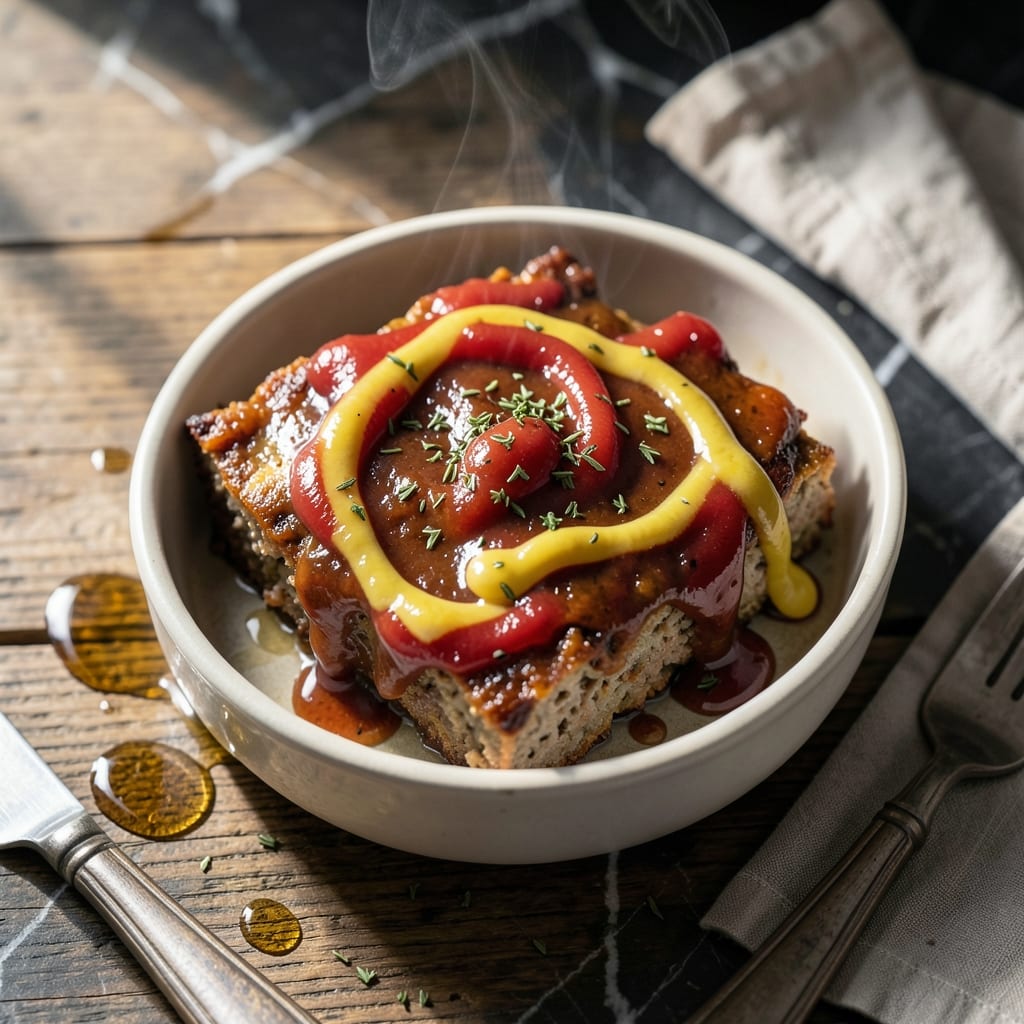
This glaze transforms ordinary meatloaf into something extraordinary with its perfect balance of tangy and sweet flavors. The mustard base provides depth while complementing the savory meat without overpowering it.
I developed this recipe after years of experimenting with different glazes, always searching for that ideal combination of flavor and texture. The key is reducing the mixture just enough to create a thick, brushable consistency that caramelizes beautifully in the oven.
What you get is a perfect caramelized coating that adds moisture and layers of flavor to every slice. It clings to the meatloaf, creating a glossy finish that looks as impressive as it tastes.
Make a double batch and store the extra in the refrigerator for up to a week. It works wonderfully on burgers and meatballs too.
Ingredients for Meatloaf Glaze Recipe with Mustard
Nine simple ingredients create that perfect caramelized tangy-sweet glaze for your meatloaf masterpiece.
| Ingredient | Amount | Notes |
|---|---|---|
| Yellow Mustard 🟡 | ½ cup | Smooth, prepared variety |
| Dijon Mustard 🟡 | 2 tbsp | For depth of flavor |
| Ketchup 🍅 | ½ cup | High-quality for sweetness |
| Brown Sugar 🍚 | 3 tbsp | Light or dark works |
| Apple Cider Vinegar 🍏 | 1 tbsp | Adds brightness to balance |
| Worcestershire Sauce 🫒 | 1 tbsp | Umami boost essential |
| Garlic Powder 🧄 | 1 tsp | Enhances savory notes |
| Onion Powder 🧅 | 1 tsp | Complements mustard base |
| Smoked Paprika 🌶️ | ½ tsp | Adds subtle smokiness |
The mustard base is non-negotiable here—yellow mustard gives you that classic tang while Dijon adds sophistication. Heinz ketchup is my go-to for consistent sweetness, but any thick, high-quality brand works. Brown sugar ties it all together, and I’ve found Domino or C&H dissolve the smoothest. Don’t skip the Worcestershire—it’s doing the heavy lifting for depth of flavor.
No Dijon? Whole grain mustard at half the amount gets you close. Swap brown sugar for honey or maple syrup (2 tbsp each) if that’s what you’ve got. Missing Worcestershire? Soy sauce plus a dash of vinegar works in a pinch. The vinegar can be white or red wine—whatever’s open. Smoked paprika missing? Regular paprika plus a pinch of chipotle powder adds the smoke.
This thickens as it cools, so make it ahead—stores 1 week in the fridge. Doubles perfectly (just scale everything). Brush on during the last 15 minutes of cooking for that glossy, caramelized finish. Works on burgers, meatballs, even roasted veggies.
Why You’ll Love This Recipe
- Five-Minute Mix: I just dump all five ingredients in a bowl—no chopping, no fuss, and it’s ready before the oven’s even hot.
- Tangy Sweet Kick: That first bite where the Dijon’s sharpness meets the brown sugar’s caramelized edge? Honestly, it’s why I make meatloaf in the first place.
- Slathers on Everything: I brush it on meatloaf, ribs, even roasted veggies—this glaze turns whatever it touches into the star of the plate.
- Budget Stretcher: A batch costs pennies, covers two meatloaves, and still tastes like I spent hours on it.
Step-by-Step Instructions for Meatloaf Glaze With Mustard
This foolproof method delivers a glossy, flavor-packed glaze that transforms any meatloaf into a masterpiece.
Step 1: Combine the Mustard Base
In a medium saucepan over medium heat, whisk together the 0.5 cup Yellow Mustard and 2 tbsp Dijon Mustard until smooth. The Dijon adds a sophisticated depth that balances the Yellow Mustard’s tang. Heat for 1-2 minutes, stirring constantly, until the mixture just begins to bubble at the edges.
You’ll notice the color deepen slightly—this indicates the raw edge of the mustard is cooking off. Don’t let it boil vigorously, or the mustard can separate. The goal here is to create a stable, flavorful foundation that will carry all the other ingredients beautifully.
Step 2: Sweeten and Balance the Mixture
Add the 0.5 cup Ketchup and 3 tbsp Brown Sugar to the mustard base. Stir well to incorporate, then increase the heat to medium-high. The ketchup introduces a fruity sweetness, while the brown sugar adds caramel notes that will later create a stunning glaze.
Bring the mixture to a gentle simmer and let it cook for 3-4 minutes. You’ll see it thicken slightly as the sugars begin to concentrate. This step is crucial for achieving that perfect sticky consistency that clings to your meatloaf without running off.
Step 3: Add the Finishing Touches
Reduce the heat to low and stir in the 1 tbsp Apple Cider Vinegar, 1 tbsp Worcestershire Sauce, 1 tsp Garlic Powder, 1 tsp Onion Powder, and 0.5 tsp Smoked Paprika. The vinegar brightens the entire mixture, while the Worcestershire adds umami depth.
The garlic and onion powders enhance the savory backbone, and the smoked paprika introduces a subtle warmth. Simmer for another 2-3 minutes, stirring frequently, until the glaze has thickened enough to coat the back of a spoon. Taste and adjust seasoning if needed—though I find it’s always perfectly balanced at this point.
Step 4: Cool and Apply for Maximum Shine
Remove the saucepan from heat and let the glaze cool for 5-10 minutes. It will thicken further as it cools, becoming the ideal consistency for brushing onto your meatloaf. If it’s too thick after cooling, you can thin it slightly with a teaspoon of water.
For the best results, brush a generous layer of glaze over your meatloaf during the last 15-20 minutes of baking. This allows the sugars to caramelize and create that irresistible, glossy finish. The glaze should bubble slightly and develop a deep, rich color as it bakes. Let it rest for a few minutes after baking to set before slicing.
Pro Tips For Making Meatloaf Glaze Recipe With Mustard
- Simmer the Glaze: Cook the glaze on low heat for 3-4 minutes, stirring often—this melts the brown sugar fully and lets the vinegar mellow out. I learned this the hard way after tasting raw vinegar in my first few batches.
- Balance the Mustards: Use a 2:1 ratio of yellow to Dijon mustard for the best flavor. Sounds weird, but it works: the yellow adds tang while the Dijon gives depth without overpowering.
- Skip the Boil: Resist the urge to boil the glaze—it can make the brown sugar separate and turn grainy. Keep it at a gentle simmer for a smooth, glossy finish.
- Glaze Twice: Brush the first coat of glaze on the meatloaf 15 minutes before it’s done, then add a second layer right at the end. This gives you that sticky, caramelized crust without burning the sugars.
Essential Equipment for This Dish
Saucepan Selection
I always reach for my 2-quart stainless steel saucepan with a heavy bottom—All-Clad is my brand of choice. The even heat distribution prevents hot spots that could scorch your mustard base. A nonstick pan works too, but stainless gives you better control over the reduction process.
Whisk Matters
Use a flat-bottomed whisk for this glaze—it scrapes the corners of your pan and ensures smooth blending. I keep a OXO silicone-tipped whisk in my kitchen specifically for sauces. The silicone won’t scratch your pan, and the flat shape helps incorporate all ingredients thoroughly.
Measuring Tools
For precise measurements, I recommend a glass measuring cup for liquids and stainless steel measuring spoons for dry ingredients. Pyrex for the cup and Cuisinox for the spoons—they’re durable and easy to clean. Accurate measurements matter, especially with the mustard and sugar balance.
Basting Brush
A silicone basting brush is essential for applying the glaze evenly. I use a 10-inch brush from KitchenAid—it holds plenty of glaze and the silicone bristles won’t fall out or absorb flavors. The long handle keeps your hands safe from the hot oven. 💡
Cooling Rack
After glazing, let your meatloaf rest on a wire cooling rack set over a baking sheet. This allows air to circulate underneath, preventing the bottom from getting soggy. I use a stainless steel rack from Wilton—it’s sturdy and fits perfectly in my half-sheet pan.
Storage Containers
For leftover glaze, I store it in a 16-ounce glass jar with a tight-fitting lid. Ball Mason jars work perfectly and let you see the glaze clearly. Always let the glaze cool completely before sealing to prevent condensation, which can lead to spoilage. ❄️
Nutrition Facts
Frequently Asked Questions
Can I use honey instead of brown sugar?
Yes, substitute 2 tbsp honey for the 3 tbsp brown sugar. It will add a floral note and slightly thinner consistency. Reduce other liquids by 1 tsp to compensate for honey’s moisture.
How long does the glaze keep in the fridge?
Properly stored in an airtight container, it stays fresh for up to 7 days. Let it cool completely before sealing. For longer storage, freeze for up to 3 months.
Why did my glaze separate while cooking?
This happens with high heat. Keep the temperature at medium and stir constantly. If it separates, remove from heat and whisk vigorously to recombine.
Can I make this ahead of time?
Prepare it up to 3 days ahead. Store in the fridge and reheat gently before using. The flavors often deepen after resting.

- BBQ Sausage Recipe Oven: Smoky Depth Without the Grill - September 28, 2026
- BBQ Chicken Bowl Recipe Rice: Smoky Sweetness Over Fluffy Grains - September 28, 2026
- Beef Cutlet Recipe Ideas: Crispy Breaded Patties With Bold Seasonings - September 28, 2026