
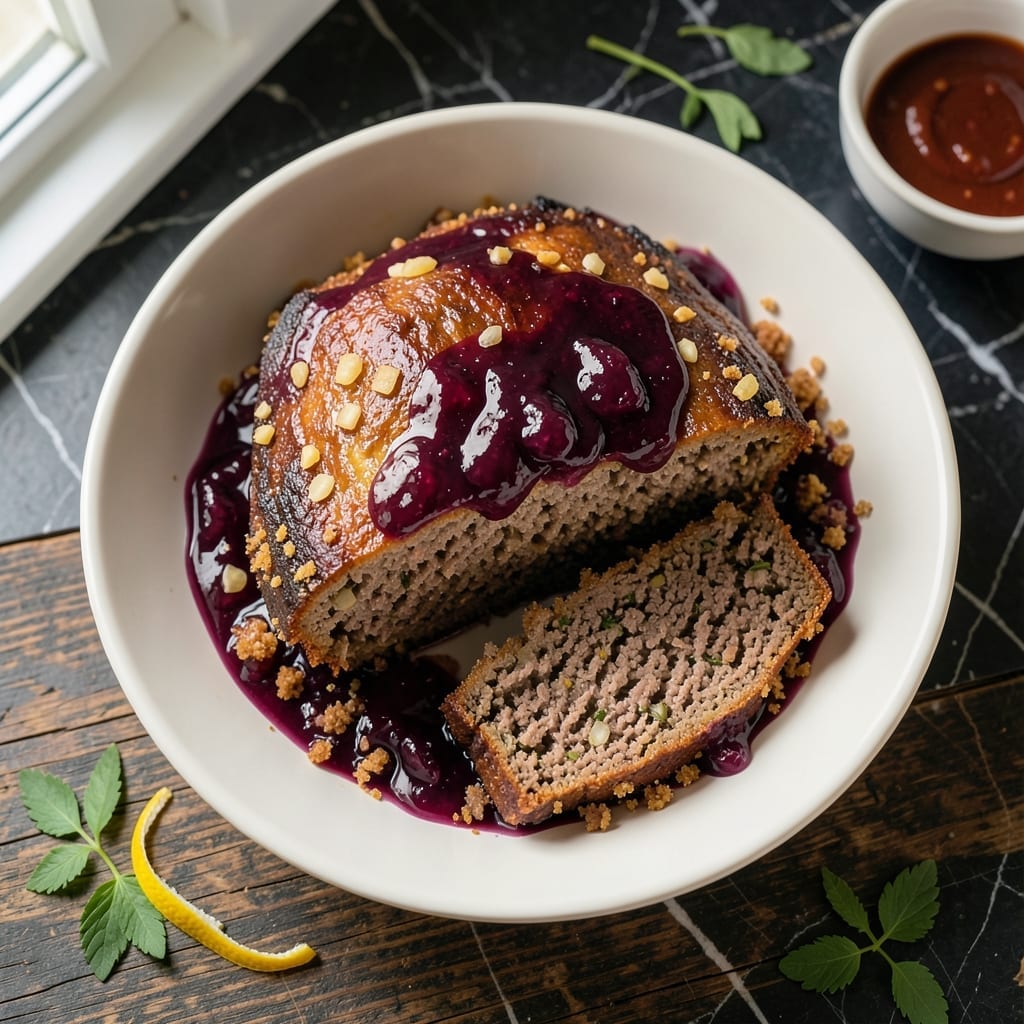
This classic meatloaf gets its signature touch from a sweet and tangy grape jelly glaze that caramelizes beautifully in the oven. The combination of savory ground beef and the bright, fruity glaze creates a dish that’s both comforting and memorable.
I’ve perfected this recipe over years of family dinners, balancing the richness of the meat with just the right amount of jelly for a glossy, flavorful finish. The glaze adds a subtle sweetness that complements the hearty base without overpowering it.
Baked at 375°F, the loaf develops a tender interior while the jelly transforms into a sticky, golden-brown coating. It’s the kind of meal that feels like home, elevated by one simple but brilliant addition.
Serve it with mashed potatoes and green beans for a complete, crowd-pleasing dinner.
Ingredients for Meatloaf Recipe with Grape Jelly
Classic comfort food ingredients with a bright, fruity glaze twist for memorable results.
| Ingredient | Amount | Notes |
|---|---|---|
| Ground Beef 🥩 | 2 lb | 80/20 lean-to-fat ratio preferred |
| Grape Jelly 🍇 | ¾ cup | For glaze and sweetness |
| Breadcrumbs 🍞 | 1 cup | Plain or panko variety |
| Large Egg 🥚 | 1 whole | Binds the meat mixture |
| Yellow Onion 🧅 | 1 whole | Finely diced for texture |
| Garlic Cloves 🧄 | 2 cloves | Minced for depth of flavor |
| Ketchup 🍅 | ½ cup | For glaze balance |
| Worcestershire Sauce 💧 | 2 tbsp | Adds umami complexity |
| Dijon Mustard 🟡 | 1 tbsp | Sharp tang for glaze |
| Dried Thyme 🌿 | 1 tsp | Earthy herb note |
| Dried Oregano 🍃 | 1 tsp | Mediterranean herb accent |
| Kosher Salt 🧂 | 1 ½ tsp | Diamond Crystal preferred |
| Black Pepper 🌶️ | 1 tsp | Freshly ground for best results |
| Milk 🥛 | ¼ cup | Moistens breadcrumbs |
The ground beef is critical here. 80/20 lean-to-fat ratio ensures a moist, flavorful loaf that doesn’t dry out. Most supermarkets carry this ratio in the butcher section. Whole Foods or Costco offer high-quality options if you’re doing a larger batch. For the grape jelly, Smucker’s or Welch’s work perfectly—avoid sugar-free varieties as they won’t caramelize as well.
No grape jelly? Apricot jam with a squeeze of lemon gets you close to the same sweet-tangy balance. Swap breadcrumbs for crushed saltines or quick oats if that’s what’s in your pantry. The Worcestershire sauce adds depth, but soy sauce in a pinch works too (though it’ll darken the glaze). Want more kick? Add half a teaspoon of cayenne to the meat mixture.
The meatloaf keeps well covered in the fridge for up to 4 days. Freeze slices wrapped in foil for 3 months. Leftovers make fantastic sandwiches—just reheat gently to keep the glaze from getting too sticky.
Why You’ll Love This Recipe
- One Bowl Wonder: I just dump the beef, breadcrumbs, egg, and onion in a bowl, mix, and shape—no fancy steps.
- Sweet & Savory Magic: The grape jelly glaze gives it this sticky, tangy-sweet crust that pairs crazy well with the rich beef.
- Feeds a Hungry Crowd: One batch gives me dinner tonight and leftovers for tomorrow’s sandwiches—no extra effort.
- Budget-Friendly Staple: Ground beef and pantry basics keep the cost low, but it tastes like I spent hours in the kitchen.
Step-by-Step Instructions for Meatloaf With Grape Jelly
Achieve perfect texture and a glossy finish with this time-tested classic preparation method.
Step 1: Prepare and Combine the Meatloaf Base
Finely dice the yellow onion and mince the 2 cloves garlic cloves. In a large mixing bowl, combine the 2 lb ground beef, 1 cup breadcrumbs, 1 whole large egg, diced onion, minced garlic, 2 tbsp Worcestershire sauce, 1 tsp dried thyme, 1 tsp dried oregano, 1.5 tsp kosher salt, and 1 tsp black pepper.
Pour in the 0.25 cup milk and mix gently with your hands or a fork just until combined. Overworking the mixture results in a dense, tough loaf. The texture should be uniform but still slightly sticky—this indicates proper binding without compacting the proteins.
Step 2: Shape and Position for Even Cooking
Transfer the mixture to a parchment-lined baking sheet or loaf pan. Shape it into a freeform loaf about 9 inches long and 4 inches wide, with slightly rounded edges. This shape ensures even cooking throughout while creating a generous surface area for the glaze to adhere.
Place the loaf on the center rack of your oven. I recommend using a baking sheet with a wire rack to allow air circulation underneath, which prevents the bottom from becoming soggy. Let the shaped loaf rest at room temperature for 15 minutes before baking to promote even cooking.
Step 3: Bake Until Firm and Nearly Cooked Through
Preheat your oven to 375°F. Bake the meatloaf uncovered for 45 minutes. You’ll notice the edges beginning to brown and the loaf pulling slightly away from the pan—this indicates the exterior is forming a crust while the interior continues to cook.
At this point, the internal temperature should read about 150°F on an instant-read thermometer inserted into the thickest part. The loaf will continue to cook as it rests, so removing it now prevents overcooking. The surface should appear firm with a light golden color, ready for the glaze.
Step 4: Apply and Set the Grape Jelly Glaze
In a small bowl, whisk together the 0.75 cup grape jelly, 0.5 cup ketchup, and 1 tbsp Dijon mustard until smooth. This creates a balanced glaze that’s sweet with a subtle tangy bite. Spread the mixture evenly over the top and sides of the meatloaf using a silicone brush or the back of a spoon.
Return the glazed loaf to the oven and bake for an additional 15-20 minutes until the glaze is bubbly and deeply caramelized and the internal temperature reaches 160°F. The glaze should have a glossy sheen and stick slightly to the surface when touched.
Step 5: Rest and Slice for Optimal Texture
Transfer the meatloaf to a cutting board and tent loosely with foil. Allow it to rest for 10-15 minutes before slicing. This resting period lets the juices redistribute throughout the loaf, ensuring each slice remains moist and holds its shape.
Slice the meatloaf into 1-inch thick portions using a sharp knife. The glaze should have set into a slightly sticky, shiny coating that enhances each bite. Serve immediately while warm, as the glaze will soften slightly upon standing but retain its rich flavor.
Pro Tips For Making Meatloaf Recipe With Grape Jelly
- Preheat the Jelly: Warm the grape jelly for 15-20 seconds in the microwave before glazing—it spreads smoother and soaks into the meatloaf better than cold jelly straight from the jar.
- Soak the Breadcrumbs: Mix the breadcrumbs with the egg and a splash of milk or water before adding the beef; this keeps the meatloaf tender instead of dry and crumbly.
- Don’t Overmix: Combine the ingredients just until they hold together—squeezing or overworking the beef makes the meatloaf dense and tough, and nobody wants that.
- Rest Before Slicing: Let the meatloaf sit for 10 minutes after baking so the juices redistribute; cutting too soon sends all that flavor straight to the cutting board.
Storing and Reheating This Dish
Refrigerator Storage
Let your meatloaf cool completely, then wrap it tightly in plastic wrap or transfer to an airtight container. It keeps beautifully in the fridge at 40°F or below for up to 4 days. The glaze actually deepens in flavor as it rests. ❄️
Freezer Storage
For longer storage, slice the loaf before freezing—this lets you reheat just what you need. Wrap individual slices in plastic wrap, then place in a freezer bag with parchment between layers. It stays fresh for 3 months without freezer burn.
Stovetop Reheating
My favorite method for leftovers: place slices in a skillet with 2 tbsp water or beef broth over medium-low heat. Cover and warm for 5-7 minutes, flipping once. This keeps the meatloaf moist while reviving the glaze.
Microwave Reheating
Place a slice on a microwave-safe plate and cover with a damp paper towel. Heat on 50% power for 1-2 minutes, checking halfway. The glaze will soften but retain its sweet-tangy flavor. 🔥
Oven Reheating
For the best texture, preheat oven to 350°F and place slices on a baking sheet. Cover with foil and warm for 10-15 minutes. This method works great for reviving the entire loaf if serving a crowd.
Serving Leftovers
Cold meatloaf makes fantastic sandwiches—just add lettuce and mayo. For a hot sandwich, reheat the slice first, then place on a toasted bun. The glaze caramelizes slightly when warmed, adding extra depth. ✨
Nutrition Facts
Frequently Asked Questions
Why use grape jelly in meatloaf?
The jelly creates a sweet, glossy glaze that caramelizes beautifully. It balances the savory beef with a bright, fruity note that’s both unexpected and delicious.
Can I substitute another jelly?
Yes! Apricot, strawberry, or even currant jelly work well. Each brings a slightly different flavor, but all add the same sweet-tangy finish to the glaze.
How do I prevent the glaze from burning?
Apply it only during the last 15-20 minutes of baking. Check the oven at 15 minutes and tent with foil if it browns too quickly.
Can I make this ahead of time?
Shape the loaf, cover, and refrigerate for up to 24 hours before baking. Add the glaze just before the final baking stage for the best texture.

- BBQ Sausage Recipe Oven: Smoky Depth Without the Grill - September 28, 2026
- BBQ Chicken Bowl Recipe Rice: Smoky Sweetness Over Fluffy Grains - September 28, 2026
- Beef Cutlet Recipe Ideas: Crispy Breaded Patties With Bold Seasonings - September 28, 2026