
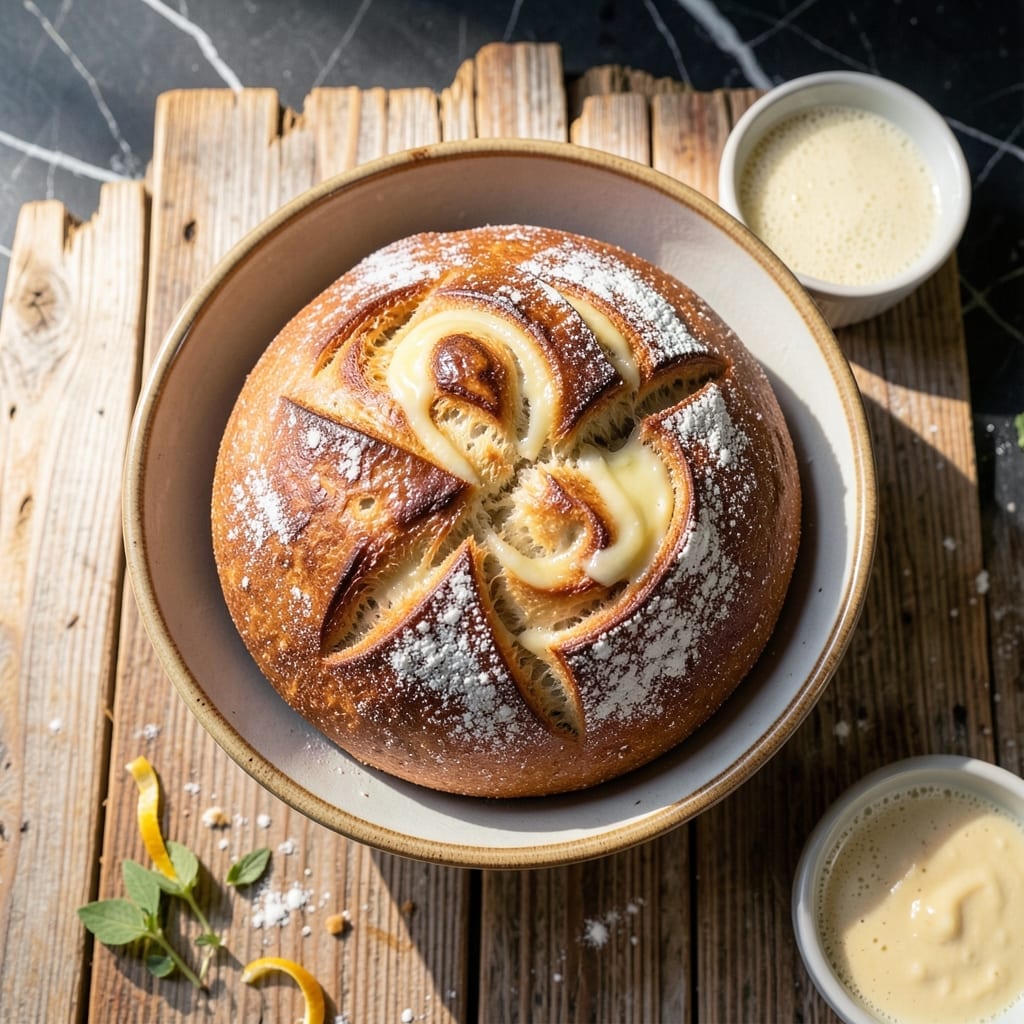
This traditional loaf holds deep cultural significance, passed down through generations as a way to honor loved ones. The soft, slightly sweet bread carries meaning beyond its simple ingredients and gentle texture.
What makes this recipe special is its balance of comfort and tradition. The dough comes together with basic pantry staples, yet transforms into something deeply meaningful. The baking process fills the kitchen with a warm, inviting aroma that signals remembrance.
The result is a soft, golden loaf with a tender crumb and subtle sweetness. Its simplicity allows the bread to serve as both nourishment and symbol, perfect for sharing with family during moments of reflection.
This version stays true to its roots while ensuring consistent, beautiful results every time. The method respects tradition while making it accessible for modern kitchens.
Ingredients for Memorial Bread
Basic pantry staples transform into a soft, sweet loaf with deep cultural roots.
| Ingredient | Amount | Notes |
|---|---|---|
| All-Purpose Flour 🌾 | 4 cups | Plus extra for dusting |
| Granulated Sugar 🍚 | ¼ cup | For subtle sweetness |
| Active Dry Yeast 🍞 | 2 ¼ tsp | Or one packet |
| Warm Water 💧 | 1 ¼ cups | 110-115°F for yeast activation |
| Whole Milk 🥛 | ¼ cup | Warmed to 110°F |
| Unsalted Butter 🧈 | ¼ cup | Melted and cooled |
| Large Egg 🥚 | 1 whole | Room temperature |
| Salt 🧂 | 1 tsp | Fine sea salt preferred |
| Vanilla Extract 🍯 | 1 tsp | Pure extract for best flavor |
| Ground Cinnamon 🌿 | ½ tsp | For warm spice note |
| Vegetable Oil 🫒 | 1 tbsp | For greasing bowl |
The flour is the foundation—King Arthur or Gold Medal deliver consistent results. Yeast freshness is critical; check the expiration date and store unopened packets in the freezer. Warm the milk and water to exactly 110-115°F (use a thermometer) to avoid killing the yeast. Butter should be melted and cooled to lukewarm; too hot will scramble the egg.
No whole milk? 2% or even water works in a pinch, though richness suffers. Short on all-purpose flour? Bread flour at a 1:1 ratio adds chew but may require slightly more liquid. For a dairy-free version, unsweetened almond milk and coconut oil substitute seamlessly. The egg can be omitted, but the loaf will be denser.
Dough rises best in a warm, draft-free spot (75-80°F). Once baked, cool completely before slicing to maintain texture. Stores well wrapped at room temperature for 3 days, or freeze for up to 3 months in airtight packaging.
Why You’ll Love This Recipe
- I’ll be real: a few cents worth of basic ingredients makes a loaf that tastes like a bakery’s best.
- One Bowl Wonder: I just dump flour, sugar, yeast, warm water, and milk in one bowl and let the magic happen—no fancy gadgets.
- Warm Sweet Comfort: That soft, slightly sweet crumb with a golden crust reminds me of Sunday mornings at grandma’s.
- Feeds a Crowd: Honestly, one loaf disappears fast at potlucks, and it pairs with jam, butter, or even a hearty soup.
Step-by-Step Instructions for Memorial Bread
Master the traditional technique for a soft, slightly sweet loaf with perfect texture.
Step 1: Activate the Yeast and Prepare Wet Ingredients
In a large mixing bowl, combine the 1.25 cups Warm Water and 0.25 cup Whole Milk heated to 110-115°F. Add the 0.25 cup Granulated Sugar and sprinkle the 2.25 tsp Active Dry Yeast over the surface. Let it sit for 5-7 minutes until the mixture becomes foamy and bubbly—this confirms the yeast is active and ready to work.
Once activated, whisk in the 0.25 cup Unsalted Butter (melted and cooled), 1 whole Large Egg, 1 tsp Vanilla Extract, and 0.5 tsp Ground Cinnamon. I prefer using a stand mixer with the dough hook for this step to ensure thorough incorporation without overworking the mixture.
Step 2: Incorporate Dry Ingredients and Knead
Add the 4 cups All-Purpose Flour and 1 tsp Salt to the wet ingredients. Mix on low speed until a shaggy dough forms, then increase to medium speed and knead for 6-8 minutes until the dough becomes smooth and elastic. The dough should pull away from the bowl but still feel slightly tacky to the touch.
If the dough seems too sticky, resist the urge to add more flour immediately. Instead, let the mixer work it for another 2 minutes—the gluten development will often resolve the stickiness. Only then should you dust with additional flour if absolutely necessary.
Step 3: First Rise and Shape the Loaf
Lightly grease a large bowl with the 1 tbsp Vegetable Oil, then transfer the kneaded dough into it. Turn the dough once to coat all sides with oil, then cover with a clean kitchen towel. Let it rise in a warm, draft-free place for 1 to 1.5 hours or until doubled in volume.
Once risen, punch down the dough to release excess air, then turn it out onto a lightly floured surface. Shape into a loaf by patting into a rectangle and rolling tightly from the short end. Pinch the seam and tuck it under to create surface tension—this ensures a uniform shape and proper oven rise.
Step 4: Second Rise and Bake to Perfection
Place the shaped loaf seam-side down in a greased 9×5-inch loaf pan. Cover and let rise again for 45-60 minutes until the dough domes about 1 inch above the rim of the pan. Preheat your oven to 375°F during the last 15 minutes of rising.
Bake for 25-30 minutes until the top is a deep golden brown and the internal temperature reaches 190-200°F. If the top begins to brown too quickly, tent loosely with aluminum foil. The loaf should sound hollow when tapped on the bottom—a sure sign it’s fully baked.
Step 5: Cool and Enjoy
Remove the bread from the pan and transfer it to a wire rack to cool for at least 20 minutes before slicing. This resting period allows the crumb structure to set, preventing a gummy texture. The bread should be soft yet sturdy, with a fine, even crumb and a subtle sweetness from the sugar and cinnamon.
For the best experience, serve slightly warm. The aroma and texture are at their peak within the first few hours of baking—perfect for honoring tradition with every slice.
Pro Tips For Making Memorial Bread
- Test the Yeast: Always bloom your yeast in the warm water with a pinch of sugar first—if it doesn’t foam within 5 minutes, your bread won’t rise. I learned this the hard way after wasting a whole batch of flour.
- Warm the Milk: Take the chill off your whole milk before mixing it in, but don’t overheat—110°F is perfect. Too cold and the yeast naps, too hot and it dies.
- Skip Cold Flour: Pull your all-purpose flour out of the fridge or freezer at least an hour before baking. Cold flour can shock the dough and slow the rise.
- Use a Scale: Measure your flour by weight, not volume—1 cup can vary by 20 grams, and that inconsistency changes the texture. My grandmother swore by this, and she was right.
Creative Variations of These Flavors
Honey-Infused Version
Replace the granulated sugar with ⅓ cup honey for a deeper, floral sweetness. Warm the honey slightly to 110°F before mixing to help it blend smoothly. I find this variation adds a beautiful golden hue to the crumb. 💛
Whole Wheat Twist
Swap 1 cup all-purpose flour for whole wheat flour to add nuttiness and fiber. You may need an extra 1-2 tbsp warm water since whole wheat absorbs more liquid. The texture remains soft but gains a heartier character.
Citrus Zest Addition
Fold in 1 tbsp orange or lemon zest with the dry ingredients for a bright, aromatic note. The citrus oils complement the cinnamon beautifully, creating a more complex flavor profile that still feels traditional.
Spiced Raisin Bread
Add ½ cup plump raisins and an extra ¼ tsp cinnamon during the final kneading stage. Soak the raisins in warm water for 10 minutes first to prevent them from drying out during baking. This version feels especially fitting for remembrance.
Brown Butter Glaze
Brush the baked loaf with a glaze of 2 tbsp melted brown butter and 1 tbsp honey immediately after removing from the oven. This adds a rich, caramelized layer that enhances both flavor and visual appeal. 🔥
Sourdough Adaptation
Replace 1 cup warm water and yeast with 1 cup active sourdough starter. Reduce the first rise to 4-6 hours at room temperature. The tangy notes add depth while keeping the bread’s tender texture.
Nutrition Facts
Frequently Asked Questions
How do I know when the dough has risen enough?
It’s ready when doubled in size and springs back slowly when pressed. This typically takes 1-1.5 hours for the first rise.
Can I make this dough ahead of time?
Yes! Prepare the dough, let it rise once, then refrigerate overnight. Shape and bake the next day—this can enhance flavor development.
Why did my loaf collapse in the oven?
This often happens if the dough overproofs or the oven isn’t hot enough. Ensure it rises just until 1 inch above the pan and preheat to 375°F.
What’s the best way to store leftover bread?
Wrap tightly in plastic or an airtight container at room temperature for up to 3 days. For longer storage, freeze slices for up to 3 months.

- BBQ Sausage Recipe Oven: Smoky Depth Without the Grill - September 28, 2026
- BBQ Chicken Bowl Recipe Rice: Smoky Sweetness Over Fluffy Grains - September 28, 2026
- Beef Cutlet Recipe Ideas: Crispy Breaded Patties With Bold Seasonings - September 28, 2026