
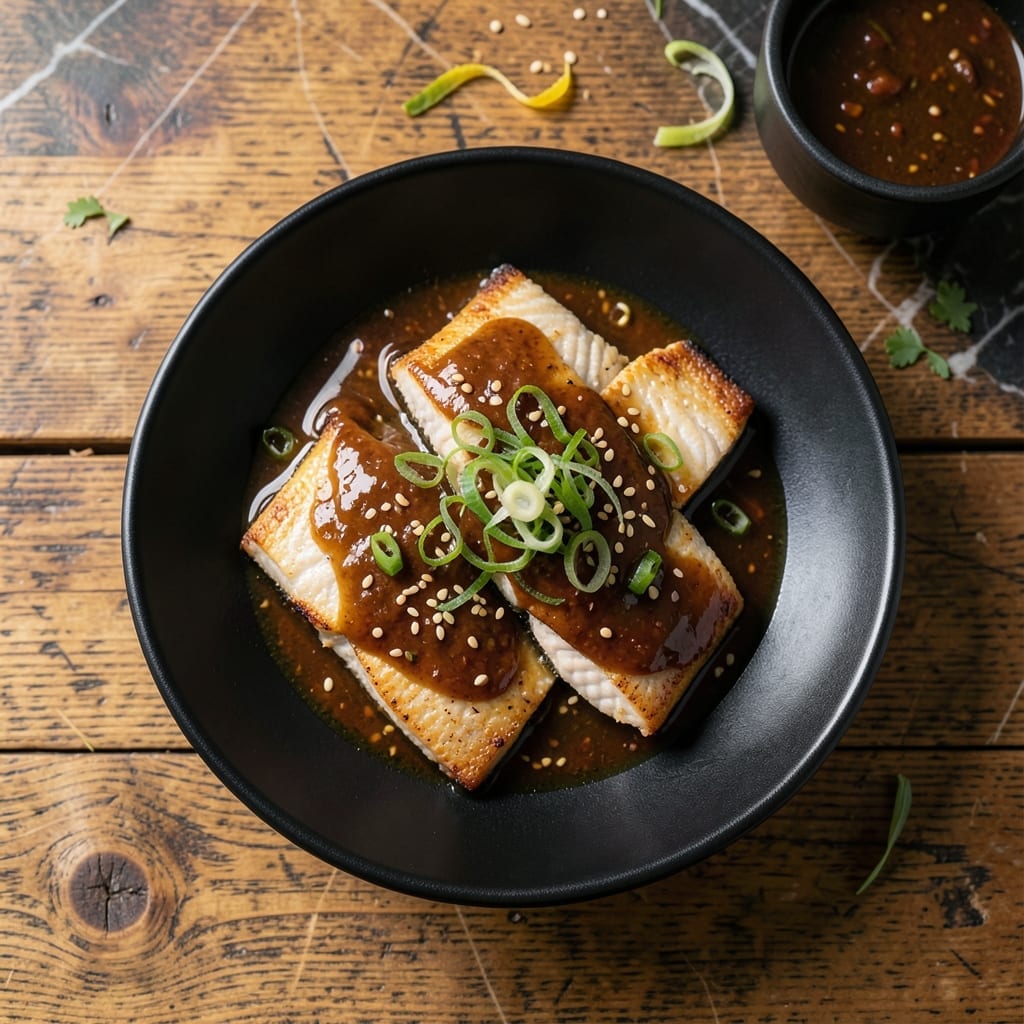
This miso-glazed sea bass delivers restaurant-quality flavor with minimal effort. The marinade transforms simple ingredients into an elegant dish.
I’ve refined this technique to balance sweet, salty, and umami notes perfectly. A short marinade and high-heat sear ensure tender fish with a caramelized crust.
What emerges is flaky, moist sea bass with a glossy, savory glaze. Serve it over rice or with steamed vegetables for a complete meal.
Precision matters here—timing and temperature make all the difference. This dish proves that sophisticated flavors don’t require complicated steps.
Ingredients for Miso Sea Bass
Restaurant-quality ingredients for elegant sea bass with minimal effort. Simple, precise, and packed with umami depth.
| Ingredient | Amount | Notes |
|---|---|---|
| Sea Bass Fillets 🐟 | 1 ½ lb | Skin-on, boneless, about 1-inch thick |
| White Miso Paste 🥣 | ½ cup | Fermented, smooth variety |
| Mirin 🍶 | 3 tbsp | Sweet rice wine for glaze |
| Soy Sauce 🫒 | 2 tbsp | Low-sodium preferred for balance |
| Sake 🍶 | 2 tbsp | Dry variety for depth |
| Granulated Sugar 🧂 | 1 tbsp | Balances miso saltiness |
| Fresh Ginger 🌿 | 1 tbsp | Peeled and finely grated |
| Garlic Cloves 🧄 | 3 cloves | Minced for marinade |
| Vegetable Oil 🫒 | 2 tbsp | High smoke point for searing |
| Green Onions 🧅 | 3 whole | Thinly sliced for garnish |
| Sesame Seeds 🌾 | 1 tsp | Toasted for garnish |
| Lemon 🍋 | 1 whole | Zested and juiced |
The sea bass is non-negotiable—wild-caught from a trusted fishmonger (I use Whole Foods or local markets with high turnover). Look for fillets with vibrant color and no fishy odor. White miso is ideal here; Miso Master or Cold Mountain brands offer consistent quality. The mirin and sake should be authentic Japanese—avoid cooking wine versions, which lack depth.
No white miso? Yellow miso at half the amount works but increases saltiness. Mirin substitutes include 1 tbsp honey plus 2 tbsp rice vinegar. For sake, dry sherry is a decent backup. The sugar can be swapped for maple syrup, but adjust to taste. Fresh ginger is key—powdered lacks the bright punch this dish deserves.
Marinate the fish for 30-60 minutes max—longer can break down the texture. Leftovers (if any) keep 2 days refrigerated. The glaze thickens as it cools, so reheat gently. Always bring sea bass to room temperature before cooking for even doneness.
Why You’ll Love This Recipe
- One Bowl Wonder: I just mix the miso, mirin, soy, and sake in a bowl, coat the bass, and let the oven do the rest.
- Umami Bomb: The white miso glaze caramelizes into this sweet-savory crust that makes every bite ridiculous.
- Dinner Party MVP: I’ve served this for date nights and weeknight family meals—always disappears first.
- Leftovers? Even Better: Honestly, the flavors deepen overnight, so I double the batch for next-day lunches.
Step-by-Step Instructions for Miso Sea Bass
Master this technique and deliver restaurant-quality sea bass with a glossy, umami-packed glaze.
Step 1: Create the Miso Marinade
In a medium bowl, whisk together the 0.5 cup White Miso Paste, 3 tbsp Mirin, 2 tbsp Soy Sauce, 2 tbsp Sake, and 1 tbsp Granulated Sugar until smooth. The sugar should fully dissolve into the liquid, creating a thick, glossy mixture with no visible grains.
Add the 1 tbsp Fresh Ginger and 3 cloves Garlic Cloves, both finely grated and minced respectively, and stir to combine. The ginger and garlic should be evenly distributed throughout the marinade, with no clumps. This blend delivers the signature umami depth while balancing sweetness and saltiness perfectly.
Step 2: Marinate the Sea Bass Fillets
Pat the 1.5 lb Sea Bass Fillets completely dry with paper towels—this ensures the marinade adheres properly and the skin crisps evenly. Place the fillets skin-side down in a shallow dish and pour the marinade over them, turning to coat completely.
Let the sea bass marinate at room temperature for 20-30 minutes. The surface should develop a slightly tacky texture as the miso mixture adheres. Don’t exceed 30 minutes, as the salt in the miso can begin to cure the fish, altering its texture.
Step 3: Sear the Fillets to Perfection
Heat the 2 tbsp Vegetable Oil in a large skillet over medium-high heat until it shimmers but does not smoke. Carefully place the sea bass fillets in the pan skin-side down, pressing gently with a fish spatula for 10 seconds to prevent curling and ensure full contact with the pan.
Cook undisturbed for 4-5 minutes until the skin is golden brown and crisp and the edges of the fillets appear opaque. Flip the fillets and cook for an additional 3-4 minutes until the fish flakes easily with a fork and the internal temperature reaches 145°F.
Step 4: Glaze and Garnish for Serving
Transfer the sea bass to a serving platter, skin-side up. Spoon any remaining marinade from the dish over the fillets, then drizzle with the juice from the 1 whole Lemon. The glaze should be thick and glossy, clinging to the surface of the fish.
Garnish with the thinly sliced 3 whole Green Onions and the 1 tsp Sesame Seeds, sprinkling them evenly over the top. The green onions add a fresh, sharp contrast to the rich miso, while the sesame seeds provide a subtle nutty crunch and visual appeal.
Pro Tips For Making Miso Sea Bass
- Pat Dry First: I learned this the hard way—wet fillets steam instead of sear, so blot the sea bass with paper towels before adding the miso marinade. It’s the difference between soggy and crisp.
- Marinade Overnight: Sounds weird, but 12 hours in white miso, mirin, and sake actually changes the outcome, letting the flavors sink deep without overpowering the fish.
- Skip Boiling Miso: Resist the urge to boil the miso marinade—high heat kills its delicate enzymes and turns it bitter. Warm it gently, just until the sugar dissolves.
- Broil Last Minute: After baking, a quick 2-minute broil gives that glossy, caramelized finish to the miso glaze. Watch it like a hawk—it goes from perfect to burnt fast.
Dietary Considerations for This Dish
Gluten-Free Friendly
This dish is naturally gluten-free when using white miso paste and tamari instead of regular soy sauce. Always verify your miso brand—I trust Miso Master for consistent gluten-free certification. The rice-based mirin and sake are safe, but check labels for additives. 💡
Low-Carb Option
With only 1 tbsp sugar in the entire recipe, each serving contains minimal carbs. For keto, replace sugar with 1 tsp erythritol or monk fruit sweetener. The fish itself has zero carbs, making this ideal for low-carb diets.
Pescatarian Perfect
This creation is a pescatarian dream, offering high-quality protein without meat. Sea bass provides omega-3 fatty acids and essential minerals like selenium. I love how it satisfies both health and flavor cravings.
Allergy Considerations
The main allergens here are fish and soy from the miso and soy sauce. For soy allergies, use a chickpea-based miso substitute. Always disclose fish allergies, as sea bass is the star ingredient.
Sodium Awareness
Miso and soy sauce contribute significant sodium—about 800-1000mg per serving. To reduce, use low-sodium soy sauce and cut miso to ⅓ cup. Balance with fresh lemon juice to brighten flavors without extra salt.
Dairy-Free Naturally
This dish contains no dairy, making it safe for lactose-intolerant diners. The umami depth comes entirely from fermented soy and fish, proving you don’t need butter or cream for rich flavor. A true crowd-pleaser for mixed-diet gatherings. ✨
Nutrition Facts
Frequently Asked Questions
Can I use a different type of fish?
Yes! Try cod, halibut, or salmon for similar results. Just adjust cooking time for thickness—thinner fillets need 2-3 minutes less per side.
How do I prevent the glaze from burning?
Use medium-high heat and don’t walk away. The sugar in miso caramelizes quickly. If it darkens too fast, lower heat slightly.
What if my marinade is too thick?
Thin it with 1-2 tsp water or extra mirin. The consistency should coat the back of a spoon but still drip slowly.
Can I make this ahead of time?
Marinate the fish up to 2 hours ahead, but cook just before serving. The glaze loses its gloss if reheated.

- BBQ Sausage Recipe Oven: Smoky Depth Without the Grill - September 28, 2026
- BBQ Chicken Bowl Recipe Rice: Smoky Sweetness Over Fluffy Grains - September 28, 2026
- Beef Cutlet Recipe Ideas: Crispy Breaded Patties With Bold Seasonings - September 28, 2026