
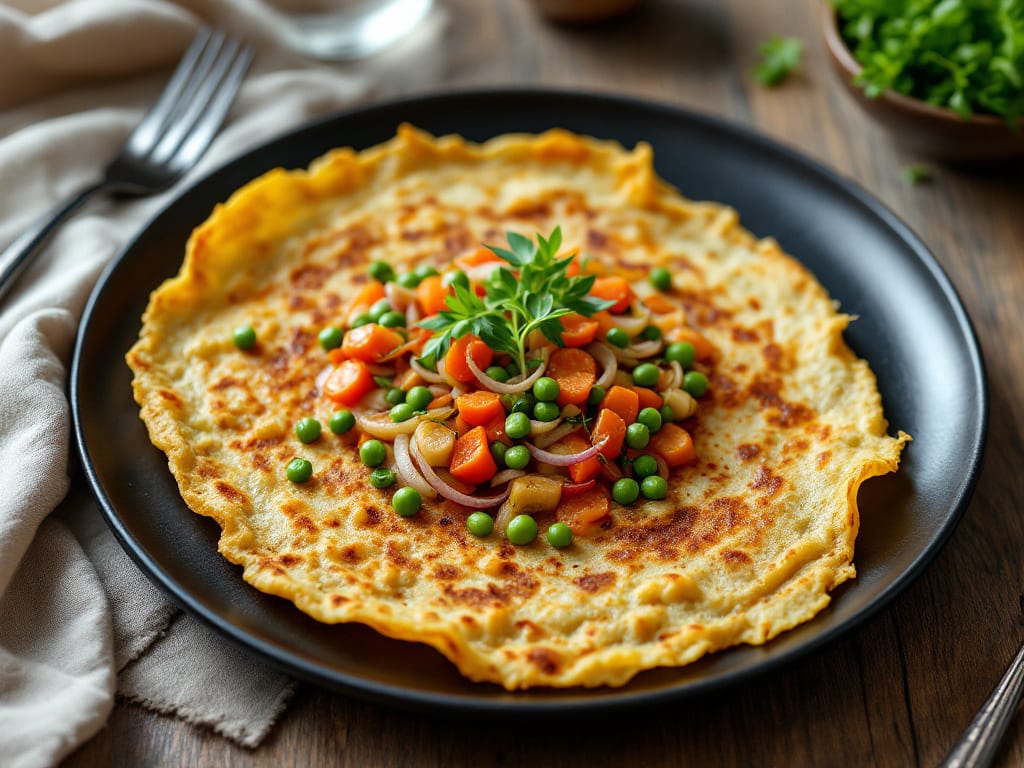
This mix veg uttapam recipe delivers crispy, golden South Indian pancakes with a fluffy center and customizable vegetable fillings that bring bold flavors to your breakfast table.
The secret lies in the fermented batter—slightly tangy, just thick enough to hold its shape while cooking into perfect circles with crisp edges and tender interiors. I developed this version after years of testing, ensuring the batter stays light yet sturdy enough to encase chopped vegetables without falling apart.
The beauty of uttapam is its versatility—you can load it with onions, carrots, green chilies, and coriander for a classic mix, or swap in spinach, mushrooms, or paneer for a protein-packed twist.
The key technique is heating the pan just right before pouring the batter, which creates that signature crispy lattice pattern while keeping the inside soft and pillowy. Serve with coconut chutney or a tangy tomato-onion sauce for the full South Indian experience.
What makes this recipe stand out is the balance between simplicity and professional results—no special equipment needed, just a nonstick pan and a little patience for the batter to ferment.
The crispy exterior gives way to a fluffy interior with pockets of savory vegetables, making every bite satisfying. Once you master this technique, you’ll never buy store-bought uttapam again.
Perfect for breakfast or brunch, these pancakes reheat beautifully and pair well with chutneys, yogurt, or even a fried egg on top. The recipe scales easily for a crowd, and the batter can be prepped ahead, so you’re ready to cook in minutes.
Let’s get started on making these crispy, flavorful pancakes from scratch.
Ingredients for mix veg uttapam
These crispy, golden pancakes start with a simple batter and bold veggies. Nothing fancy—just good flavors coming together.
| Ingredient | Amount | Notes |
|---|---|---|
| Rice Flour 🌾 | 1 cup | Fine grind for smooth batter |
| Besi Gram Flour (Chana Dal) 🌱 | ½ cup | Ground into fine powder |
| Yogurt (Plain) 🥛 | ½ cup | Full-fat for richness |
| Water (Room Temperature) 💧 | ½ cup | Adjust for batter consistency |
| Onions 🧅 | ½ cup | Finely chopped, red or white |
| Carrots 🥕 | ½ cup | Finely grated or diced small |
| Green Chilies 🌶️ | 2 whole | Slit lengthwise, seeds removed |
| Fresh Coriander Leaves 🌿 | ¼ cup | Chopped finely, stems removed |
| Cumin Seeds 🌿 | 1 tsp | Toasted lightly for aroma |
| Salt 🧂 | ½ tsp | Adjust to taste |
| Asafoetida (Hing) 🌶️ | ⅛ tsp | Pinch for authentic flavor |
| Baking Soda 🧪 | ¼ tsp | Activates during cooking |
| Oil (Vegetable or Sunflower) 🫒 | 2 tbsp | For greasing the pan |
| Paneer (Optional) 🧀 | ½ cup | Cubed, for protein boost |
| Lemon Juice 🍋 | 1 tbsp | For tangy finish |
The flours are key here. Rice flour keeps it light, while besi gram flour adds protein and that signature uttapam texture. Grab them from the Indian aisle at Whole Foods or India Mart online if your local store doesn’t carry besi gram. The yogurt needs to be plain—no fruit flavors—and room temp so it blends smoothly. For the veggies, fresh is non-negotiable. Wilting onions or carrots turn the batter mushy. I always chop mine extra fine so they cook through without making the pancakes dense. The green chilies? Slit lengthwise and deseed—just enough heat, no bitterness.
No besi gram flour? Substitute with extra rice flour plus 1 tbsp chickpea flour—it’s a decent stand-in. Out of yogurt? Plain kefir or buttermilk works in a pinch, but add a splash more water to balance. The paneer is optional but adds great texture—firm, cubed pieces hold up best. For extra crispiness, a mix of vegetable and sunflower oil works better than just one. The asafoetida (hing) is the secret ingredient—if you can’t find it, skip it or use a pinch of garlic powder, but don’t skip the cumin. Toast it in a dry pan for 30 seconds first—trust me on that. The baking soda activates during cooking, so don’t add it until you’re ready to cook.
This batter ferments best overnight in the fridge—4-6 hours minimum. It’ll rise slightly and smell tangy, like a cross between yogurt and dough. If you’re short on time, let it sit at room temp for 2 hours, but the flavor won’t be as developed. The pancakes reheat beautifully—30 seconds in a toaster or 10 in a pan—so make a batch ahead. Store the batter in an airtight container for up to 2 days. The cooked pancakes? Keep them wrapped in a clean towel to stay crispy for 1 day. Freeze extras for up to 3 months—just reheat in a skillet.
Why You’ll Love This Recipe
- No-Fuss Batter: The mix of rice flour and chana dal creates a batter that’s almost foolproof—just whisk, rest, and pour. No rolling dough, no fussy shaping; it’s all about that smooth, pourable consistency that cooks up crispy in minutes.
- Umami-Packed Crunch: That chana dal isn’t just for texture—it brings a deep, nutty flavor that pairs perfectly with the mild sweetness of onions and the tangy yogurt base. Honestly, the first bite is like a warm hug for your taste buds, especially when the edges get that golden, caramelized kick.
- Weeknight Superstar: I make this when I’m too tired to fuss over dinner but still want something hearty. Serve it with coconut chutney for a quick lunch, or pile it high with spiced potatoes for a full meal that feels special—no one will guess it took me 25 minutes.
- Pantry Staple Power: Between us, this recipe uses ingredients you’re probably already buying—rice flour, chana dal, yogurt. No exotic finds, no last-minute grocery runs. And leftovers? They reheat like a dream, crispy edges intact, so you’re basically set for lunches all week.
Step-by-step instructions for mix veg uttapam recipe
Here’s how to make crispy, golden-brown uttapam with a perfect balance of crunch and savory filling.
Prepare the Vegetable Filling
Heat 2 tablespoons oil in a non-stick pan over medium heat. Add the 1 teaspoon cumin seeds and let them sizzle for 30 seconds until fragrant. Add the 0.5 cup finely chopped onions and sauté for 3-4 minutes until translucent and golden.
Stir in the 0.5 cup grated carrots and cook for another 3 minutes until they soften slightly. Add the 2 slit green chilies and 0.125 teaspoon asafoetida (hing) and sauté for 30 seconds to infuse the flavors. Remove from heat and let cool for 5 minutes. This prevents the filling from releasing too much moisture into your batter.
Make the Batter and Mix in Fillings
In a large mixing bowl, combine the 1 cup rice flour and 0.5 cup besi gram flour (chana dal). Add the 0.5 cup plain yogurt, 0.5 cup room temperature water, 0.5 teaspoon salt, and 0.25 teaspoon baking soda. Mix thoroughly until you get a smooth, lump-free batter with a consistency similar to pancake batter.
Gently fold in the 0.5 cup paneer (optional, cubed) and the cooled vegetable mixture. Add the 0.25 cup finely chopped fresh coriander leaves and 1 tablespoon lemon juice. Mix just until combined—overmixing develops gluten, which can make your uttapam dense. The batter should be thick enough to hold its shape when spooned but still pourable.
Cook the Uttapam to Crispy Perfection
Heat a non-stick uttapam pan or a regular non-stick skillet over medium-high heat. Lightly grease with 1 teaspoon oil and spread it evenly. Pour about ½ cup of batter into the center of the pan, spreading it quickly and evenly in a circular motion to form a ¼-inch thick pancake. Press down gently with a spatula to create a slight depression in the center.
Cook for 2-3 minutes until the edges turn golden brown and crispy. Carefully flip the uttapam and cook the other side for another 2-3 minutes until it’s evenly golden and crispy all over. The center should still be slightly soft—this is where the filling stays warm and the texture remains perfect. Repeat with the remaining batter, keeping the cooked uttapams warm in a 200°F oven.
Serve Hot with Your Favorite Dips
Transfer the crispy uttapam to a serving plate and let them rest for 1 minute before serving. The slight rest helps the flavors meld and the crispiness settle. Serve immediately with coconut chutney or mint chutney for dipping. Each uttapam should have a beautiful golden-brown crust on the outside and a soft, savory filling inside.
Here’s the thing—don’t skip the lemon juice. It brightens up the flavors and prevents the batter from becoming too heavy. If your batter seems too thick, add 1 tablespoon water at a time until it reaches the right consistency. And remember, the secret to crispy uttapam is in the cooking: medium-high heat and even spreading.
Pro Tips For Making Mix Veg Uttapam
- Soak the Dal: After burning three batches of uttapam with raw chana dal, I finally soaked it for 15 minutes before grinding—makes the batter smoother and prevents that gritty texture. No need to soak overnight; just enough to soften the skins.
- Whisk the Batter: Don’t just mix the rice and chana dal batter with a spoon—whisk it vigorously for 5 minutes. The air bubbles create a lighter, crispier uttapam, and you’ll spot lumps if you’re lazy about this step (yes, even if you’re impatient like me).
- Medium-High Heat Only: The pan must be hot but not smoking—medium-high is the sweet spot. Too low, and your uttapam turns greasy; too high, and it burns before the edges set. Test with a drop of batter: if it sizzles but doesn’t char instantly, you’re good.
- Press and Release: Press the batter into the pan, then immediately lift the press slightly to let steam escape—this prevents soggy centers. The edges will puff naturally, giving you that perfect crispy-chewy texture without overcooking the middle.
Troubleshooting this dish
Batter Too Thick?
If your batter feels like glue and refuses to spread, don’t panic—just add 1 tablespoon water at a time while mixing. The goal is a consistency similar to thick pancake batter, not too runny but still pourable.
I’ve had this happen when using extra-thick yogurt or when the rice flour absorbs too much moisture. Stir gently to avoid lumps, and test by spooning a small amount onto a plate—it should hold its shape but still flow smoothly. 💧
Sogginess Instead of Crisp?
Overcooking the veggie filling releases too much moisture, making your uttapam soggy. Always let your sautéed veggies cool for 5 minutes before mixing into the batter. Also, ensure your pan is hot enough—medium-high heat is critical.
If the edges brown too fast but the center stays wet, reduce heat slightly and cook longer. A nonstick uttapam pan (like the Hestan brand) helps with even heat distribution.
Batter Not Fermenting?
Fermentation is key for that tangy flavor and light texture. If your batter isn’t rising after 4-6 hours in the fridge, check the yogurt—it should be plain and full-fat. Add ½ teaspoon baking soda to activate fermentation, or let it sit at room temperature for 2 extra hours.
Pro tip: Cover the bowl loosely with a damp cloth to trap moisture without sealing it completely. The batter should smell tangy and slightly sour, not flat.
Uneven Cooking?
Uneven browning usually means your pan isn’t hot enough or the oil isn’t distributed evenly. Heat the pan for 2-3 minutes before adding oil, then spread it thinly with a paper towel.
Use medium-high heat and spread the batter quickly in a circular motion—press down gently with a spatula to create an even thickness. If one side cooks faster, reduce heat slightly. A heavy-bottomed skillet (like Lodge) helps maintain consistent heat.
Filling Falling Out?
This happens when the batter isn’t thick enough or the veggies are too wet. Ensure your batter has a pancake-like consistency—it should hold its shape when spooned but still be pourable. Also, drain excess moisture from sautéed veggies by pressing them gently in a sieve before mixing.
If using paneer, pat it dry with a paper towel to avoid sogginess. The filling should be firm enough to stay intact when flipped.
Batter Separating?
Separation usually occurs if the batter sits too long before cooking or if the flours aren’t mixed properly. Stir the batter gently just before pouring into the pan—this redistributes any separated ingredients. If it’s already separated, mix in 1 tablespoon yogurt** to bind it back together.
Always cook the uttapam immediately after mixing to prevent further separation. Keeping the pan hot and greased lightly also helps the batter adhere better.
Nutrition facts
Frequently asked questions
Can I make uttapam without besi gram flour?
Yes, you can substitute besi gram flour with ½ cup extra rice flour plus 1 tbsp chickpea flour for a similar texture. The chickpea flour adds protein and helps bind the batter, though the flavor won’t be identical. For a gluten-free option, use ½ cup gluten-free oat flour instead. The key is maintaining a thick, pourable consistency—adjust water as needed to match pancake batter thickness.
How do I store leftover uttapam?
Keep cooked uttapam crispy by wrapping them in a clean kitchen towel or parchment paper. Store in an airtight container at room temperature for 1 day. For longer storage, freeze them for up to 3 months—reheat in a skillet over medium heat for 2-3 minutes per side. To revive soggy leftovers, press them gently between two sheets of parchment and reheat in a dry pan for 1 minute.
What’s the best way to make uttapam extra crispy?
Crispiness comes from three key factors: hot pan, proper oil distribution, and medium-high heat. Heat your nonstick pan for 3 minutes before adding oil, then spread it thinly with a paper towel. Pour the batter quickly into a ¼-inch thick circle and press down gently with a spatula. Cook until edges are golden brown, then flip carefully—this creates the signature crispy lattice pattern. A cast-iron skillet works best for even heat distribution.
Can I use store-bought dosa batter for uttapam?
Technically yes, but it won’t give you the same texture or flavor. Store-bought dosa batter is thinner and lacks the fermented tang and rice-lentil protein that make uttapam special. For best results, make your own batter with rice flour and besi gram flour—the fermentation process is what creates that signature light, crispy-yet-fluffy texture. If you’re short on time, mix 1 cup dosa batter with ½ cup rice flour and adjust water to reach the right consistency.
What vegetables work best in uttapam?
The classic mix of onions, carrots, green chilies, and coriander works perfectly, but you can get creative! Try spinach and mushrooms for a heartier version, grated zucchini or bell peppers for extra moisture, or finely chopped paneer for protein. Avoid watery veggies like cucumber or tomatoes—they’ll make your batter too thin. Always sauté and cool your veggies first to prevent sogginess. The key is small, finely chopped pieces that cook through quickly.

- Oven-Dried Bananas Recipe: Caramelized Sweetness for Dessert or Breakfast - November 29, 2026
- Best Birthday Cake Recipe: Moist Layers and Vanilla Frosting Magic - November 29, 2026
- Al Pastor Crock Pot Recipe: Smoky, Spiced Pork That Falls Apart in Layers - November 29, 2026