
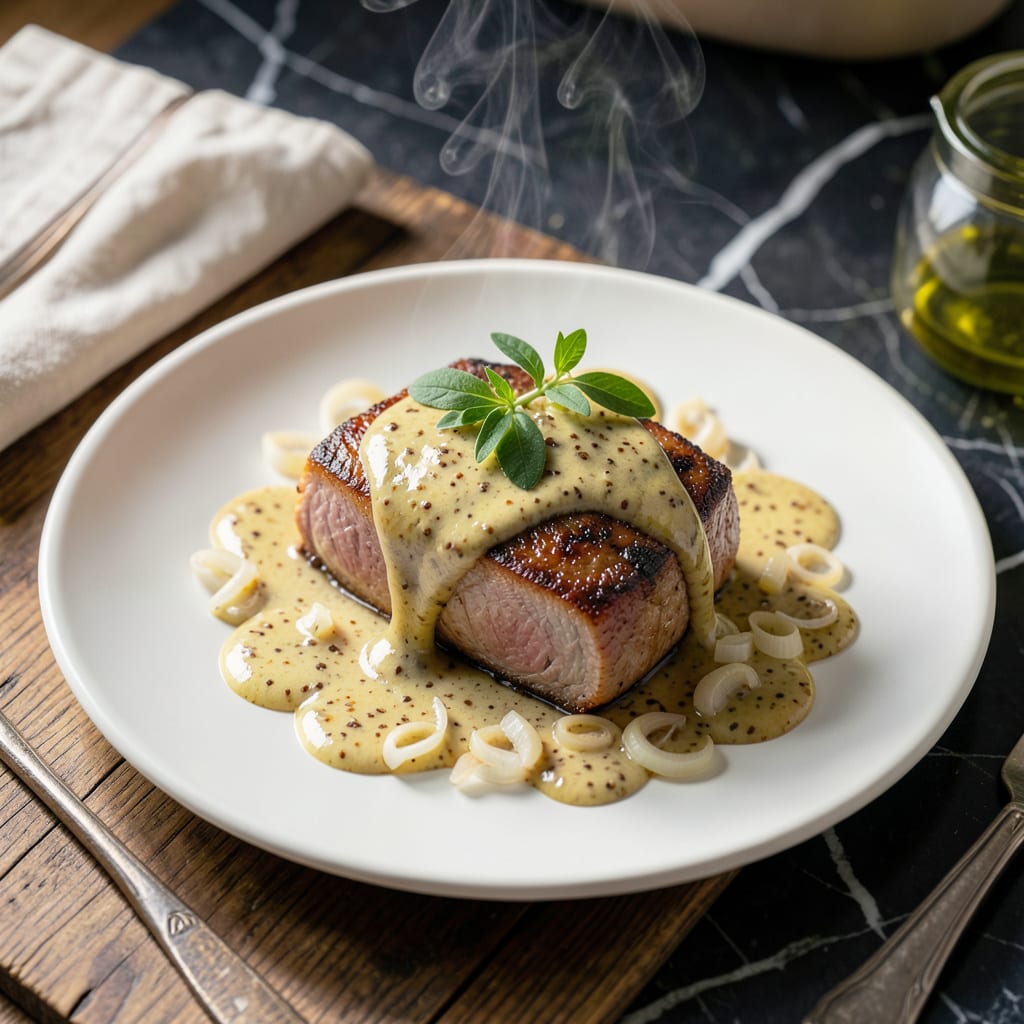
This tangy mustard sauce transforms simple pork into a restaurant-quality dish with minimal effort. The secret lies in balancing sharp Dijon with fresh herbs and a touch of cream for depth.
Ready in 10 minutes, it pairs perfectly with roasted or grilled pork, adding a sophisticated finish that elevates every bite without overpowering the meat.
Ingredients for Mustard Sauce Recipe for Pork
Ten ingredients create this sophisticated tangy sauce with herbal depth and creamy finish.
| Ingredient | Amount | Notes |
|---|---|---|
| Dijon Mustard 🟡 | ½ cup | Sharp, high-quality preferred |
| Whole Grain Mustard 🟡 | 2 tbsp | For texture and visual contrast |
| Heavy Cream 🥛 | ¼ cup | Full-fat for richness |
| White Wine Vinegar 🍷 | 1 tbsp | Balances sharpness of mustard |
| Shallot 🧅 | 1 whole | Finely minced for depth |
| Fresh Tarragon 🌿 | 1 tbsp | Chopped, key herbal note |
| Fresh Chives 🌱 | 1 tbsp | Thinly sliced for freshness |
| Unsalted Butter 🧈 | 2 tbsp | For finishing and sheen |
| Kosher Salt 🧂 | ½ tsp | Diamond Crystal preferred |
| Freshly Ground Black Pepper 🌶️ | ¼ tsp | To taste for balance |
The mustard base is non-negotiable. Maille or Grey Poupon for Dijon—avoid cheap brands that taste acrid. Whole grain mustard adds texture; Pommery is a solid choice. Heavy cream should be full-fat (36-40%) for proper body. Shallots are milder than onions—look for firm, dry bulbs at Whole Foods. Fresh tarragon and chives are essential; dried simply won’t deliver the bright, green flavor this sauce demands.
No tarragon? Substitute fresh dill at equal amount—it lacks the anise note but works. Short on chives? Green onion tops (the dark green part) can stand in. White wine vinegar can be swapped for apple cider vinegar in a pinch. For a lighter version, half-and-half works but reduces richness. The butter finish is key—don’t skip it, but vegan butter is acceptable if avoiding dairy.
This sauce holds 3-4 days refrigerated in a sealed jar. The flavors meld and mellow overnight. For longer storage, freeze for up to 2 months—thaw gently and whisk to re-emulsify. Bring to room temperature before serving for best texture and full flavor release.
Why You’ll Love This Recipe
- 5-Minute Mix: I can make this sauce while the pork rests—just stir and simmer.
- Tangy & Creamy: The Dijon and whole grain mustard give it a sharp kick, but the heavy cream smooths it into this rich, velvety finish.
- Dinner to Leftovers: It clings to pork so well, I drizzle extra on my lunch sandwich the next day.
- Pantry Staples: Honestly, I always have these ingredients on hand, so it’s my backup plan for a flavor boost.
Step-by-Step Instructions for Mustard Sauce for Pork
This refined technique ensures a smooth, balanced sauce with professional consistency every time.
Step 1: Sauté the Shallot to Sweet Perfection
Finely mince the 1 whole Shallot to ensure even cooking and distribution throughout the sauce. Heat a small saucepan over medium-low heat and melt 2 tbsp Unsalted Butter until it begins to foam but not brown.
Add the minced shallot and cook for 3-4 minutes, stirring frequently, until it becomes translucent and just begins to take on a pale golden hue. This gentle cooking removes the raw sharpness while developing subtle sweetness. Avoid letting it brown, as that would introduce bitter notes that compete with the mustard’s tang.
Step 2: Build the Acidic Foundation
Once the shallot is properly cooked, add the 1 tbsp White Wine Vinegar to the pan. The liquid should sizzle as it hits the hot butter. Let this mixture simmer for 1-2 minutes until the vinegar has reduced by about half.
This step serves two purposes: it deglazes the pan, incorporating any fond from the shallot, and it tempers the acidity before introducing the cream. The vinegar’s sharpness will mellow as it cooks, creating a balanced base for the mustard’s intensity.
Step 3: Incorporate the Mustards and Cream
Reduce heat to low and add the 0.5 cup Dijon Mustard and 2 tbsp Whole Grain Mustard. Whisk vigorously to combine, breaking up any clumps of whole grain mustard. The mixture will thicken noticeably as the mustard absorbs the warm liquid.
Gradually pour in the 0.25 cup Heavy Cream while continuing to whisk constantly. This slow incorporation prevents the sauce from separating and ensures a silky-smooth texture. Cook for 2-3 minutes until the sauce just begins to simmer at the edges.
Step 4: Finish with Herbs and Seasoning
Remove the saucepan from heat and stir in the 1 tbsp Fresh Tarragon and 1 tbsp Fresh Chives. The residual heat will wilt the herbs slightly while preserving their bright, fresh character.
Season with 0.5 tsp Kosher Salt and 0.25 tsp Freshly Ground Black Pepper. Taste and adjust seasoning if needed, keeping in mind that the sauce will intensify slightly as it cools. The finished sauce should have a velvety texture with visible flecks of whole grain mustard and fresh herbs.
Let the sauce rest for 5 minutes before serving to allow the flavors to meld completely. The sauce will thicken slightly as it cools, coating the back of a spoon with a rich, glossy sheen.
Pro Tips For Making Mustard Sauce Recipe For Pork
- Temper the Cream: Always warm the heavy cream slightly before adding it to the mustard mixture—cold cream can cause the sauce to curdle.
- Finely Mince Shallots: Dice the shallots as fine as possible so they melt into the sauce rather than leaving noticeable chunks.
- Balance the Tang: Taste before seasoning—white wine vinegar can vary in sharpness, so adjust with a pinch of sugar if needed.
- Use Both Mustards: Skip substituting one for the other—Dijon adds smooth heat while whole grain gives texture, and the combo is non-negotiable.
Common Mistakes When Making Perfect Results
Overcooking the Shallot
Burnt shallots turn bitter and overpower the delicate mustard flavor. Cook them on medium-low heat for just 3-4 minutes until translucent, not brown. I pull mine off the heat as soon as they hit that sweet spot.
Skipping the Vinegar Reduction
Rushing this step leaves the sauce too sharp. Let the 1 tbsp white wine vinegar reduce by half before adding mustard—this takes 1-2 minutes. The mellowed acidity balances the mustard’s intensity perfectly.
Adding Cream Too Fast
Pouring all the ¼ cup heavy cream at once can cause separation. Instead, whisk it in slowly over low heat to create a silky emulsion. This takes patience but prevents a broken sauce.
Overheating the Sauce
Boiling the sauce after adding cream causes curdling. Keep it at a gentle simmer (2-3 minutes max) and remove from heat before adding herbs. I use a heavy-bottomed pan for even heat distribution.
Using Dried Herbs
Dried tarragon or chives taste dusty and flat. Fresh 1 tbsp tarragon and 1 tbsp chives are essential for that bright, green pop. If you must substitute, use fresh dill instead. 💡
Incorrect Seasoning Timing
Seasoning too early can lead to over-salting as the sauce reduces. Wait until the end to add the ½ tsp kosher salt and ¼ tsp black pepper, then taste and adjust. Flavors concentrate as it cools.
Nutrition Facts
Frequently Asked Questions
Can I use yellow mustard instead of Dijon?
Yellow mustard lacks the sharp depth of Dijon. For best results, stick with Dijon or mix 1 tbsp yellow mustard with ¼ cup Dijon to balance the flavor.
How long can I store this sauce?
It keeps for 3-4 days in the fridge in an airtight container. For longer storage, freeze for up to 2 months and whisk after thawing.
What can I use instead of tarragon?
Fresh dill works well as a substitute at equal amounts. Avoid dried herbs—they won’t deliver the same bright flavor.
Why did my sauce separate?
This happens if cream is added too quickly. Whisk it in slowly over low heat to keep the emulsion smooth.

- BBQ Sausage Recipe Oven: Smoky Depth Without the Grill - September 28, 2026
- BBQ Chicken Bowl Recipe Rice: Smoky Sweetness Over Fluffy Grains - September 28, 2026
- Beef Cutlet Recipe Ideas: Crispy Breaded Patties With Bold Seasonings - September 28, 2026