
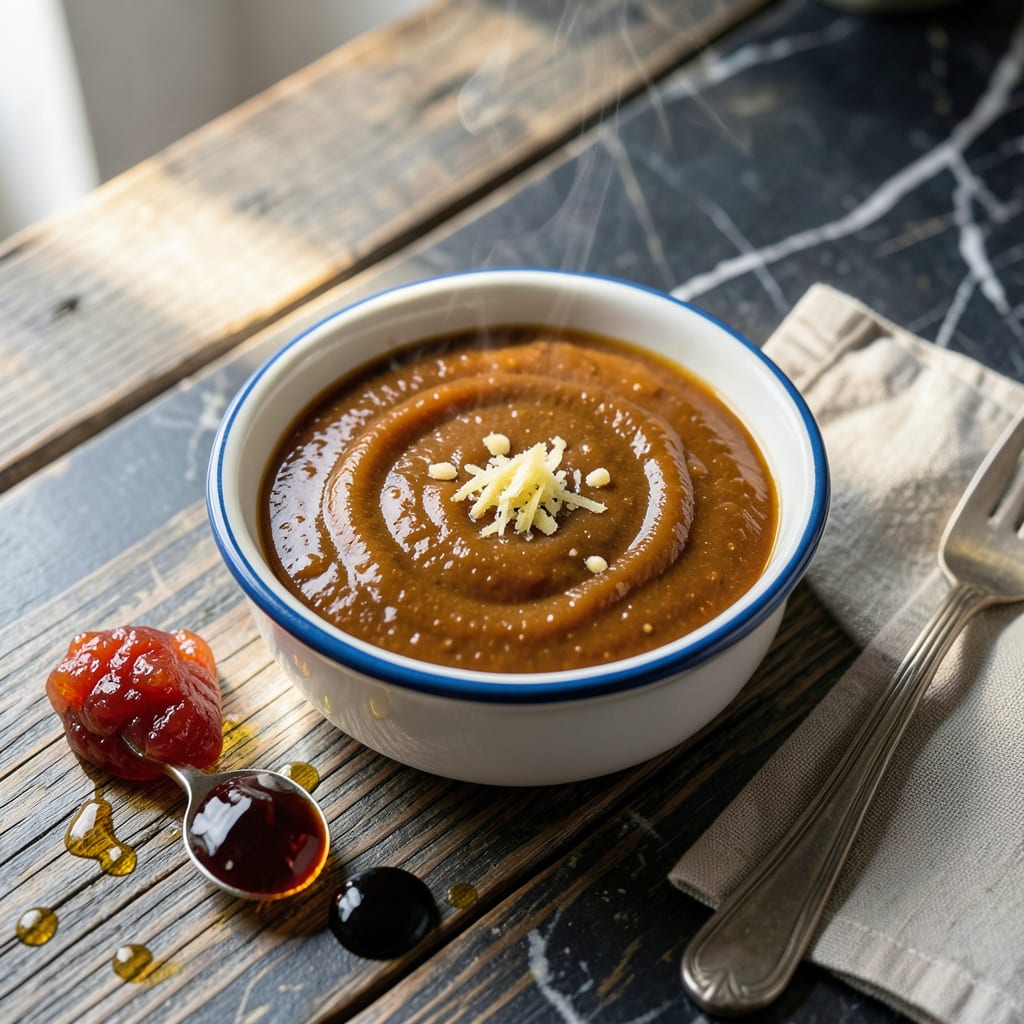
This New England-style sauce brings together sweet and tangy flavors that perfectly complement Asian dishes. It’s a versatile condiment that elevates everything from spring rolls to grilled meats.
With just a few pantry staples and 10 minutes of prep, you’ll have a homemade version that’s fresher and more vibrant than anything store-bought.
Ingredients for New England Duck Sauce
Nine pantry staples transform into that classic sweet-tangy sauce in minutes.
| Ingredient | Amount | Notes |
|---|---|---|
| Apricot Jam 🍑 | 1 cup | Smooth, no fruit pieces |
| White Vinegar 💧 | ¼ cup | Distilled or apple cider |
| Soy Sauce 🥢 | 2 tbsp | Low-sodium preferred |
| Brown Sugar 🍚 | 2 tbsp | Light or dark works |
| Garlic Cloves 🧄 | 2 cloves | Minced finely for smooth texture |
| Fresh Ginger 🌿 | 1 tbsp | Peeled and grated |
| Dijon Mustard 🟡 | 1 tsp | Adds tangy depth |
| Red Pepper Flakes 🌶️ | ¼ tsp | Optional for slight heat |
| Water 💧 | 2 tbsp | To thin as needed |
The apricot jam is non-negotiable (it’s the soul of New England duck sauce). Smucker’s or Bonne Maman are solid choices—avoid the cheap brands with high-fructose corn syrup. Fresh ginger makes a difference here, so grab it from the produce section, not the jarred stuff. Trader Joe’s and Whole Foods have great organic options if you’re avoiding pesticides.
No apricot jam? Peach or orange marmalade works in a pinch (adjust sweetness with extra vinegar). Swap soy sauce for tamari if you need gluten-free. Brown sugar can be coconut sugar—same amount. The Dijon mustard is subtle but important; yellow mustard lacks the depth. If you hate spice, skip the red pepper flakes entirely.
This keeps like a dream—3 weeks in the fridge in a sealed jar. The flavors actually deepen after a day or two. Freezes beautifully for 6 months too (thaw in the fridge before using). Always give it a stir before serving, as the ingredients can separate.
Why You’ll Love This Recipe
- I’ll be real: I double the batch and keep it in the fridge for up to two weeks—saves me from last-minute takeout runs.
- 5-Minute Mix: I just dump all the ingredients in a saucepan and let it simmer—no chopping, no fuss.
- Sweet-Tangy Balance: The apricot jam and vinegar create this addictive mix of fruity and sharp that’s spot-on every time.
- Dinner’s Secret Weapon: Honestly, it’s my go-to for glazing pork, dipping spring rolls, or even jazzing up a plain chicken sandwich.
Step-by-Step Instructions for New England Duck Sauce
This method ensures a perfectly balanced sweet-tangy sauce with just the right consistency.
Step 1: Combine the Base Ingredients
In a medium saucepan, combine the 1 cup Apricot Jam with the 0.25 cup White Vinegar, 2 tbsp Soy Sauce, and 2 tbsp Brown Sugar. I prefer using low-sodium soy sauce here to control the saltiness of the final product.
Stir these ingredients together over medium heat until the brown sugar fully dissolves. You’ll notice the mixture beginning to bubble gently at the edges—this is your signal that the sugar has incorporated properly. The jam should start to liquefy as it warms.
Step 2: Add the Aromatics
Once the base is smooth, stir in the 2 cloves Garlic Cloves (minced finely) and the 1 tbsp Fresh Ginger (peeled and grated). These aromatics need to cook for just 1-2 minutes until they become fragrant—any longer and the garlic might take on a bitter edge.
Watch for the mixture to turn a deeper shade of amber as the garlic and ginger infuse their flavors. The scent should be warm and inviting, not sharp or raw. This step builds the foundation of the sauce’s complexity.
Step 3: Incorporate the Finishing Touches
Next, whisk in the 1 tsp Dijon Mustard and 0.25 tsp Red Pepper Flakes. The mustard adds a subtle tang that complements the sweetness, while the red pepper flakes introduce a mild heat that lingers pleasantly. If you prefer a milder sauce, you can omit the red pepper flakes entirely.
Allow the mixture to simmer for 3-4 minutes on low heat. The sauce will begin to thicken slightly as the flavors meld together. Stir occasionally to prevent sticking, especially as the sugars in the jam and brown sugar start to caramelize.
Step 4: Adjust Consistency and Finish
If the sauce is thicker than you’d like, stir in the 2 tbsp Water, one tablespoon at a time, until it reaches your desired consistency. The sauce should coat the back of a spoon but still drip slowly. For a smoother texture, you can strain out the ginger fibers, though I often leave them in for a bit of rustic character.
Taste and adjust seasoning if needed, though the balance of sweet, tangy, and savory should already be spot-on. Transfer the sauce to a jar and let it cool to room temperature. The flavors will deepen as it sits, making it even more delicious the next day.
Pro Tips For Making New England Duck Sauce
- Simmer Low and Slow: Keep the heat at a gentle simmer—boiling the apricot jam too hard will make it separate and turn grainy. I learned this the hard way after my first batch looked like sweet, chunky glue.
- Mince the Garlic Fine: Those garlic cloves need to be minced to near-paste consistency, otherwise you’ll get sharp, uneven bites in an otherwise smooth sauce.
- Balance the Sweetness: Taste before adding all the brown sugar—some apricot jams are sweeter than others, and you might not need the full amount.
- Use Fresh Jam: Skip the old, half-empty jar in the fridge; fresh apricot jam blends smoother and gives a brighter, fruitier flavor to the sauce.
Regional Styles of This Dish
Classic New England
This version stays true to the traditional preparation I grew up with in Boston. The apricot jam base is essential—it provides that signature sweetness that defines New England duck sauce. I always use Smucker’s for consistency, and the addition of white vinegar gives it that tangy kick. 💛
Spicy Boston Variation
For those who like a little heat, increase the red pepper flakes to ½ tsp or add 1 tsp sriracha. This version is popular in Chinatown restaurants where diners want extra bite with their spring rolls. The spice balances beautifully with the sweet jam base.
Rhode Island Style
In Providence, they often add 1 tbsp orange zest and 2 tbsp orange juice to brighten the flavor. This citrusy twist pairs especially well with seafood dishes. I tried this first at a local seafood shack and was instantly hooked.
Vermont Maple Twist
Replace the brown sugar with 2 tbsp pure Vermont maple syrup for a uniquely New England touch. The maple adds depth and a subtle earthiness that complements the apricot. Use Grade A Dark & Robust for the strongest flavor.
Maine Coastal Version
Coastal Maine adds 1 tsp fish sauce to their duck sauce for umami depth. This might sound unusual, but it enhances the savory notes without making it taste fishy. I recommend Red Boat brand for the cleanest flavor.
Connecticut Sweet Heat
In Hartford, they mix in 1 tbsp honey and ½ tsp cayenne pepper for a sweeter, spicier profile. This version works particularly well with fried foods like egg rolls or crispy chicken. The honey adds a floral note that’s quite distinctive. 🔥
Nutrition Facts
Frequently Asked Questions
Can I use peach jam instead of apricot?
Yes, peach jam works as a substitute. You may need to add an extra 1 tsp vinegar to balance the extra sweetness. The flavor will be slightly different but still delicious.
How long does homemade duck sauce last?
Properly stored in an airtight container, it keeps for 3 weeks in the fridge. For longer storage, freeze it for up to 6 months. Always stir before using.
What dishes pair well with this sauce?
It’s perfect with spring rolls, egg rolls, grilled meats, and even as a glaze for roasted vegetables. The sweet-tangy flavor complements both Asian and American dishes beautifully.
Can I make it less sweet?
Reduce the brown sugar by half or replace it with 1 tbsp rice vinegar. This will give you a tangier sauce while keeping the essential apricot flavor.

- BBQ Sausage Recipe Oven: Smoky Depth Without the Grill - September 28, 2026
- BBQ Chicken Bowl Recipe Rice: Smoky Sweetness Over Fluffy Grains - September 28, 2026
- Beef Cutlet Recipe Ideas: Crispy Breaded Patties With Bold Seasonings - September 28, 2026