
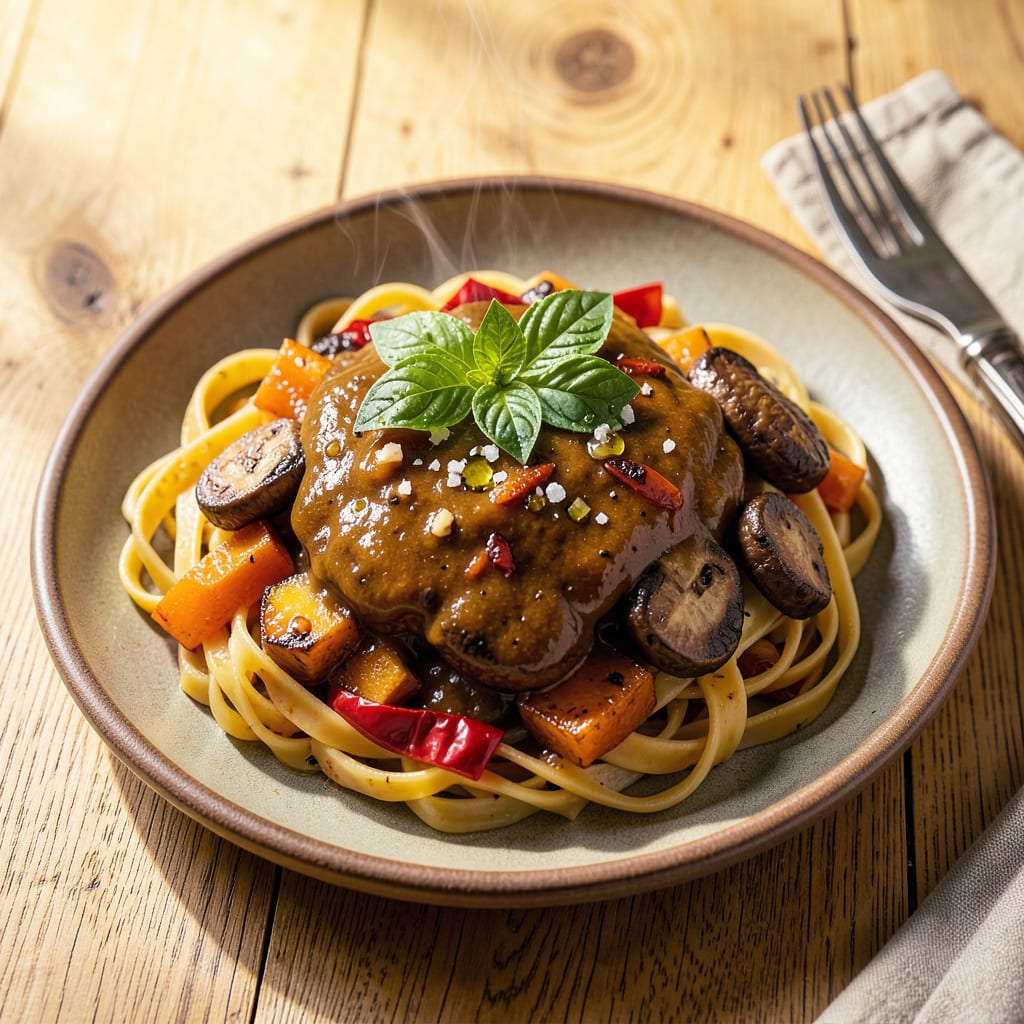
A nomato recipe replaces tomatoes with roasted beets, carrots, and sweet potatoes for a rich, tangy sauce that mimics marinara without nightshades. Blend with garlic, vinegar, and herbs for depth.
This clever substitution works because roasted root vegetables develop deep, caramelized flavors that replicate tomato’s natural sweetness. 🔥 The acidity from vinegar or lemon juice cuts through the earthiness, while aromatic herbs like basil and oregano add that familiar Italian profile. I’ve found this approach particularly useful for those managing autoimmune conditions or nightshade sensitivities, as it delivers the comfort of traditional sauces without triggering reactions.
What makes this technique so versatile is its adaptability to different dishes. ✨ The sauce clings beautifully to pasta, works as a pizza base, and even serves as a rich dip for breadsticks. The key lies in balancing the roasting time—too short and you lose depth, too long and the flavors turn bitter.
💡 In This Article
- How Roasted Vegetables Create the Perfect Nomato Flavor
- Best Ways to Use Nomato Sauce in Everyday Cooking
How Roasted Vegetables Create the Perfect Nomato Flavor
The magic starts with caramelization—when beets and carrots roast at 400°F for 45-60 minutes, their natural sugars break down through the Maillard reaction. This creates complex, deep flavors that mimic tomato’s natural sweetness. Beets contribute earthy undertones while carrots add brightness, together forming a base that’s surprisingly similar to traditional marinara.
The key is cutting vegetables into uniform 1-inch cubes for even browning. 🔥
Acidity plays a crucial role in balancing these roasted flavors. I recommend adding 2-3 tablespoons of red wine vinegar or lemon juice per 4 cups of blended vegetables. This not only brightens the sauce but also helps break down the vegetable fibers, creating a smoother texture.
The acidity level should reach about pH 4.0-4.5—similar to canned tomatoes—to achieve that characteristic tang without overpowering the natural sweetness.
Herbs transform the earthy base into something unmistakably Italian. Basil and oregano contain volatile oils that release when heated, creating that familiar aromatic profile. I use 1 tablespoon fresh basil and 1 teaspoon dried oregano per batch, added during the last 5 minutes of blending to preserve their delicate compounds.
These herbs also contain umami-enhancing compounds like eugenol, which tricks our taste buds into perceiving depth similar to tomatoes. ✨
The blending process matters more than you might think. For the smoothest texture, start with 1/2 cup vegetable broth and blend on high for 2-3 minutes, then gradually add more liquid as needed. This prevents the sauce from becoming gummy, which can happen if the vegetable fibers over-develop during blending.
The ideal consistency should coat the back of a spoon but still drip slowly—about 1,000-1,200 centipoise viscosity for those who like precise measurements.
Temperature control during storage preserves the flavors you’ve worked so hard to develop. Cool the sauce to 70°F within 2 hours of cooking, then store in airtight containers. The flavors will continue to meld and deepen over 24-48 hours in the refrigerator, much like traditional tomato sauce.
This resting period allows the acidic and sweet components to fully integrate, creating a more harmonious final product. 💫
For those missing that classic tomato “brightness,” a pinch of ascorbic acid (vitamin C powder)—about 1/8 teaspoon per batch—can replicate the subtle citrus notes found in fresh tomatoes. This tiny addition makes a surprising difference in the overall flavor profile, bringing it even closer to traditional marinara while keeping it completely nightshade-free.

- BBQ Sausage Recipe Oven: Smoky Depth Without the Grill - September 28, 2026
- BBQ Chicken Bowl Recipe Rice: Smoky Sweetness Over Fluffy Grains - September 28, 2026
- Beef Cutlet Recipe Ideas: Crispy Breaded Patties With Bold Seasonings - September 28, 2026