
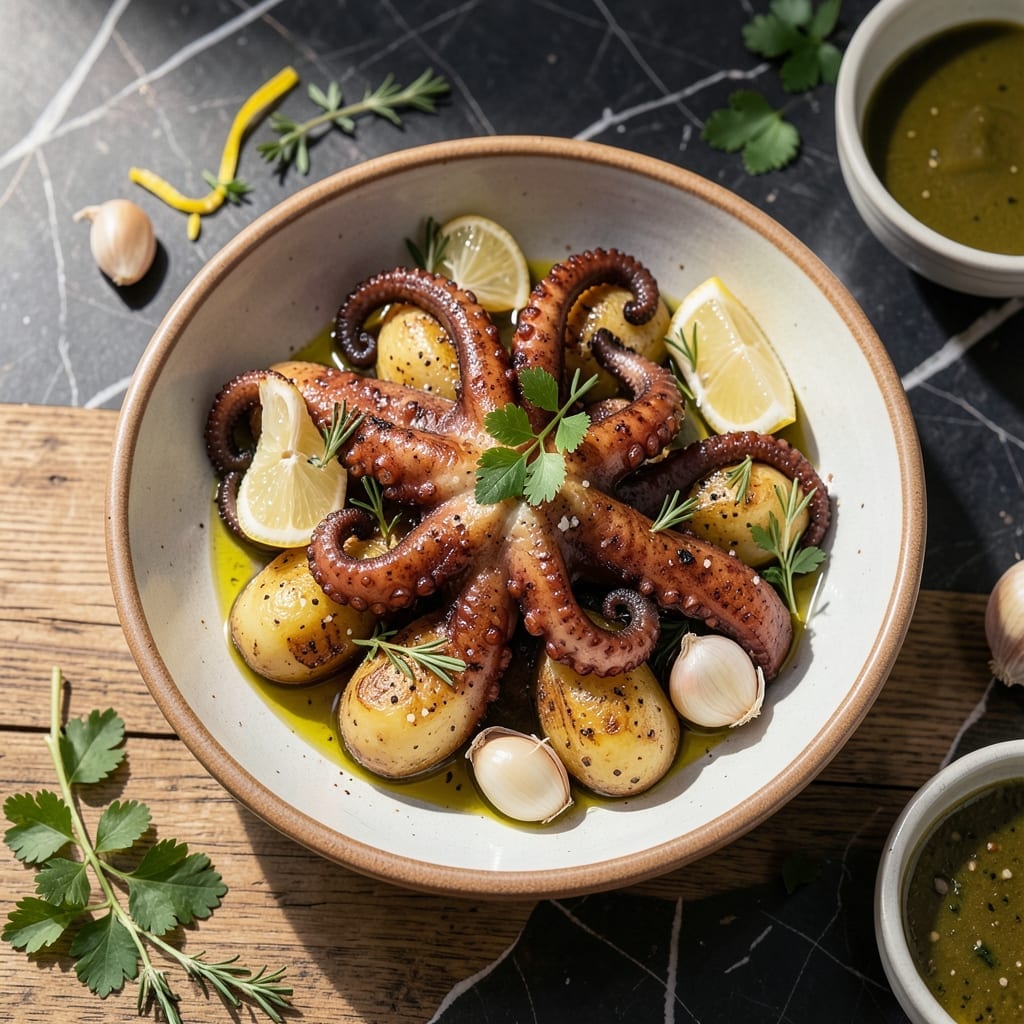
I’ve spent years perfecting the art of cooking octopus to achieve that tender, melt-in-your-mouth texture that defines Mediterranean cuisine. The secret lies in a two-step process that transforms this often-intimidating ingredient into something extraordinary.
First, the octopus must be simmered gently until fork-tender, which typically takes about 45 to 60 minutes. This crucial step ensures the meat becomes soft and receptive to the flavors that follow.
Once pre-cooked, a quick sear on a hot grill or in a pan adds a smoky depth and beautiful char. The result is a dish that’s both elegant and approachable, with a texture that’s tender throughout.
Serve this with a drizzle of olive oil, a squeeze of lemon, and fresh herbs for a restaurant-worthy meal that’s surprisingly simple to create at home.
Ingredients for Octopus Recipe Ideas
A handful of Mediterranean staples transform octopus into a restaurant-worthy star.
| Ingredient | Amount | Notes |
|---|---|---|
| Octopus 🐙 | 2 lb | Fresh or thawed, cleaned |
| Extra-Virgin Olive Oil 🫒 | ½ cup | Divided for cooking and finishing |
| Lemon 🍋 | 2 whole | Juiced and zested |
| Garlic Cloves 🧄 | 4 cloves | Minced or thinly sliced |
| Fresh Parsley 🌿 | ½ cup | Chopped, for garnish |
| Fresh Oregano 🌿 | ¼ cup | Leaves stripped, chopped |
| Bay Leaves 🍃 | 2 whole | For simmering liquid |
| Black Peppercorns 🌶️ | 1 tsp | Whole, for simmering |
| Sea Salt 🧂 | 2 tbsp | Coarse, for seasoning |
| Red Wine Vinegar 🍷 | 2 tbsp | For brightness and acidity |
| Crushed Red Pepper Flakes 🔥 | ½ tsp | Adjust to spice preference |
| White Wine 🍷 | 1 cup | Dry, for simmering liquid |
| Water 💧 | 4 cups | For simmering octopus |
The octopus is everything here. Fresh is ideal—look for bright eyes and firm, glossy skin at a trusted seafood counter like Whole Foods or a local fishmonger. Frozen works too (just thaw overnight in the fridge), but avoid anything that smells even slightly fishy. I always grab mine from Trader Joe’s when I’m in a pinch. If buying whole, ask them to clean it for you—saves a messy step.
No white wine? Substitute with dry vermouth or a splash of lemon juice in extra water. Fresh herbs are key here, but dried oregano at one-third the amount will do if that’s all you’ve got. If you can’t find fresh octopus, frozen pre-cooked (the kind already tenderized) cuts the simmering time in half. The red pepper flakes can be swapped for fresh chili or cayenne to taste.
Prepped octopus keeps in the fridge for 1-2 days before cooking. Leftovers (if any) stay good for 3-4 days and reheat beautifully—just warm gently. The simmering liquid can be strained and frozen for 1 month if you’re making stock later.
Why You’ll Love This Recipe
- I’ll be real: it tastes even better cold the next day, straight from the fridge.
- One Pot Wonder: I toss the octopus, garlic, and parsley in a single pan with olive oil—minimal cleanup, maximum flavor.
- Bright and Zesty: The lemon cuts through the richness, and that garlic-infused oil? I could drink it with a spoon.
- Dinner Party Star: Honestly, it looks fancy but takes less effort than my usual weeknight pasta.
Step-by-Step Instructions for Mediterranean Grilled Octopus
This method guarantees tender results with bold Mediterranean flavors every time.
Step 1: Tenderize the Octopus Through Simmering
In a large pot, combine the 4 cups Water, 1 cup White Wine, 2 whole Bay Leaves, 1 tsp Black Peppercorns, and 2 tbsp Sea Salt. Bring to a gentle simmer over medium heat—you want small bubbles, not a rolling boil.
Add the 2 lb Octopus and simmer for 45-60 minutes until a knife pierces the thickest part of a tentacle with ease. The octopus is ready when it turns from translucent to opaque and the texture changes from rubbery to tender. This slow cooking breaks down the connective tissue for that perfect melt-in-your-mouth result.
Step 2: Infuse with Aromatics and Acid
Drain the octopus, reserving ½ cup of the simmering liquid. In a bowl, whisk together 0.5 cup Extra-Virgin Olive Oil, juice and zest from the 2 whole Lemon, 4 cloves Garlic Cloves (minced), 0.25 cup Fresh Oregano, 0.5 tsp Crushed Red Pepper Flakes, and 2 tbsp Red Wine Vinegar.
Pour this marinade over the warm octopus and let it sit for 30 minutes at room temperature. The residual heat helps the flavors penetrate deeply. I always use fresh herbs here—their bright, citrusy notes make all the difference in the final dish.
Step 3: Grill to Charred Perfection
Preheat your grill to medium-high heat. Remove the octopus from the marinade (reserve the marinade) and grill for 2-3 minutes per side until you see those beautiful char marks forming. The octopus should sizzle when it hits the grill—this is how you know it’s hot enough.
Baste occasionally with the reserved marinade during grilling to build layers of flavor and prevent drying. Watch closely—octopus can go from perfectly charred to burnt quickly. You’re aiming for a slight crispness on the outside while maintaining that tender interior we worked so hard to achieve.
Step 4: Rest and Garnish for Serving
Transfer the grilled octopus to a cutting board and let it rest for 5 minutes. This allows the juices to redistribute. Drizzle with any remaining marinade and sprinkle with the 0.5 cup Fresh Parsley.
Slice the octopus into serving portions and arrange on a platter. The charred edges should contrast beautifully with the tender interior, and the fresh parsley adds a pop of color and freshness that completes this Mediterranean masterpiece.
Pro Tips For Making Octopus Recipe Ideas
- Tenderize First: Freeze the octopus for 24 hours before cooking—this breaks down the fibers and guarantees a tender result without a long simmer. I learned this the hard way after chewing through rubbery octopus more times than I’d like to admit.
- Low and Slow: Simmer the octopus in water with a splash of vinegar or lemon for 45-60 minutes on low heat. High heat makes it tough, and I used to rush this part until I realized patience is the only thing that works.
- Skip the Raw Garlic: Mince the garlic and let it sit in the olive oil for 5 minutes before adding to the octopus—it mellows the bite and infuses the oil with flavor. Sounds weird, but it works.
- Finish with Fresh: Toss the cooked octopus with chopped parsley and lemon zest right before serving. After burning through dried herbs in my early attempts, fresh parsley became non-negotiable for that bright finish.
Wine and Beer Pairings for This Dish
White Wine Pairings
A crisp Assyrtiko from Santorini is my top choice—the mineral notes and bright acidity cut through the richness beautifully. Vermentino from Sardinia offers citrus and herbal undertones that complement the charred flavors. Both have enough body to stand up to the octopus without overpowering it. 🍷
Rosé Options
A dry Provence rosé with its delicate strawberry and melon notes provides a refreshing contrast. I love the subtle floral aromas that enhance the Mediterranean herbs. Serve chilled to 50°F for the best experience.
Red Wine Choices
For red lovers, a light-bodied Grenache from Spain works surprisingly well. Its red fruit flavors and touch of spice echo the octopus’s charred exterior. Avoid heavy tannins that can clash with seafood.
Beer Pairings
A Belgian witbier like Hoegaarden offers citrus and coriander notes that mirror the lemon and herbs. The effervescence cleanses your palate between bites. Serve in a chilled glass.
Non-Alcoholic Options
Sparkling water with a squeeze of lemon enhances the dish’s brightness. A Mediterranean-style herbal tea with oregano and mint offers a warming alternative. Both let the octopus shine.
Nutrition Facts
Frequently Asked Questions
How do I know when the octopus is done simmering?
It’s ready when a knife pierces the thickest tentacle easily, usually after 45-60 minutes. The texture should change from rubbery to tender.
Can I use frozen octopus instead of fresh?
Yes! Thaw it overnight in the fridge. Frozen octopus is often pre-cleaned and pre-tenderized, which can cut simmering time in half.
What’s the best way to prevent rubbery texture?
Simmer gently—never boil—and let it cook long enough for the collagen to break down. Rushing this step is the most common mistake.
How long should I marinate the octopus?
30 minutes at room temperature is ideal. The residual heat helps the flavors penetrate deeply without overpowering the seafood.

- BBQ Sausage Recipe Oven: Smoky Depth Without the Grill - September 28, 2026
- BBQ Chicken Bowl Recipe Rice: Smoky Sweetness Over Fluffy Grains - September 28, 2026
- Beef Cutlet Recipe Ideas: Crispy Breaded Patties With Bold Seasonings - September 28, 2026