
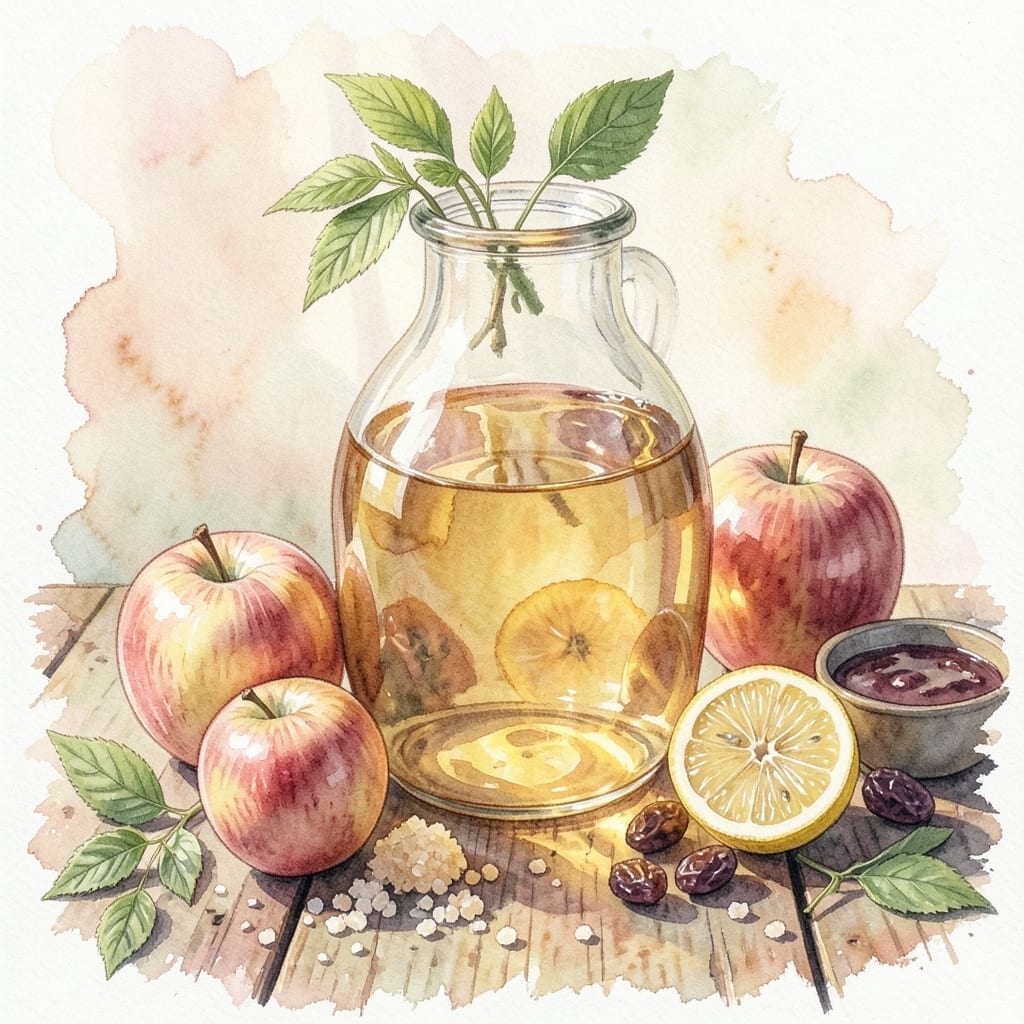
This traditional method transforms fresh apples into a smooth, gallon-sized batch of wine with deep, rustic character. The process honors time-tested techniques without modern shortcuts.
I’ve refined this approach to balance sweetness and acidity naturally from the fruit. The fermentation develops complex flavors that commercial versions can’t match.
You’ll use simple ingredients and basic equipment to create wine that improves with age. The initial fermentation takes about a week, with aging completing the transformation.
The result is a clear, smooth beverage with authentic apple essence. This recipe delivers consistent quality every time you make it.
Ingredients for Old Fashioned Apple Wine Recipe 1 Gallon
Transform fresh apples into a gallon of rustic, fermented wine with these essential ingredients.
| Ingredient | Amount | Notes |
|---|---|---|
| Fresh Apples 🍎 | 20 lb | Sweet and tart varieties mixed |
| Granulated Sugar 🍚 | 8 cups | Organic cane sugar preferred |
| Water 💧 | 16 cups | Filtered for best results |
| Champagne Yeast 🍞 | 1 package | 5 grams, wine yeast strain |
| Lemon Juice 🍋 | 1 cup | Freshly squeezed for acidity |
| Raisins 🍇 | 1 cup | Optional for added body |
| Ground Cinnamon 🌿 | 1 tbsp | Optional for spice notes |
| Whole Cloves 🌰 | 6 pieces | Optional for depth |
| Yeast Nutrient 💊 | 1 tsp | Boosts fermentation vigor |
| Pectic Enzyme 🧪 | ½ tsp | Clarifies the wine |
| Campden Tablets 💊 | 2 pieces | Sterilizes must before yeast |
The apples are critical—use a mix of sweet and tart varieties like Gala and Granny Smith for balanced flavor. Local orchards often have the best selection in fall. Avoid wax-coated supermarket apples (the wax can inhibit fermentation). The sugar should be plain granulated—organic cane sugar gives the cleanest ferment. For yeast, Lalvin EC-1118 is a reliable choice available at homebrew supply stores or online.
No fresh lemon juice? Bottled works in a pinch but fresh is preferable. Skipping raisins? The wine will be lighter in body but still drinkable. For spices, ground cinnamon at one-third the amount works if you don’t have whole cloves. The pectic enzyme and yeast nutrient aren’t strictly necessary but highly recommended for clarity and complete fermentation. Campden tablets can be replaced with potassium metabisulfite at the same ratio.
Store unwashed apples in a cool, dark place until ready to use—up to 2 weeks. Once fermented, the wine keeps improving for 6-12 months in a cool, dark spot. Always use sterilized equipment to prevent contamination. The finished wine can be bottled in glass wine bottles with corks or screw caps for long-term storage.
Why You’ll Love This Recipe
- Five Ingredients: Honestly, that’s all you need—fresh apples, sugar, water, yeast, and a splash of lemon juice to balance it.
- Cider-like Depth: The champagne yeast gives it that rich, fermented taste that’s way more interesting than store-bought.
- Gift-Ready Batch: I make a gallon at a time, split it into bottles, and suddenly I’m the popular friend at potlucks.
- Budget Sip: Between us, it costs pennies compared to fancy hard ciders and tastes even better after a few weeks.
Step-by-Step Instructions for Old Fashioned Apple Wine
This traditional method ensures a balanced fermentation with robust apple character and clarity.
Step 1: Sanitize and Prepare the Must
Begin by thoroughly washing and chopping the 20 lb Fresh Apples into small pieces, leaving the skins on for added tannins. Place them in a sanitized fermentation vessel. Add the 16 cups Water and the 1 cup Lemon Juice for acidity balance.
Crush the apples with a sanitized potato masher or your hands to release the juices. Stir in the 8 cups Granulated Sugar until fully dissolved. This initial mixture, called the must, should be well-combined to ensure even fermentation.
Step 2: Sterilize and Add Spices
Crush the 2 pieces Campden Tablets and stir them into the must. These tablets release sulfur dioxide, which sterilizes the mixture and prevents wild yeast or bacteria from spoiling the batch. Cover the vessel with a clean cloth and let it sit for 24 hours.
After the waiting period, add the 1 cup Raisins, 1 tbsp Ground Cinnamon, and 6 pieces Whole Cloves for complexity. These optional ingredients contribute depth and body to the finished wine. Stir well to distribute evenly.
Step 3: Introduce Yeast and Nutrients
Sprinkle the 1 package Champagne Yeast, 1 tsp Yeast Nutrient, and 0.5 tsp Pectic Enzyme over the surface of the must. The yeast nutrient supports healthy fermentation, while the pectic enzyme helps break down pectin for clearer wine.
Stir gently to incorporate the yeast without splashing. Cover the vessel with a sanitized fermentation lock or a cloth secured with a rubber band. This allows gases to escape while keeping contaminants out.
Step 4: Ferment and Monitor
Store the vessel in a dark, temperature-stable location at 68-75°F. Fermentation should begin within 12-24 hours, evident by bubbling in the fermentation lock. Stir the must daily for 5-7 days to prevent the fruit from compacting and to aerate the mixture.
After 7 days, strain the liquid into a sanitized secondary fermentation vessel, leaving the solids behind. Attach a fermentation lock and let it ferment for an additional 4-6 weeks until bubbling slows to less than one bubble per minute.
Step 5: Rack and Age
Once primary fermentation is complete, rack the wine into a clean vessel, leaving behind any sediment. Repeat this racking process every 4-6 weeks until the wine is clear and stable. This typically takes 3-6 months for full clarity and flavor development.
Age the wine for at least 6 months to allow the flavors to mellow and integrate. Bottle when ready, ensuring all equipment is sanitized to prevent contamination. The result will be a crisp, aromatic wine with the rustic charm of old-fashioned craftsmanship.
Pro Tips For Making Old Fashioned Apple Wine Recipe 1 Gallon
- Use Mixed Apple Varieties: I learned this the hard way—tart apples like Granny Smith balanced with sweeter ones like Gala give your wine depth. Stick to one type and it’ll taste flat.
- Sanitize Everything First: After ruining two batches to wild yeast, I now dunk every utensil, jar, and my hands in a no-rinse sanitizer. Champagne yeast can’t compete with contaminants.
- Pitch Yeast at 70°F: Tossing yeast into cold juice just stuns it, and too hot kills it. I wait until my must hits 70°F on the dot—fermentation kicks off in half the time.
- Add Lemon After Ferment: Skip the lemon juice at the start; it can slow your yeast. I stir it in after the first week to brighten the flavor without messing with the early stages.
Pro Cooking Tips for old fashioned apple wine recipe 1 gallon
Temperature Control
Keep your fermentation vessel at a steady 68-75°F for optimal yeast activity. I use a fermentation chamber with a temperature controller, but a closet or basement works too. Avoid direct sunlight and drafts. 🌡️
Sanitization Essentials
Sanitize everything—vessel, airlock, spoons—with Star San or potassium metabisulfite solution. One unsanitized tool can ruin your entire gallon batch. I learned this the hard way with my first attempt.
Stirring Technique
Stir the must daily during primary fermentation to prevent fruit caps from forming. Use a sanitized wooden spoon and push down any floating apples. This ensures even extraction and prevents mold growth.
Patience with Racking
Don’t rush racking—wait until bubbling slows to less than 1 bubble per minute. I rack into a glass carboy every 4-6 weeks until completely clear. Each transfer leaves more sediment behind.
Aging Wisdom
Age for at least 6 months before tasting. The longer you wait (up to 12-18 months), the smoother and more complex your wine becomes. Store in a cool, dark place. 💪
Bottling Tips
Use wine bottles with corks or screw caps. Fill to the bottom of the neck to minimize oxygen exposure. Label with the date—it’s fun to compare batches over time.
Nutrition Facts
Frequently Asked Questions
Can I use store-bought apple juice instead of fresh apples?
No, fresh apples are essential for authentic flavor and proper fermentation. Store-bought juice lacks the tannins and natural yeasts from apple skins that contribute to complexity and body.
How long should I age the wine before drinking?
A minimum of 6 months is recommended, but 12-18 months yields the smoothest, most developed flavor. Patience allows the wine to mellow and clarify naturally.
What if my fermentation isn’t bubbling after 24 hours?
Check your temperature—yeast is inactive below 60°F. Also, ensure you used fresh yeast and properly sanitized equipment. If still inactive, repitch with new yeast after 48 hours.
Do I need to add extra sugar for a sweeter wine?
The recipe’s 8 cups of sugar should produce a balanced wine. For sweetness, add 1-2 cups more at the start, or back-sweeten with simple syrup before bottling.

- BBQ Oysters Recipe Grill: Smoky Garlic Butter Bliss - September 28, 2026
- Crock Pot Mac and Cheese Recipe Paula Deen: Ultra Creamy Southern-Style Comfort - September 28, 2026
- Beyond Burger Recipe Ideas: Plant-Based Creativity for Every Meal - September 28, 2026