
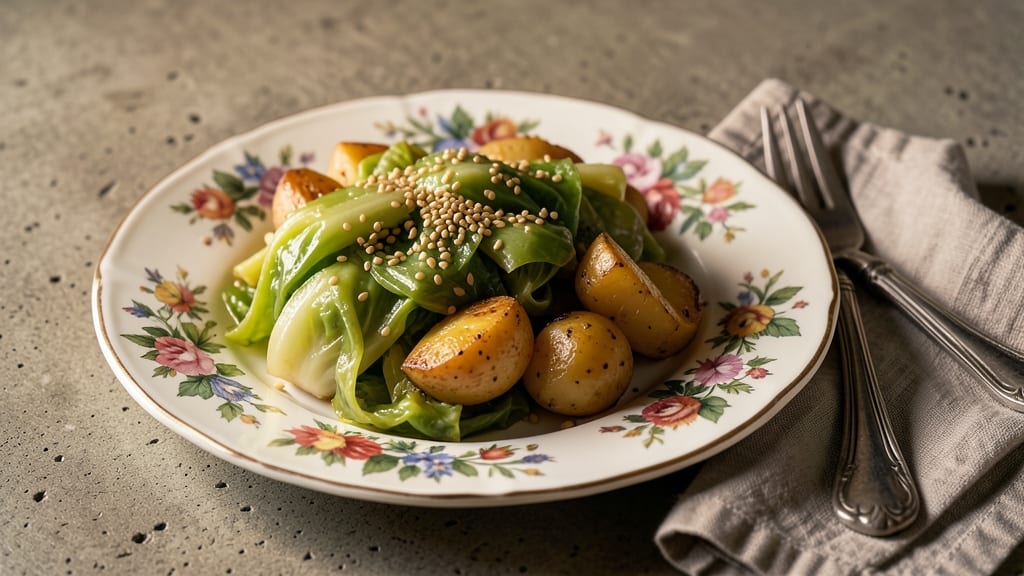
This old-fashioned cabbage and potatoes recipe delivers the comforting flavors of a traditional side dish that’s been passed down through generations. The secret lies in slow-simmering the vegetables until the cabbage reaches tender perfection while the potatoes develop crispy edges—a balance that transforms simple ingredients into something deeply satisfying.
I first discovered this method while researching Eastern European comfort food, where hearty sides like this were staples for family meals.
The beauty of this recipe is its simplicity—just a few basic ingredients that come together to create a dish with rich, savory depth. Onions and garlic form the aromatic base, while a splash of vinegar brightens the flavors and helps tenderize the cabbage.
The dish simmers in its own juices, developing a caramelized richness that makes every bite worth savoring. What starts as a humble combination of vegetables ends up as a restaurant-quality side that pairs beautifully with roasted meats or stands alone as a vegetarian main.
By the time you’re done, you’ll have a dish that’s crispy at the edges and tender in the center, with layers of flavor that make it impossible to resist.
The aroma alone will have everyone at the table asking for seconds, and the leftovers reheat just as well as the first serving. This is the kind of recipe that feels like a warm hug on a chilly day—simple yet deeply comforting, with a technique that’s easy to master.
The versatility of this dish makes it perfect for any meal, whether you’re serving it alongside Sunday roast or using it as the centerpiece of a vegetarian spread. The slow-cooked method ensures the flavors meld beautifully, creating a dish that’s both nostalgic and satisfyingly modern.
Let’s get started on this timeless classic that brings a touch of tradition to your table.
Ingredients for old fashioned cabbage and potatoes
Twelve essential ingredients transform humble vegetables into a nostalgic, restaurant-quality side dish.
| Ingredient | Amount | Notes |
|---|---|---|
| Yellow Onions 🧅 | 1 whole | Medium size, thinly sliced |
| Garlic Cloves 🧄 | 4 cloves | Peeled, thinly sliced |
| Green Cabbage 🥬 | 1 ½ lb | Green cabbage, shredded |
| Russet Potatoes 🥔 | 2 lbs | Medium size, quartered |
| White Vinegar 💧 | ¼ cup | Distilled white vinegar |
| Salt 🧂 | 1 ½ tsp | Diamond Crystal kosher salt |
| Black Peppercorns 🌶️ | ½ tsp | Freshly cracked preferred |
| Unsalted Butter 🧈 | 2 tbsp | Cold, cubed for finishing |
| Fresh Thyme Leaves 🌿 | ¼ cup | Chopped, or 1 tsp dried |
| Bay Leaves 🌿 | 2 whole | Dried, removed before serving |
| Water 💧 | 1 cup | For initial simmering |
| Heavy Cream 🥛 | ¼ cup | Full-fat for richness |
| Extra-Virgin Olive Oil 🫒 | 1 tbsp | For crisping potatoes |
The cabbage selection matters—Green Mountain or Savoy varieties hold up best to slow cooking, developing that signature tender yet crisp texture. Whole Foods or local farmers markets often carry these heirloom types, but any green cabbage works in a pinch. For potatoes, Russet or Yukon Gold create ideal crispy edges; avoid waxy varieties like red potatoes. The Diamond Crystal kosher salt is critical here—it dissolves cleanly and enhances flavor without overpowering. Fresh thyme from Trader Joe’s or a local herb vendor adds depth, but dried works if you’re short on time.
No white vinegar? Apple cider vinegar at the same amount delivers similar bright acidity. Substituting butter for olive oil? Use equal parts melted butter—the fat content matters for crisping. Short on bay leaves? Dried oregano at half the amount mimics the earthy notes. For a vegetarian twist, omit the butter finishing and add nutritional yeast for umami depth. The heavy cream can be swapped for half-and-half if you prefer a lighter finish, though it won’t be as rich. Potatoes can be pre-cooked in boiling water for 5 minutes to speed up the process—just drain well before adding to the pot.
This dish reheats beautifully—simply cover with foil and warm in a 350°F oven for 15 minutes. Store leftovers in the fridge for up to 5 days, covered with a damp towel to maintain moisture. For make-ahead convenience, prepare through step 3, then refrigerate the raw mixture overnight before cooking. The flavors actually improve after 24 hours of resting, as the vegetables absorb the seasonings more deeply. When serving, always finish with fresh herbs and a pat of cold butter—this is non-negotiable for that restaurant-quality touch.
Why You’ll Love This Recipe
- One-Pot Magic: I swear by this—just toss everything in one pot, lid on, and walk away. No chopping like a fine chef, no fancy pans, just good old potatoes and cabbage getting tender together while you sip your coffee.
- Vinegar-Kissed Crunch: That splash of white vinegar? It’s the secret. The cabbage stays crisp enough to bite into while the potatoes soften, and the onions caramelize into something dangerously good. (Yes, even on a Tuesday night.)
- Leftovers That Beg for More: Make a double batch, and you’ll have lunches for days. Cold or reheated, it’s still hearty—just add a fried egg or a slice of bread, and suddenly it’s dinner again. My go-to when I’m too tired to cook.
- Pantry Staple Power: Five ingredients, zero specialty items. If you’ve got potatoes, cabbage, and onions, you’ve got this. Honestly, it’s how I feed my family for under $10—no guilt, just good food.
Step-by-step instructions for slow-simmered cabbage and potatoes
This method delivers perfectly crispy potato edges and fork-tender cabbage through precise timing and layering.
Par-cook Potatoes for Crispy Edges
Heat a large Dutch oven over medium-high heat. Add the 1 tablespoon extra-virgin olive oil and swirl to coat the bottom evenly. Place the 2 lbs russet potatoes in a single layer, cut-side down. Cook undisturbed for 8-10 minutes until the cut surfaces develop golden-brown spots and begin to crisp slightly.
Here’s the key: resist the urge to move them. The potatoes need direct contact with the hot surface to develop that signature crispy texture. Once you see those golden spots forming, carefully flip each potato piece and cook another 4-5 minutes until all sides have developed color. Remove potatoes and set aside on a plate.
Build Flavor Base with Aromatics
In the same Dutch oven, add the 1 whole yellow onions and cook over medium heat for 4-5 minutes until softened and translucent. Add the 4 cloves garlic cloves and cook for 30 seconds until fragrant—don’t let them brown or they’ll turn bitter. Stir in the 1.5 tsp salt, 0.5 tsp black peppercorns, and 2 whole bay leaves.
Pour in the 0.25 cup white vinegar and 1 cup water, scraping up any browned bits from the bottom. Bring to a gentle simmer, then add the 1.5 lb shredded green cabbage. Cover and cook for 10 minutes, stirring occasionally, until the cabbage begins to soften but still maintains some bite.
Layer and Simmer for Tender Texture
Return the par-cooked potatoes to the Dutch oven, arranging them in a single layer over the cabbage mixture. Add the 0.25 cup chopped fresh thyme leaves and the 2 tbsp cold unsalted butter. Cover tightly and reduce heat to low. Simmer for 25-30 minutes, stirring occasionally, until the potatoes are fork-tender and the cabbage is completely tender.
This slow cooking phase is critical. The potatoes should absorb the cabbage’s flavors while maintaining their structure. The butter will melt into the potatoes, creating a rich, velvety texture. If the mixture looks too dry, add 2-3 tablespoons of water through the vent in the lid.
Finish with Cream for Richness
Once everything is tender, remove the bay leaves and stir in the 0.25 cup heavy cream. Increase heat to medium and cook uncovered for 3-4 minutes until the cream has thickened slightly and coats the back of a spoon. Taste and adjust seasoning if needed—this dish should be well-seasoned but not overly salty.
The cream adds a luxurious finish that balances the earthy flavors. Serve immediately while the potatoes maintain their crispy edges and the cabbage remains tender. The dish pairs beautifully with crusty bread or a simple green salad to cut through its richness.
Pro Tips For Making Old Fashioned Cabbage And Potatoes
- Parboil Potatoes First: Drop peeled Russets into boiling water for 5 minutes before adding to the pan—I learned this the hard way when my potatoes turned to mush. This keeps them intact while still letting them absorb all that savory cabbage flavor.
- Shred Cabbage Thin: Use a sharp knife or mandoline for even, paper-thin slices. Thick chunks stay crunchy and undercooked, while thin shreds soften perfectly and soak up the vinegar-onion punch.
- Sweat Onions Low: Cook onions over medium-low heat until translucent, not browned. I used to rush this, and the dish always tasted bitter—patience here makes the difference between good and great cabbage.
- Acid at the End: Toss in white vinegar just before serving—it brightens the whole dish without making the potatoes soggy. (Yes, even if you’re impatient like me, wait until the very last minute.)
Pro cooking tips for this dish
Dutch Oven Mastery
A heavy-bottomed Dutch oven is your secret weapon for even heat distribution and crispy potato edges. I recommend a Le Creuset 5.5-quart for its even heating and durable construction. Preheat the pot for 5 minutes before adding oil—this ensures the potatoes develop that perfect golden crust.
If your pot is lighter, reduce heat to medium-low during the initial searing to prevent burning while waiting for crispiness. 🔥
Potato Pre-Cooking
Never skip the par-cooking step—this is what creates those coveted crispy edges. Cut potatoes into 1-inch chunks for even cooking. For extra crispiness, pat them dry with a kitchen towel before searing.
If your potatoes start steaming instead of browning, your heat is too low—adjust to medium-high and give it 2-3 more minutes per side. 🥔
Vinegar’s Role
The white vinegar isn’t just for acidity—it tenderizes the cabbage while brightening the overall flavor. For maximum effect, add it when the onions are fully softened but before adding water.
If you’re short on time, increase the simmering time by 5 minutes to compensate, but the texture won’t be quite as tender. 💧
Layering Technique
Arrange potatoes in a single layer over the cabbage to ensure even cooking. Overcrowding will steam the potatoes instead of crisping them. If your pot is too small, work in batches—cook half the potatoes first, then add the cabbage mixture, and finish with the remaining potatoes.
This two-stage approach maintains texture integrity. ✨
Butter Timing
Add the cold butter during the final simmering phase so it melts gradually into the potatoes. Using room-temperature butter will cause it to separate instead of creating that luscious, velvety coating. For extra richness, replace 1 tbsp of the heavy cream with melted butter in the final step. 🧈
Cream Finish
Stirring the cream over medium heat prevents curdling while thickening it just enough to coat the vegetables. If you prefer a lighter finish, reduce the cream to ¼ cup and add 2 tbsp sour cream instead.
The cream should coat the back of a spoon but remain pourable—overcooking turns it grainy. 🥛
Nutrition facts
Frequently asked questions
Can I substitute regular potatoes for the recipe?
For best results, stick with Russet or Yukon Gold potatoes—they develop the ideal crispy edges. If you only have waxy potatoes like red or fingerlings, par-cook them for 2 extra minutes per side to compensate for their lower starch content. The texture will be slightly less crisp but still delicious.
How do I make this dish vegetarian?
This recipe is already vegetarian! Simply omit the butter finishing if you prefer a dairy-free version. For extra richness, add 1 tablespoon nutritional yeast when stirring in the cream—it adds a cheesy, umami depth that works beautifully with the vegetables. The dish maintains its hearty, satisfying texture without any meat.
What’s the best way to reheat leftovers?
Cover the dish with foil and warm in a 350°F oven for 15-20 minutes to preserve the crispy potato edges. For microwave reheating, place portions in a bowl with 1 tablespoon water and cover with a damp paper towel—this prevents drying out. The cream finish reheats best in the oven method for the creamiest texture.
Can I make this ahead of time?
Yes! Prepare through step 3 (after simmering but before adding cream), then refrigerate the raw mixture overnight. The flavors actually deepen during this time. When ready to serve, simply add the cream and finish cooking as directed. For make-ahead freezing, cook completely, cool, and freeze in portions—reheat from frozen in a 375°F oven for 25 minutes.
Why does my cabbage turn mushy?
Overcooking is the most common cause. The cabbage should be fork-tender but still hold its shape—if it’s completely falling apart, it’s been cooked too long. Start checking for doneness at 15 minutes of simmering. Also ensure you’re using a heavy-bottomed pot to prevent hot spots that can overcook some areas while undercooking others.

- Beef Pikes Peak Roast Recipe: Slow-Cooked Richness With Herbed Crust - November 29, 2026
- Brine Pork Ribs Overnight Recipe: Fall-Apart Tenderness Without the Wait - November 29, 2026
- Chilli Sauce for Hot Dogs Recipe: Smoky-Sweet Glaze That Elevates Every Bite - November 29, 2026