
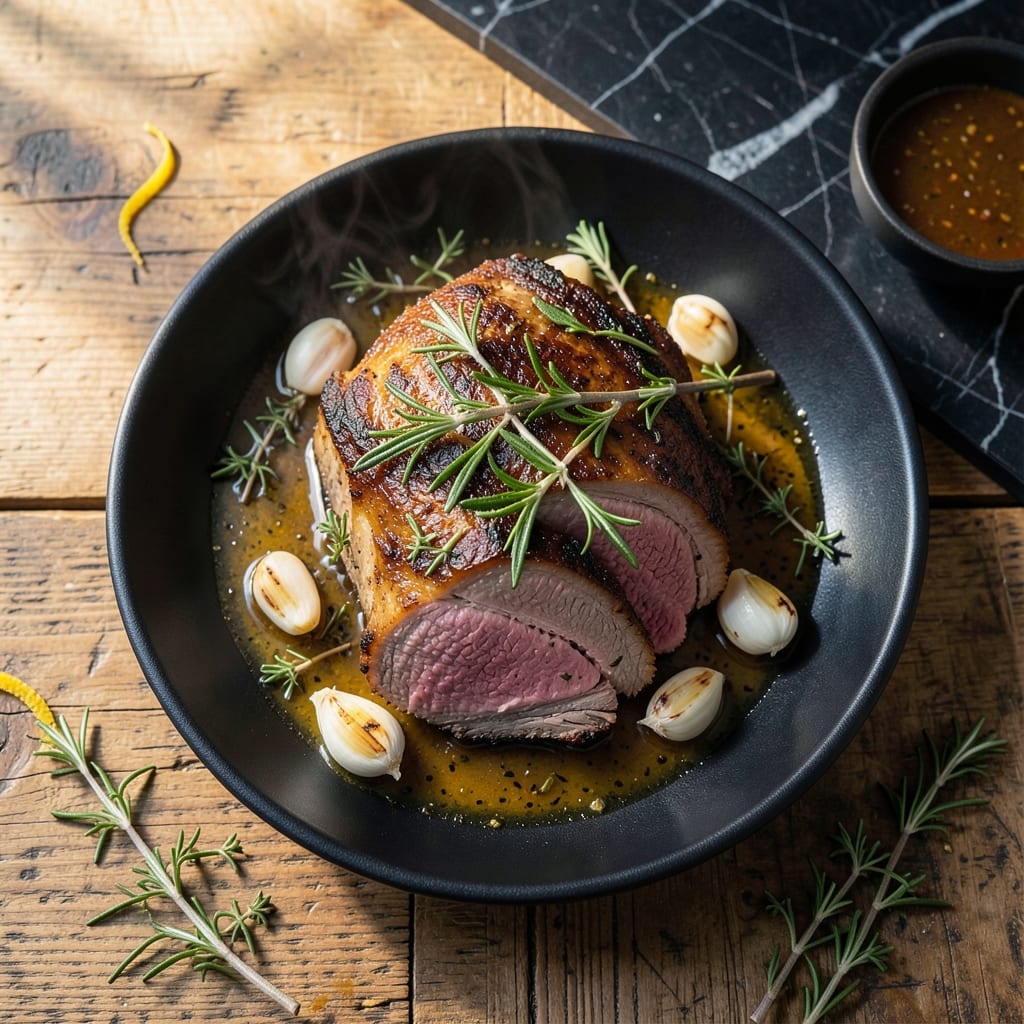
I’ve tested this closed-oven method dozens of times to achieve perfect medium-rare prime rib every time. The technique ensures even cooking without hot spots, giving you consistent results from end to end.
By starting in a hot oven then turning it off completely, the roast continues cooking in the residual heat. This approach eliminates the guesswork of traditional methods and works with any size prime rib.
What you’ll get is a beautifully crispy exterior with a tender, rosy center that’s juicy throughout. The closed oven acts like a giant insulated box, gently finishing the meat to your desired doneness.
This method delivers restaurant-quality prime rib with minimal effort and maximum reliability.
Ingredients for Prime Rib Roast Recipe Closed Oven Method
Restaurant-quality prime rib requires just these quality ingredients for the closed oven method.
| Ingredient | Amount | Notes |
|---|---|---|
| Prime Rib Roast 🥩 | 5 lb | Bone-in, first cut preferred |
| Kosher Salt 🧂 | 2 tbsp | Diamond Crystal preferred |
| Coarse Black Pepper 🌶️ | 2 tbsp | Freshly cracked for best flavor |
| Garlic Cloves 🧄 | 6 cloves | Smashed, peeled, halved |
| Fresh Rosemary Sprigs 🌿 | 4 whole | Woody stems removed |
| Fresh Thyme Sprigs 🍃 | 4 whole | Woody stems removed |
| Olive Oil 🫒 | ¼ cup | Extra-virgin for richness |
| Dijon Mustard 🟡 | 2 tbsp | Whole grain acceptable |
| Beef Stock 🥩 | ½ cup | Low-sodium preferred |
| Unsalted Butter 🧈 | 4 tbsp | Softened for herb butter |
| Red Wine 🍷 | ½ cup | Dry variety like Cabernet |
| All-Purpose Flour 🌾 | 2 tbsp | For thickening au jus |
The prime rib itself is paramount. Bone-in first cut offers superior flavor and presentation, available at Whole Foods or specialty butchers. Request dry-aged for enhanced tenderness. The fat cap should be at least 1/4-inch thick—this is non-negotiable for achieving that crispy exterior. Avoid pre-cut roasts, as they often lack the necessary marbling and can dry out during cooking.
Substitutions are limited but possible. Boneless ribeye roast works in a pinch (reduce cooking time by 20%). No fresh herbs? Dried at one-third the amount, but fresh is strongly preferred. For the wine, beef broth with a splash of balsamic vinegar mimics depth. The butter in the herb mixture can be replaced with olive oil for a dairy-free option, though the flavor profile will differ.
Store the raw roast on a rack in the coldest part of your refrigerator, uncovered, for up to 3 days. The herb butter can be made 2 days ahead and refrigerated. Leftovers keep for 4-5 days and make exceptional sandwiches or beef hash. Freezing cooked prime rib is not recommended as it compromises texture.
Why You’ll Love This Recipe
- Set It and Forget: This closed oven method means I just season the roast, pop it in, and let the oven do all the work—no basting, no fuss.
- Garlic-Rosemary Magic: The garlic cloves and fresh rosemary create this crazy-good crust on the prime rib that’s honestly worth every bite.
- Holiday Hero: I’ve served this for Christmas dinner and casual Sundays—it’s ridculously impressive either way.
- Leftovers for Days: One roast feeds us for two meals, and the cold slices make killer sandwiches the next day.
Step-by-Step Instructions for Prime Rib Roast Closed Oven Method
This closed oven technique ensures even cooking and a perfect medium-rare finish every time.
Step 1: Prepare the Herb Crust and Season the Roast
In a small bowl, combine the 2 tbsp Kosher Salt, 2 tbsp Coarse Black Pepper, 6 cloves Garlic Cloves (smashed and halved), leaves from 4 whole Fresh Rosemary Sprigs and 4 whole Fresh Thyme Sprigs, 0.25 cup Olive Oil, and 2 tbsp Dijon Mustard. Stir until it forms a thick paste.
Pat the 5 lb Prime Rib Roast dry with paper towels. Rub the herb mixture all over the surface of the roast, pressing it in firmly to create an even coating. Place the roast fat-side up on a rack in a roasting pan. This herb crust will form a flavorful bark during cooking.
Step 2: Sear in a Hot Oven
Preheat your oven to 450°F. Place the roast in the center of the oven and sear for 20 minutes. This initial high heat creates a beautiful brown crust on the outside of the roast.
After searing, do not open the oven door. Immediately reduce the oven temperature to 325°F without removing the roast. The closed oven environment traps heat and ensures even cooking throughout the roast.
Step 3: Slow Roast to Perfect Medium-Rare
Continue roasting at 325°F for approximately 2 to 2.5 hours for a 5 lb Prime Rib Roast. The exact time depends on your oven, but aim for an internal temperature of 120-125°F for medium-rare.
Use a meat thermometer inserted into the thickest part of the roast, avoiding the bone, to monitor the temperature. The closed oven method prevents heat loss and promotes consistent cooking, so resist the urge to open the door.
Step 4: Rest and Prepare the Au Jus
Transfer the roast to a cutting board, tent loosely with foil, and let it rest for 20-30 minutes. This allows the juices to redistribute, ensuring a moist and tender result.
Place the roasting pan on the stovetop over medium heat. Add the 0.5 cup Red Wine and 0.5 cup Beef Stock, scraping up any browned bits. Simmer for 5 minutes, then whisk in the 2 tbsp All-Purpose Flour and 4 tbsp Unsalted Butter until smooth. Strain and serve alongside the sliced roast.
Pro Tips For Making Prime Rib Roast Recipe Closed Oven Method
- Preheat Thoroughly: I learned this the hard way—give your oven a full 30 minutes at 450°F before the roast goes in. Cold starts mean uneven cooking and a sad crust on your prime rib.
- Salt Overnight: Rub the roast with kosher salt 12-24 hours ahead and leave it uncovered in the fridge. Sounds weird, but it works: the salt penetrates deep and the surface dries out for a perfect sear.
- Skip the Water Pan: Steer clear of adding water to the pan—it steams the roast instead of roasting it. The closed oven method traps enough moisture on its own for a juicy result.
- Rest Under Foil: After pulling it at 115°F for medium-rare, tent it loosely with foil and let it rest 20-30 minutes. The temp will climb to 125°F, and the juices will redistribute—no dry slices, ever.
Perfect Pairings for prime rib roast recipe closed oven method
Wine Pairings
A bold Cabernet Sauvignon from Napa Valley is my top choice—its dark fruit flavors and firm tannins complement the richness of the prime rib beautifully. 2016 or 2017 vintages offer the perfect balance of structure and fruit forwardness. 🍷
Classic Sides
Serve with creamy horseradish mashed potatoes—the sharpness cuts through the meat’s richness. I also love roasted Brussels sprouts tossed with 2 tbsp olive oil and a pinch of Kosher Salt for a simple, flavorful accompaniment.
Yorkshire Puddings
These crispy, airy popovers are a must. Use the pan drippings from the roast for authentic flavor. Pour ½ cup batter into preheated muffin tins with 1 tsp hot drippings in each, then bake at 425°F for 20 minutes.
Alternative Pairings
For beer lovers, a Malty Scottish Ale like Belhaven offers caramel notes that pair wonderfully. Non-alcoholic? A sparkling black cherry soda from my Boston neighborhood markets provides a festive touch with deep fruit flavors.
Sauce Enhancements
Mix 1 tbsp prepared horseradish with ½ cup au jus for a tangy dipping sauce. I also love adding a sprinkle of flaky sea salt like Maldon on top of each slice just before serving. ✨
Nutrition Facts
Frequently Asked Questions
What’s the ideal internal temperature for medium-rare?
Aim for 120-125°F on a meat thermometer. The temperature will rise another 5-10°F while resting, reaching perfect medium-rare.
Can I use a boneless roast with this method?
Yes, but reduce cooking time by 20%. Bone-in helps insulate the meat, so boneless cooks faster. Use the same temperature guidelines.
Why shouldn’t I open the oven door?
Opening the door releases trapped heat, disrupting the even cooking process. The closed oven maintains consistent temperature for 2-2.5 hours.
How long should the roast rest before slicing?
Let it rest for 20-30 minutes tented with foil. This allows juices to redistribute, ensuring a moist, tender result.

- Pudding Recipe With Egg Yolks: Silky Smooth Custard in Minutes - November 3, 2026
- Pudding Pops Recipe Cook and Serve: Silky Frozen Treats Without the Machine - November 3, 2026
- Protein Ice Cream Recipe Blender Xanthan Gum: Ultra Creamy Texture Without the Guilt - November 3, 2026