
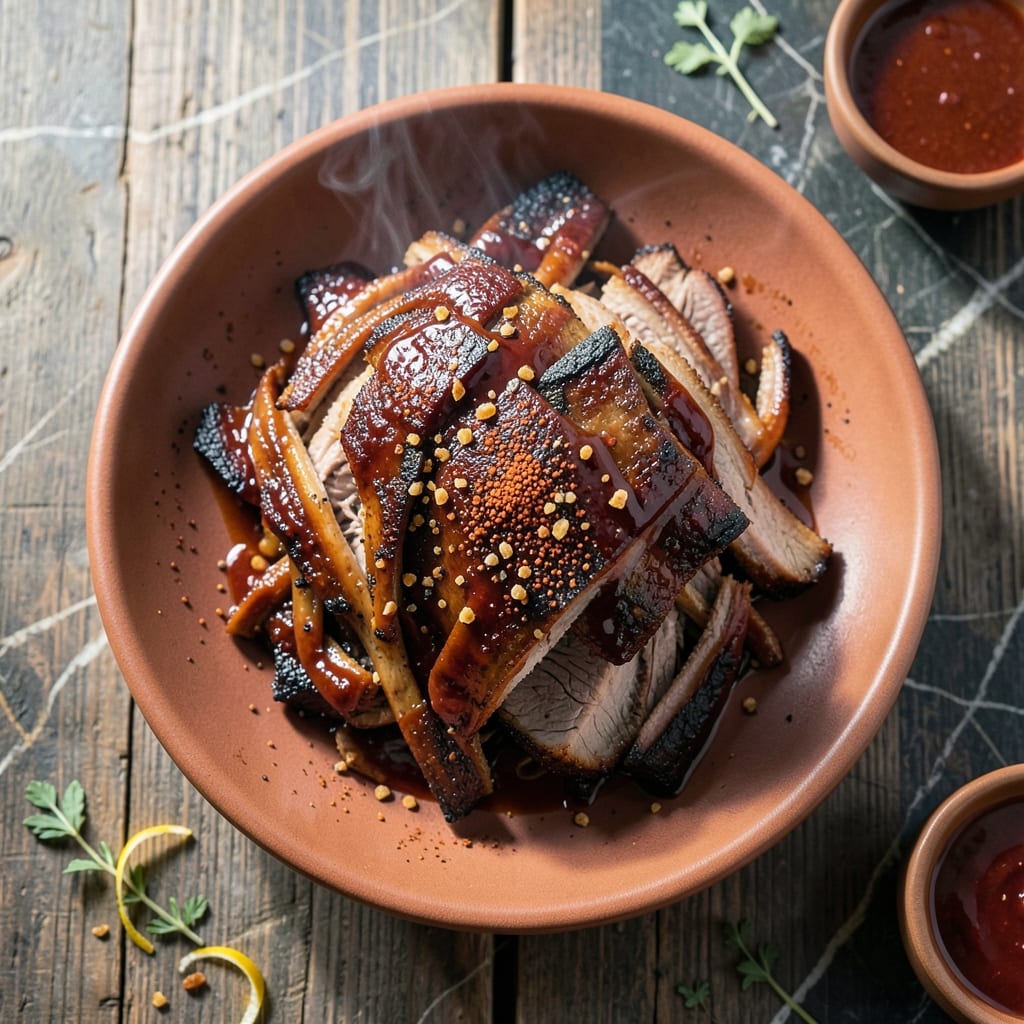
This pulled pork recipe transforms tough cuts into meltingly tender perfection through low, slow cooking. I developed this method after years of testing in my small Boston kitchen, perfecting the balance of smoke, spice, and time.
The secret lies in a simple dry rub and patient cooking at 225°F until the meat falls apart. This approach ensures every bite delivers the rich, smoky flavor that defines great pulled pork.
What emerges is meat so tender it shreds with a fork, with a bark that’s both crisp and flavorful. The process takes time, but the result is worth every minute of the wait.
Serve on buns with your favorite sauce, or use it to elevate tacos, sandwiches, and more. This is pulled pork done right.
Ingredients for Pulled Pork Recipe from Scratch
A handful of spices and a pork shoulder are all it takes to start this smoky masterpiece.
| Ingredient | Amount | Notes |
|---|---|---|
| Pork Shoulder 🐷 | 4 lb | Bone-in, skin-on preferred |
| Brown Sugar 🍚 | ½ cup | Light or dark variety |
| Paprika 🌶️ | 2 tbsp | Sweet or smoked variety |
| Garlic Powder 🧄 | 1 tbsp | Not garlic salt |
| Onion Powder 🧅 | 1 tbsp | Fine ground preferred |
| Ground Cumin 🌿 | 1 tsp | Toasted for deeper flavor |
| Salt 🧂 | 2 tbsp | Kosher or coarse sea salt |
| Black Pepper 🌶️ | 1 tbsp | Freshly ground preferred |
| Cayenne Pepper 🔥 | ½ tsp | Adjust for heat preference |
| Apple Cider Vinegar 💧 | ½ cup | For tangy moisture |
| BBQ Sauce 🍅 | 2 cups | Homemade or store-bought |
| Yellow Mustard 🟡 | ¼ cup | For rub binder |
| Hickory Wood Chips 🪵 | 2 cups | Soaked in water first |
The pork shoulder is non-negotiable here—bone-in, skin-on gives the best texture and flavor. I grab mine from Whole Foods or Market Basket in Boston; look for good marbling and at least 4 lbs so it doesn’t dry out. The brown sugar in the rub caramelizes beautifully, so don’t swap it for white (the molasses depth matters). For the wood chips, hickory is classic, but apple or cherry work too if that’s what you’ve got.
No pork shoulder? Pork butt is essentially the same thing—just ask your butcher. Out of apple cider vinegar? White vinegar with a splash of apple juice gets you close. The BBQ sauce can be whatever you love (I’m partial to Stubb’s Original), but avoid super-sweet varieties. Skip the cayenne if you’re sensitive to heat, but don’t omit the mustard—it’s the glue that makes the rub stick.
The rub keeps in a jar for 1 week if you make extra, but the pork is best cooked fresh. Leftover pulled pork freezes for 3 months—portion it before freezing for easy meals. Always let the meat rest before shredding (worth the extra 15 minutes).
Why You’ll Love This Recipe
- Set It & Forget: I toss the pork shoulder with brown sugar and spices in the morning, and the slow cooker does the rest.
- Sweet & Smoky Magic: The brown sugar caramelizes while the paprika and garlic powder create that deep, crave-worthy flavor.
- Feeds a Crowd: Between us, this one pork shoulder makes enough for tacos, sandwiches, and a freezer meal.
- Budget Hero: Pork shoulder is cheap, and honestly, it turns into something that tastes like a million bucks.
Step-by-Step Instructions for Pulled Pork From Scratch
Here’s the method I use for fall-apart tender results every time.
Step 1: Prepare the Rub and Season the Pork
In a small bowl, combine the 0.5 cup Brown Sugar, 2 tbsp Paprika, 1 tbsp Garlic Powder, 1 tbsp Onion Powder, 1 tsp Ground Cumin, 2 tbsp Salt, 1 tbsp Black Pepper, and 0.5 tsp Cayenne Pepper. Mix until evenly blended.
Pat the 4 lb Pork Shoulder dry with paper towels, then rub it all over with the 0.25 cup Yellow Mustard—this helps the rub stick. Coat the meat generously with the spice mixture, pressing it into all the crevices. This creates a flavorful bark that locks in moisture during smoking.
Step 2: Set Up the Smoker for Low and Slow Cooking
Soak the 2 cups Hickory Wood Chips in water for at least 30 minutes before starting. Preheat your smoker to 225-250°F using the soaked wood chips for consistent, clean smoke. Place a water pan inside to maintain humidity—this keeps the pork moist during the long cook.
Once the smoker is at temperature and producing thin blue smoke (not thick white smoke), place the seasoned pork shoulder directly on the grate, fat-side up. The fat will render down, basting the meat as it smokes.
Step 3: Smoke Until Probe-Tender
Close the lid and let the pork smoke undisturbed for 6-8 hours. Resist the urge to peek—every time you open the smoker, you lose heat and add cooking time. The pork is ready for the next step when the internal temperature reaches 165-170°F.
At this point, you’ll hit the stall—a plateau where the temperature stops rising as moisture evaporates. Don’t worry, this is normal. Wrap the pork tightly in foil or butcher paper with 0.5 cup Apple Cider Vinegar to power through the stall and keep it moist.
Step 4: Finish and Shred the Pork
Return the wrapped pork to the smoker and continue cooking until it reaches an internal temperature of 200-205°F and a probe slides in like butter. This usually takes another 2-3 hours. The meat should be so tender it nearly falls apart when you handle it.
Carefully remove the pork from the smoker and let it rest for 30 minutes in the foil or butcher paper. This allows the juices to redistribute. Unwrap the pork, discard any large fat chunks, and shred it using two forks or meat claws. It should pull apart effortlessly.
Step 5: Mix with BBQ Sauce and Serve
Place the shredded pork in a large bowl or pot and stir in the 2 cups BBQ Sauce. Mix gently to coat every strand evenly. If the mixture seems dry, add a splash of the reserved juices from the foil or a bit of water to reach your desired consistency.
Serve immediately on buns, in tacos, or over rice. The pork should be melt-in-your-mouth tender with a smoky, slightly sweet, and tangy flavor that shines through in every bite.
Pro Tips For Making Pulled Pork Recipe From Scratch
- Low and Slow Wins: Cook that pork shoulder at 225°F for at least 8 hours—any higher and the meat tightens up instead of falling apart.
- Dry the Meat First: Pat the pork shoulder completely dry before rubbing in the brown sugar and spices; wet meat steams instead of forming that sticky bark.
- Skip the Shortcut Cuts: I learned this the hard way—avoid pre-cut pork chunks, as whole shoulder holds moisture better and shreds more evenly.
- Rest Before Pulling: Let the pork rest 30 minutes under foil after cooking; it reabsorbs the juices so every bite stays tender instead of dry.
Troubleshooting pulled pork recipe from scratch
Stall Situation
If your pork temperature stalls at 160-170°F, don’t panic. This is normal as moisture evaporates. I wrap mine tightly in foil with 0.5 cup Apple Cider Vinegar to push through. This adds moisture and speeds up the process. 💡
Dry Results
Dry pulled pork usually means it cooked too hot or too fast. Keep your smoker at 225°F and use a water pan. If it’s already dry, mix in extra BBQ sauce or reserved juices when shredding.
Tough Meat
Tough pork didn’t cook long enough. It needs to reach 200-205°F internally. I use a ThermoWorks probe to check. If it’s tough, return it to the smoker wrapped until probe-tender.
Bland Flavor
If your pork lacks flavor, the rub may not have adhered properly. Use 0.25 cup Yellow Mustard as a binder next time. Also, ensure you’re using enough wood chips—2 cups Hickory gives that essential smoky depth.
Uneven Cooking
For even cooking, position your pork fat-side up in the smoker’s center. Rotate it 180° halfway through if your smoker has hot spots. I learned this the hard way in my tiny Boston kitchen.
Bark Issues
For a better bark, don’t wrap too early. Let it develop until 165°F internal. Also, avoid opening the smoker unnecessarily—this disrupts the bark formation process. ✨
Nutrition Facts
Frequently Asked Questions
Can I use a pork loin instead of shoulder?
No, pork shoulder is ideal because its fat and connective tissue break down during long cooking. Pork loin is too lean and will dry out. Stick with 4 lb bone-in shoulder for best results.
How do I know when it’s done?
It’s ready when internal temperature hits 200-205°F and a probe slides in like butter. The meat should shred effortlessly with forks. Don’t rush it—this takes 8-10 hours at 225°F.
Why did my bark turn out soft?
Soft bark usually means too much moisture or wrapping too early. Let it cook uncovered until 165°F internal, and avoid opening the smoker unnecessarily. Thin blue smoke also helps build a better bark.

- Pudding Recipe With Egg Yolks: Silky Smooth Custard in Minutes - November 3, 2026
- Pudding Pops Recipe Cook and Serve: Silky Frozen Treats Without the Machine - November 3, 2026
- Protein Ice Cream Recipe Blender Xanthan Gum: Ultra Creamy Texture Without the Guilt - November 3, 2026