
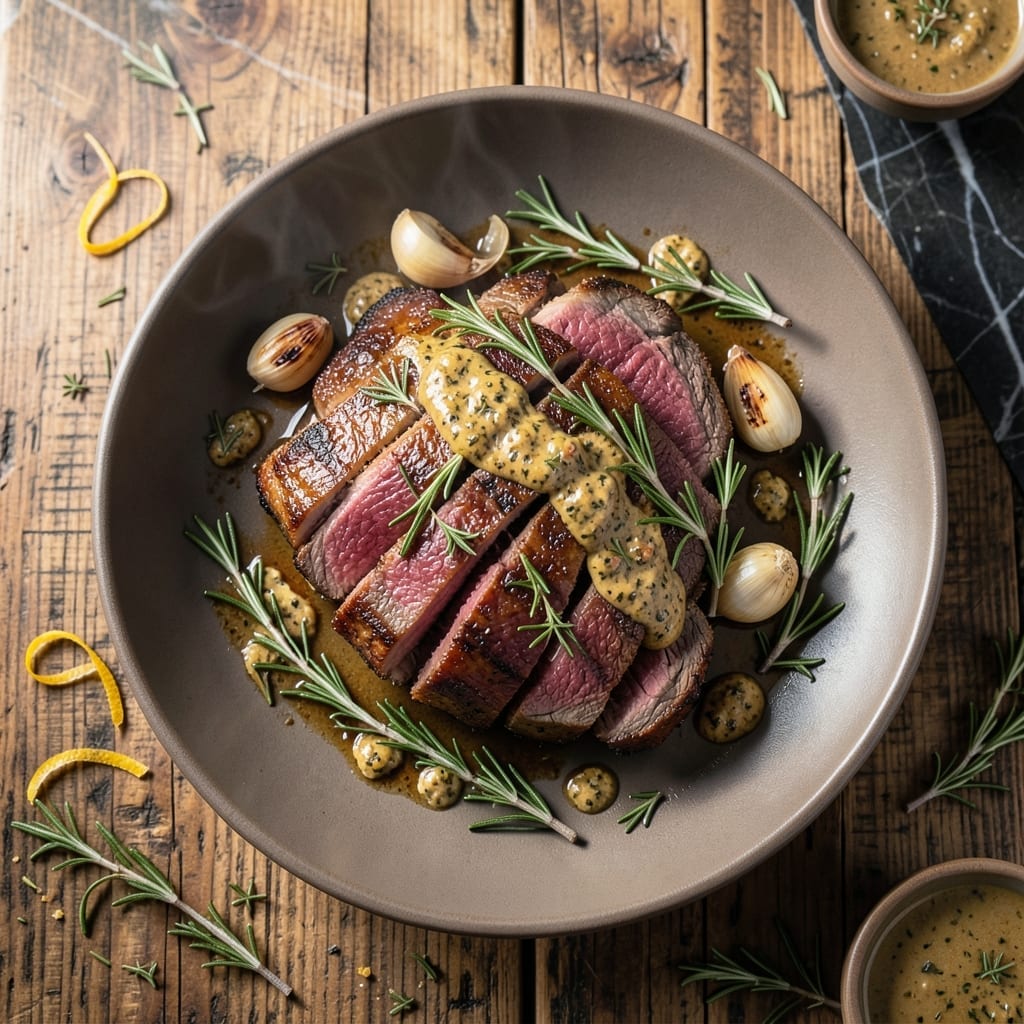
There’s nothing quite like serving a perfectly roasted boneless prime rib at your holiday table. This method delivers tender, juicy meat with a herb-crusted exterior that impresses every time.
The secret lies in a low-and-slow approach, starting with a high-heat sear to develop a flavorful crust, then finishing at a gentle temperature. I’ve refined this technique over years of special occasion dinners, ensuring consistent results.
What emerges from the oven is a centerpiece-worthy roast with a rosy medium-rare center and deeply caramelized herb topping. The aroma alone will have your guests gathering around the kitchen.
Let the meat rest before slicing—this step guarantees juiciness in every bite. Here’s how to achieve restaurant-quality results at home.
Ingredients for Prime Rib Roast Beef Recipe Boneless
Sixteen ingredients for a showstopping roast with herb-crusted perfection and juicy medium-rare center.
| Ingredient | Amount | Notes |
|---|---|---|
| Boneless Prime Rib Roast 🥩 | 5 lb | Well-marbled, tied for even cooking |
| Kosher Salt 🧂 | 2 tbsp | Diamond Crystal preferred for even distribution |
| Freshly Ground Black Pepper 🌶️ | 2 tsp | Coarse grind for texture |
| Garlic Cloves 🧄 | 6 cloves | Minced for herb crust |
| Fresh Rosemary 🌿 | 3 tbsp | Finely chopped, stems discarded |
| Fresh Thyme 🍃 | 3 tbsp | Leaves stripped from stems |
| Dijon Mustard 🟡 | 3 tbsp | For herb crust binding |
| Olive Oil 🫒 | 2 tbsp | Extra-virgin for searing |
| Unsalted Butter 🧈 | 4 tbsp | Softened for basting |
| Red Wine 🍷 | 1 cup | Dry variety for deglazing |
| Beef Broth 🥣 | 2 cups | Low-sodium preferred |
| Yellow Onion 🧅 | 1 whole | Quartered for roasting |
| Carrots 🥕 | 4 whole | Peeled, cut into chunks |
The prime rib is the star—Costco and Whole Foods carry excellent boneless cuts. Look for vibrant marbling (those white fat streaks) and avoid anything gray or dry. Ask the butcher for the center-cut portion if you want uniform slices. I always get mine a day ahead and let it rest uncovered in the fridge to dry the surface (better sear, trust me).
No red wine? Substitute beef broth with a splash of balsamic vinegar. Fresh herbs are ideal but dried at one-third the amount works—just soak them in warm water first to rehydrate. If you’re out of Dijon, whole-grain mustard adds great texture. The butter can be salted, but reduce the added salt by half to compensate.
The roast needs to rest at least 30 minutes before slicing—this keeps it juicy. Leftovers? Wrap tightly and refrigerate for up to 4 days, or freeze for 3 months. Slice cold for sandwiches, or reheat gently in the au jus to revive.
Why You’ll Love This Recipe
- Set It and Forget: I rub the roast with salt, pepper, garlic, and rosemary then let the oven do the work—no babysitting required.
- That Crust Though: The garlic and rosemary form this crazy-flavorful crust that cracks when you slice into it. Honestly, it’s the best part.
- Holiday or Tuesday: I’ve served this for Christmas dinner and also just because it’s Tuesday and we deserved a treat.
- Leftovers for Days: One roast means prime rib sandwiches, tacos, or just cold slices straight from the fridge for at least three more meals.
Step-by-Step Instructions for Herb-Crusted Prime Rib Roast
This foolproof method delivers a showstopping roast with minimal effort and maximum flavor.
Step 1: Prepare the Herb Crust and Season the Roast
In a small bowl, combine the 3 tbsp Fresh Rosemary, 3 tbsp Fresh Thyme, 6 cloves Garlic Cloves, 3 tbsp Dijon Mustard, 2 tbsp Olive Oil, 2 tbsp Kosher Salt, and 2 tsp Freshly Ground Black Pepper into a thick paste. This aromatic blend will form the flavor-packed crust that defines this dish.
Pat the 5 lb Boneless Prime Rib Roast dry with paper towels—this ensures the herb mixture adheres properly. Rub the paste evenly over the entire surface of the roast, pressing it in so it forms a thick, uniform layer. Let it sit at room temperature for 1 hour to allow the flavors to penetrate the meat.
Step 2: Sear the Roast for a Flawless Crust
Preheat your oven to 450°F. Place the roast on a rack set in a roasting pan, rib bones down (if bone-in) or flat side down (for boneless). The rack elevates the roast, allowing hot air to circulate and crisp the crust evenly.
Roast for 20 minutes at this high temperature to create a deep, caramelized crust. You’ll see the herb mixture transform into a golden-brown, fragrant layer—this is your visual cue that the sear is perfect. Resist the urge to baste during this phase; the dry heat is what builds that incredible texture.
Step 3: Slow-Roast to Perfect Doneness
Reduce the oven temperature to 325°F and continue roasting. Add the 1 whole Yellow Onion and 4 whole Carrots to the pan around the roast—they’ll soak up the drippings and add to your pan sauce later.
Roast for another 1.5 to 2 hours, or until the internal temperature reaches 125°F for medium-rare. Use a meat thermometer inserted into the thickest part, avoiding the fat cap. The roast is done when the thermometer reads your desired temperature and the juices run clear with a slight pink hue.
Step 4: Rest and Prepare the Pan Sauce
Transfer the roast to a cutting board, tent loosely with foil, and let it rest for 20 minutes. This is non-negotiable—it allows the juices to redistribute so every slice is succulent. While it rests, place the roasting pan on the stovetop over medium heat.
Add the 1 cup Red Wine and 2 cups Beef Broth to the pan, scraping up all the browned bits with a wooden spoon. Simmer for 5-7 minutes until reduced by half. Remove from heat, whisk in the 4 tbsp Unsalted Butter one tablespoon at a time until the sauce is glossy and slightly thickened. Strain if you prefer a smooth sauce.
Step 5: Slice and Serve
Carve the roast into ½-inch thick slices, cutting against the grain for maximum tenderness. Arrange the slices on a platter and drizzle with some of the pan sauce. Serve the remaining sauce on the side for dipping, along with the roasted Yellow Onion and Carrots.
The meat should be rosy pink in the center with a robust herb crust on the outside. Each bite will deliver rich, beefy flavor balanced by the aromatic herbs and the deep, wine-infused sauce.
Pro Tips For Making Prime Rib Roast Beef Recipe Boneless
- Rest the Roast: Pull the prime rib out 1-2 hours before cooking to bring it to room temperature—I learned this the hard way after serving tough, cold centers to dinner guests.
- Salt Generously: Coat the roast with kosher salt the night before; it’s not too much, and it guarantees a well-seasoned crust that makes every bite sing.
- Skip the Overcrowding: Use a roasting pan just big enough for the prime rib—crowding it with veggies or herbs steams the meat instead of browning it.
- Use a Thermometer: A meat thermometer is non-negotiable; pull it at 115°F for medium-rare, and resist the urge to cut into it to check—you’ll lose all those precious juices.
Troubleshooting This Recipe
Uneven Cooking
If your roast has uneven doneness, it likely started cold. Always let your 5 lb Boneless Prime Rib Roast sit at room temperature for 1 hour before cooking. I also recommend rotating the pan 180° halfway through cooking for even heat distribution. 💡
Dry or Tough Meat
Overcooking is the usual culprit. Pull your roast when it hits 120-125°F internal temperature—it will rise 5-10°F while resting. Also, ensure you’re using a well-marbled cut from a trusted butcher, like those at New Seasons Market.
Weak Herb Crust
If your herb crust isn’t adhering, the roast may not have been dry enough. Pat it thoroughly with paper towels before applying the paste. I’ve found pressing the Dijon Mustard mixture firmly into the meat helps it stay put during cooking.
Sauce Too Thin
For a thicker pan sauce, simmer it longer—up to 10 minutes instead of 5-7 minutes. If you’re in a hurry, mix 1 tsp cornstarch with 1 tbsp water and whisk it in during the final minute of simmering. 🔥
Resting Time Issues
Skipping the 20-minute rest means losing precious juices. Tent the roast loosely with foil to keep it warm while it rests. I learned this the hard way at my first holiday dinner—now it’s non-negotiable in my kitchen.
Thermometer Problems
If your thermometer gives inconsistent readings, check its calibration by testing in boiling water—it should read 212°F. I use a ThermoWorks instant-read for accuracy. Insert it into the thickest part, avoiding bone and fat pockets.
Nutrition Facts
Frequently Asked Questions
How long should I let the roast sit before cooking?
Let it sit at room temperature for 1 hour before roasting. This ensures even cooking throughout the entire cut.
What internal temperature means it’s done?
Remove it from the oven when it reaches 120-125°F internally. It will rise to 130-135°F while resting, giving perfect medium-rare.
Can I use dried herbs instead of fresh?
Yes, use 1/3 the amount of dried herbs. Soak them in warm water first to rehydrate and bring out their flavor.
Why is resting so important?
The 20-minute rest lets juices redistribute through the meat. Skipping this step means dry, less flavorful slices.

- Pudding Recipe With Egg Yolks: Silky Smooth Custard in Minutes - November 3, 2026
- Pudding Pops Recipe Cook and Serve: Silky Frozen Treats Without the Machine - November 3, 2026
- Protein Ice Cream Recipe Blender Xanthan Gum: Ultra Creamy Texture Without the Guilt - November 3, 2026