
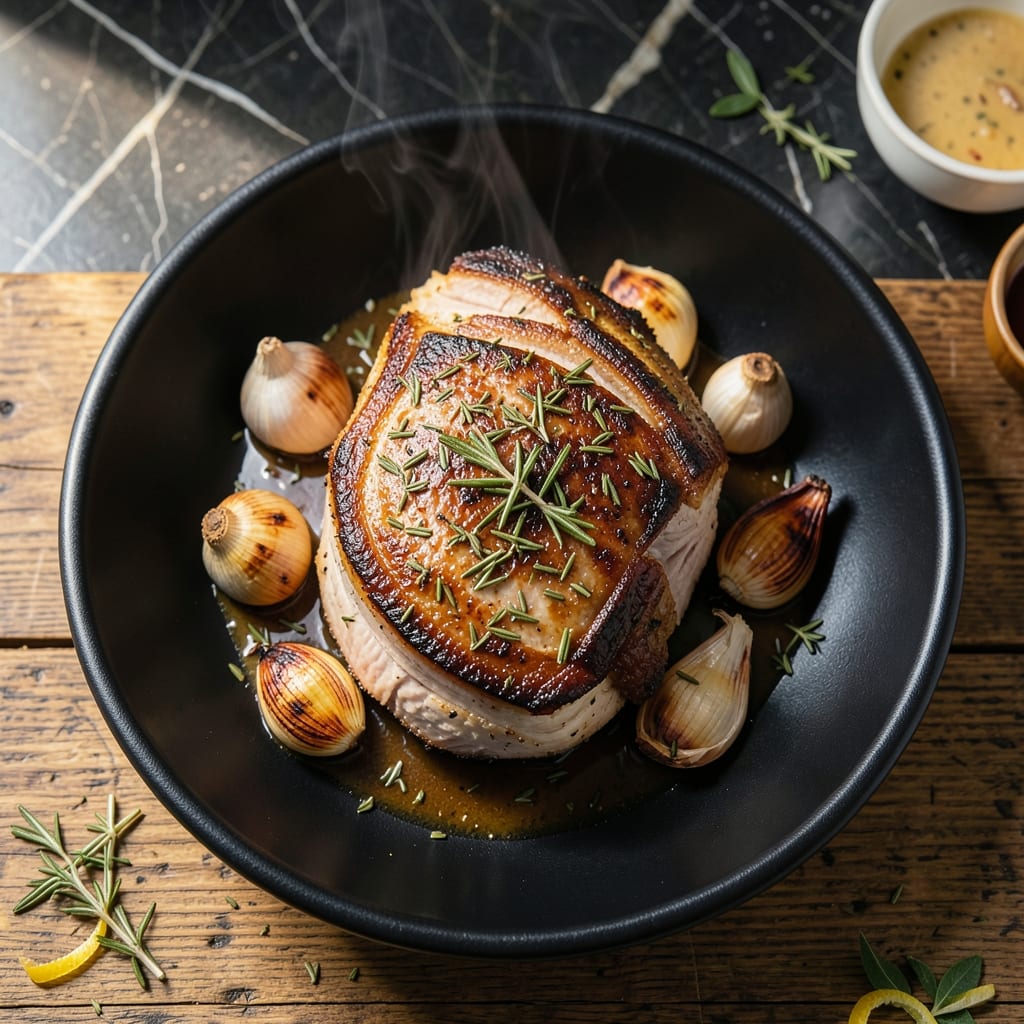
Sunday suppers deserve a centerpiece that impresses without overwhelming the cook. This boneless pork rib roast delivers restaurant-quality elegance with a simple herb crust that forms a flavorful seal.
The secret lies in proper preparation and timing. A slow roast at 325°F ensures tender, juicy meat throughout, while a final high-heat sear creates a golden crust. Letting it rest before slicing guarantees perfect texture.
What emerges is a beautifully herb-crusted roast with a moist interior and aromatic exterior. The meat pulls apart easily, revealing succulent layers that pair perfectly with pan juices.
Ideal for feeding a crowd or creating leftovers that taste even better the next day. This method transforms an ordinary Sunday into something special.
Ingredients for Pork Rib Roast Recipe Boneless
Restaurant-quality ingredients create this herb-crusted centerpiece for a memorable Sunday supper.
| Ingredient | Amount | Notes |
|---|---|---|
| Boneless Pork Rib Roast 🥩 | 4 lb | Trimmed of excess fat |
| Kosher Salt 🧂 | 2 tbsp | Diamond Crystal preferred |
| Black Pepper 🌶️ | 1 tbsp | Freshly ground coarse |
| Fresh Rosemary 🌿 | 3 tbsp | Finely chopped, stems removed |
| Fresh Thyme 🍃 | 2 tbsp | Leaves stripped from stems |
| Fresh Sage 🍃 | 1 tbsp | Finely minced |
| Garlic Cloves 🧄 | 6 cloves | Peeled and minced |
| Dijon Mustard 🟡 | ¼ cup | Whole grain preferred |
| Olive Oil 🫒 | ¼ cup | Extra-virgin for richness |
| Dry White Wine 🍷 | ½ cup | Sauvignon Blanc or Pinot Grigio |
| Chicken Stock 🥣 | 1 cup | Low-sodium preferred |
| Unsalted Butter 🧈 | 4 tbsp | Cubed, room temperature |
| All-Purpose Flour 🌾 | 2 tbsp | For thickening pan sauce |
The pork rib roast quality is paramount. Opt for well-marbled boneless cuts from reputable butchers or Whole Foods. The fat cap should be trimmed to about 1/4 inch for optimal searing. For herbs, organic varieties from specialty markets offer superior aroma. The garlic must be fresh—avoid pre-minced jars as they lack the necessary pungency for this preparation.
No fresh herbs? Dried at one-third the quantity works, though texture will differ. For the wine, any dry white will do—Chardonnay or Viognier are suitable substitutes. Chicken stock can be replaced with vegetable stock for a lighter profile. Mustard lovers can use whole grain Dijon for added texture in the crust.
The roast benefits from resting 30 minutes before slicing, allowing juices to redistribute. Store leftovers in airtight containers for up to 4 days, or freeze sliced portions for 3 months. Pan sauce can be refrigerated separately for 5 days.
Why You’ll Love This Recipe
- Set It and Forget: I rub the roast with salt, pepper, rosemary, and thyme, then let the oven do all the work.
- Herb-Crusted Bliss: The fresh rosemary and thyme create a fragrant crust that’s ridiculously good with every bite.
- Sunday Dinner Star: It’s my go-to for special family meals, but honestly, I make it just because.
- Leftovers for Days: One roast feeds us for two meals, and the sandwiches the next day? Even better.
Step-by-Step Instructions for Herb-Crusted Pork Rib Roast
Master this technique for a Sunday supper that balances crispy crust with juicy, aromatic pork.
Step 1: Prepare the Herb Crust and Season the Roast
In a small bowl, combine the 2 tbsp Kosher Salt, 1 tbsp Black Pepper, 3 tbsp Fresh Rosemary, 2 tbsp Fresh Thyme, 1 tbsp Fresh Sage, and 6 cloves Garlic Cloves. This herb blend creates a fragrant foundation for the crust. Finely chop the herbs and mince the garlic to ensure even distribution and maximum flavor infusion.
Pat the 4 lb Boneless Pork Rib Roast dry with paper towels. This step is critical for achieving a crispy exterior. Rub the herb mixture evenly over the entire surface of the roast, pressing gently so it adheres. Let the seasoned roast sit at room temperature for 30 minutes to allow the flavors to penetrate.
Step 2: Sear and Coat for Maximum Flavor
Preheat your oven to 375°F. In a large oven-safe skillet or roasting pan, heat the 0.25 cup Olive Oil over medium-high heat. Once shimmering, sear the roast on all sides for 2-3 minutes per side until deeply browned. This creates a flavorful crust and locks in juices.
Remove the roast from the pan and brush it generously with the 0.25 cup Dijon Mustard. The mustard not only adds a tangy depth but also helps the herb crust cling to the meat. Return the roast to the pan, fat-side up, and place it in the preheated oven.
Step 3: Roast to Perfection
Roast the pork for 1 hour to 1 hour 15 minutes, or until an instant-read thermometer inserted into the thickest part registers 145°F. Baste the roast with the pan juices every 20 minutes to keep it moist and enhance the crust. The internal temperature will continue to rise a few degrees during resting.
You’ll know it’s ready when the crust is deep golden brown and the juices run clear. If the crust begins to darken too quickly, tent the pan loosely with foil to prevent over-browning while ensuring even cooking.
Step 4: Rest and Prepare the Pan Sauce
Transfer the roast to a cutting board, tent loosely with foil, and let it rest for 15 minutes. This allows the juices to redistribute, ensuring a moist and tender result. While the roast rests, place the roasting pan on the stovetop over medium heat.
Add the 0.5 cup Dry White Wine to the pan and deglaze, scraping up the browned bits with a wooden spoon. Simmer for 2 minutes, then whisk in the 1 cup Chicken Stock. Bring to a gentle simmer and cook for 3-4 minutes until slightly reduced.
Step 5: Finish the Sauce and Serve
Reduce the heat to low and whisk in the 4 tbsp Unsalted Butter, one cube at a time, until the sauce is smooth and slightly thickened. For a richer consistency, sprinkle in the 2 tbsp All-Purpose Flour and whisk vigorously for 1 minute until fully incorporated.
Slice the roast against the grain into ½-inch thick slices and arrange on a platter. Drizzle the warm pan sauce over the top or serve it on the side. The sauce should be velvety, with a balance of herbal, tangy, and savory notes that complement the succulent pork.
Pro Tips For Making Pork Rib Roast Recipe Boneless
- Rest the Roast: Let it sit at room temperature for 30-45 minutes before cooking—I learned this the hard way after pulling a cold roast straight from the fridge and wondering why the center stayed tough.
- Season Aggressively: Use more kosher salt than you think, especially with fresh herbs like rosemary and thyme; the coarse grains stick better and actually penetrate the meat.
- Skip the Overcrowding: If searing first, resist the urge to cram the pan—give the roast space so it browns instead of steams in its own juices.
- Use a Meat Thermometer: After burning one too many roasts, I finally started pulling it at 145°F—no more guessing, no more dry pork.
Make-Ahead Tips for pork rib roast recipe boneless
Prep the Night Before
Mix your herb crust the evening before—combine 2 tbsp Kosher Salt, 1 tbsp Black Pepper, 3 tbsp Fresh Rosemary, 2 tbsp Fresh Thyme, and 1 tbsp Fresh Sage in a bowl. Cover and refrigerate. This lets the flavors meld overnight for a more complex taste. 💡
Season Ahead
Pat the 4 lb Boneless Pork Rib Roast dry and rub with the herb mixture up to 12 hours before cooking. Wrap it tightly in plastic and refrigerate. Take it out 30 minutes before cooking to bring to room temperature.
Pre-Sear Option
For extra depth, sear the roast the night before, then store it in the fridge. This creates a deeper crust when finished in the oven the next day. Just ensure it’s fully cooled before refrigerating to maintain food safety.
Make the Sauce Base
Prepare the Dijon Mustard coating and measure out your 0.5 cup Dry White Wine and 1 cup Chicken Stock ahead of time. Store the wine and stock together in a jar for easy access during cooking.
Resting Strategy
After cooking, tent the roast with foil and let it rest for 15-30 minutes. This step is non-negotiable for juicy slices. Use this time to finish your pan sauce or set the table.
Reheat Like a Pro
To serve leftovers, place slices in a baking dish with a splash of broth, cover with foil, and warm at 300°F for 15-20 minutes. This keeps the meat moist and tender. 🔥
Nutrition Facts
Frequently Asked Questions
What’s the best internal temperature for doneness?
Use a meat thermometer and pull the roast at 145°F. The temperature will rise to 150-155°F during resting, giving you perfectly medium-rare, juicy meat every time.
Can I use dried herbs instead of fresh?
Yes, but reduce the amount to 1/3 of fresh. So 1 tbsp dried replaces 3 tbsp fresh. Rehydrate them in 1 tbsp olive oil for 10 minutes before applying to boost flavor.
How do I prevent the crust from burning?
If it browns too fast, tent with foil after 45 minutes. Also, position the roast in the center rack and avoid opening the oven door unnecessarily during the first 1 hour.
What if my roast doesn’t have a fat cap?
No fat cap? Brush the top with extra olive oil before searing and basting more frequently. This helps create a golden crust and keeps the meat from drying out.

- BBQ Sausage Recipe Oven: Smoky Depth Without the Grill - September 28, 2026
- BBQ Chicken Bowl Recipe Rice: Smoky Sweetness Over Fluffy Grains - September 28, 2026
- Beef Cutlet Recipe Ideas: Crispy Breaded Patties With Bold Seasonings - September 28, 2026