
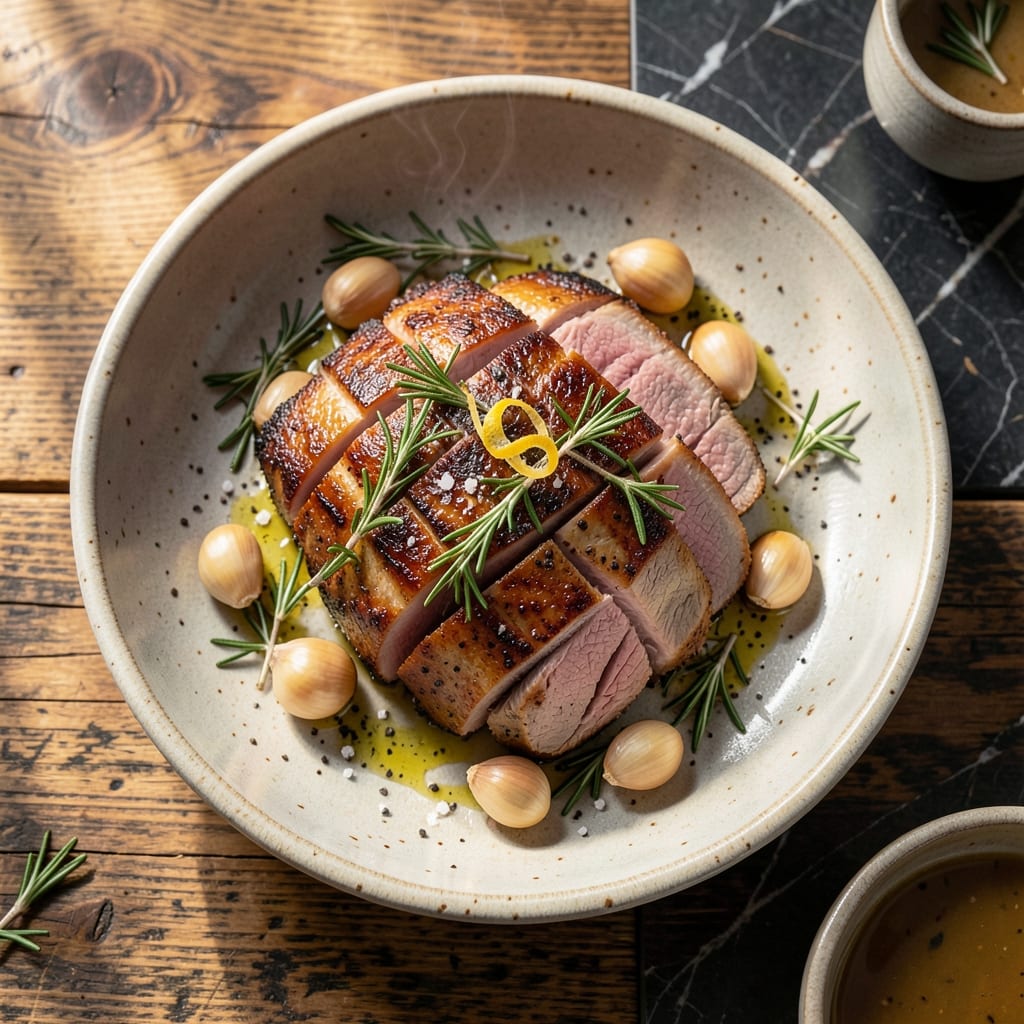
This slow-roasted pork loin delivers herb-infused succulence with minimal effort. I developed this method after years of testing different techniques, and the combination of rosemary and garlic creates a flavor profile that’s both elegant and approachable.
The key is searing the loin first to lock in juices, then roasting at a low temperature to ensure even cooking. Fresh rosemary and garlic form a crust that infuses every bite with aromatic depth, while the slow roasting process guarantees tender results.
What emerges from the oven is a perfectly cooked pork loin with a golden-brown exterior and juicy, flavorful meat throughout. The herbs and garlic create a natural pan sauce that’s ideal for drizzling over each serving.
Serve with roasted vegetables or mashed potatoes for a complete meal that feels special enough for company.
Ingredients for Pork Loin Recipe Rosemary Garlic
Elegant yet approachable ingredients for slow-roasted herb-infused pork loin perfection.
| Ingredient | Amount | Notes |
|---|---|---|
| Pork Loin 🥩 | 2 lb | Boneless, center-cut preferred |
| Fresh Rosemary 🌿 | 3 tbsp | Finely chopped, stems discarded |
| Garlic Cloves 🧄 | 6 cloves | Minced for maximum flavor infusion |
| Olive Oil 🫒 | 2 tbsp | Extra-virgin for searing |
| Kosher Salt 🧂 | 1 tsp | Diamond Crystal preferred |
| Black Pepper 🌶️ | 1 tsp | Freshly cracked for best results |
| Dijon Mustard 🟡 | 1 tbsp | Whole grain or smooth variety |
| Dry White Wine 🍷 | ½ cup | For deglazing pan |
| Chicken Stock 🥣 | ½ cup | Low-sodium preferred |
| Unsalted Butter 🧈 | 2 tbsp | For finishing the pan sauce |
| Shallot 🧅 | 1 whole | Finely minced for sauce |
| Fresh Thyme 🍃 | 1 tbsp | Leaves only, stems removed |
The pork loin must be center-cut and boneless for even cooking. Whole Foods or Costco have excellent quality—look for vibrant pink color and firm texture. Fresh rosemary is non-negotiable; dried lacks the aromatic depth. Organic garlic from the produce section offers superior flavor compared to pre-minced jars. The olive oil should be high-quality extra-virgin for searing at high heat.
No white wine? Apple cider vinegar diluted with water works in a pinch. Dried thyme can substitute for fresh at one-third the amount. Vegetable stock replaces chicken stock if needed. Shallots add subtle sweetness—yellow onion at half the quantity is acceptable. For the mustard, whole grain provides texture, but smooth Dijon is equally flavorful.
Store fresh herbs wrapped in damp paper towels for up to 5 days. The pork loin keeps in the fridge for 3-4 days before cooking. Leftover cooked pork freezes beautifully for 3 months—slice before freezing for easy portioning.
Why You’ll Love This Recipe
- One Pan Wonder: I just rub the pork loin with olive oil, salt, minced garlic and rosemary, then roast—no marinating, no flipping, no fuss.
- Herb-Crusted Heaven: The rosemary and garlic form this insane crust that’s fragrant and juicy with every bite.
- Feeds a Crowd: I’ve served this at Sunday dinner and it’s always the first thing to disappear—great for leftovers too.
- Budget Hero: A single pork loin feeds my family for two nights, and the ingredients are all pantry staples.
Step-by-Step Instructions for Rosemary Garlic Pork Loin
This method ensures a perfectly roasted pork loin with a fragrant herb crust and juicy interior.
Step 1: Prepare the Herb Marinade
In a small bowl, combine the 2 tbsp Olive Oil, 1 tbsp Dijon Mustard, 3 tbsp Fresh Rosemary, 6 cloves Garlic Cloves, 1 tbsp Fresh Thyme, 1 tsp Kosher Salt, and 1 tsp Black Pepper. Stir until the herbs are evenly distributed throughout the mixture.
This aromatic blend will infuse the pork loin with deep, earthy flavors while helping to create a beautiful golden crust. The Dijon mustard acts as a flavor binder, ensuring the herbs adhere to the meat during roasting.
Step 2: Season and Sear the Pork Loin
Pat the 2 lb Pork Loin dry with paper towels to ensure optimal browning. Rub the herb marinade all over the surface of the pork, making sure to coat it evenly. Let it sit at room temperature for 15-20 minutes to allow the flavors to begin penetrating the meat.
Heat a large oven-safe skillet over medium-high heat. Once hot, add the pork loin and sear on all sides until golden brown, about 2-3 minutes per side. This initial sear locks in juices and creates a flavorful fond for the pan sauce.
Step 3: Roast to Perfection
Preheat your oven to 375°F. Transfer the seared pork loin in the skillet to the oven and roast for 30-40 minutes, or until the internal temperature reaches 145°F on an instant-read thermometer.
Baste the pork loin with the pan juices halfway through the roasting time to enhance the flavor and moisture. The pork is done when the juices run clear and the internal temperature is reached. Let it rest in the skillet for 10 minutes before transferring to a cutting board.
Step 4: Create the Pan Sauce
Place the skillet with the pork drippings over medium heat. Add the 1 whole Shallot and sauté for 2-3 minutes until softened and slightly caramelized. Pour in the 0.5 cup Dry White Wine and scrape up any browned bits from the bottom of the skillet.
Let the wine reduce by half, then add the 0.5 cup Chicken Stock and bring to a simmer. Whisk in the 2 tbsp Unsalted Butter until the sauce is smooth and slightly thickened. Taste and adjust seasoning if needed.
Step 5: Slice and Serve
Slice the pork loin against the grain into ½-inch thick pieces. Arrange the slices on a serving platter and spoon the warm pan sauce over the top. The sauce should be rich, with a balance of acidic wine and savory stock.
Serve immediately, ensuring each portion gets a generous amount of the herbed pan sauce. The pork should be tender and juicy, with a fragrant crust that highlights the rosemary and garlic flavors.
Pro Tips For Making Pork Loin Recipe Rosemary Garlic
- Rest Before Slicing: Give the pork loin a solid 10 minutes under foil after roasting—I learned this the hard way when all the juices ended up on the cutting board instead of in the meat.
- Score the Fat: Make shallow cuts in the fat cap before seasoning so the rosemary and garlic actually penetrate, not just sit on top.
- Don’t Overcrowd the Pan: If searing first, use a large enough pan so the pork browns instead of steams—soggy rosemary garlic crust is a sad outcome.
- Use Room-Temp Garlic: Let the garlic sit out for 10 minutes after mincing so its flavor mellows and blends into the oil better than cold, raw cloves.
Best Sauces and Condiments for This Recipe
Classic Pan Sauce
The pan sauce you create while cooking is perfect as-is—I always tell David it’s the heart of this dish. The white wine and chicken stock base soaks up all the rosemary and garlic flavors from the pork. Just reduce it by half and finish with 2 tbsp butter for a velvety texture. 💫
Apple Compote
A sweet-tart apple compote balances the savory pork beautifully. Sauté 2 diced apples with 1 tbsp butter, 1 tbsp brown sugar, and a pinch of cinnamon until soft. The natural sweetness complements the herbs without overpowering them.
Garlic Aioli
For a creamy option, mix ½ cup mayo with 1 minced garlic clove, 1 tbsp lemon juice, and 1 tsp Dijon. This Austin farmers market favorite adds richness that pairs perfectly with the lean pork.
Rosemary Jus
Strain your pan sauce and reduce it further with an extra sprig of fresh rosemary for an elegant presentation. I like to drizzle this over each slice at the table—it highlights the herb notes in both the sauce and the meat.
This works especially well when serving for company. 🌟
Spicy Mustard
Mix ¼ cup Dijon with 1 tbsp honey and ½ tsp cayenne for a sweet-heat contrast. David always requests this—it cuts through the richness while echoing the mustard in the marinade.
Nutrition Facts
Frequently Asked Questions
How long should I let the pork rest before slicing?
Let it rest for at least 10 minutes after roasting. This allows the juices to redistribute, ensuring moist, tender slices. Skipping this step can result in dry meat.
Can I use dried rosemary instead of fresh?
Yes, but reduce the amount to 1 tbsp since dried herbs are more concentrated. Fresh rosemary provides better flavor, but dried works in a pinch.
What if my pork loin is larger than 2 lbs?
Increase the cooking time by about 10-15 minutes per additional pound. Always use a meat thermometer to check for 145°F internally.
Can I make this recipe ahead of time?
Cook and slice the pork, then store it in the fridge for up to 3 days. Reheat gently in the pan sauce to maintain moisture.

- Potato Chip Cookie Recipe With Pecans: Buttery Crunch Meets Nutty Richness - October 30, 2026
- Potato Patty Recipe No Egg: Crispy Edges Without the Binder - October 30, 2026
- Paula Deen’s Potato Chip Cookies Recipe: Salty-Sweet Crunch in Every Bite - October 30, 2026