
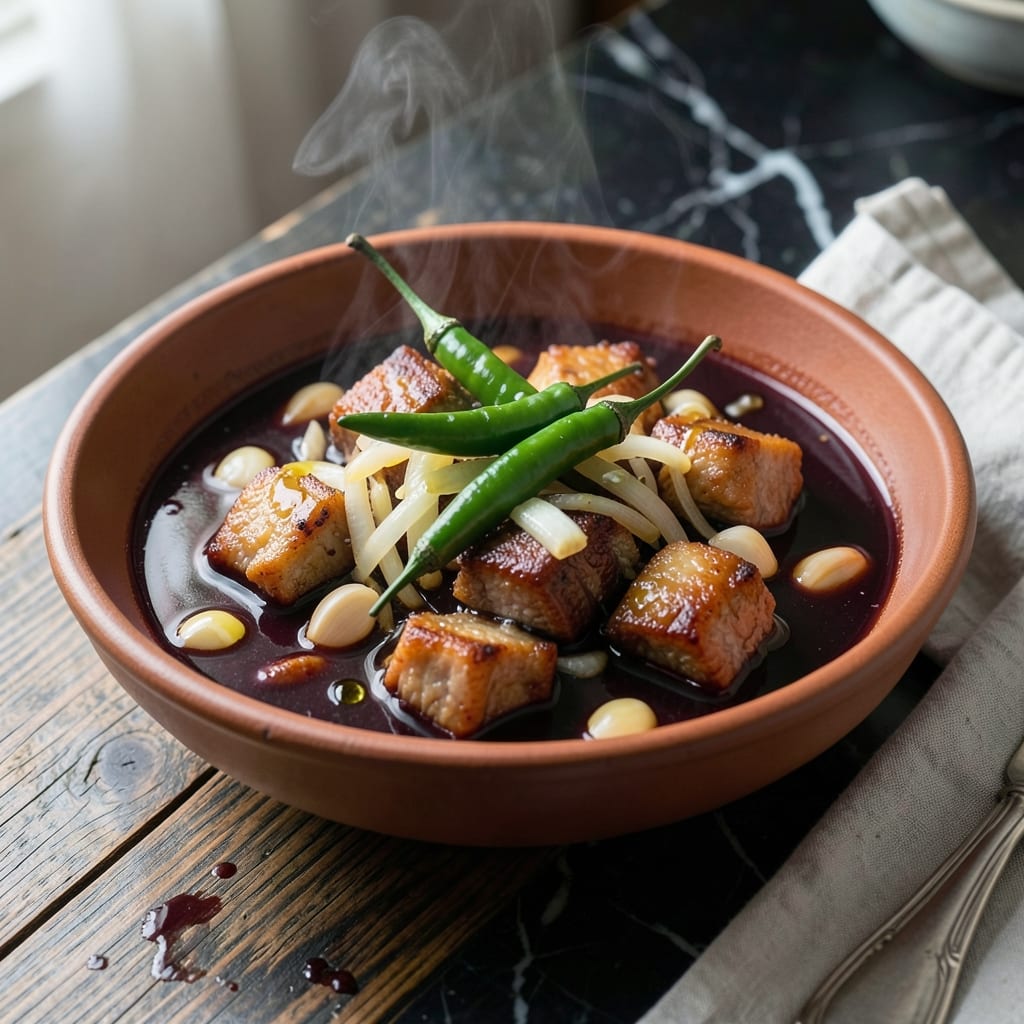
Few dishes capture Filipino culinary tradition quite like this rich, savory creation. I remember my grandmother making it without a recipe, relying on instinct and generations of knowledge to achieve the perfect balance of flavors.
This dish transforms simple ingredients into something deeply satisfying. The key lies in slow cooking to develop the traditional depth of flavor that makes it so beloved. Every bite carries the warmth of home cooking and cultural heritage.
What emerges is a hearty, aromatic dish with a velvety texture that coats every grain of rice. The combination of tangy vinegar and rich pork creates a harmony that’s both comforting and complex.
Serve it hot with steamed rice for an authentic experience that brings family together at the table.
Ingredients for Pork Blood Recipe Philippines
Traditional Filipino flavors start with pork, blood, and a handful of pantry staples. Rich, deep, and satisfying.
| Ingredient | Amount | Notes |
|---|---|---|
| Pork Blood 🩸 | 2 cups | Fresh, liquid, from butcher |
| Pork Belly 🥓 | 1 ½ lb | Cut into small cubes |
| White Vinegar 🍶 | 1 cup | Cane vinegar preferred |
| Garlic Cloves 🧄 | 8 cloves | Minced for depth of flavor |
| Yellow Onion 🧅 | 1 whole | Medium, finely chopped |
| Long Green Chilies 🌶️ | 3 pieces | Sliced diagonally (optional) |
| Bay Leaves 🍃 | 2 pieces | Dried, for aroma |
| Ground Black Pepper 🌶️ | 1 tsp | Freshly ground preferred |
| Salt 🧂 | 1 tsp | Adjust to taste |
| Sugar 🥄 | 1 tsp | White or brown |
| Vegetable Oil 🫒 | 2 tbsp | For sautéing aromatics |
| Water 💧 | 1 cup | As needed for consistency |
The pork blood is non-negotiable here. Ask your local butcher in advance—many Asian markets carry it frozen. Pork belly gives the right fat-to-meat ratio for that silky texture, but pork shoulder works if that’s what you can find. Look for fresh blood with no clotting. At Filipino grocery stores, they often stock it pre-packaged in the freezer section. Always thaw it in the fridge overnight.
No pork blood? There’s no true substitute, but chicken blood (common in some regions) can work in a pinch. Out of vinegar? Calamansi or lemon juice at half the amount adds the needed tang. If you can’t find pork belly, pork shoulder or even ground pork will do—just adjust the cooking time. The chilies are optional but add a nice kick (remove seeds for less heat).
This keeps well in the fridge for up to 3 days and actually tastes better the next day. Freeze portions for up to 3 months—just thaw and reheat gently. Always store in airtight containers to preserve the rich flavors.
Why You’ll Love This Recipe
- One Pot Meal: I just toss the pork belly, blood, and vinegar in a single pot—minimal cleanup, maximum flavor.
- Rich Umami Bomb: The garlic and onion caramelize with the pork, creating a deep, savory taste that’s purely Filipino comfort.
- Feeds a Hungry Crowd: I make a big batch for family gatherings, and it’s always the first dish to disappear.
- Stretches Your Budget: Pork blood is affordable, and a little goes a long way—honestly, it’s one of my most cost-effective meals.
Step-by-Step Instructions for Traditional Dinuguan
Follow this time-honored method to create a rich, savory stew with authentic Filipino flavors.
Step 1: Sauté Aromatics and Brown Pork Belly
Heat the 2 tbsp Vegetable Oil in a large pot over medium heat. Add the finely chopped Yellow Onion and cook for 2-3 minutes until it starts to soften and turn translucent. This builds the flavor base for the entire dish.
Stir in the minced Garlic Cloves and cook for another 30 seconds until fragrant. Be careful not to let it brown. Add the cubed Pork Belly and cook for 5-7 minutes, stirring occasionally, until the edges begin to brown. This step develops deep, caramelized flavors.
Step 2: Season and Simmer the Pork
Once the Pork Belly is browned, add the 1 cup White Vinegar and let it simmer for 3-4 minutes to cook off the sharp acidity. This is crucial—it mellows the vinegar while keeping its tangy essence.
Season with the 1 tsp Salt, 1 tsp Ground Black Pepper, and 1 tsp Sugar. Add the Bay Leaves and Long Green Chilies. Pour in the 1 cup Water, then bring to a boil. Reduce heat to low, cover, and simmer for 40-45 minutes until the Pork Belly is tender.
Step 3: Incorporate the Pork Blood
Gradually pour in the 2 cups Pork Blood while stirring constantly to prevent curdling. This step requires attention—keep the heat at a gentle simmer, not a rolling boil. Stir in a figure-eight motion to create a smooth, velvety texture.
Let the mixture cook for another 10-12 minutes until it thickens to your desired consistency. You’ll notice the color deepen to a rich, chocolatey brown. Taste and adjust seasoning with additional Salt if needed, but remember the flavors will intensify as it rests.
Step 4: Rest and Serve
Remove the pot from heat and let the Dinuguan rest for 5 minutes. This allows the flavors to meld together and the sauce to reach its final thickness. Discard the Bay Leaves before serving.
Ladle into bowls while warm. The stew should have a thick, almost pudding-like consistency with tender Pork Belly pieces suspended in a rich, dark sauce. Serve with steamed white rice to soak up every last bit of the savory goodness.
Pro Tips For Making Pork Blood Recipe Philippines
- Bloom the Aromatics: Cook the garlic and onion in pork fat until golden but not browned—I learned this the hard way after bitter batches. The fat from the pork belly adds depth you can’t get from oil.
- Stir the Blood: Keep the pork blood moving constantly as it thickens to prevent clumping. After burning two pots, I finally figured out that low, steady heat and a wooden spoon work best.
- Vinegar Last: Add the white vinegar only after the blood has thickened to avoid curdling. My grandmother swore by this, and she was right: it keeps the texture smooth.
- Use Fresh Blood: Skip the pre-packaged blood if it’s been sitting too long—it loses its rich color and flavor. Sounds weird, but it works: ask your butcher for the freshest batch.
Regional Styles of These Flavors
Manila Classic Style
In the capital, this dish often includes extra pork offal like liver or intestines for added texture. I remember my grandmother adding chopped pork ears for a satisfying chew. The vinegar ratio stays the same, but some cooks add soy sauce for umami depth. 🗺️
Pampanga Variation
This region’s version leans sweeter, with 1 additional tbsp sugar and sometimes pineapple chunks for contrast. The Kapampangan approach uses more garlic—sometimes double the amount. I love how the sweetness balances the tang.
Visayan Approach
In the Visayas, they often use coconut vinegar instead of cane vinegar for a milder acidity. Some versions include shredded coconut meat for richness. The cooking time remains similar, but the flavor profile shifts subtly.
Ilocano Style
Up north, they add bitter melon (ampalaya) for a unique contrast. The preparation stays the same, but the ampalaya slices are added with the pork belly. This variation reflects the region’s love for bitter flavors.
I find this version particularly interesting as it adds a new dimension to the dish’s complexity.
Modern Fusion
Some contemporary cooks add mushrooms or tofu for vegetarian-friendly versions. While not traditional, these adaptations maintain the dish’s spirit. The blood remains essential for authenticity.
Nutrition Facts
Frequently Asked Questions
Where can I buy pork blood for this dish?
Check Filipino or Asian grocery stores first—they often carry it frozen. Call ahead to confirm availability. Local butchers may also source it if requested 2-3 days in advance.
Can I make this without blood?
No true substitute exists, but chicken blood works in a pinch. For a vegetarian version, some use beet juice for color and mushroom broth for depth, though the taste differs.
How do I prevent the blood from curdling?
Keep heat at a gentle simmer, never boiling. Stir constantly in a figure-eight motion while adding blood slowly. Using fresh, unclotted blood helps too.
How long does this keep in the fridge?
Store in an airtight container for up to 3 days. The flavors deepen overnight. For longer storage, freeze for up to 3 months.

- Potato Chip Cookie Recipe With Pecans: Buttery Crunch Meets Nutty Richness - October 30, 2026
- Potato Patty Recipe No Egg: Crispy Edges Without the Binder - October 30, 2026
- Paula Deen’s Potato Chip Cookies Recipe: Salty-Sweet Crunch in Every Bite - October 30, 2026