
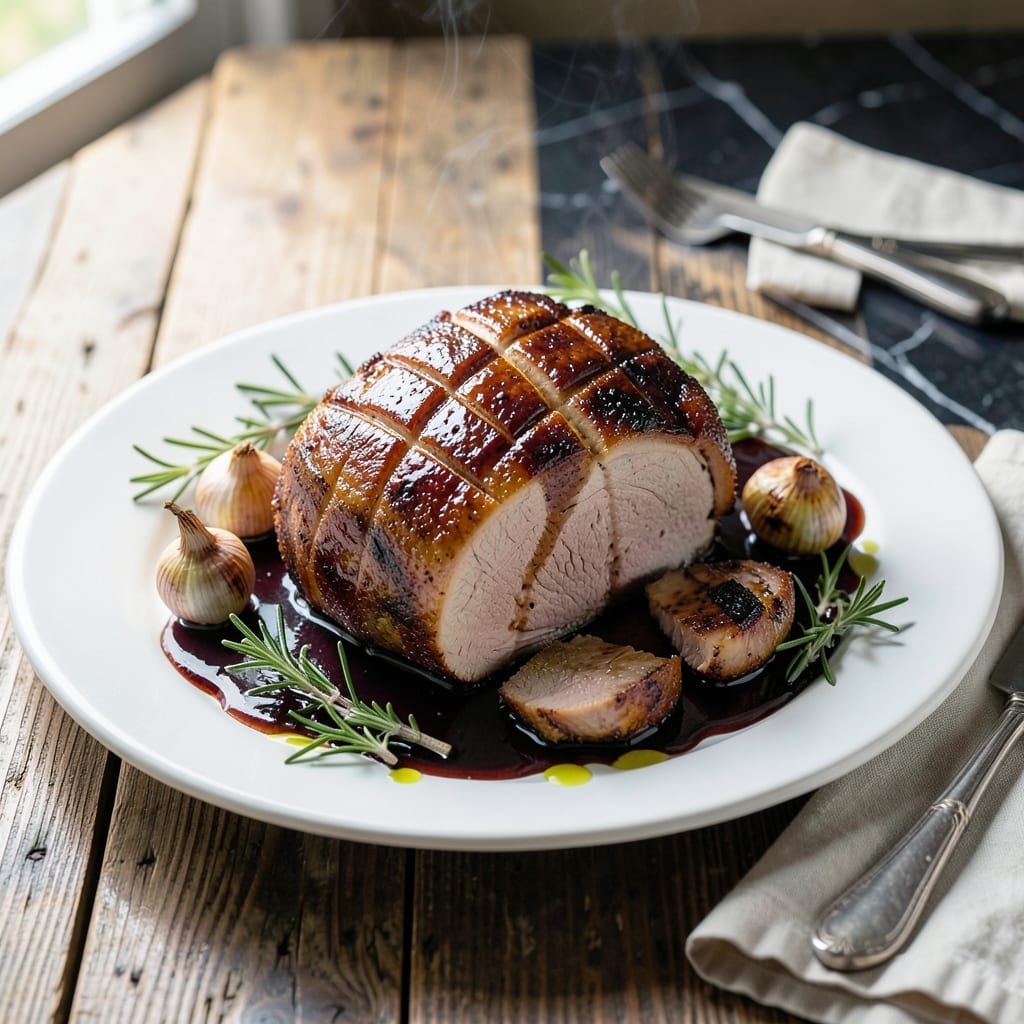
This oven-roasted pork recipe delivers tender results with a sweet-tart balsamic glaze that caramelizes beautifully. I developed this method after testing multiple approaches in my small Boston kitchen to find the most reliable technique.
The balsamic vinegar creates a sticky, flavorful crust while keeping the meat incredibly juicy. A simple dry rub enhances the natural pork flavors without overpowering. The glaze reduces into a glossy finish that’s both elegant and deeply flavorful.
At 325°F, the pork cooks evenly while the glaze develops its signature shine. The result is succulent meat with a perfect balance of sweetness and acidity that complements every bite.
This dish proves that impressive meals don’t require complicated techniques. The balsamic glaze elevates the pork to restaurant-quality with minimal effort.
Ingredients for Pork Roast Recipe with Balsamic Vinegar
A handful of pantry staples and fresh herbs transform pork into a restaurant-worthy centerpiece.
| Ingredient | Amount | Notes |
|---|---|---|
| Pork Shoulder 🐖 | 3 lb | Bone-in, skin scored |
| Balsamic Vinegar 🍷 | ¾ cup | Aged for depth |
| Brown Sugar 🍚 | ¼ cup | Light or dark variety |
| Garlic Cloves 🧄 | 6 cloves | Minced finely |
| Dijon Mustard 🟡 | 2 tbsp | Smooth texture preferred |
| Kosher Salt 🧂 | 2 tsp | Diamond Crystal preferred |
| Black Pepper 🌶️ | 1 ½ tsp | Freshly ground |
| Dried Rosemary 🌿 | 1 tbsp | Crushed for aroma |
| Olive Oil 🫒 | 2 tbsp | Extra-virgin for richness |
| Onion 🧅 | 1 whole | Yellow or sweet, diced |
| Chicken Stock 🥣 | ½ cup | Low-sodium preferred |
| Honey 🍯 | 2 tbsp | Optional for extra sweetness |
The pork shoulder is non-negotiable for this dish—bone-in, well-marbled cuts from Whole Foods or a trusted butcher ensure the juiciest results. Look for pieces with a fat cap at least 1/4-inch thick; it renders down during roasting, basting the meat. Aged balsamic vinegar (check Trader Joe’s for affordable options) delivers the complex sweet-tart profile that defines the glaze.
No pork shoulder? Pork butt works identically (they’re from the same primal cut). Swap brown sugar for maple syrup at one-third the amount for a less refined sweetness. If avoiding honey, agave nectar substitutes seamlessly. Fresh rosemary can replace dried at a 3:1 ratio, but the dried version concentrates flavor beautifully in the rub.
The roast holds well at room temperature for 2 hours before serving—ideal for dinner parties. Refrigerate leftovers within 2 hours; they keep for 4-5 days or freeze for 3 months. Slice only what you need, as the glaze preserves moisture on the uncut portion.
Why You’ll Love This Recipe
- Set It and Forget: That pork shoulder just needs a quick rub with brown sugar and garlic, then the oven does all the work.
- Sticky Sweet Tang: The balsamic and Dijon caramelize into this ridiculous glaze that clings to every bite.
- Feeds My Family Twice: One roast means dinner tonight and killer sandwiches tomorrow—no waste, no stress.
- Budget Hero: Pork shoulder is cheap, and that vinegar sugar crust makes it taste like a million bucks.
Step-by-Step Instructions for Pork Roast With Balsamic Glaze
Here’s the method. Straightforward, tested, works every time.
Step 1: Score and Season the Pork Shoulder
Pat the 3 lb Pork Shoulder dry with paper towels, then score the fat cap in a crosshatch pattern. This allows the glaze to penetrate deeper and creates more surface area for browning.
Rub the pork all over with 2 tsp Kosher Salt, 1.5 tsp Black Pepper, and 1 tbsp Dried Rosemary. I crush the rosemary between my fingers first to release its aromatic oils. Let the seasoned pork sit at room temperature for 30 minutes while you prepare the glaze.
Step 2: Create the Balsamic Glaze
In a small saucepan, combine 0.75 cup Balsamic Vinegar, 0.25 cup Brown Sugar, 2 tbsp Dijon Mustard, 6 cloves Garlic Cloves, and 2 tbsp Honey. Simmer over medium heat for 8-10 minutes until reduced by about half and slightly thickened.
The glaze should coat the back of a spoon but still be pourable. This reduction concentrates the flavors and ensures it won’t slide off the pork during roasting. Remove from heat and let cool slightly.
Step 3: Sear and Begin Roasting
Preheat your oven to 375°F. Heat 2 tbsp Olive Oil in a large oven-safe pot or Dutch oven over medium-high heat. Sear the pork on all sides until deep golden brown, about 3-4 minutes per side.
Transfer the pork to a plate and add 1 whole Onion (diced) to the pot. Cook for 3 minutes until softened. Return the pork to the pot, fat cap up, and pour the glaze over it. Add 0.5 cup Chicken Stock to the bottom of the pot.
Step 4: Roast to Perfection
Cover the pot and transfer to the preheated oven. Roast for 2 hours, then uncover and roast for an additional 30-45 minutes. The pork is done when the internal temperature reaches 195°F and the meat shreds easily with a fork.
Baste the pork with the pan juices every 30 minutes during the uncovered roasting time. This builds layers of flavor and creates a beautiful, glossy exterior. The onions in the bottom will have caramelized into a rich, sweet base for the sauce.
Step 5: Rest and Serve
Transfer the pork to a cutting board and let it rest for 15-20 minutes before shredding or slicing. This allows the juices to redistribute throughout the meat, ensuring every bite is moist and flavorful.
Skim excess fat from the cooking liquid and serve it alongside the pork. The sauce will have reduced into a thick, tangy-sweet glaze that perfectly complements the rich, tender meat. Serve with crusty bread or roasted vegetables to soak up the sauce.
Pro Tips For Making Pork Roast Recipe With Balsamic Vinegar
- Sear the Pork First: I learned this the hard way—browning the pork shoulder in a hot pan for 3-4 minutes per side locks in juices and gives the balsamic glaze something to cling to.
- Reduce the Vinegar: Simmer the balsamic vinegar with brown sugar for 5 minutes before adding it to the pork; it thickens the glaze and mellows the acidity.
- Don’t Rush the Rest: After roasting, let the pork rest for at least 15 minutes under foil—skipping this makes the meat dry out when you slice it.
- Crush the Garlic: Smash the garlic cloves lightly before adding them; it releases more flavor into the balsamic sauce without leaving harsh chunks.
Serving Suggestions for This pork roast recipe with balsamic vinegar
Plating Presentation
I love serving this pork on a large wooden board for a rustic feel. Arrange the shredded meat in a loose pile, then drizzle the reduced pan sauce in a zigzag pattern. Garnish with fresh rosemary sprigs for color contrast against the dark glaze.
Side Pairings
Creamy polenta makes an ideal base to soak up the balsamic sauce. For a Boston touch, serve with roasted Brussels sprouts tossed with a bit of the leftover glaze. The slightly bitter greens balance the sweetness beautifully. 💛
Bread Options
A crusty Italian loaf or ciabatta from my neighborhood bakery is perfect for mopping up every last bit of sauce. Toast slices lightly with garlic butter for extra flavor. I always make more bread than needed—leftovers disappear fast.
Fresh Elements
Add brightness with a simple arugula salad dressed with lemon and olive oil. The peppery greens cut through the richness. A handful of pomegranate seeds adds a pop of color and tartness that complements the balsamic perfectly.
Family-Style Serving
For gatherings, keep the pork whole on a platter with the sauce in a separate bowl. Let guests serve themselves with tongs and a spoon for the sauce. This works especially well in my small kitchen where counter space is limited.
Garnish Touches
Finish each plate with a sprinkle of flaky sea salt and cracked black pepper. The texture contrast elevates the dish. A drizzle of extra-virgin olive oil just before serving adds a silky finish. 🔥
Nutrition Facts
Frequently Asked Questions
Can I use a different cut of pork?
Yes, pork butt works identically since it’s from the same primal cut. Avoid lean cuts like tenderloin as they dry out during long roasting. The fat content in shoulder or butt is essential for tenderness.
How do I prevent the glaze from burning?
Keep the oven at 375°F and baste every 30 minutes once uncovered. If the glaze starts darkening too quickly, tent the pork loosely with foil. The sugar in the glaze can caramelize fast.
What if my pork isn’t shredding at 195°F?
Give it more time—some cuts need up to 205°F to break down fully. Check the thickest part with a fork. If it resists, return to the oven for 15-20 minutes more.

- Potato Patty Recipe No Egg: Crispy Edges Without the Binder - October 30, 2026
- Paula Deen’s Potato Chip Cookies Recipe: Salty-Sweet Crunch in Every Bite - October 30, 2026
- Potato Gnocchi Recipe Ideas: Pillowy Soft Dumplings With Rustic Charm - October 30, 2026