
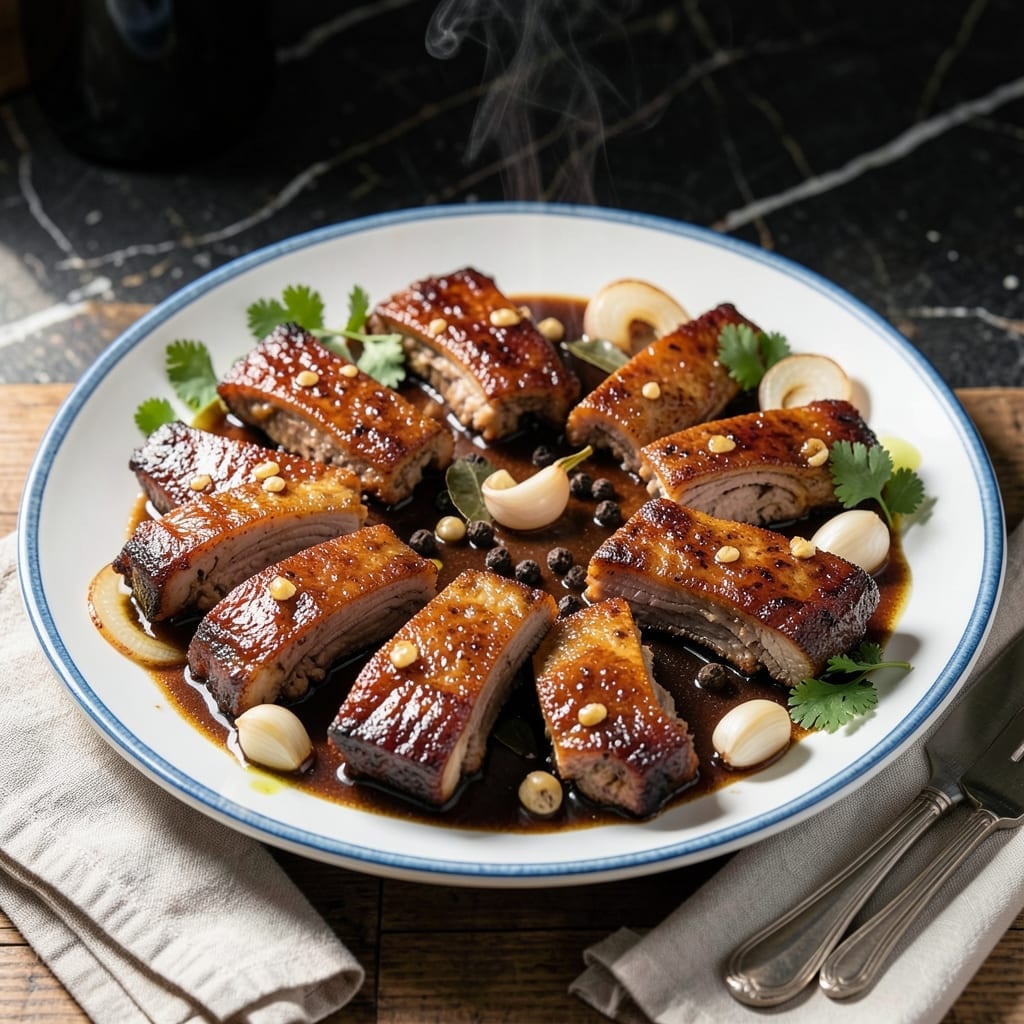
I developed this recipe after testing dozens of adobo variations, searching for the perfect balance between tangy and savory that defines authentic Pinoy flavors. The secret lies in the slow braising method that transforms tough ribs into tender, fall-off-the-bone perfection.
This approach uses simple ingredients you likely already have in your pantry, making it accessible without sacrificing authenticity. The adobo glaze reduces to a sticky, caramelized coating that clings to every rib, creating layers of flavor with each bite.
What emerges is a dish that captures the essence of Filipino comfort food—rich, deeply flavorful, and satisfying. The ribs become so tender they nearly dissolve in your mouth, while the sauce develops a complex balance of salty, sour, and slightly sweet notes.
Perfect for family dinners or special occasions, this method delivers consistent results every time. The long cooking process ensures the meat absorbs maximum flavor while becoming irresistibly tender.
Ingredients for Pork Ribs Recipe Pinoy
Simple pantry staples combine to create this rich, authentic Filipino-inspired dish with deep, layered flavors.
| Ingredient | Amount | Notes |
|---|---|---|
| Pork Baby Back Ribs 🥩 | 2 ½ lb | Cut into individual ribs |
| Soy Sauce 🫒 | ¾ cup | Low-sodium preferred for balance |
| White Vinegar 💧 | ½ cup | Cane or distilled works best |
| Garlic Cloves 🧄 | 8 cloves | Peeled and crushed |
| Bay Leaves 🍃 | 3 pieces | Dried, whole leaves |
| Black Peppercorns 🌶️ | 1 tbsp | Whole, lightly crushed |
| Brown Sugar 🍚 | ¼ cup | Light or dark, packed |
| Onion 🧅 | 1 whole | Yellow or white, sliced |
| Water 💧 | 1 cup | For braising liquid |
| Vegetable Oil 🫒 | 2 tbsp | For searing ribs |
| Salt 🧂 | 1 tsp | Kosher or sea salt |
| Green Onions 🧅 | 4 whole | Thinly sliced for garnish |
The ribs are the foundation here. Baby back ribs give you the best meat-to-bone ratio and stay tender during the long braise. Look for ribs with good marbling at Costco or your local butcher—they’ll have the freshest cuts. Avoid pre-cut ribs if possible; whole racks let you control the size. The soy sauce should be a quality brand like Silver Swan or Datu Puti for that true Pinoy flavor.
Short on soy sauce? Tamari at half the amount works but adds depth—adjust salt to taste. No white vinegar? Apple cider vinegar brings a fruity note that complements the dish. Brown sugar can be swapped for coconut sugar (same amount). Fresh garlic is non-negotiable here—jarred lacks the punch. Don’t skip the bay leaves; they add an earthy base that balances the acidity.
Adobo tastes even better the next day as the flavors meld. Store in an airtight container for up to 4 days in the fridge or freeze for 3 months. Reheat gently to keep the ribs from drying out. Always garnish with fresh green onions just before serving.
Why You’ll Love This Recipe
- One Pot Wonder: I toss everything in a single pot—ribs, soy sauce, vinegar, garlic—and let it simmer. Cleanup is almost laughably easy.
- Garlic Bay Bomb: The garlic cloves and bay leaves infuse the ribs with that deep, savory Pinoy flavor I crave every time.
- Feeds the Gang: I make a big batch for family gatherings and it’s always the first dish to disappear.
- Budget Stretch: Pork ribs go a long way, and the pantry staples keep the cost low. Honestly, it’s my wallet’s best friend.
Step-by-Step Instructions for Fall-Off-The-Bone Adobo Glaze Pork Ribs
Here is the tested method. Precise, reliable, and delivers tender ribs with rich Filipino adobo flavor.
Step 1: Sear the Pork Baby Back Ribs
Heat 2 tbsp vegetable oil in a large pot over medium-high heat until shimmering. Add the 2.5 lb pork baby back ribs, cut into individual pieces, and sear for 3-4 minutes per side until deeply browned.
Don’t overcrowd the pot—work in batches if needed. You want a good crust on each piece without steaming them. The ribs are ready to flip when they release easily from the bottom of the pot.
Step 2: Build the Adobo Braising Liquid
In the same pot, add the sliced onion and cook for 2 minutes until softened. Stir in 8 cloves peeled and crushed garlic cloves, 3 pieces bay leaves, and 1 tbsp lightly crushed black peppercorns and cook for 1 minute until fragrant.
Pour in the 0.75 cup soy sauce, 0.5 cup white vinegar, 0.25 cup packed brown sugar, 1 cup water, and 1 tsp salt. Stir until the brown sugar dissolves completely. This creates the signature adobo glaze that will infuse the ribs.
Step 3: Braise the Ribs Until Tender
Return all the seared pork baby back ribs to the pot, ensuring they are mostly submerged in the liquid. Bring to a boil, then reduce heat to low, cover, and simmer for 1.5 to 2 hours.
Check occasionally and add a splash of water if the liquid reduces too much. The ribs are done when the meat pulls away from the bone with minimal resistance, typically around the 2-hour mark. The sauce will thicken slightly and develop a glossy sheen.
Step 4: Reduce the Sauce and Finish
Once the ribs are tender, transfer them to a serving platter. Increase the heat to medium-high and let the braising liquid simmer uncovered for 5-7 minutes until it reduces to a thick, syrupy glaze that coats the back of a spoon.
Taste the sauce and adjust seasoning if needed, though the balance of soy sauce, vinegar, and brown sugar should already be spot-on. Pour this reduced glaze over the ribs, turning to coat every piece evenly.
Step 5: Garnish and Serve
Slice the 4 whole green onions thinly and sprinkle them over the glazed ribs as a fresh, colorful garnish. Let the ribs rest for 5 minutes to allow the glaze to set slightly before serving.
Serve the ribs with steamed rice to soak up the rich adobo glaze. Each bite should deliver fall-off-the-bone tenderness with a perfect balance of salty, tangy, and slightly sweet flavors characteristic of authentic Filipino adobo.
Pro Tips For Making Pork Ribs Recipe Pinoy
- Simmer Low and Slow: Keep the heat at a gentle simmer for at least 1 hour—any higher and the ribs turn tough instead of fall-off-the-bone tender. I learned this the hard way after ending up with chewy meat more than once.
- Score the Ribs: Make shallow cuts between the bones before marinating so the soy sauce, vinegar, and garlic penetrate deeper. Sounds weird, but it actually changes the outcome.
- Skip the Overcrowding: If boiling the ribs first, use a pot big enough to hold them in a single layer. Resist the urge to cram them in—it leads to uneven cooking.
- Rest Before Serving: Let the ribs sit in their sauce for 10-15 minutes off the heat after cooking. My grandmother swore by this, and she was right: it locks in the flavor.
Common Mistakes When Making This Recipe
Overcrowding the Pot
Never dump all 2.5 lb pork baby back ribs into the pot at once. I learned this the hard way—steaming instead of searing turns your ribs gray and flavorless. Work in batches for that perfect medium-high heat crust. David can attest to the difference this makes. 🔥
Vinegar Timing
Adding 0.5 cup white vinegar too early can prevent the meat from browning properly. I wait until after searing to introduce the vinegar. This preserves the Maillard reaction we worked so hard to achieve.
Skipping the Sear
Some argue searing is unnecessary for braised dishes, but I disagree. That initial crust adds depth to the final dish. Use 2 tbsp vegetable oil and don’t rush—3-4 minutes per side creates the flavor foundation.
Sauce Reduction
Don’t walk away during the final reduction. The line between perfect glaze and burnt sauce is thin. At medium-high heat, it takes just 5-7 minutes to reach that syrupy consistency. I set a timer to be safe.
Resting the Ribs
After glazing, give your ribs 5 minutes to rest. This lets the sauce cling properly. Serving immediately means most of that beautiful adobo glaze ends up on the plate, not the ribs.
Bay Leaf Removal
Nutrition Facts
Frequently Asked Questions
What cut of ribs works best?
Baby back ribs are ideal for their tender meat and perfect size. They cook evenly during the 1.5-2 hour braise and absorb the adobo flavors beautifully. Spareribs work too but may need 30 minutes longer.
Can I make this without vinegar?
Vinegar is essential for authentic adobo flavor, but in a pinch use 1/4 cup calamansi or lemon juice. The acidity balances the soy sauce and tenderizes the meat. Don’t skip it entirely.
How do I adjust the sweetness?
Start with 1/4 cup brown sugar, then taste before reducing. For less sweetness, reduce to 2 tbsp. For more, add 1 tbsp at a time. The sauce should be tangy-sweet, not desert-like.
What if my sauce is too thin?
Simmer uncovered at medium-high heat for 5-7 minutes. If still thin, mix 1 tsp cornstarch with water and stir in. The glaze should coat the back of a spoon thickly.

- Potato Patty Recipe No Egg: Crispy Edges Without the Binder - October 30, 2026
- Paula Deen’s Potato Chip Cookies Recipe: Salty-Sweet Crunch in Every Bite - October 30, 2026
- Potato Gnocchi Recipe Ideas: Pillowy Soft Dumplings With Rustic Charm - October 30, 2026