
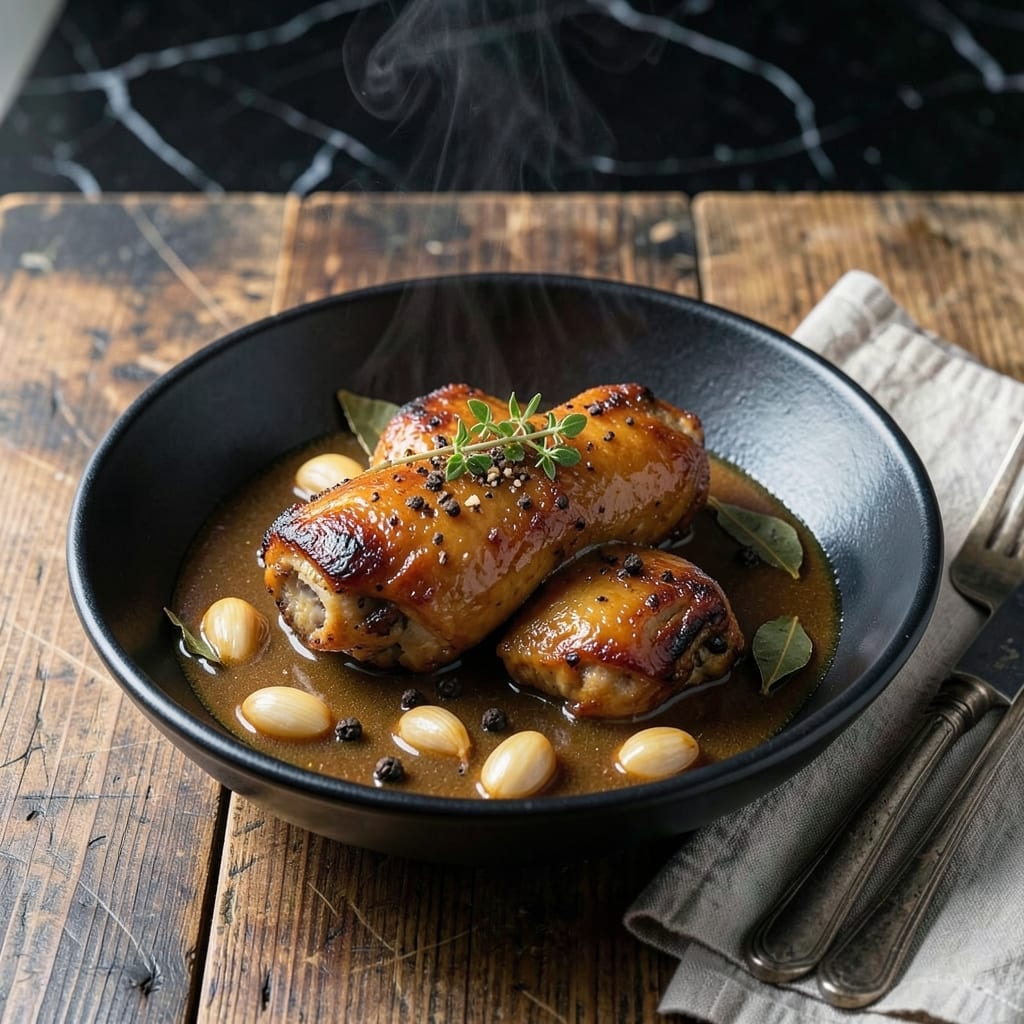
Few dishes represent Filipino cuisine as authentically as chicken adobo, with its perfect balance of tangy vinegar and rich soy sauce. This recipe captures the traditional braising technique that transforms simple ingredients into tender, flavorful perfection.
What sets this version apart is the slow simmering process, allowing the chicken to absorb every layer of the marinade. The vinegar mellows during cooking while maintaining its signature sharpness that defines authentic adobo.
The result is fall-off-the-bone chicken bathed in a glossy, deeply seasoned sauce that’s both savory and slightly tangy. Each bite delivers the comfort and complexity that makes this dish a national treasure.
Serve with steamed rice to soak up every drop of the incredible sauce. Here’s how to make it exactly right.
Ingredients for Authentic Chicken Adobo Recipe Filipino
Traditional Filipino flavors start with these quality ingredients for authentic vinegar-braised perfection.
| Ingredient | Amount | Notes |
|---|---|---|
| Chicken Thighs 🍗 | 2 lb | Boneless, skin-on preferred for flavor |
| White Vinegar 💧 | ¾ cup | Or cane vinegar for authenticity |
| Soy Sauce 🫒 | ¾ cup | Use Silver Swan or Datu Puti brand |
| Garlic Cloves 🧄 | 10 cloves | Minced for maximum flavor infusion |
| Bay Leaves 🍃 | 5 pieces | Dried, whole for aroma |
| Black Peppercorns 🌶️ | 1 tbsp | Lightly crushed for freshness |
| Brown Sugar 🍚 | 1 tbsp | Optional for balancing acidity |
| Water 💧 | ½ cup | To adjust sauce consistency |
| Vegetable Oil 🫒 | 2 tbsp | For searing chicken thighs |
| Green Onions 🧅 | 4 whole | Thinly sliced for garnish |
| Jasmine Rice 🍚 | 2 cups | Uncooked, for serving |
| Kosher Salt 🧂 | 1 tsp | Adjust to taste after cooking |
The chicken thighs are non-negotiable here. Bone-in, skin-on yields the most flavorful result—Costco or Asian markets often have the best selection. For vinegar, cane vinegar is traditional, but white vinegar works in a pinch. Silver Swan soy sauce is the gold standard for Filipino cooking, available at most Asian grocery stores or online.
No cane vinegar? Apple cider vinegar at a 1:1 ratio gets you close. Out of bay leaves? Dried thyme at half the amount can substitute, though the flavor profile shifts slightly. For a deeper sauce, reduce the water by half. The brown sugar can be omitted, but it helps balance the vinegar’s sharpness—coconut sugar works too.
The adobo sauce deepens in flavor over 24 hours. Store leftovers in an airtight container in the fridge for up to 5 days. For longer storage, freeze the sauce and chicken separately for up to 3 months. Reheat gently to preserve the tender texture.
Why You’ll Love This Recipe
- One Pot Wonder: I toss everything in a single pan—chicken, vinegar, soy sauce, garlic—and let it simmer while I set the table.
- Tangy Garlic Bomb: The vinegar and soy sauce blend into this rich, tangy sauce that soaks into the chicken thighs, and the garlic? Absolute perfection.
- Feeds a Crowd: I make a big batch for Sunday dinner, and it’s just as good reheated for lunch the next day.
- Pantry Staples: Honestly, I always have soy sauce, vinegar, and garlic on hand, so this comes together even when the fridge is bare.
Step-by-Step Instructions for Vinegar-Braised Chicken Adobo
Master the technique that defines Filipino comfort food with these precise, traditional steps.
Step 1: Sear the Chicken Thighs for Depth of Flavor
Heat the 2 tbsp vegetable oil in a large, heavy-bottomed pot over medium-high heat until it shimmers. Pat the 2 lb chicken thighs dry with paper towels to ensure a good sear—this prevents steaming and promotes browning.
Add the chicken thighs skin-side down and sear undisturbed for 5-6 minutes until the skin renders its fat and turns deep golden brown. Flip and sear the other side for 3-4 minutes. Remove the chicken and set aside. This step builds a flavor foundation that defines authentic adobo.
Step 2: Sauté Aromatics and Toast Spices
In the same pot, reduce heat to medium and add the 10 cloves minced garlic cloves. Sauté for 30-45 seconds until fragrant but not browned—burnt garlic adds bitterness. Immediately add the 5 pieces bay leaves and 1 tbsp lightly crushed black peppercorns.
Toast the spices for 15-20 seconds until the bay leaves release their aroma. This brief toasting step wakes up the spices and ensures their flavors infuse fully into the dish. Watch closely to avoid burning.
Step 3: Build the Braising Liquid and Simmer
Pour in the 0.75 cup soy sauce, 0.75 cup white vinegar, and 0.5 cup water. Stir to deglaze the pot, scraping up all the browned bits from the bottom—this is pure flavor. Add the 1 tbsp brown sugar and 1 tsp kosher salt, stirring until dissolved.
Return the chicken to the pot, skin-side up. The liquid should just cover the chicken. Bring to a gentle simmer, then reduce heat to low. Cover and let it braise for 35-40 minutes, turning the chicken halfway through, until the meat is fall-off-the-bone tender.
Step 4: Reduce the Sauce and Finish
Once the chicken is tender, remove the lid and increase heat to medium-high. Simmer uncovered for 10-12 minutes to reduce the sauce by about half. The sauce should coat the back of a spoon and have a glossy, slightly syrupy consistency.
Taste and adjust seasoning if needed, though the balance of salty, sour, and slightly sweet should already be perfect. Discard the bay leaves before serving. This reduction step is crucial for achieving the signature adobo sauce thickness.
Step 5: Serve with Jasmine Rice and Garnish
Cook the 2 cups jasmine rice according to package instructions. Thinly slice the 4 whole green onions just before serving to preserve their freshness. Arrange the chicken over the steamed rice and spoon the reduced sauce generously over the top.
Garnish with the sliced green onions. The contrast of the tender, saucy chicken with the fluffy rice and crisp green onions completes the dish. Serve immediately while hot for the best texture and flavor.
Pro Tips For Making Authentic Chicken Adobo Recipe Filipino
- Simmer Low and Slow: I learned this the hard way—boiling the vinegar too hard turns the chicken tough. Keep it at a gentle simmer for 30-40 minutes so the flavors meld without drying out the meat.
- Use Bone-In Thighs: Skip the boneless cuts; bone-in, skin-on thighs stay juicier and absorb the adobo sauce better. The fat renders out, making the dish richer.
- Balance the Vinegar: After burning a batch with too much acid, I now use a 1:1 ratio of vinegar to soy sauce. Taste before serving—add a splash of sugar if it’s too sharp.
- Reduce the Sauce: Once the chicken is cooked, crank the heat to medium-high and let the sauce thicken for 5-7 minutes. It clings to the meat better and intensifies the flavor.
Common Mistakes When Making Perfect Results
Overcrowding the Pot
Don’t cram all the 2 lb chicken thighs into the pot at once. I learned this the hard way—overcrowding steams the chicken instead of searing it. Cook in batches if needed to get that deep golden brown crust that defines authentic adobo. 🔥
Skipping the Sear
Some recipes suggest dumping everything in raw, but skipping the sear means missing the Maillard reaction that builds complex flavors. Those 5-6 minutes of browning create the foundation for your sauce’s depth.
Using the Wrong Vinegar
White vinegar works, but cane vinegar is traditional for a reason. Its milder acidity lets the soy sauce shine. If using apple cider vinegar, reduce it slightly to avoid overpowering the dish.
Boiling the Sauce
Keep the heat at a gentle simmer, never a rolling boil. Boiling makes the chicken tough and can cause the vinegar to evaporate too quickly, leaving your sauce unbalanced. Low and slow is the Filipino way.
Discarding the Fat
That rendered chicken fat is liquid gold. Instead of pouring it out, use it to sauté your 10 cloves minced garlic. This infuses the oil with flavor before building your braising liquid.
Rushing the Reduction
Those final 10-12 minutes of uncovered simmering are crucial. Rushing this step leaves you with a watery sauce instead of the glossy, clingy adobo sauce we all love. Patience pays off here.
Nutrition Facts
Frequently Asked Questions
What’s the best vinegar to use?
Cane vinegar is traditional for its milder taste, but white vinegar works well. For a fruitier note, try apple cider vinegar in the same amount.
Can I use chicken breasts instead of thighs?
Thighs are ideal for tenderness, but breasts can work. Reduce cooking time by 10 minutes to prevent dryness. They lack the same richness though.
How do I make the sauce thicker?
Simmer uncovered for an extra 5-10 minutes after the chicken is tender. Avoid boiling, as this can toughen the meat and make the sauce bitter.
Can I make this in a slow cooker?
Yes! Sear the chicken first, then transfer everything to the slow cooker. Cook on low for 4-5 hours for the best results.

- Crock Pot Mac and Cheese Recipe Paula Deen: Ultra Creamy Southern-Style Comfort - September 28, 2026
- Beyond Burger Recipe Ideas: Plant-Based Creativity for Every Meal - September 28, 2026
- BBQ Bison Recipe Steaks: Smoky Grill Mastery with Bold Flavor - September 28, 2026