
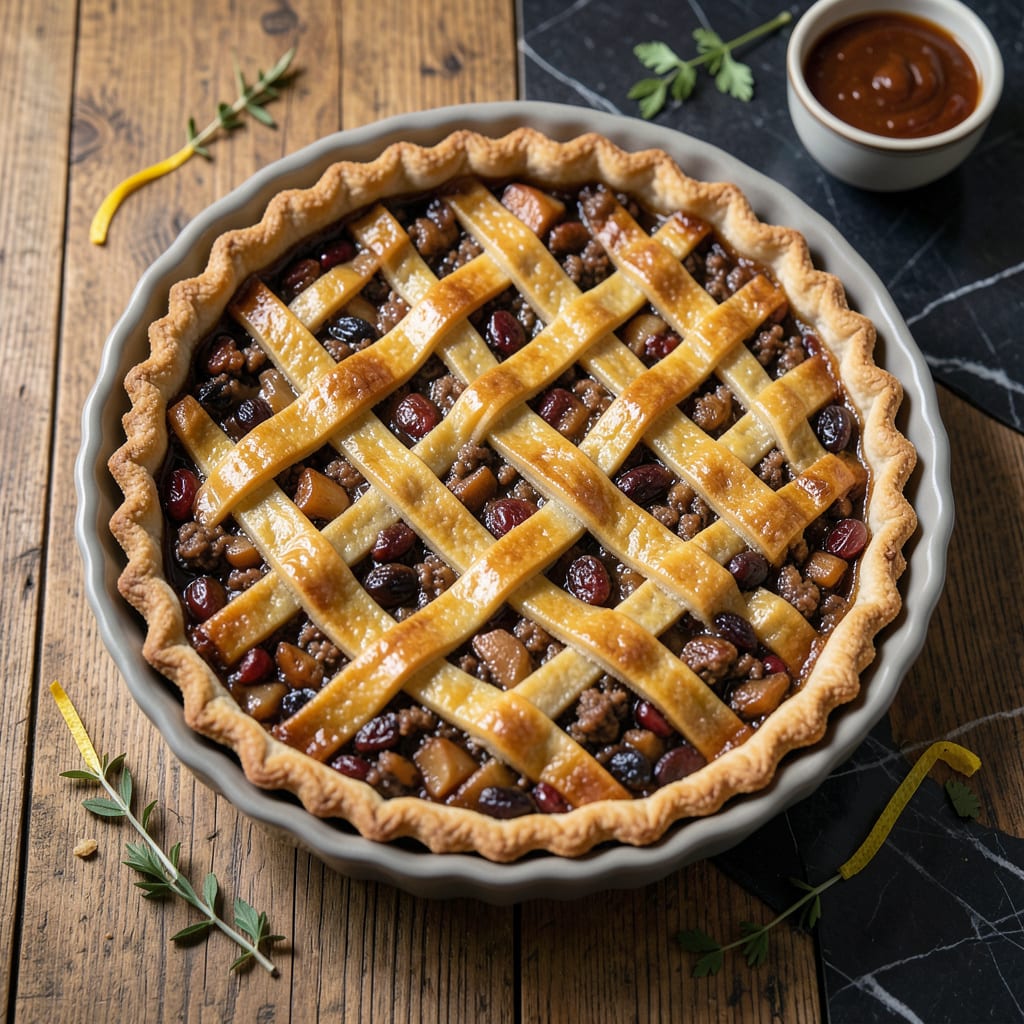
This historic mincemeat pie brings 18th-century tradition to your modern kitchen with a flaky crust that encases a rich, spiced filling.
Authentic to the 1798 original, this recipe combines dried fruits, warm spices, and a touch of suet for a genuinely nostalgic dessert experience.
Ingredients for Old-fashioned Mincemeat Pie Recipe from 1798
Eighteenth-century authenticity meets modern kitchens with these time-honored ingredients for a truly nostalgic dessert.
| Ingredient | Amount | Notes |
|---|---|---|
| All-Purpose Flour 🌾 | 2 ½ cups | Plus extra for dusting surface |
| Unsalted Butter 🧈 | 1 cup | Chilled and cubed for crust |
| Ice Water 💧 | ½ cup | For pie crust dough |
| Granulated Sugar 🍚 | ½ cup | For filling sweetness |
| Dark Brown Sugar 🟤 | ½ cup | Packed, for depth of flavor |
| Beef Suet 🥩 | ½ cup | Finely chopped, traditional fat |
| Raisins 🍇 | 1 ½ cups | Soaked in warm water |
| Currants 🍇 | ¾ cup | Dried, for authentic taste |
| Diced Candied Citrus Peel 🍊 | ½ cup | Orange and lemon preferred |
| Chopped Cooking Apples 🍏 | 1 ½ cups | Peeled, tart variety |
| Ground Cinnamon 🌿 | 1 ½ tsp | Freshly ground preferred |
| Ground Nutmeg 🌰 | ½ tsp | Freshly grated for best aroma |
| Ground Cloves 🌶️ | ¼ tsp | Use sparingly for warmth |
| Salt 🧂 | ½ tsp | Fine sea salt recommended |
| Brandy 🥃 | ¼ cup | Or substitute apple cider |
The suet is non-negotiable for authenticity—Atora is the most accessible brand at specialty grocers or online. For the flour, King Arthur all-purpose gives the flakiest crust. The dried fruits should be plump; if they seem dry, soak them in warm brandy overnight. Candied citrus peel can be found at World Market or made at home with a quick boil and sugar coat.
No suet? Vegetable shortening works in a pinch but lacks the depth. Substitute half the amount of butter for suet if absolutely necessary. Dried cranberries or chopped dates can replace currants. The brandy can be skipped—apple cider or strong tea adds moisture without alcohol. For the spices, freshly grinding whole nutmeg and cloves elevates the flavor significantly.
The crust dough keeps 2 days wrapped tightly in the fridge, or freeze for 1 month. Completed pies stay fresh 4 days at room temperature in an airtight container. For longer storage, freeze baked pies for up to 3 months—reheat in a warm oven to revive the flakiness.
Why You’ll Love This Recipe
- One Bowl Magic: I mix the flour, butter, and ice water in a single bowl—no fancy equipment, just my hands and 10 minutes of effort.
- Rich Spiced Warmth: The dark brown sugar caramelizes into the filling, giving that deep molasses-like richness that makes every bite feel like a hug.
- Holiday Showstopper: Between us, this pie steals the show at Christmas dinner, but it’s just as welcome on a random Sunday with tea.
- Budget-Friendly Batch: A little butter and flour stretch far, and the filling keeps well—so I bake one now, freeze one for later. Honestly, it’s my frugal secret.
Step-by-Step Instructions for Old-Fashioned Mincemeat Pie
This traditional method ensures a perfect balance of spiced filling encased in a flaky, tender crust.
Step 1: Prepare the Traditional Pie Crust
In a large bowl, combine the 2.5 cups All-Purpose Flour and 0.5 tsp Salt. Cut in the 1 cup Unsalted Butter and 0.5 cup Beef Suet using a pastry cutter or your fingers until the mixture resembles coarse crumbs with pea-sized pieces of fat visible. This texture is crucial for achieving flakiness.
Gradually add the 0.5 cup Ice Water, 1 tablespoon at a time, mixing gently with a fork until the dough just begins to come together. You want the dough to be shaggy, not smooth—overworking it develops gluten, which makes the crust tough rather than tender. Form the dough into a disk, wrap in plastic, and refrigerate for 1 hour.
Step 2: Create the Authentic Mincemeat Filling
In a large mixing bowl, combine the 1.5 cups Raisins, 0.75 cup Currants, 0.5 cup Diced Candied Citrus Peel, 1.5 cups Chopped Cooking Apples, 0.5 cup Granulated Sugar, and 0.5 cup Dark Brown Sugar. Stir in the 1.5 tsp Ground Cinnamon, 0.5 tsp Ground Nutmeg, and 0.25 tsp Ground Cloves.
Pour the 0.25 cup Brandy over the mixture and stir until all the ingredients are evenly coated and the liquid is absorbed. The brandy not only adds depth of flavor but also helps preserve the filling. Let the mixture sit for 30 minutes to allow the flavors to meld and the fruit to plump slightly.
Step 3: Assemble and Bake the Pie
On a lightly floured surface, roll out two-thirds of the chilled dough to a 12-inch round and transfer it to a 9-inch pie dish. Trim the edges, leaving a ½-inch overhang. Spoon the mincemeat filling into the crust, mounding it slightly in the center.
Roll out the remaining dough and place it over the filling. Trim and crimp the edges to seal, then cut 4-5 slits in the top crust to allow steam to escape. Bake at 375°F for 50-60 minutes, or until the crust is deep golden brown and the filling is bubbling beneath the slits. If the edges brown too quickly, cover them with foil.
Step 4: Cool and Serve
Remove the pie from the oven and transfer it to a wire rack. Let it cool for at least 2 hours before slicing—this allows the filling to set and makes for cleaner portions. The crust should be crisp and flaky, with the rich, spiced aroma of the mincemeat filling wafting through each layer.
Serve warm or at room temperature, ideally with a dollop of lightly sweetened whipped cream or a scoop of vanilla ice cream to complement the deep, complex flavors of the pie. The filling should be moist but not runny, with each bite offering a harmonious blend of fruit, spice, and brandy-infused richness.
Pro Tips For Making Old-Fashioned Mincemeat Pie Recipe From 1798
- Chill the Dough: Let the pie crust rest in the fridge for at least 30 minutes before rolling—this keeps the butter firm so it doesn’t melt into the flour, which is the only way to get that flaky, layered texture an 18th-century baker would recognize.
- Brown the Sugar: Lightly toasting the dark brown sugar in a dry pan for 2-3 minutes deepens its molasses notes, which is crucial since older recipes like this one relied on that rich, caramelized flavor to balance the tartness of the mincemeat.
- Skip Warm Water: Use ice water straight from the fridge, not just cold tap water—I learned this the hard way when my crust turned out tough instead of tender because the butter started melting too soon.
- Blind Bake First: Pre-bake the bottom crust for 8-10 minutes before adding the filling; sounds fussy, but it prevents the soggy bottom that ruins so many mincemeat pies, especially with a wet, spiced filling like the 1798 version.
Regional Styles of This Dish
New England Tradition
In colonial New England, this pie was a holiday staple with venison or beef suet replacing butter. The cold climate made suet more accessible, and families often prepared large batches to last through winter. I love how it connects us to those early American kitchens. 💛
British Heritage
Across the Atlantic, British versions often included minced beef or mutton along with the dried fruits. The 18th-century English recipe books I’ve studied show a preference for heavier spicing, sometimes adding mace or allspice for extra warmth.
Southern Adaptation
Southern cooks frequently substituted pecans or walnuts for suet, and bourbon replaced brandy. The warmer climate meant less reliance on suet, and the addition of nuts gave the filling a delightful crunch. I’ve tried this version—it’s a delicious twist.
Pennsylvania Dutch
The Pennsylvania Dutch added molasses and vinegar to their filling, creating a tangy depth. Their pies often featured a top crust only, allowing the filling to peek through in a rustic, open-faced style.
Canadian Influence
In Canada, maple syrup sometimes sweetened the filling, and wild game like elk or caribou replaced beef. This version reflects the local ingredients and the resourcefulness of early settlers in harsh climates.
Modern American
Today, many American bakers use vegetable shortening or butter for convenience. While less traditional, it still delivers a flaky crust. I find adding 1 tsp vanilla extract to the filling bridges old and new beautifully. ✨
Nutrition Facts
Frequently Asked Questions
Why does the recipe call for suet?
Suet was the traditional fat used in 18th-century baking for its rich flavor and high smoke point. It creates a flakier crust than butter alone. Modern bakers can substitute vegetable shortening if needed.
Can I make this without alcohol?
Yes! Replace the 0.25 cup brandy with apple cider or strong tea. The filling will still be flavorful and moist, though slightly less complex.
How long should the pie cool before serving?
Let it cool for at least 2 hours to allow the filling to set. This prevents a runny texture and makes slicing cleaner. Serve warm or at room temperature.
What’s the best way to store leftovers?
Keep in an airtight container at room temperature for up to 4 days. For longer storage, freeze for up to 3 months and reheat in the oven.

- BBQ Sausage Recipe Oven: Smoky Depth Without the Grill - September 28, 2026
- BBQ Chicken Bowl Recipe Rice: Smoky Sweetness Over Fluffy Grains - September 28, 2026
- Beef Cutlet Recipe Ideas: Crispy Breaded Patties With Bold Seasonings - September 28, 2026