
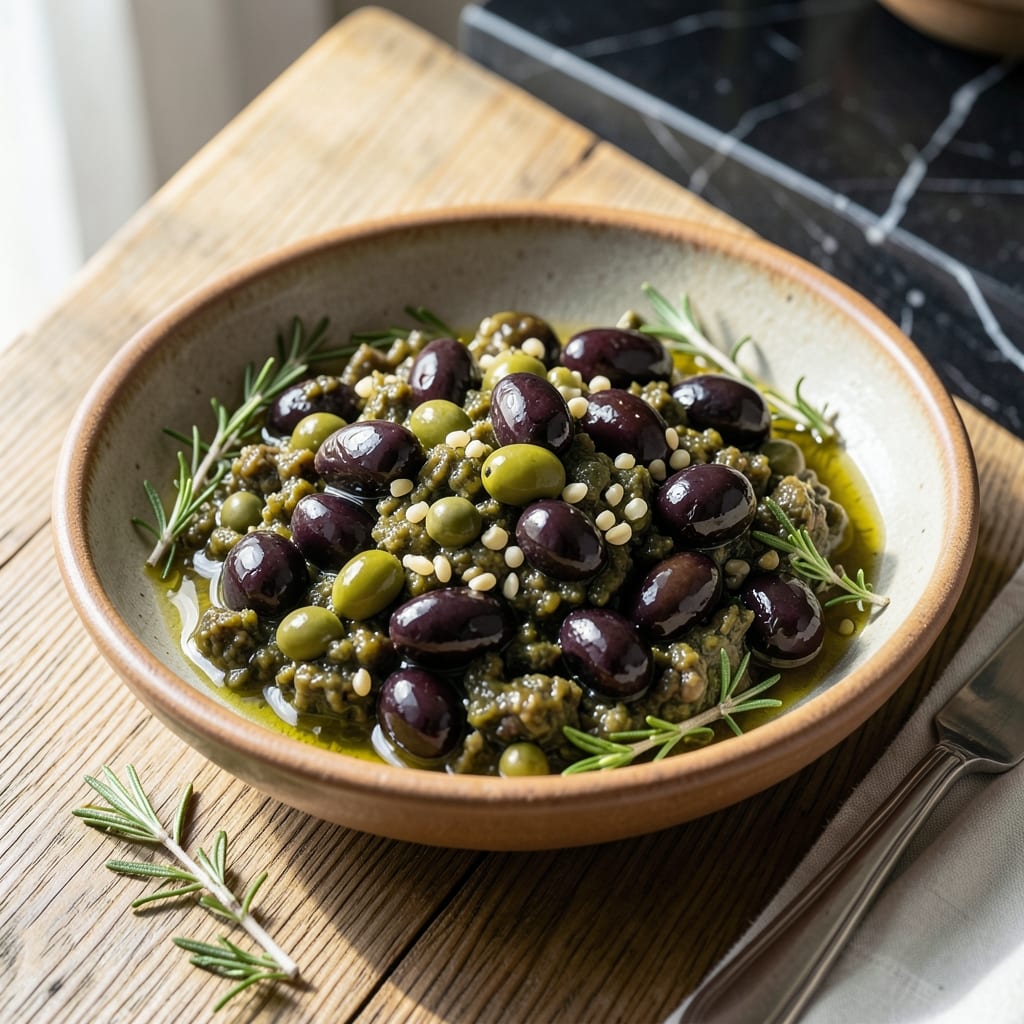
This Mediterranean spread captures the bold, briny essence of the region without relying on traditional anchovies. The secret lies in balancing salty olives with fresh herbs and a touch of acidity to create a smooth, spreadable paste that elevates any dish.
I developed this version to offer the same depth of flavor as classic tapenade while keeping it accessible. A food processor does most of the work, transforming simple ingredients into a rich, aromatic condiment in minutes.
Use it to enhance charcuterie boards, sandwiches, or grilled meats. The versatile spread also works beautifully as a topping for crostini or a flavor booster in pasta dishes.
The result is a vibrant, herb-infused paste that brings Mediterranean flair to your table with minimal effort.
Ingredients for Olive Tapenade Recipe Without Anchovies
A handful of briny olives, fresh herbs, and a few pantry staples come together beautifully here.
| Ingredient | Amount | Notes |
|---|---|---|
| Kalamata Olives 🫒 | 2 cups | Pitted, briny and rich |
| Green Olives 🫒 | 1 cup | Pitted, mild and crisp |
| Capers 🌿 | 2 tbsp | Drained, for tangy depth |
| Fresh Rosemary 🌿 | 1 tbsp | Finely chopped, aromatic |
| Fresh Thyme Leaves 🍃 | 1 tbsp | Stripped from stems |
| Garlic Cloves 🧄 | 3 cloves | Peeled, minced |
| Extra-Virgin Olive Oil 🫒 | ½ cup | High-quality, fruity finish |
| Dijon Mustard 🟡 | 1 tbsp | Smooth, adds sharpness |
| Red Wine Vinegar 🍷 | 1 tbsp | Balances saltiness |
| Lemon Zest 🍋 | 1 tsp | Brightens flavor profile |
The olives are the soul of this spread. Kalamata olives from Whole Foods or a Mediterranean deli have the right briny punch. If you can only find jarred, look for brands packed in brine (not oil) for better texture. Green olives add a milder contrast—Manzanilla works well. Fresh herbs matter too; grab them from the produce section with vibrant color and no wilting. The capers? Non-pasteurized in jars taste better than the canned kind.
No fresh herbs? Dried at one-third the amount works in a pinch (rosemary and thyme hold up best). Out of capers? Chopped cornichons add a similar tang. For the olive oil, California Olive Ranch or any cold-pressed extra-virgin gives you that fruity finish. If you want more heat, a pinch of red pepper flakes blends right in. The lemon zest can be swapped for lime if that’s what you’ve got.
This keeps 1 week in the fridge if covered with a thin layer of olive oil to prevent browning. For longer storage, freeze in ice cube trays for up to 3 months. The flavors actually deepen after a day, so make it ahead if you can (worth the extra minute).
Why You’ll Love This Recipe
- 5-Minute Chop: I just dump everything in the food processor—Kalamata olives, green olives, capers, rosemary, thyme—and pulse. No fancy techniques.
- Herb-Packed Punch: The fresh rosemary and thyme give it this bright, earthy kick that makes it taste way more complicated than it is.
- Spread or Dip: Honestly, I slather it on sandwiches, toss it with pasta, or just eat it straight from the bowl with crackers.
- Stays Fresh: I make a big batch on Sunday and it keeps perfectly in the fridge for over a week. No waste, just flavor on demand.
Step-by-Step Instructions for Olive Tapenade Without Anchovies
This Mediterranean spread comes together quickly with simple chopping and blending techniques.
Step 1: Prepare the Olives and Capers
Place the 2 cups Kalamata Olives and 1 cup Green Olives on a cutting board. Roughly chop them into small, uneven pieces—this texture creates the characteristic rustic appeal of tapenade. I like to keep some pieces slightly larger for visual interest.
Add the 2 tbsp Capers to your cutting board and chop them alongside the olives. The capers are already small, so just a few quick passes with your knife will suffice. This ensures every bite delivers that signature briny pop.
Step 2: Mince the Aromatics
Finely mince the 3 cloves Garlic Cloves until they’re almost paste-like. Fresh garlic can be strong, so this fine texture helps it distribute evenly throughout the tapenade without overpowering any single bite.
Next, finely chop the 1 tbsp Fresh Rosemary and 1 tbsp Fresh Thyme Leaves. Strip the thyme leaves from their stems first, then chop them together with the rosemary. The combination of these herbs adds an aromatic backbone that complements the olives perfectly.
Step 3: Combine All Ingredients
In a food processor, combine the chopped olives, capers, garlic, rosemary, and thyme. Pulse 5-6 times until the mixture is finely chopped but not puréed—you want to maintain some texture. Scrape down the sides of the processor bowl as needed to ensure even chopping.
Add the 1 tbsp Dijon Mustard, 1 tbsp Red Wine Vinegar, and 1 tsp Lemon Zest to the processor. The mustard adds depth and creaminess, while the vinegar and lemon zest brighten the rich olive flavors. Pulse 2-3 more times to incorporate these ingredients evenly.
Step 4: Emulsify with Olive Oil
With the processor running, slowly drizzle in the 0.5 cup Extra-Virgin Olive Oil through the feed tube. This slow addition allows the oil to emulsify with the other ingredients, creating a smooth, cohesive spread. Stop and scrape down the sides once or twice during this process.
Process for an additional 10-15 seconds until the mixture reaches your desired consistency. For a chunkier tapenade, pulse briefly. For a smoother spread, let it run a bit longer. The final texture should be thick but spreadable, with visible flecks of olive and herb.
Step 5: Rest and Serve
Transfer the tapenade to a serving bowl and let it sit at room temperature for 15-20 minutes. This resting time allows the flavors to meld together. The oil will separate slightly during this time, which is normal—just give it a stir before serving.
Taste and adjust seasoning if needed, though the olives and capers typically provide enough saltiness. Serve with crusty bread, crackers, or as a condiment for grilled meats. The tapenade will keep in an airtight container in the refrigerator for up to 1 week.
Pro Tips For Making Olive Tapenade Recipe Without Anchovies
- Pit the Olives: I learned this the hard way—leaving pits in makes the tapenade bitter and ruins the texture. Take 5 minutes to remove them all before blending.
- Toast the Herbs: Lightly toasting fresh rosemary and thyme in a dry pan for 30 seconds releases their oils and deepens the flavor. Sounds weird, but it works.
- Pulse, Don’t Purée: Over-blending turns tapenade into a smooth paste. Pulse in short bursts until chunky—you want texture, not hummus.
- Rinse the Capers: Capers packed in brine can overpower the olives. Rinse them under cold water first to mellow the saltiness.
Pro Cooking Tips for olive tapenade recipe without anchovies
Precision Chopping
For the best texture, I hand-chop the 2 cups Kalamata olives and 1 cup green olives before pulsing in the processor. This gives you control over chunk size—aim for ¼-inch pieces for that rustic, artisanal look. The capers only need a few quick chops to release their briny flavor. 💡
Garlic Paste Trick
Instead of mincing, I smash the 3 garlic cloves with the flat side of my knife, then sprinkle with ¼ tsp salt before dragging the blade across to create a paste. This ensures even distribution without sharp garlic bites that can overpower the spread.
Processor Technique
Pulse in 5-second bursts rather than continuous processing to avoid a mushy texture. I use a Cuisinart 14-cup food processor—its wide bowl prevents ingredients from sticking to the sides. Scrape down the bowl after each pulse for consistent results.
Oil Emulsification
Drizzle the ½ cup olive oil very slowly while the processor runs—this should take about 30 seconds. I use California Olive Ranch for its fruity notes that complement the olives. The mixture will thicken and become glossy as the oil emulsifies.
Resting for Flavor
Always let the tapenade rest for 15-20 minutes at room temperature before serving. This allows the herbs to infuse the oil. I transfer mine to a shallow bowl to speed up the process, giving it a quick stir before serving. 🌟
Avoiding Bitterness
If your tapenade tastes bitter, it’s likely from over-processing the olive pits. Double-check that your Kalamata olives are fully pitted. A pinch of sugar can balance any lingering bitterness without affecting the savory profile.
Nutrition Facts
Frequently Asked Questions
Can I use canned olives?
Yes, but drain and rinse them first to remove excess sodium. Look for brine-packed varieties for better texture. The flavor won’t be as vibrant as fresh, but it’ll still work well.
What if my tapenade is too thick?
Add more olive oil 1 tbsp at a time until it reaches your desired consistency. For a smoother texture, process for an additional 10-15 seconds. Stir well between additions.
How do I store leftover tapenade?
Keep it in an airtight container in the fridge for up to 1 week. Cover the surface with a thin layer of olive oil to prevent browning. It also freezes well for up to 3 months.
Can I use dried herbs instead of fresh?
Yes, but reduce the amount to 1 tsp per 1 tbsp fresh. Dried herbs are more concentrated. Rosemary and thyme hold up best in this recipe.

- Peach Syrup Recipe for Ice Cream: Sweet and Silky Drizzle for Scoops - October 6, 2026
- Pav Bhaji Recipe Food Lab: Mumbai Street Food Magic at Home - October 6, 2026
- Peach Jelly Recipe Without Pectin: Naturally Set Sweet Spread - October 6, 2026