
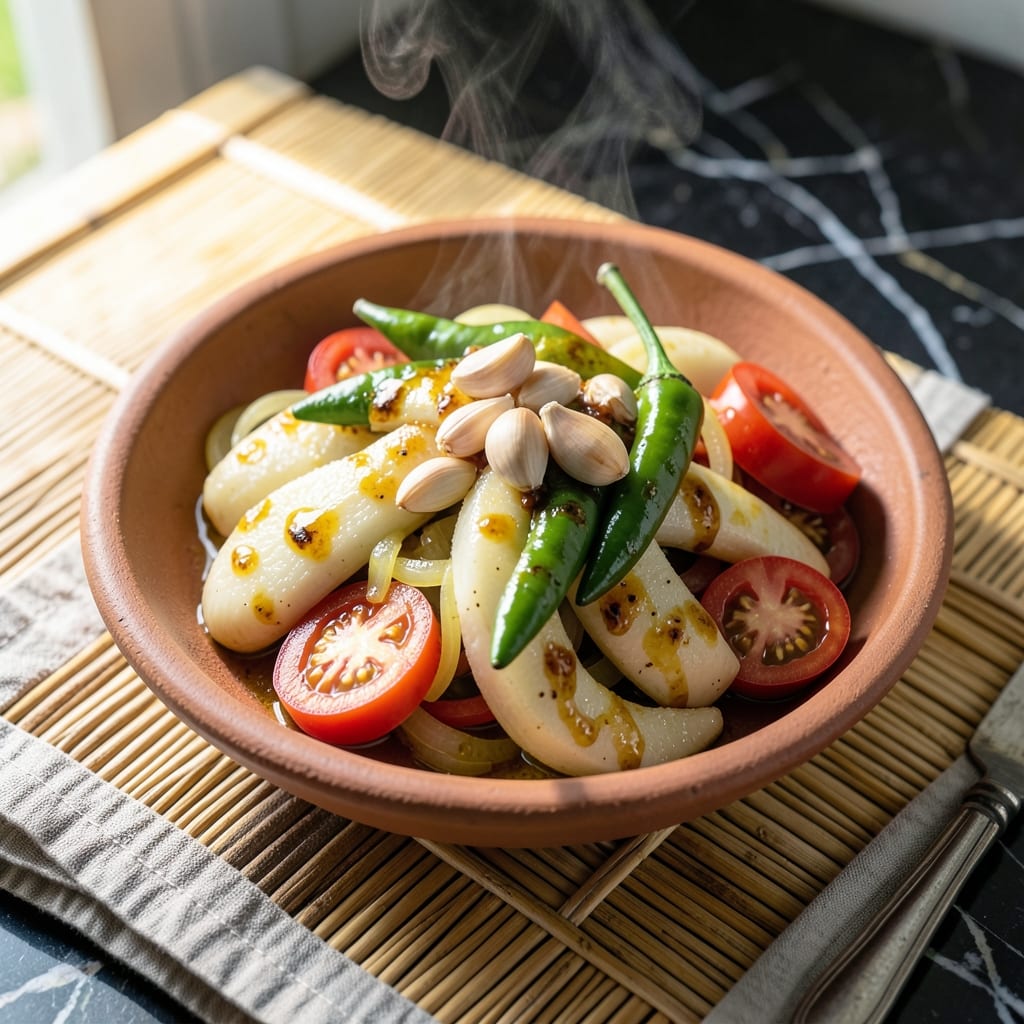
This traditional Filipino dish highlights the humble opo squash in a way that celebrates its natural sweetness and tender texture. I developed this method after years of studying authentic Pinakbet preparations, focusing on the balance of flavors that define Filipino home cooking.
The key is sautéing the squash with aromatics like garlic and onion until caramelized, then finishing with a splash of fish sauce for umami depth. This technique ensures the opo squash stays tender-crisp while absorbing the rich, savory flavors of the dish.
What you get is a side dish that’s both comforting and versatile, perfect alongside grilled meats or steamed rice. It’s a simple yet authentic way to bring a taste of the Philippines to your table, using ingredients you likely already have on hand.
Serve it hot, garnished with fresh herbs for a pop of color and brightness. Here’s how to make it right.
Ingredients for Opo Squash Recipe Filipino
Fresh vegetables and bold Filipino flavors come together in this authentic side dish.
| Ingredient | Amount | Notes |
|---|---|---|
| Opo Squash 🎃 | 2 lb | Peeled, seeded, cubed |
| Garlic Cloves 🧄 | 6 cloves | Minced finely for even distribution |
| Yellow Onion 🧅 | 1 whole | Thinly sliced for caramelization |
| Roma Tomatoes 🍅 | 2 whole | Diced, seeds removed |
| Long Green Chili 🌶️ | 1 whole | Sliced thin, seeds optional |
| Fish Sauce 💧 | 2 tbsp | Vegetarian substitute if needed |
| Vegetable Oil 🫒 | 3 tbsp | For sautéing aromatics |
| Diamond Crystal Kosher Salt 🧂 | 1 tsp | Adjust to taste at end |
| Freshly Ground Black Pepper 🌶️ | ½ tsp | Coarse grind preferred |
| Fresh Cilantro 🌿 | ¼ cup | Chopped, for garnish |
| Shrimp Paste 🦐 | 1 tbsp | Optional for depth of flavor |
| Eggplant 🍆 | 1 whole | Cubed, skin on for texture |
| Okra 🌿 | 4 pieces | Trimmed, sliced lengthwise |
| String Beans 🌱 | ½ lb | Trimmed, cut into 2-inch pieces |
The opo squash is the star here—look for firm, unblemished specimens at Asian markets or well-stocked Whole Foods. Eggplant should be glossy and heavy for its size (a sign of freshness). For the green chili, serrano works if you can’t find long green chili. I always grab fresh cilantro from the Latin produce section (it’s usually cheaper and lasts longer).
No fish sauce? Soy sauce plus a squeeze of lime gets you 80% there. Skip the shrimp paste entirely for strict vegetarian prep—mushroom sauce adds similar umami. Short on okra? Zucchini holds up well. String beans can be swapped for green bell peppers. The tomatoes? San Marzano canned work in winter when fresh ones taste like cardboard.
This keeps 3-4 days in the fridge, but honestly tastes best fresh. The squash will soften over time (still good, just different texture). Reheat gently—high heat turns it mushy. Freezing? Not recommended. The okra gets slimy when thawed.
Why You’ll Love This Recipe
- One-Pot Wonder: I love that everything—opo squash, tomatoes, and that aromatic garlic—simmers together in one pan. No fancy techniques, just straightforward cooking.
- Garlic-Tomato Punch: Honestly, the combo of sautéed garlic, sweet onions, and Roma tomatoes gives this dish a rich, savory depth that’s hard to resist.
- Weeknight Lifesaver: Between us, this comes together faster than takeout, and it’s just as satisfying on a busy Tuesday as it is for a lazy Sunday lunch.
- Stretches a Peso: Opo squash is so budget-friendly, and a little goes a long way. I’ll be real: it feeds my family for two meals without breaking the bank.
Step-by-Step Instructions for Pinakbet-Style Opo Squash
Here’s the authentic method that delivers bold Filipino flavors in every bite.
Step 1: Sauté Aromatics to Build the Flavor Base
Heat the 3 tbsp vegetable oil in a large wok or deep skillet over medium heat. Add the 6 cloves garlic cloves and sauté for 30-45 seconds until just golden and fragrant—don’t let it brown or it’ll turn bitter.
Immediately add the 1 whole yellow onion and cook for 2-3 minutes until it softens and turns translucent. Then stir in the 1 tbsp shrimp paste and cook for another 1 minute, pressing it into the oil to dissolve completely. This creates the umami foundation for your dish.
Step 2: Add Vegetables in Stages for Perfect Texture
Increase heat to medium-high and add the 1 whole eggplant, 2 whole Roma tomatoes, and 1 whole long green chili. Sauté this mixture for 3-4 minutes until the eggplant begins to soften and the tomatoes start breaking down.
Next, add the 0.5 lb string beans and 4 pieces okra. Stir-fry for 2 minutes until the vegetables are bright green and slightly tender. The eggplant should be absorbing all those delicious flavors from the aromatics by now.
Step 3: Incorporate Opo Squash and Season
Add the 2 lb opo squash to the pan, stirring gently to combine with the other vegetables. The opo squash will release some liquid as it cooks—that’s normal. Season with the 1 tsp Diamond Crystal kosher salt and 0.5 tsp freshly ground black pepper.
Pour in the 2 tbsp fish sauce and stir well to distribute evenly. Cover the pan and cook for 5-7 minutes on medium-low heat, stirring occasionally, until the opo squash is tender but still holding its shape and all vegetables are cooked through.
Step 4: Finish and Garnish
Taste and adjust seasoning if needed—sometimes the vegetables need a bit more salt. The opo squash should be soft but not mushy, and the sauce should have reduced slightly to coat the vegetables beautifully.
Remove from heat and garnish with the 0.25 cup fresh cilantro. Serve immediately while hot, with steamed rice to soak up all the flavorful sauce. This traditional preparation highlights each vegetable’s natural taste while creating a harmonious, savory dish that’s quintessentially Filipino.
Pro Tips For Making Opo Squash Recipe Filipino
- Sauté Aromatics First: Cook the garlic, onion, and tomatoes until soft and fragrant before adding the opo squash—this builds the base flavor that makes the dish taste truly Filipino.
- Peel the Squash Thinly: Use a vegetable peeler and remove only the outer skin, keeping as much flesh as possible for texture and to prevent the squash from turning mushy.
- Skip Overcooking Squash: I learned this the hard way—opo squash cooks fast, so add it last and simmer just 5–7 minutes until tender but still firm.
- Use Ripe Tomatoes: Roma tomatoes should be deep red and slightly soft; underripe ones stay hard and sour, no matter how long you cook them.
Storing and Reheating This opo squash recipe filipino
Refrigerator Storage
Let this dish cool completely before transferring to airtight containers. It will keep in the fridge at 40°F or below for up to 3-4 days. The flavors actually deepen overnight as the vegetables continue to meld together. 💡
Texture Considerations
The opo squash will soften over time in storage—this is normal but means it’s best enjoyed fresh. The okra may release some natural gels, which is typical for this vegetable. I find the string beans hold their texture the longest.
Gentle Reheating
Warm leftovers in a skillet over medium-low heat with a splash of water or fish sauce to refresh the flavors. Stir occasionally for 5-7 minutes until heated through. Avoid high heat, which can turn the squash mushy. 🔥
Microwave Option
For quick reheating, place a portion in a microwave-safe dish with a damp paper towel cover. Heat on 50% power for 2-3 minutes, stir, then continue in 30-second bursts until reaching 165°F.
Freezing Not Recommended
While you can freeze this dish, the texture changes significantly upon thawing. The opo squash becomes watery, and the okra may develop a slimy consistency. If you must freeze, portion into single servings and thaw overnight in the fridge.
Nutrition Facts
Frequently Asked Questions
Can I use zucchini instead of opo squash?
Yes, zucchini works as a substitute, though it has a firmer texture. Cook it for 2-3 minutes less to prevent mushiness, as it releases less moisture than opo squash.
How do I know when the squash is done?
It should be tender-crisp and slightly translucent. Test with a fork—it should slide in easily but the pieces should still hold their shape. Overcooking turns it mushy.
What if I don’t have shrimp paste?
Skip it for a vegetarian version or use 1 tbsp soy sauce + 1 tsp lime juice. For depth, add 1 tsp miso paste dissolved in water.
Can I make this ahead of time?
Best served fresh, but you can prep veggies a day ahead. Store cut vegetables in water in the fridge to maintain crispness.

- BBQ Sausage Recipe Oven: Smoky Depth Without the Grill - September 28, 2026
- BBQ Chicken Bowl Recipe Rice: Smoky Sweetness Over Fluffy Grains - September 28, 2026
- Beef Cutlet Recipe Ideas: Crispy Breaded Patties With Bold Seasonings - September 28, 2026