
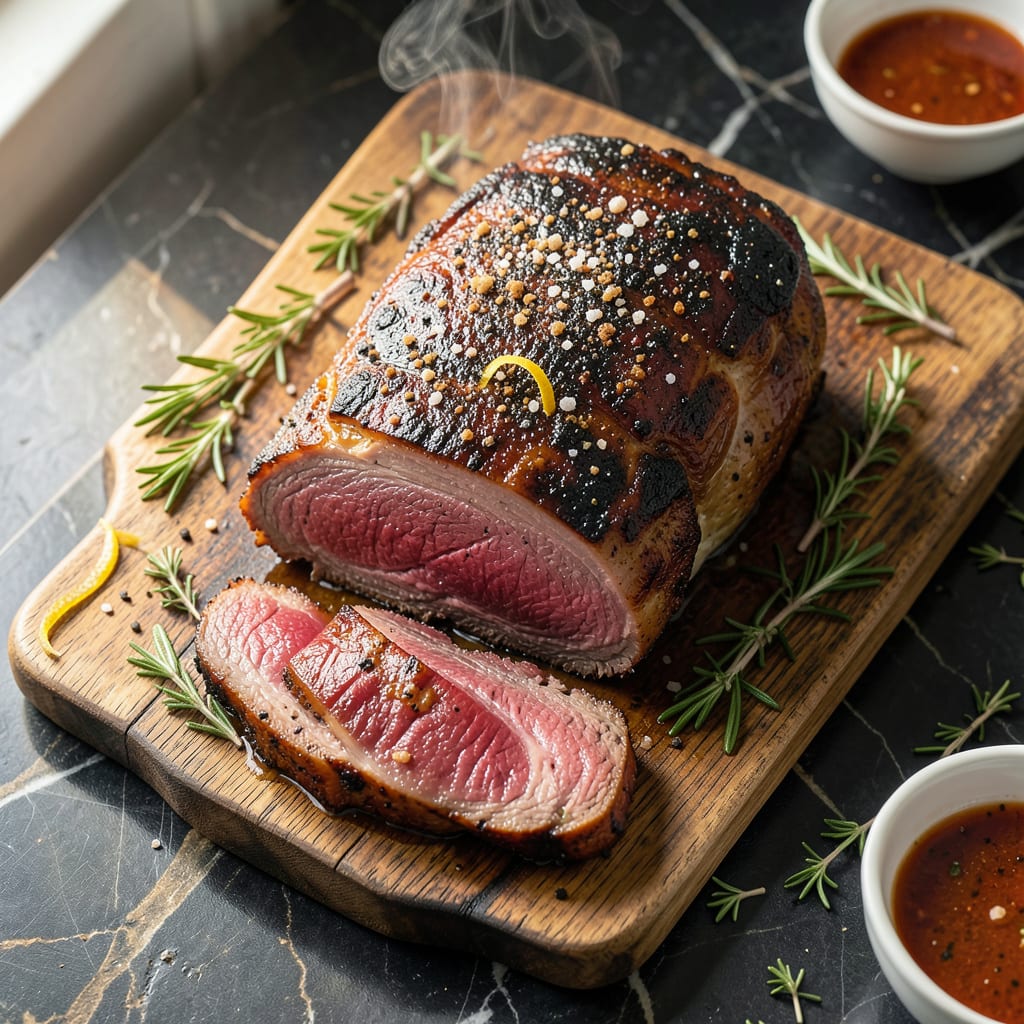
This oven method delivers tender tri tip with a crispy crust every time. The secret is a high-heat sear followed by slow roasting to lock in juices.
You’ll achieve restaurant-quality results with minimal effort. No smoker needed—just your oven and a simple seasoning blend for that signature smoky flavor.
Ingredients for Oven Tri Tip
Tender beef and bold spices create that restaurant-quality tri tip right in your oven.
| Ingredient | Amount | Notes |
|---|---|---|
| Tri Tip Roast 🥩 | 2 ½ lb | Well-marbled, trimmed of excess fat |
| Kosher Salt 🧂 | 1 ½ tbsp | Diamond Crystal preferred for even coating |
| Coarse Black Pepper 🌶️ | 1 ½ tbsp | Freshly cracked for bold flavor |
| Garlic Powder 🧄 | 1 tbsp | Not garlic salt for pure flavor |
| Onion Powder 🧅 | 1 tbsp | Fine grind for even distribution |
| Smoked Paprika 🌶️ | 1 tbsp | For signature smoky depth |
| Dried Rosemary 🌿 | 1 tsp | Crushed between fingers to release oils |
| Dried Thyme 🍃 | 1 tsp | Rubbed between palms to activate |
| Olive Oil 🫒 | 2 tbsp | High smoke point variety for searing |
| Beef Broth 💧 | ½ cup | Low-sodium preferred for control |
| Unsalted Butter 🧈 | 2 tbsp | For basting during roasting |
| Fresh Garlic Cloves 🧄 | 4 cloves | Smashed but left whole for aromatics |
The tri tip is the star here. Look for well-marbled roasts at Costco or your butcher—marbling equals juiciness. The spices need to be fresh; if your smoked paprika smells like dust, replace it immediately. I grab mine from Penzeys or the bulk section at Whole Foods. Don’t skip the kosher salt—Diamond Crystal dissolves perfectly and seasons evenly without over-salting.
No smoked paprika? Regular paprika plus a pinch of cayenne gets you close. Short on time? Use pre-minced garlic at half the amount, but fresh smashed cloves add more depth. Out of beef broth? Water with a bouillon cube works in a pinch. The butter can be swapped for ghee if you’re avoiding dairy, but honestly unsalted butter gives the best flavor for basting.
The roast rests beautifully—20 minutes before slicing lets juices redistribute. Leftovers? Wrap tightly in foil, keeps 4-5 days in the fridge. For freezing, slice first then vacuum-seal for up to 3 months (worth the effort).
Why You’ll Love This Recipe
- Set It and Forget: I just season, pop it in the oven, and let the dry rub do its magic—no babysitting required.
- That Crust Though: The coarse salt and pepper form this insane crust while the garlic and onion powders sink deep into the meat. Ridiculously good.
- Feeds My Crew: One tri tip roast and I’ve got dinner for six, plus leftovers for sandwiches the next day. My secret weapon for busy weeks.
- Budget Hero: Honestly, this cut stays affordable while tasting like a steakhouse special. I’ll be real: it’s my go-to for impressing without overspending.
Step-by-Step Instructions for Oven Tri Tip
Here’s the method that guarantees a perfectly crusty exterior with melt-in-your-mouth center every time.
Step 1: Season and Prep the Tri Tip
Pat the 2.5 lb tri tip roast completely dry with paper towels to ensure a good sear. In a small bowl, combine the 1.5 tbsp kosher salt, 1.5 tbsp coarse black pepper, 1 tbsp garlic powder, 1 tbsp onion powder, 1 tbsp smoked paprika, 1 tsp dried rosemary, and 1 tsp dried thyme.
Rub this spice mixture all over the roast, pressing firmly to adhere. I crush the rosemary and thyme between my fingers first to release their aromatic oils. Let the seasoned roast sit at room temperature for 30-45 minutes while you preheat the oven.
Step 2: Sear for a Crusty Exterior
Preheat your oven to 425°F. Heat the 2 tbsp olive oil in a large oven-safe skillet or Dutch oven over high heat until shimmering. Add the roast and sear for 3-4 minutes per side until deeply browned. You want a rich, dark crust to form—this creates the flavor foundation.
During searing, add the 4 cloves fresh garlic cloves (smashed but whole) to the pan. They’ll infuse the oil with aroma without burning. Tilt the pan occasionally to baste the roast with the hot oil and garlic. Remove from heat once both sides are deep golden brown.
Step 3: Roast to Perfect Tenderness
Transfer the skillet to the preheated oven. Pour the 0.5 cup beef broth into the pan around the roast. This creates steam that keeps the meat moist during cooking. Roast uncovered for 20-25 minutes for medium-rare.
You’re aiming for an internal temperature of 130-135°F for perfect pink centers. I start checking at the 20-minute mark with an instant-read thermometer. The beef broth will reduce slightly, concentrating its flavor as it combines with the pan drippings.
Step 4: Baste with Butter and Rest
Remove the roast from the oven and transfer it to a cutting board. Place the skillet on the stovetop over medium heat. Add the 2 tbsp unsalted butter and swirl to melt, then baste the roast with this buttery mixture for 1-2 minutes.
This final basting adds richness and an extra layer of flavor. Tent the roast loosely with foil and let it rest for 10-15 minutes before slicing. Resting allows the juices to redistribute, ensuring every slice is juicy and tender. Slice against the grain for maximum tenderness.
Pro Tips For Making Oven Tri Tip
- Reverse Sear Method: Start at 275°F until the internal temp hits 115°F, then finish with a 5-minute broil for a perfect crust—I learned this the hard way after serving dry tri tip to my in-laws.
- Season Overnight: Rub that tri tip with salt, pepper, garlic, and onion powder the night before; the flavors sink in deeper than any last-minute sprinkle.
- Skip the Cold Roast: Pull the tri tip out of the fridge 1-2 hours before cooking so it cooks evenly—sounds obvious, but I’ve ruined more than one roast by rushing this.
- Rest Before Slicing: Tent it with foil for 10 minutes after cooking; it keeps the juices where they belong—in the meat, not on your cutting board.
Essential Equipment for Great oven tri tip
Oven-Safe Skillet
An oven-safe skillet is non-negotiable for this recipe. I swear by my 12-inch Lodge cast iron—it goes from stovetop to oven seamlessly and retains heat beautifully. A heavy stainless steel skillet works too if you prefer easier cleanup.
Instant-Read Thermometer
Precision matters with tri tip. My ThermoWorks Thermapen gives accurate reads in 2-3 seconds. Look for internal temps between 130-135°F for medium-rare. Don’t guess—this tool ensures perfect results every time.
Heat-Resistant Tongs
Flipping a hot, heavy roast requires sturdy tools. I use 12-inch locking tongs for control and safety. Avoid silicone—it can melt at high temps. Metal tongs with a good grip are ideal for turning the searing roast.
Basting Spoon
A long-handled basting spoon lets you coat the roast with buttery pan drippings without burning your hands. I keep one dedicated to meat cooking. The long handle keeps your hands safe from the 425°F oven heat. 🔥
Cutting Board
Rest your roast on a wooden cutting board—it’s gentler on knives than plastic. I use a large maple board with a juice groove to catch drippings. The board should be big enough to accommodate the entire roast with room to slice.
Carving Knife
A sharp 8-inch chef’s knife makes slicing against the grain effortless. I sharpen mine before each use. The blade should glide through the meat cleanly, creating even ½-inch slices without tearing the tender fibers.
Nutrition Facts
Frequently Asked Questions
What’s the best internal temperature for tri tip?
For perfect medium-rare, aim for 130-135°F. Use an instant-read thermometer to check—this ensures tender, juicy results without overcooking.
Can I use a different cut of beef?
Tri tip’s unique shape and marbling make it ideal, but sirloin tip or bottom round can work in a pinch. Adjust cooking time slightly, as these cuts may be less tender.
How long should I let it rest before slicing?
Rest the roast for 10-15 minutes after cooking. This allows juices to redistribute, keeping every slice moist and flavorful.
What if my roast isn’t browning well?
Ensure your skillet is very hot before searing, and don’t move the roast too soon. A deep brown crust forms best with patience and high heat.

- BBQ Sausage Recipe Oven: Smoky Depth Without the Grill - September 28, 2026
- BBQ Chicken Bowl Recipe Rice: Smoky Sweetness Over Fluffy Grains - September 28, 2026
- Beef Cutlet Recipe Ideas: Crispy Breaded Patties With Bold Seasonings - September 28, 2026