
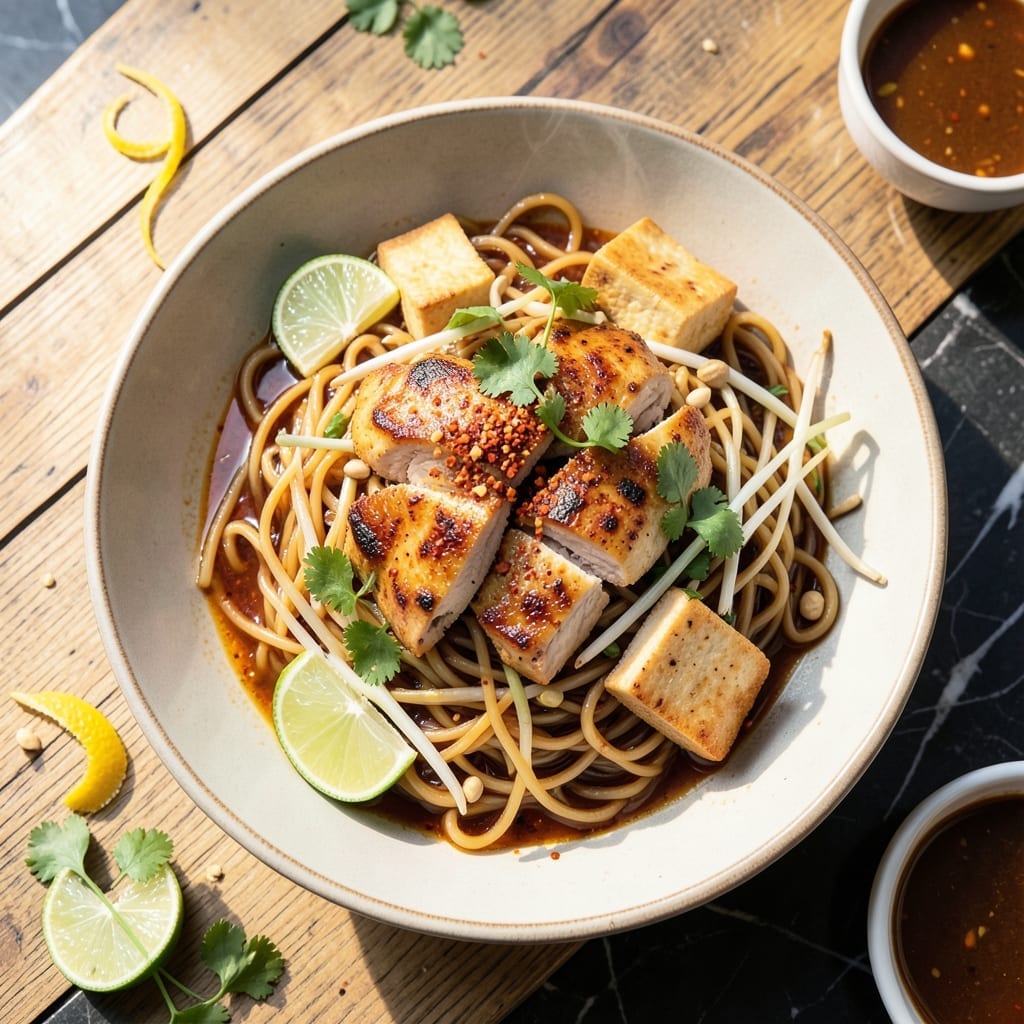
Bringing the vibrant flavors of Thai street food to your kitchen is simpler than you think. This dish captures the perfect balance of sweet, tangy, and savory that makes Pad Thai irresistible.
The secret lies in the sauce—a harmonious blend of tamarind, fish sauce, and palm sugar that coats every noodle. I’ve refined this method to ensure restaurant-quality results with ingredients you can find at any grocery store.
You’ll achieve tender noodles, perfectly cooked protein, and a sauce that clings beautifully to each bite. The addition of crushed peanuts and fresh lime adds the finishing touches for an authentic experience.
Ready in 30 minutes, this is a meal worth mastering for weeknight dinners or impressive gatherings.
Ingredients for Padthai
Rice noodles, tamarind, and a few fresh staples bring Thai street food home.
| Ingredient | Amount | Notes |
|---|---|---|
| Rice Noodles 🍜 | 8 oz | Flat, medium-width preferred |
| Chicken Breast 🍗 | 1 lb | Boneless, skinless, thinly sliced |
| Tamarind Paste 🌱 | 3 tbsp | Pure, no additives |
| Fish Sauce 🐟 | 3 tbsp | Thai brand preferred |
| Palm Sugar 🍚 | 3 tbsp | Or substitute brown sugar |
| Rice Vinegar 🍶 | 1 tbsp | For tangy balance |
| Large Eggs 🥚 | 2 whole | Lightly beaten |
| Firm Tofu 🧈 | 8 oz | Pressed, cubed (optional) |
| Bean Sprouts 🌱 | 1 cup | Fresh, rinsed |
| Garlic Cloves 🧄 | 3 cloves | Minced finely |
| Shallot 🧅 | 1 whole | Finely chopped |
| Crushed Peanuts 🥜 | ½ cup | Unsalted, for garnish |
| Fresh Lime 🍈 | 1 whole | Cut into wedges |
| Fresh Cilantro 🌿 | ¼ cup | Chopped, for garnish |
| Dried Chili Flakes 🌶️ | ½ tsp | Adjust to taste |
| Vegetable Oil 🫒 | 3 tbsp | For stir-frying |
The tamarind paste is non-negotiable here. Asian markets carry the best quality, but Whole Foods or Amazon work in a pinch. Look for pure paste without added sugar or preservatives. The fish sauce should be Thai—Red Boat or Tiparos are solid choices. For the noodles, banh pho (flat rice noodles) are traditional, but any medium-width rice noodle works.
No tamarind? Lime juice mixed with brown sugar gives a similar sweet-tart balance (use equal parts). Swap chicken for shrimp or tofu—both soak up the sauce beautifully. Fish sauce can be replaced with soy sauce plus a pinch of sugar for a vegetarian twist (though it won’t be traditional). The peanuts can be subbed with cashews or almonds if that’s what you’ve got.
Noodles cook fast—soak them according to package directions, then rinse under cold water to stop cooking. The sauce can be made ahead and stored in the fridge for up to 3 days. Leftovers reheat well, though the noodles may soften a bit. Garnish with lime and cilantro just before serving.
Why You’ll Love This Recipe
- I’ll be real: it tastes even better the next day after the noodles soak up all that sauce.
- One Pan Meal: I love how everything cooks together—noodles, chicken, and that tangy tamarind sauce—all in one pan.
- Sweet-Savory Magic: The palm sugar and fish sauce create this ridiculous balance that’s both rich and bright.
- Weeknight Hero: Honestly, it’s my go-to for busy evenings when I need dinner fast but still crave restaurant flavor.
Step-by-Step Instructions for Pad Thai
Master this balance of sweet, tangy, and savory with my foolproof method.
Step 1: Soak Noodles and Prep Proteins
Place the 8 oz rice noodles in a large bowl and cover with warm water. Let them soak for 15-20 minutes until pliable but still slightly firm. Meanwhile, thinly slice the 1 lb chicken breast into bite-sized pieces and press the 8 oz firm tofu to remove excess moisture before cubing.
This step prevents mushy noodles while ensuring even cooking. I always prep all proteins and aromatics first—mince the 3 cloves garlic cloves and finely chop the 1 whole shallot—so everything moves quickly once the wok hits the heat.
Step 2: Make the Sauce and Prep Garnishes
In a small bowl, whisk together the 3 tbsp tamarind paste, 3 tbsp fish sauce, 3 tbsp palm sugar, and 1 tbsp rice vinegar until the sugar dissolves completely. This sauce is the soul of the dish, so taste and adjust the balance if needed—more sugar for sweetness or vinegar for tang.
Next, lightly beat the 2 whole large eggs in a separate bowl. Rinse the 1 cup bean sprouts and pat dry. Arrange your garnishes: chop the 0.25 cup fresh cilantro, cut the 1 whole fresh lime into wedges, and measure out the 0.5 cup crushed peanuts and 0.5 tsp dried chili flakes. Organization is key here.
Step 3: Stir-Fry Aromatics and Proteins
Heat 2 tbsp of the 3 tbsp vegetable oil in a wok or large skillet over high heat until shimmering. Add the shallot and garlic, stir-frying for 30 seconds until fragrant but not browned. Immediately add the chicken and tofu, cooking for 4-5 minutes until the chicken is no longer pink and the tofu is lightly browned on all sides.
Push the proteins to one side of the wok and add the remaining 1 tbsp vegetable oil to the empty space. Pour in the beaten eggs and scramble quickly until just set. This two-zone cooking method ensures everything finishes at the same time without overcooking.
Step 4: Combine Noodles and Sauce
Drain the rice noodles thoroughly and add them to the wok along with the bean sprouts. Pour the tamarind sauce evenly over the noodles. Using tongs, toss everything vigorously for 2-3 minutes until the noodles are tender and fully coated in sauce. The noodles should be chewy, not mushy, and the sauce should cling to every strand.
Here’s the thing—if the mixture seems dry, add a splash of water and continue tossing. The high heat and constant motion are what give this dish its signature texture. Taste and adjust the seasoning with a bit more fish sauce or sugar if needed.
Step 5: Garnish and Serve Immediately
Transfer the pad thai to serving plates and top generously with crushed peanuts, fresh cilantro, and chili flakes. Serve with lime wedges on the side for squeezing over the top. The acid from the lime brightens all the flavors and ties everything together beautifully.
I like to let everyone customize their own plate with extra garnishes. This dish is best eaten fresh, while the noodles are still hot and slightly sticky, so don’t wait—dig in right away for the full experience.
Pro Tips For Making Padthai
- Soak Noodles Right: Cover rice noodles in room-temperature water for 30-45 minutes until pliable but still firm—I learned this the hard way after ending up with mushy noodles that turned to paste in the wok.
- Prep Chicken Small: Slice chicken breast into thin, bite-sized pieces (about 1/4-inch thick) so it cooks through in under 2 minutes in the hot wok—any thicker and you’ll end up with rubbery bits.
- Balance the Sauce: Mix tamarind paste, fish sauce, and palm sugar in equal parts (about 2 tablespoons each) before cooking, then taste and adjust—this saves you from frantically tweaking flavors while stirring a smoking wok.
- High Heat Only: Crank the burner to max and let the wok get screaming hot before adding oil, or your pad thai will steam instead of sear After burning three batches, I finally figured out this was the culprit.
Perfect Pairings for This Dish
Thai Beverage Pairings
Thai iced tea is my top pick—its creamy sweetness with orange blossom water balances the tangy-savory profile. I make mine with Cha Thai brand tea leaves for authenticity. The cold temperature cuts through the richness beautifully. 🍹
Crisp White Wines
A dry Riesling or Sauvignon Blanc works wonders with Pad Thai. The bright acidity mirrors the lime and tamarind in the sauce. I prefer Dr. Loosen Blue Slate Riesling for its mineral notes.
Light Beer Options
Crisp lagers like Singha or Chang (Thai beers) complement the dish perfectly. For craft options, try a Belgian witbier with citrus notes. Avoid heavy IPAs that overpower the delicate flavors.
Fresh Side Dishes
A simple cucumber salad with rice vinegar and chili flakes adds refreshing crunch. I toss 1 English cucumber with 1 tbsp sugar and 1 tbsp vinegar. Or try green papaya salad for authentic Thai contrast.
Dessert Pairings
Mango sticky rice makes an ideal follow-up—the sweet coconut milk and ripe mango cleanse your palate. For quicker options, coconut ice cream with crushed peanuts echoes the dish’s flavors. 💛
Non-Alcoholic Choices
Sparkling water with lime keeps it simple and refreshing. I also love lychee juice or coconut water for tropical flair. These options won’t compete with the bold Pad Thai flavors.
Nutrition Facts
Frequently Asked Questions
What can I use if I don’t have tamarind paste?
Mix equal parts lime juice and brown sugar for a similar sweet-tart balance. It won’t be identical, but it works in a pinch. For best results, use 2 tbsp lime juice and 2 tbsp brown sugar for this recipe.
How do I prevent my noodles from turning mushy?
Soak rice noodles for only 15-20 minutes until pliable but still firm. Rinse under cold water immediately after soaking to halt cooking. High heat and quick stir-frying are key to maintaining the perfect chewy texture.
Can I make this dish vegetarian?
Replace chicken with 8 oz extra firm tofu and use soy sauce plus a pinch of sugar instead of fish sauce. The sauce and noodles will still deliver that classic flavor.
What’s the best way to store leftovers?
Store in an airtight container in the fridge for up to 3 days. Reheat gently in a skillet with a splash of water to restore moisture. Note that noodles may soften slightly upon reheating.

- BBQ Sausage Recipe Oven: Smoky Depth Without the Grill - September 28, 2026
- BBQ Chicken Bowl Recipe Rice: Smoky Sweetness Over Fluffy Grains - September 28, 2026
- Beef Cutlet Recipe Ideas: Crispy Breaded Patties With Bold Seasonings - September 28, 2026