
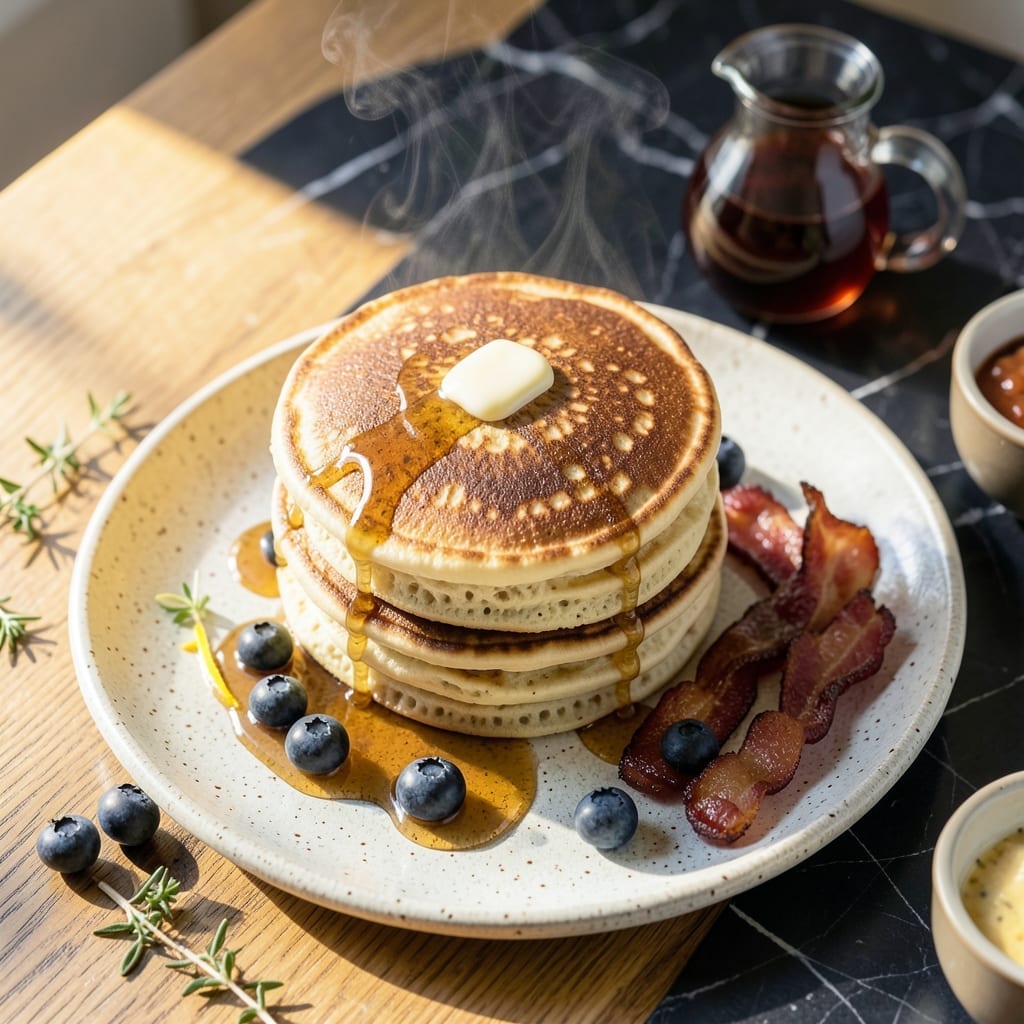
Nothing beats the satisfaction of homemade pancakes with a golden exterior and fluffy interior. This proven method delivers consistent results every time.
With simple ingredients and a straightforward technique, you’ll create a breakfast that rivals any diner. The secret lies in proper mixing and precise cooking temperatures.
Ingredients for Pancake Recipe from Scratch
These pantry staples and fridge basics transform into diner-quality breakfast in minutes.
| Ingredient | Amount | Notes |
|---|---|---|
| All-Purpose Flour 🌾 | 2 cups | Sifted for lighter texture |
| Granulated Sugar 🍚 | 2 tbsp | Fine grain preferred |
| Baking Powder 🧂 | 2 tsp | Fresh for best rise |
| Baking Soda 🧂 | ½ tsp | Balances acidity |
| Salt 🧂 | ½ tsp | Fine sea salt |
| Large Eggs 🥚 | 2 whole | Room temperature preferred |
| Whole Milk 🥛 | 1 ¾ cups | Full-fat for richness |
| Unsalted Butter 🧈 | 4 tbsp | Melted and cooled |
| Vanilla Extract 🌿 | 1 tsp | Pure extract preferred |
| Vegetable Oil 🫒 | 1 tbsp | For greasing griddle |
The flour is the foundation. King Arthur unbleached all-purpose delivers consistent results with a slightly higher protein content for structure. Baking powder loses potency over time—replace every 6 months for maximum lift. The milk matters too: whole milk yields the tenderest crumb, though 2% works in a pinch. Always check the expiration date on your leavening agents.
No whole milk? Buttermilk at the same quantity adds tang and extra fluffiness. Out of baking powder? 1 tsp baking soda plus 2 tsp cream of tartar per tablespoon substitutes. The butter can be swapped for coconut oil for a dairy-free version (though texture differs slightly). Fresh eggs are non-negotiable—old eggs won’t provide the same structure.
Store dry ingredients in airtight containers for 6-12 months. The batter can rest 10 minutes before cooking (improves texture). Cooked pancakes keep 2-3 days refrigerated or freeze for 1 month. Reheat in toaster for best results.
Why You’ll Love This Recipe
- One Bowl Wonder: I mix the dry ingredients right in the bowl—flour, sugar, baking powder, soda, salt—then just add wet stuff. No extra dishes to wash.
- Fluffy Gold: That perfect rise from the baking powder and soda combo? It makes them light as air, with just the right hint of sweetness.
- Breakfast or Dessert: Honestly, I’ve served these for dinner too. Top with fruit and syrup or go savory with herbs and cheese.
- Pantry Staples: Between us, I always have these ingredients on hand, so pancakes are never more than 10 minutes away.
Step-by-Step Instructions for Pancakes From Scratch
Precise technique and proper mixing order are essential for achieving the ideal texture and rise.
Step 1: Combine Dry Ingredients for Even Distribution
In a large mixing bowl, whisk together the 2 cups All-Purpose Flour, 2 tbsp Granulated Sugar, 2 tsp Baking Powder, 0.5 tsp Baking Soda, and 0.5 tsp Salt until fully incorporated. Sifting the flour first ensures a lighter batter, as it aerates the dry ingredients and prevents dense pancakes.
This step is critical for even leavening—baking powder and baking soda need to be evenly dispersed to create consistent air pockets throughout the batter. The sugar will caramelize slightly during cooking, adding subtle depth to the flavor.
Step 2: Whisk Wet Ingredients to Homogeneous Consistency
In a separate medium bowl, beat the 2 whole Large Eggs lightly, then add the 1.75 cups Whole Milk, 4 tbsp Unsalted Butter (melted and cooled to room temperature), and 1 tsp Vanilla Extract. Whisk until the mixture is smooth and fully emulsified.
Room-temperature eggs and milk incorporate more smoothly into the batter, preventing streaks or separation. The melted butter adds richness and tenderness, while the vanilla extract enhances the overall flavor profile with a warm, aromatic note.
Step 3: Create the Batter with Minimal Mixing
Pour the wet ingredients into the dry ingredients and gently fold them together using a spatula. Mix just until the flour is moistened and no large dry streaks remain—small lumps are acceptable and will dissolve during cooking.
Overmixing develops the gluten in the flour, resulting in tough, chewy pancakes. The batter should be thick but pourable, with a slightly lumpy texture. This is the point where less effort yields better results, as the chemical leaveners do most of the work.
Step 4: Cook on a Preheated Surface to Golden Perfection
Heat a griddle or large skillet over medium heat and brush lightly with 1 tbsp Vegetable Oil. The surface is ready when a drop of water sizzles and evaporates immediately upon contact.
Pour ¼ cup of batter onto the griddle for each pancake, spacing them 2 inches apart to allow for spreading. Cook until bubbles form on the surface and the edges appear set, about 2-3 minutes. Flip and cook for another 1-2 minutes until golden brown and cooked through.
Resist the urge to press down on the pancakes with the spatula—this compresses the air pockets and prevents them from rising properly. The first pancake is often a test; adjust the heat if it browns too quickly or too slowly.
Pro Tips For Making Pancake Recipe From Scratch
- Rest the Batter: After mixing, let the batter sit for 5-10 minutes—this gives the flour time to hydrate and the baking powder a chance to work its magic.
- Use Room-Temp Ingredients: I learned this the hard way—cold eggs or milk can make the batter clump and the pancakes dense. Pull them out 30 minutes before mixing.
- Skip Overmixing: Stir just until the dry spots disappear; a few lumps are fine. Overmixing develops gluten, and you’ll end up with tough, chewy pancakes.
- Preheat the Pan: Sounds obvious, but a properly hot pan (medium heat, about 375°F) is the difference between golden-brown and pale, gummy pancakes. Test with a drop of water—it should sizzle and dance.
Make-Ahead Tips for This Dish
Batter Prep Ahead
Mix your dry ingredients the night before and store in an airtight container. In the morning, just add wet ingredients. This saves 5 minutes and ensures consistent leavening.
Overnight Batter
Combine all ingredients except baking powder the night before. In the morning, stir in 2 tsp fresh baking powder and cook immediately. The rest time develops flavor beautifully.
Freeze Cooked Pancakes
Cool completely, then layer between parchment paper in a zip-top bag. Freeze for up to 1 month. This method prevents freezer burn while keeping them fresh. ❄️
Reheat Like a Pro
Pop frozen pancakes directly into your toaster on medium-high for 1-2 minutes. They’ll come out warm and crispy without drying out.
Griddle Ready
Pre-measure your batter into a pitcher and refrigerate overnight. The next morning, just pour and cook. I use a 4-cup Pyrex measuring cup for easy pouring.
Dry Mix Storage
Pre-mix multiple batches of dry ingredients and store in mason jars for up to 3 months. Label with the date and remaining wet ingredients needed.
Frequently Asked Questions
Why are my pancakes dense instead of fluffy?
Overmixing the batter develops gluten, creating tough pancakes. Mix just until flour is moistened—small lumps are fine. Also ensure your baking powder is fresh, as old leaveners lose potency quickly.
Can I substitute milk with water?
Water works in a pinch but yields less rich, tender results. For best texture, use whole milk or a 50/50 milk-water blend. Buttermilk adds tang and extra fluffiness if available.
How do I know when to flip them?
Wait until bubbles form on the surface and edges look set, about 2-3 minutes. The bottom should be golden brown before flipping. Only flip once for even cooking.
Can I make the batter ahead?
Yes! Mix dry ingredients the night before. Morning of, add wet ingredients and cook immediately. For overnight batter, omit baking powder until ready to cook for best rise.
Nutrition Facts

- BBQ Sausage Recipe Oven: Smoky Depth Without the Grill - September 28, 2026
- BBQ Chicken Bowl Recipe Rice: Smoky Sweetness Over Fluffy Grains - September 28, 2026
- Beef Cutlet Recipe Ideas: Crispy Breaded Patties With Bold Seasonings - September 28, 2026