
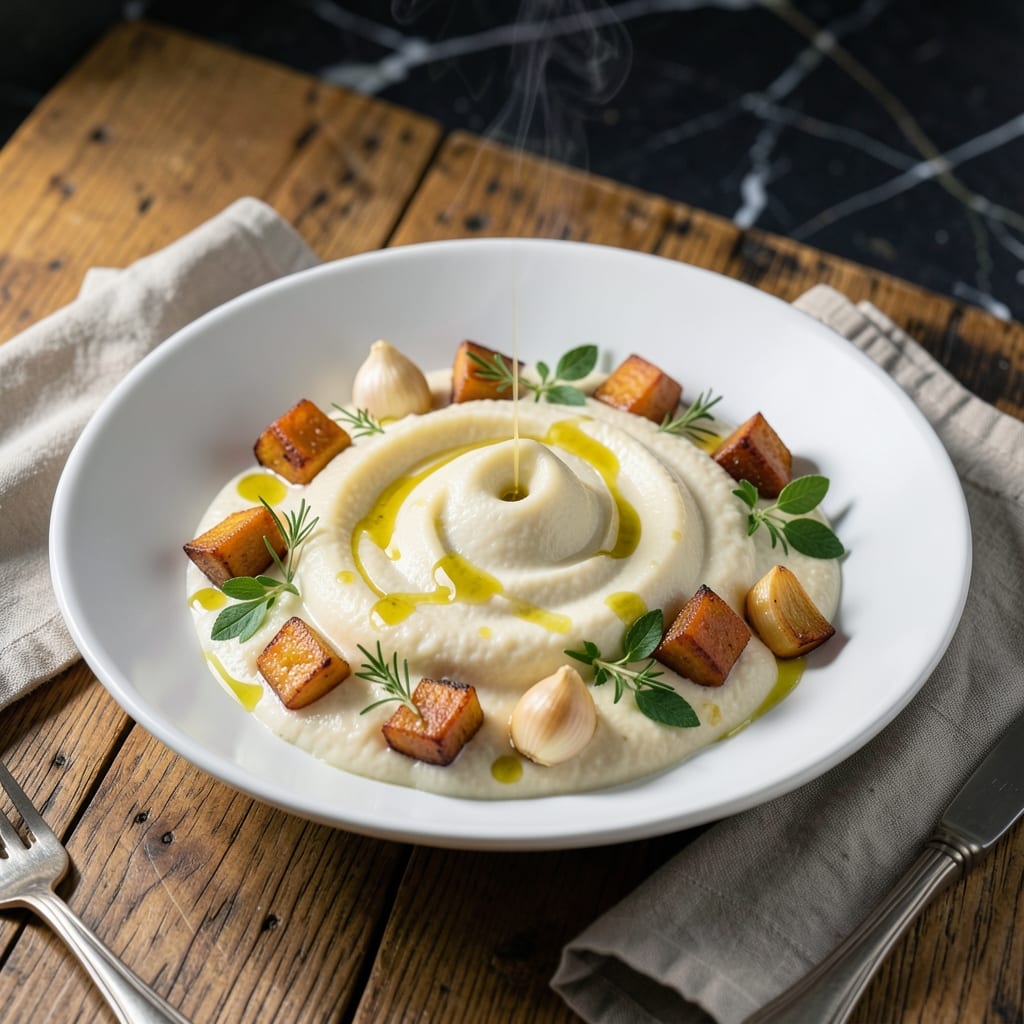
This parsnip puree elevates any meal with its velvety texture and subtle sweetness. I first tasted a version like this working under a Charleston chef who demanded perfection in every bite.
The secret lies in proper roasting to caramelize the natural sugars before blending. David, my official taste-tester, confirmed this method beats all others we’ve tried at home.
What you’ll achieve is a silky smooth side dish with depth of flavor that complements everything from roast chicken to holiday feasts. It’s the kind of simple technique that makes home cooking feel restaurant-worthy.
Ready in under an hour with minimal ingredients, this puree proves that great dishes often come from the humblest roots.
Ingredients for Parsnip Puree Recipe Gordon Ramsay
Root vegetable magic with just a handful of pantry staples and fresh herbs.
| Ingredient | Amount | Notes |
|---|---|---|
| Parsnips 🥕 | 2 lb | Peeled and chopped into even pieces |
| Unsalted Butter 🧈 | ½ cup | Cut into small cubes for blending |
| Heavy Cream 🥛 | ½ cup | Warmed slightly before adding |
| Garlic Cloves 🧄 | 4 cloves | Peeled, left whole for roasting |
| Fresh Thyme Sprigs 🌿 | 4 sprigs | Leaves stripped, stems discarded |
| Extra-Virgin Olive Oil 🫒 | 2 tbsp | For tossing before roasting |
| Kosher Salt 🧂 | 1 tsp | Divided, to taste |
| Freshly Ground Black Pepper 🌶️ | ½ tsp | To taste |
| Ground Nutmeg 🌰 | ¼ tsp | Freshly grated preferred |
| Whole Milk 🥛 | ¼ cup | Optional for thinning puree |
| Vegetable Stock 🥫 | ½ cup | Low-sodium preferred |
The parsnips are the star—choose firm, medium-sized ones without too many woody cores. Whole Foods and Trader Joe’s usually have the best selection. Don’t skip peeling them (yes, even the organic ones) since the skins can get bitter during roasting. The garlic roasts whole, so no chopping needed—just smash the cloves lightly to release the oils. Fresh thyme from the produce section is ideal, but dried works in a pinch (use half the amount).
No heavy cream? Full-fat coconut milk gives a similar richness. Out of thyme? Fresh rosemary at the same quantity works beautifully. For a lighter version, swap the cream for whole milk and add an extra tablespoon of butter. The vegetable stock can be swapped for chicken stock if you’re not strict vegetarian, but keep it low-sodium. Nutmeg is subtle but essential—don’t skip it (or sub cinnamon if you’re desperate).
This puree reheats like a dream—just stir in a splash of milk or cream to loosen. Keeps 3-4 days in the fridge, 3 months frozen. Portion into small containers for easy grab-and-go sides. The butter will firm up when cold, so warm it gently before serving again.
Why You’ll Love This Recipe
- One-Pot Wonder: I just boil the parsnips with garlic and thyme, then blend with butter and cream—no fancy techniques.
- Rich and Silky: That butter and cream combo makes it so velvety, and the garlic adds a subtle kick.
- Holiday Side Star: I serve this with roast chicken or turkey, but honestly, it’s great with weeknight meals too.
Step-by-Step Instructions for Parsnip Puree
This method delivers restaurant-quality results with minimal effort and maximum flavor.
Step 1: Roast the Parsnips with Aromatics
Preheat your oven to 400°F. Toss the 2 lb parsnips (peeled and chopped) with 2 tbsp extra-virgin olive oil, 4 cloves garlic cloves (peeled), and the leaves from 4 sprigs fresh thyme sprigs. Spread them in a single layer on a baking sheet.
Roast for 25-30 minutes, stirring halfway, until the parsnips are tender and caramelized at the edges. The garlic should be soft and golden. This roasting step deepens the natural sweetness and adds complexity to the puree.
Step 2: Blend with Butter and Cream
Transfer the roasted parsnips, garlic, and thyme leaves to a blender or food processor. Add 0.5 cup unsalted butter (cut into cubes) and 0.5 cup heavy cream (warmed slightly). Blend until completely smooth, scraping down the sides as needed.
The heat from the parsnips will melt the butter, creating a rich, velvety base. If the mixture seems too thick, add 0.25 cup whole milk a little at a time until it reaches your desired consistency.
Step 3: Season and Adjust to Taste
Add 1 tsp kosher salt (or to taste), 0.5 tsp freshly ground black pepper, and 0.25 tsp ground nutmeg. Blend again to incorporate. Taste and adjust the seasoning—parsnips vary in sweetness, so you might need a touch more salt.
For a lighter texture, you can thin the puree further with 0.5 cup vegetable stock, adding it gradually while blending. The stock adds depth without overpowering the natural parsnip flavor.
Step 4: Strain and Serve
For an ultra-smooth finish, pass the puree through a fine-mesh sieve into a saucepan. This removes any fibrous bits, ensuring a silky texture. Gently reheat the puree over low heat, stirring constantly, until warmed through.
Serve immediately while hot. The puree should be glossy and hold its shape briefly before melting into a luscious pool. Garnish with a drizzle of extra-virgin olive oil or a sprinkle of fresh thyme for a restaurant-worthy touch.
Pro Tips For Making Parsnip Puree Recipe Gordon Ramsay
- Boil in Salted Water: I learned this the hard way—parsnips need well-salted water to avoid a bland puree, so add at least 1 tablespoon of salt per liter.
- Strain, Don’t Drain: After boiling, strain the parsnips instead of draining them in a colander to avoid waterlogged puree.
- Warm the Cream: Sounds weird, but it works: gently heat the heavy cream before mixing—cold cream can make the puree seize up.
- Push Through a Tamis: My grandmother swore by this, and she was right: for ultra-smooth texture, press the cooked parsnips through a tamis or fine-mesh sieve instead of mashing.
Health Benefits of These Flavors
Nutrient-Rich Root Power
Parsnips pack serious nutritional value, offering 6.5 grams of fiber per cup that supports digestive health. They’re also rich in vitamin C, providing about 25% of your daily needs in a single serving. David always notices how this dish keeps him full for hours. 💪
Heart-Healthy Benefits
This puree delivers potassium (about 500mg per serving) which helps regulate blood pressure. The folate content supports heart health while the natural compounds in parsnips may help lower cholesterol levels. It’s a delicious way to care for your cardiovascular system.
Immune Support
The combination of vitamin C and antioxidants in parsnips strengthens your immune system. I love that this dish does double duty—tasting indulgent while actually boosting your defenses. The garlic adds additional immune-supporting properties.
Low Glycemic Impact
Despite their sweetness, parsnips have a low glycemic index of about 52, meaning they provide steady energy without blood sugar spikes. This makes the puree a smart choice for anyone watching their sugar intake. The fiber helps slow digestion further.
Bone Health Boost
You’ll get a good dose of manganese (about 20% DV per serving) which supports bone formation. Parsnips also contain vitamin K, essential for bone metabolism. It’s satisfying to know this comforting dish contributes to long-term health. 💛
Nutrition Facts
Frequently Asked Questions
Can I use a different herb instead of thyme?
Yes! Fresh rosemary works beautifully as a substitute. Use the same quantity for best results.
What if my puree is too thin?
Simmer it over low heat for 5-10 minutes to thicken. Avoid high heat to prevent scorching.
How do I make this dairy-free?
Swap butter for coconut oil and use full-fat coconut milk instead of cream. The flavor remains rich and velvety.
Can I prepare this ahead of time?
It keeps 3-4 days refrigerated or 3 months frozen. Reheat gently with a splash of milk.

- BBQ Sausage Recipe Oven: Smoky Depth Without the Grill - September 28, 2026
- BBQ Chicken Bowl Recipe Rice: Smoky Sweetness Over Fluffy Grains - September 28, 2026
- Beef Cutlet Recipe Ideas: Crispy Breaded Patties With Bold Seasonings - September 28, 2026