
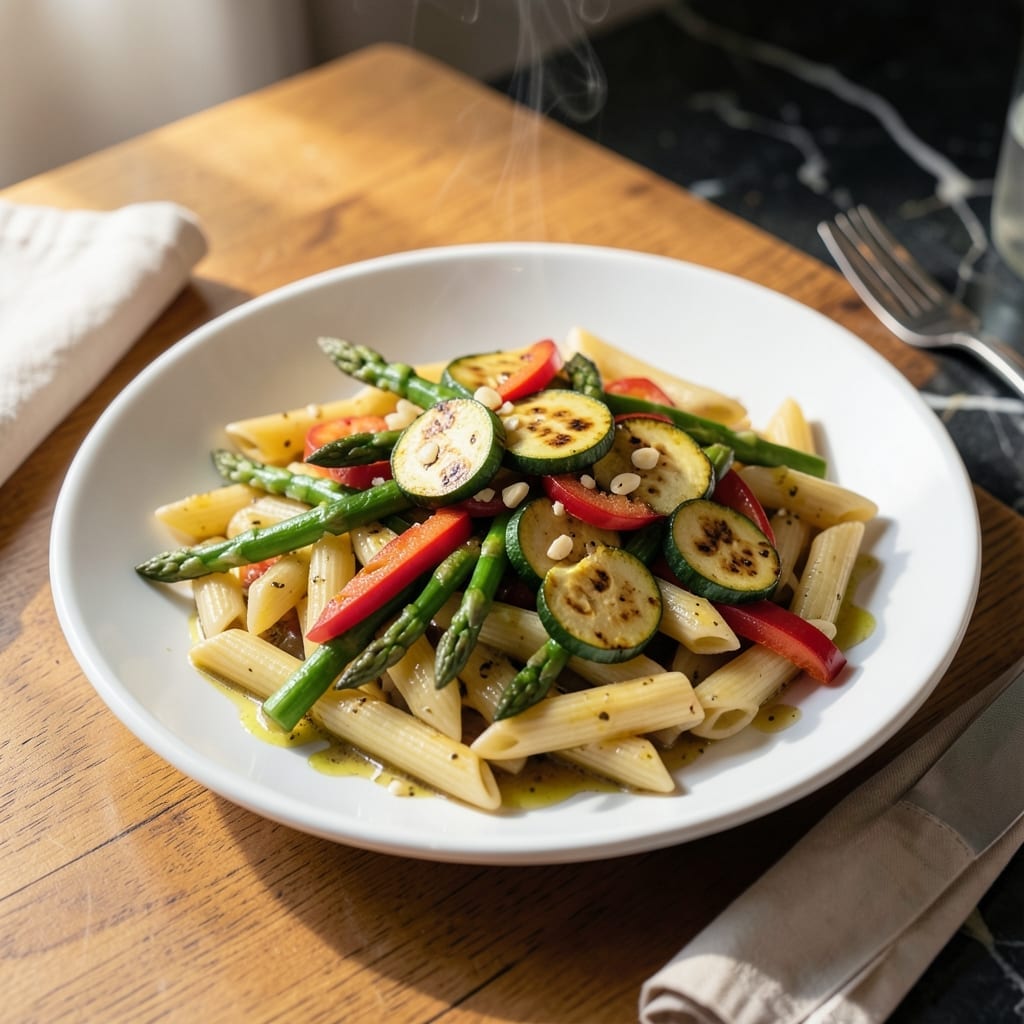
This pasta primavera celebrates the best of spring produce with a light yet flavorful garlic white wine sauce. The combination of fresh, seasonal vegetables and al dente pasta creates a dish that feels both elegant and approachable.
I developed this recipe to highlight the natural sweetness of spring vegetables—asparagus, bell peppers, and zucchini—while the sauce adds depth without overpowering. The white wine reduces to concentrate its acidity, balancing the richness of the garlic and olive oil.
The result is a vibrant, restaurant-quality plate where each ingredient retains its distinct texture and taste. The pasta absorbs just enough sauce to feel cohesive, while the vegetables stay crisp and bright.
Serve it as a vegetarian main or pair with grilled chicken for added protein. Here’s how to make it perfectly every time.
Ingredients for Pasta Primavera
Bright spring vegetables and al dente pasta shine in this elegant, approachable dish.
| Ingredient | Amount | Notes |
|---|---|---|
| Penne Pasta 🍝 | 12 oz | Or fusilli, farfalle preferred |
| Asparagus 🌱 | 1 lb | Trimmed, cut into 2-inch pieces |
| Red Bell Pepper 🌶️ | 1 whole | Thinly sliced into strips |
| Zucchini 🥒 | 2 whole | Medium size, sliced into half-moons |
| Garlic Cloves 🧄 | 4 cloves | Minced finely for maximum flavor |
| Extra-Virgin Olive Oil 🫒 | ½ cup | Divided for cooking and finishing |
| Dry White Wine 🍷 | ¾ cup | Sauvignon Blanc or Pinot Grigio |
| Vegetable Stock 🥫 | ½ cup | Low-sodium preferred for balance |
| Unsalted Butter 🧈 | 3 tbsp | For richness in sauce |
| Heavy Cream 🥛 | ¼ cup | Full-fat for creaminess |
| Parmesan Cheese 🧀 | ½ cup | Freshly grated, plus extra for serving |
| Fresh Basil Leaves 🌿 | ¼ cup | Thinly sliced for garnish |
| Fresh Flat-Leaf Parsley 🌿 | ¼ cup | Chopped, for freshness |
| Kosher Salt 🧂 | 1 tsp | Plus more to taste |
| Freshly Ground Black Pepper 🌶️ | ½ tsp | Plus more to taste |
The vegetables are the heart of this dish. Farmers markets are ideal for spring asparagus, bell peppers, and zucchini—look for firm, vibrantly colored specimens. The pasta shape matters too: penne, fusilli, or farfalle hold sauce beautifully. For the wine, a crisp Sauvignon Blanc or Pinot Grigio from Trader Joe’s or Whole Foods works perfectly (and you’ll have some left for sipping).
No white wine? Substitute with additional vegetable stock and 1 tbsp lemon juice for acidity. Out of fresh herbs? Dried basil or parsley at one-third the amount works in a pinch. The heavy cream can be swapped for half-and-half—just reduce the sauce a bit longer. For a richer dish, add 1/4 cup grated Pecorino Romano alongside the Parmesan.
Store leftovers in an airtight container—they keep well for 3-4 days in the fridge. The flavors meld beautifully overnight. Freezing isn’t ideal (the veggies get mushy), but if you must, it’ll last 1 month. Reheat gently with a splash of water or stock to revive.
Why You’ll Love This Recipe
- One Pan Wonder: I can toss the penne, asparagus, bell pepper, and zucchini in a single pan while the garlic does its magic.
- Garlic Kissed Veggies: The garlic cloves make the asparagus and zucchini taste ridiculously good, like they were meant to be together.
- My Go-To Weeknight: Honestly, it’s my reliable dish for busy evenings—ready before the kids finish their homework.
- Leftovers for Days: Between us, it tastes even better the next day, and it stretches for lunches all week.
Step-by-Step Instructions for Pasta Primavera
Master this technique for vibrant vegetables and a silky sauce that clings perfectly to each bite.
Step 1: Prep and Blanch the Vegetables
Bring a large pot of salted water to a boil. Meanwhile, trim the 1 lb asparagus into 2-inch pieces, thinly slice the red bell pepper into strips, and cut the 2 zucchini into half-moons. Blanch the asparagus for 2 minutes, then remove with a slotted spoon and shock in ice water to preserve the bright green color.
Repeat with the zucchini and bell pepper, blanching each for 1-2 minutes until just tender-crisp. This step ensures the vegetables retain their vibrant hues and perfect texture when finished in the sauce. Drain well and set aside.
Step 2: Sauté Aromatics and Build the Sauce Base
In a large, deep skillet, heat ¼ cup of the extra-virgin olive oil over medium heat. Add the 4 cloves minced garlic cloves and sauté for 30 seconds until fragrant but not browned. Pour in the ¾ cup dry white wine and simmer for 3 minutes to reduce by half, allowing the alcohol to cook off.
Add the ½ cup vegetable stock and bring to a gentle simmer. Stir in the 3 tbsp unsalted butter until melted, creating a rich, emulsified base for your sauce. The mixture should look glossy and slightly thickened.
Step 3: Cook the Pasta and Combine
In the same boiling water used for blanching, cook the 12 oz penne pasta according to package instructions until al dente. Reserve 1 cup of pasta water before draining. Transfer the pasta directly to the skillet with the sauce, along with the blanched vegetables.
Toss everything together over medium-low heat, adding reserved pasta water as needed to create a silky consistency. Stir in the ¼ cup heavy cream and ½ cup parmesan cheese, allowing the cheese to melt into the sauce. The sauce should coat the pasta and vegetables evenly, with a slight sheen.
Step 4: Finish and Garnish
Remove the skillet from heat and stir in the 1 tsp kosher salt and ½ tsp freshly ground black pepper. Taste and adjust seasoning if needed. Drizzle with the remaining ¼ cup extra-virgin olive oil for a final touch of richness.
Garnish with chopped fresh flat-leaf parsley and thinly sliced fresh basil leaves. The herbs should be added just before serving to preserve their bright, fresh flavor. Serve immediately, as the dish is best enjoyed hot with the vegetables at their peak texture.
Pro Tips For Making Pasta Primavera
- Blanch the Asparagus: Drop asparagus in boiling salted water for 2 minutes before adding to the pan—keeps it bright green and crisp-tender instead of mushy. I learned this the hard way after too many gray, limp spears.
- Slice Veggies Thin: Cut zucchini and bell pepper into ¼-inch strips so they cook evenly with the pasta. Sounds tedious, but it actually changes the outcome—no more crunchy peppers hiding in bites.
- Reserve Pasta Water: Scoop out ½ cup of starchy pasta water before draining—it helps the sauce cling to the penne. Skip this and you’ll be stirring a dry, sad bowl of noodles.
- Toast the Garlic: Cook minced garlic in olive oil just until fragrant, about 30 seconds, then pull it off the heat. Burnt garlic ruins the dish—ask me how I know.
Health Benefits of This Recipe
Nutrient-Rich Vegetables
This dish packs a variety of spring vegetables like asparagus, bell peppers, and zucchini, all rich in essential vitamins and minerals. Asparagus provides folate and vitamin K, while bell peppers deliver a hefty dose of vitamin C and antioxidants. 💪
Heart-Healthy Fats
The extra-virgin olive oil and Parmesan cheese contribute healthy fats that support cardiovascular health. Olive oil is loaded with monounsaturated fats, which help lower bad cholesterol levels, while Parmesan adds calcium for strong bones.
Balanced Macros
With 12 oz penne pasta and fresh veggies, this dish offers a balanced mix of carbohydrates, proteins, and fiber. The pasta provides sustained energy, while the vegetables add fiber to aid digestion and keep you feeling full longer.
Immune-Boosting Properties
The garlic and herbs in this recipe, like basil and parsley, contain compounds that support immune function. Garlic, in particular, has been shown to have antimicrobial properties, making this dish as nourishing as it is delicious. 🌱
Low-Calorie, High-Flavor
Despite its rich taste, this pasta primavera is relatively light, with most calories coming from nutrient-dense ingredients. The white wine sauce adds depth without excessive heaviness, making it a satisfying yet health-conscious choice.
Antioxidant Powerhouse
The colorful vegetables are packed with antioxidants like beta-carotene and vitamin C, which help combat oxidative stress. Regularly including such ingredients in your diet can contribute to long-term health and vitality.
Nutrition Facts
Frequently Asked Questions
Can I use different vegetables?
Try broccoli, snap peas, or mushrooms for variety. Just adjust blanching times to keep them crisp-tender.
What if I don’t have white wine?
Substitute with ½ cup vegetable stock plus 1 tbsp lemon juice. The acidity mimics wine’s brightness.
How do I prevent mushy veggies?
Blanch vegetables separately and shock in ice water immediately. This preserves color and texture.
Can I make this ahead?
Yes! Store cooked pasta and sauce separately in the fridge for up to 2 days. Reheat gently with a splash of water.

- BBQ Sausage Recipe Oven: Smoky Depth Without the Grill - September 28, 2026
- BBQ Chicken Bowl Recipe Rice: Smoky Sweetness Over Fluffy Grains - September 28, 2026
- Beef Cutlet Recipe Ideas: Crispy Breaded Patties With Bold Seasonings - September 28, 2026