
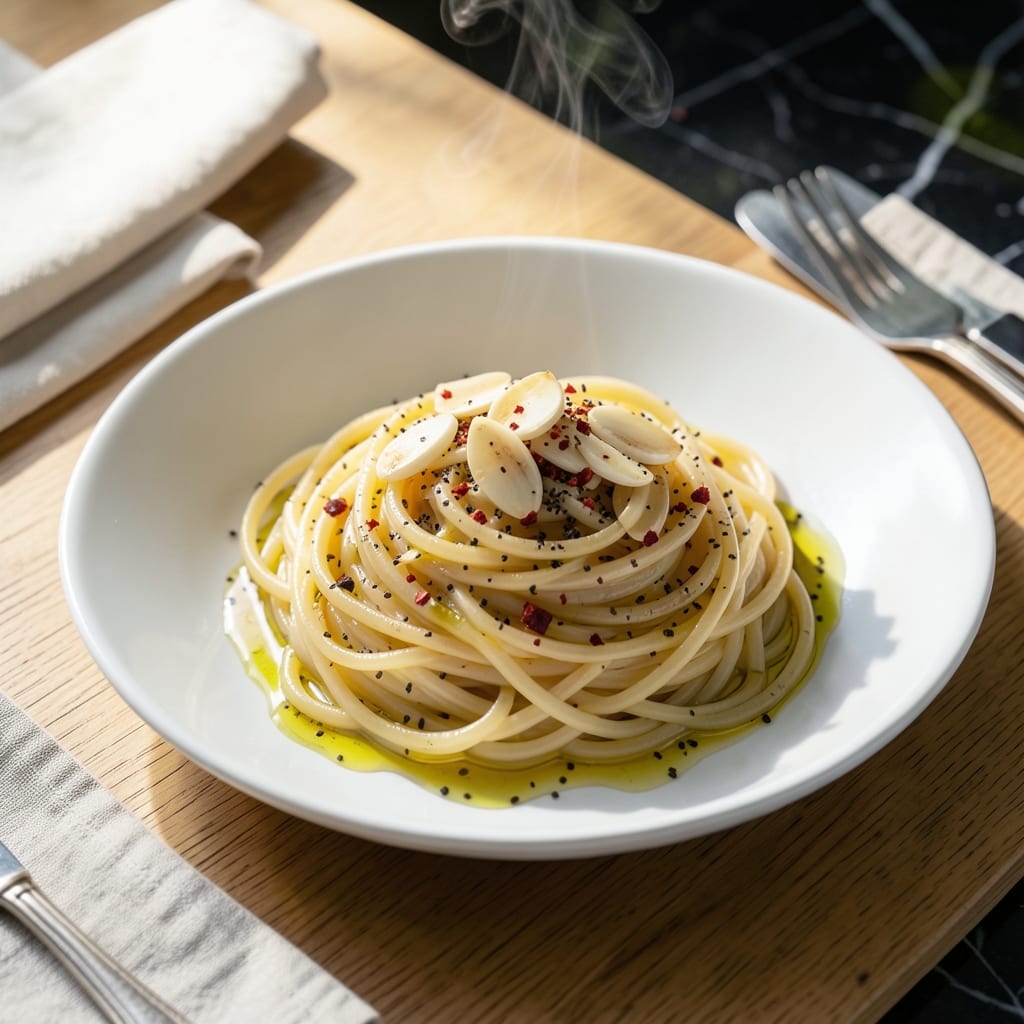
There’s a simple elegance to pasta that doesn’t rely on tomato sauce for its flavor. This dish proves that garlic and olive oil can create a base that’s just as rich and satisfying.
The key lies in the quality of the ingredients. Freshly minced garlic, high-quality extra virgin olive oil, and perfectly cooked al dente pasta come together in a way that feels both rustic and refined.
What you get is a dish where every strand of pasta is coated in a fragrant, golden oil infused with the warmth of garlic. It’s light yet deeply flavorful, with a simplicity that lets each ingredient shine.
Ready in under 20 minutes, this is the kind of meal that feels special but requires minimal effort. Let’s bring this classic to life.
Ingredients for Pasta Recipe Without Tomato Sauce
Simple ingredients, extraordinary results. Garlic, olive oil, and pasta shine together beautifully here.
| Ingredient | Amount | Notes |
|---|---|---|
| Spaghetti 🍝 | 1 lb | Dried, al dente preferred |
| Extra-Virgin Olive Oil 🫒 | ¾ cup | High quality for richness |
| Garlic Cloves 🧄 | 6 cloves | Freshly minced for best flavor |
| Red Pepper Flakes 🌶️ | ½ tsp | Adjust for heat preference |
| Kosher Salt 🧂 | 1 ½ tsp | For pasta water and seasoning |
| Freshly Ground Black Pepper 🌶️ | 1 tsp | For finishing the dish |
| Parmesan Cheese 🧀 | ½ cup | Freshly grated from block |
| Fresh Parsley 🌿 | ¼ cup | Chopped, for garnish |
| Lemon Zest 🍋 | 1 tsp | Optional, for brightness |
| Reserved Pasta Water 💧 | ½ cup | Starchy, for emulsifying sauce |
The olive oil is the foundation, so splurge on a high-quality extra-virgin. Look for bottles labeled cold-pressed with a harvest date—California Olive Ranch or Colavita are reliable. The pasta should be bronze-cut for better sauce adherence. De Cecco or Barilla are my go-tos. Fresh garlic is non-negotiable; the pre-minced stuff lacks punch.
No extra-virgin olive oil? Regular olive oil works in a pinch, but the flavor won’t be as vibrant. Out of fresh garlic? Garlic powder at one-third the amount (2 tsp) can substitute, but fresh is far superior. For heat, swap red pepper flakes with cayenne or a pinch of Aleppo pepper. The Parmesan can be omitted for a vegan version, though the dish loses some depth.
Store dried pasta in a cool, dark place for up to 2 years. Olive oil keeps for 12-18 months unopened, 6 months after opening. Fresh garlic lasts 3-6 months in a mesh bag. Cooked leftovers keep in the fridge for 3-4 days—reheat gently with a splash of water.
Why You’ll Love This Recipe
- One Pot Wonder: I love that it comes together in a single skillet—just boil the pasta, then toss with oil, garlic, and flakes.
- Garlic Lovers’ Dream: The sizzling garlic in olive oil with a kick of red pepper is ridiculously good, and the salt ties it all together.
- Weeknight Hero: Honestly, it’s my go-to for busy evenings when I need something fast but still satisfying.
- Budget Stretcher: A handful of pantry staples and no waste—this feeds us for days without breaking the bank.
Step-by-Step Instructions for Garlicky Olive Oil Coated Pasta
This method ensures perfectly al dente pasta with a rich, aromatic olive oil and garlic sauce.
Step 1: Cook Spaghetti Until Al Dente
Bring a large pot of water to a rolling boil. Add the 1.5 tsp Kosher Salt and stir to dissolve. Add the 1 lb Spaghetti and cook according to package instructions until just al dente—about 1 minute less than the suggested time.
This timing ensures the pasta finishes cooking in the sauce later. Reserve 0.5 cup Reserved Pasta Water before draining. The starchy water is essential for emulsifying the sauce. Drain the pasta but do not rinse—surface starch helps the sauce cling.
Step 2: Infuse Olive Oil with Garlic and Red Pepper
In a large skillet over medium-low heat, warm the 0.75 cup Extra-Virgin Olive Oil. Add the minced 6 cloves Garlic Cloves and 0.5 tsp Red Pepper Flakes. Cook for 2-3 minutes, stirring frequently, until the garlic turns light golden and becomes fragrant.
Watch the heat closely—garlic burns easily and turns bitter if overcooked. You want it to gently infuse the oil with its aroma without browning too deeply. Remove the skillet from heat once the garlic reaches the desired color to prevent further cooking.
Step 3: Combine Pasta and Sauce Off Heat
Add the drained pasta to the skillet with the garlic-infused oil. Using tongs, toss everything together to coat the strands evenly. Add 0.5 cup Reserved Pasta Water, a little at a time, and toss vigorously for 1-2 minutes until the sauce emulsifies and clings to the pasta.
The starchy water helps bind the oil and garlic, creating a silky, cohesive sauce. Keep the skillet off direct heat to avoid separating the emulsion. The pasta should glisten with a light, flavorful coating.
Step 4: Finish with Cheese, Herbs, and Seasonings
Remove the skillet from heat and stir in the 0.5 cup Parmesan Cheese until melted and smooth. Sprinkle with the 1 tsp Freshly Ground Black Pepper, 0.25 cup Fresh Parsley, and 1 tsp Lemon Zest, tossing gently to distribute evenly.
The cheese adds richness, while the parsley and lemon zest brighten the dish. Taste and adjust seasoning if needed, though the pasta water and cheese should provide enough saltiness. Serve immediately while warm.
Pro Tips For Making Pasta Recipe Without Tomato Sauce
- Reserve Pasta Water: Scoop out a cup of starchy pasta water before draining—it helps the olive oil and garlic cling to the noodles. I learned this the hard way after watching my sauce slide right off.
- Slice Garlic Thin: Cut the garlic into paper-thin slices instead of mincing so it infuses the oil evenly without burning. Sounds fussy, but it actually changes the outcome.
- Skip Cold Oil: Heat the olive oil over medium-low before adding garlic and red pepper flakes to prevent bitterness. After burning three batches, I finally figured out the timing.
- Salt the Water: Use about 1 tablespoon of kosher salt per gallon of boiling water—more than you think, but the pasta needs it. My grandmother swore by this, and she was right.
Storing and Reheating Leftovers
Refrigerator Storage
Let this dish cool for no more than 2 hours before transferring to airtight containers. I use glass containers with snap-tight lids to prevent oil absorption. Store at 40°F or below for up to 4 days. The flavors meld beautifully overnight. ❄️
Freezer Storage
This pasta freezes well for up to 3 months without texture loss. Use flat freezer bags to save space, leaving 1 inch of headspace for expansion. Squeeze out excess air to prevent freezer burn. Label bags with the date for easy tracking.
Stovetop Reheating
This is my preferred method for best texture. Warm pasta in a skillet over medium-low heat with 2 tbsp water or olive oil. Cover and heat for 3-4 minutes, stirring occasionally. Add a splash more liquid if it looks dry. 🔥
Microwave Reheating
For quick meals, place pasta in a microwave-safe dish with 1 tbsp water. Cover with a damp paper towel and microwave on 70% power for 1-2 minutes, stirring halfway. This prevents the cheese from separating.
Nutrition Facts
Frequently Asked Questions
Can I use a different type of pasta?
While spaghetti works beautifully, linguine or fettuccine also hold the sauce well. For a heartier bite, try pappardelle. Just adjust cooking time based on the package instructions.
Why do I need to reserve pasta water?
The starchy water helps emulsify the oil and garlic, creating a silky sauce that clings to the pasta. Without it, the dish may feel greasy or separated. Always reserve before draining!
How can I make this dish vegan?
Simply omit the Parmesan or replace it with a plant-based alternative like nutritional yeast or vegan hard cheese. The garlic and olive oil remain the stars of the dish.
What if my garlic burns?
Burnt garlic tastes bitter and can ruin the dish. If this happens, start fresh with new oil and garlic. Cook on medium-low heat and watch closely to avoid browning too quickly.

- Pav Bhaji Recipe Food Lab: Mumbai Street Food Magic at Home - October 6, 2026
- Peach Jelly Recipe Without Pectin: Naturally Set Sweet Spread - October 6, 2026
- Pasta Salad Recipe With Zesty Italian Dressing: Bright Herb-Kissed Medley for Picnics - October 6, 2026