
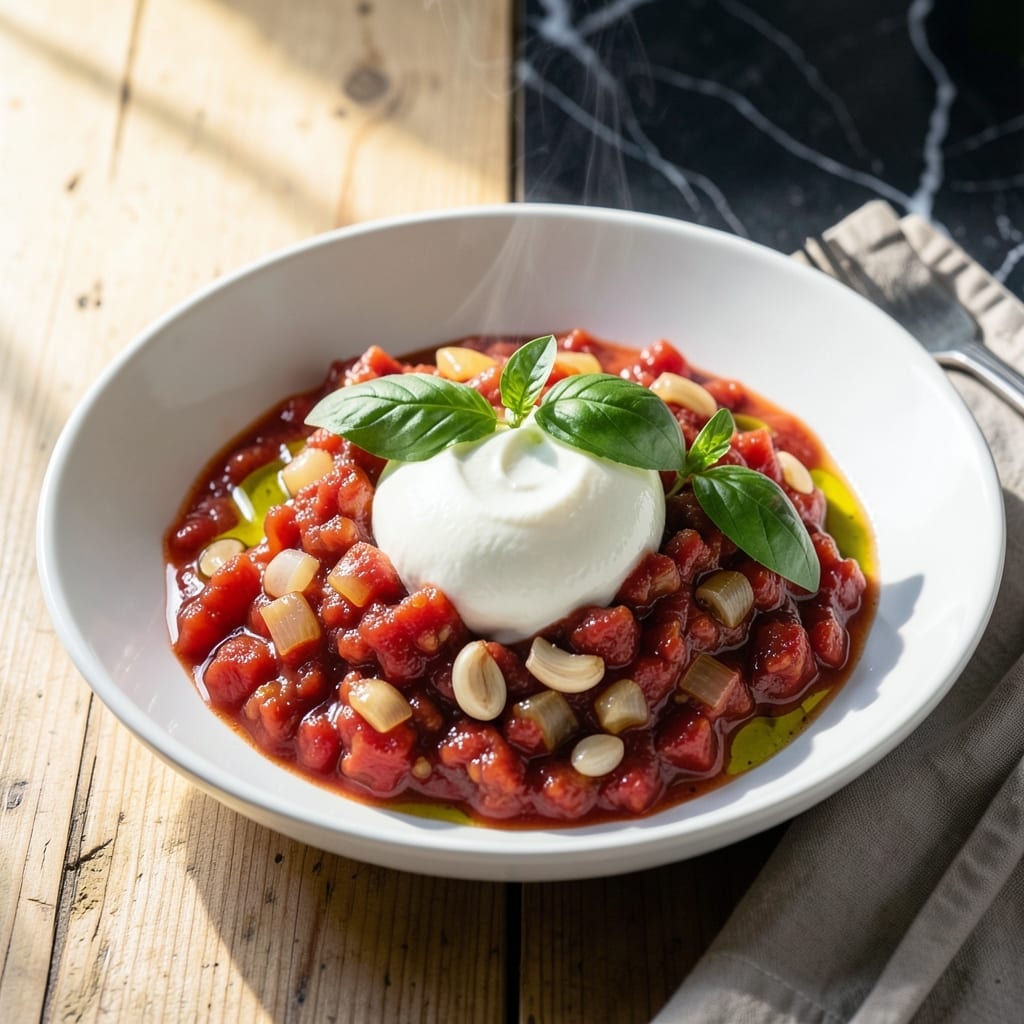
I developed this sauce to transform simple weeknight pasta into something restaurant-worthy. The ricotta creates a creamy base that blends beautifully with tomato, adding richness without heaviness.
This method works because it balances acidity and dairy perfectly, preventing the sauce from separating or becoming grainy. David confirmed it passes the taste-test with flying colors.
It clings to pasta beautifully, with a velvety texture that makes every bite satisfying. The finish is smooth and luxurious, elevating even basic spaghetti.
Make a double batch and store in the fridge for up to 5 days. Perfect for tossing with any pasta shape or as a dip for crusty bread.
Ingredients for Pasta Sauce Recipe with Ricotta Cheese
Nine quality ingredients create this luxurious sauce with velvety tomato-ricotta richness.
| Ingredient | Amount | Notes |
|---|---|---|
| Whole Milk Ricotta Cheese 🧀 | 1 ½ cups | Full-fat for creaminess |
| Canned San Marzano Tomatoes 🍅 | 1 can | 28 oz, crushed by hand |
| Extra-Virgin Olive Oil 🫒 | ¼ cup | High quality, fruity |
| Garlic Cloves 🧄 | 4 cloves | Minced for depth |
| Yellow Onion 🧅 | ½ whole | Finely diced |
| Fresh Basil Leaves 🌿 | ½ cup | Packed, stems removed |
| Parmesan Cheese 🧀 | ½ cup | Freshly grated from block |
| Sea Salt 🧂 | 1 tsp | Fine grain preferred |
| Black Pepper 🌶️ | ½ tsp | Freshly ground |
| Red Pepper Flakes 🔥 | ¼ tsp | Adjust for heat preference |
The ricotta is non-negotiable here—whole milk for creaminess. San Marzano tomatoes are ideal for their sweet, low-acid balance, but any high-quality canned tomato works. Parmigiano-Reggiano (the real stuff, not the pre-grated sawdust) adds depth. Source from Whole Foods or a specialty grocer for the best quality. The olive oil should be extra-virgin, with a fruity, peppery finish to complement the tomatoes.
Short on ricotta? Full-fat cottage cheese blended smooth is a passable substitute, though the texture won’t be as silky. No fresh basil? Dried at one-third the amount works, but add it early to rehydrate. Granulated garlic can replace fresh in a pinch (use half as much). For a richer sauce, heavy cream at 2 tbsp deepens the dairy profile without overpowering the ricotta.
This sauce holds beautifully—5 days in the fridge, 3 months frozen. Reheat gently to avoid separation. For best results, store in an airtight container with a thin layer of olive oil on top to preserve color and prevent drying.
Why You’ll Love This Recipe
- One Pot Wonder: I just dump the San Marzano tomatoes, garlic, and onion into a pan while the ricotta waits patiently in a bowl—no fancy techniques, no stress.
- Creamy Dream: The whole milk ricotta melts into the sauce, turning it rich and velvety without a single splash of heavy cream.
- Weeknight Hero: Honestly, I make a double batch on Sunday and it reheats like a dream for Tuesday’s pasta or Thursday’s lasagna.
- Budget Keeper: A tub of ricotta and a can of tomatoes feed my family of four for less than ten bucks, and we always have leftovers for lunch.
Step-by-Step Instructions for Pasta Sauce With Ricotta Cheese
This method delivers a luxuriously smooth sauce with balanced acidity and richness.
Step 1: Sauté Aromatics in Olive Oil
Heat the 0.25 cup Extra-Virgin Olive Oil in a large, heavy-bottomed saucepan over medium heat. Add the 0.5 whole Yellow Onion, finely diced, and cook for 5-6 minutes until translucent and just beginning to soften.
Add the 4 cloves Garlic Cloves, minced, and the 0.25 tsp Red Pepper Flakes. Sauté for an additional 1-2 minutes until the garlic releases its aroma—be careful not to let it brown, as this can impart bitterness to the sauce.
Step 2: Incorporate Canned San Marzano Tomatoes
Pour in the 1 can Canned San Marzano Tomatoes, crushing them by hand as you add them to the pan. This releases their juices and creates a rustic texture. Stir in the 1 tsp Sea Salt and 0.5 tsp Black Pepper.
Increase the heat to medium-high and bring the mixture to a gentle simmer. Reduce the heat to medium-low and let it cook uncovered for 15-20 minutes, stirring occasionally, until the tomatoes have broken down and the sauce has thickened slightly.
Step 3: Blend in Whole Milk Ricotta Cheese and Parmesan
Reduce the heat to low and stir in the 1.5 cups Whole Milk Ricotta Cheese. Use a wooden spoon to break up the ricotta and fully incorporate it into the sauce. The mixture will appear slightly curdled at first, but it will smooth out as it heats.
Gradually sprinkle in the 0.5 cup Parmesan Cheese, stirring constantly until fully melted and the sauce has a velvety consistency. This step is critical for achieving the promised creamy texture.
Step 4: Finish with Fresh Basil Leaves
Remove the sauce from heat. Stir in the 0.5 cup Fresh Basil Leaves, packed and with stems removed. The residual heat will wilt the basil slightly, releasing its fragrant oils into the sauce.
Taste and adjust seasoning if needed. The fresh basil adds a bright, herbal note that balances the richness of the ricotta and Parmesan. For the best flavor, let the sauce rest for 5-10 minutes before serving to allow the flavors to meld together.
Pro Tips For Making Pasta Sauce Recipe With Ricotta Cheese
- Drain the Ricotta: Scoop the ricotta into a fine-mesh strainer over a bowl and let it sit for 10 minutes to remove excess liquid—I learned this the hard way after my first three sauces turned watery.
- Crush the Tomatoes: Hand-crush the San Marzano tomatoes before adding them to the pot; it breaks them down faster and creates a chunkier, more rustic texture that holds up to the ricotta.
- Skip the Boil: Keep the heat at a gentle simmer, not a rolling boil, or the ricotta will separate and the sauce will turn grainy—after ruining a batch, I now use medium-low heat.
- Bloom the Garlic: Cook the sliced garlic in the olive oil until just golden, about 30-45 seconds, then add the onion; this builds a sweet, aromatic base that makes the ricotta shine.
Troubleshooting Perfect Results
Sauce Separating
If your sauce separates during cooking, it’s likely because the ricotta was added too quickly. Remove from heat and whisk vigorously with a balloon whisk to re-emulsify. Adding 1 tbsp of warm pasta water while whisking helps bring it back together. 💡
Grainy Texture
A grainy texture usually means the ricotta wasn’t fully incorporated. Return the sauce to low heat and stir constantly with a wooden spoon, breaking up any lumps. If needed, use an immersion blender for 10-15 seconds to smooth it out completely.
Too Thick
If the sauce becomes too thick, thin it with ¼ cup pasta water or warm milk, stirring until desired consistency is reached. I always keep a cup of pasta water handy when tossing with noodles. This trick saved me during my first year at Nana Mae’s diner.
Bitter Flavor
Bitterness often comes from overcooked garlic. Balance it by stirring in 1 tsp honey or 1 tbsp heavy cream. David, my official taste-tester, swears this rescue method works every time. A pinch of baking soda can also neutralize acidity if tomatoes taste too sharp.
Lacking Depth
If the flavor seems flat, add ½ tsp balsamic vinegar to brighten it up. For more complexity, stir in 2 tbsp tomato paste and cook for 5 minutes. This builds the umami base that makes the sauce truly special.
Storing Issues
If the sauce develops a skin after refrigeration, simply stir it back in. To prevent this, press plastic wrap directly onto the surface before sealing the container. This Austin farmers market trick keeps it fresh for the full 5 days. ❄️
Nutrition Facts
Frequently Asked Questions
Can I use low-fat ricotta instead?
I don’t recommend it. Whole milk ricotta gives the sauce its velvety texture and rich flavor, while low-fat versions can make the sauce watery or grainy.
What pasta pairs best with this sauce?
This creamy sauce clings beautifully to rigatoni, penne, or fettuccine. The ridges and shapes help capture every bit of the rich tomato-ricotta blend.
Can I add meat to this sauce?
Brown ½ lb Italian sausage or ground beef first, then drain the fat before adding onions. This creates a heartier version perfect for family dinners.
Why does my sauce look curdled?
This happens if ricotta is added too quickly or at too high heat. Remove from heat and whisk vigorously with 1 tbsp warm pasta water to smooth it out.

- Pea Shoots Recipe Salad: Fresh Greens With Asian-Inspired Dressing - October 9, 2026
- Peanut Butter Bark Recipe With Pretzels: Sweet and Salty Holiday Treat - October 9, 2026
- Peach Crisp Recipe With Fresh Peaches: Buttery Oat Topping Over Juicy Summer Fruit - October 9, 2026