
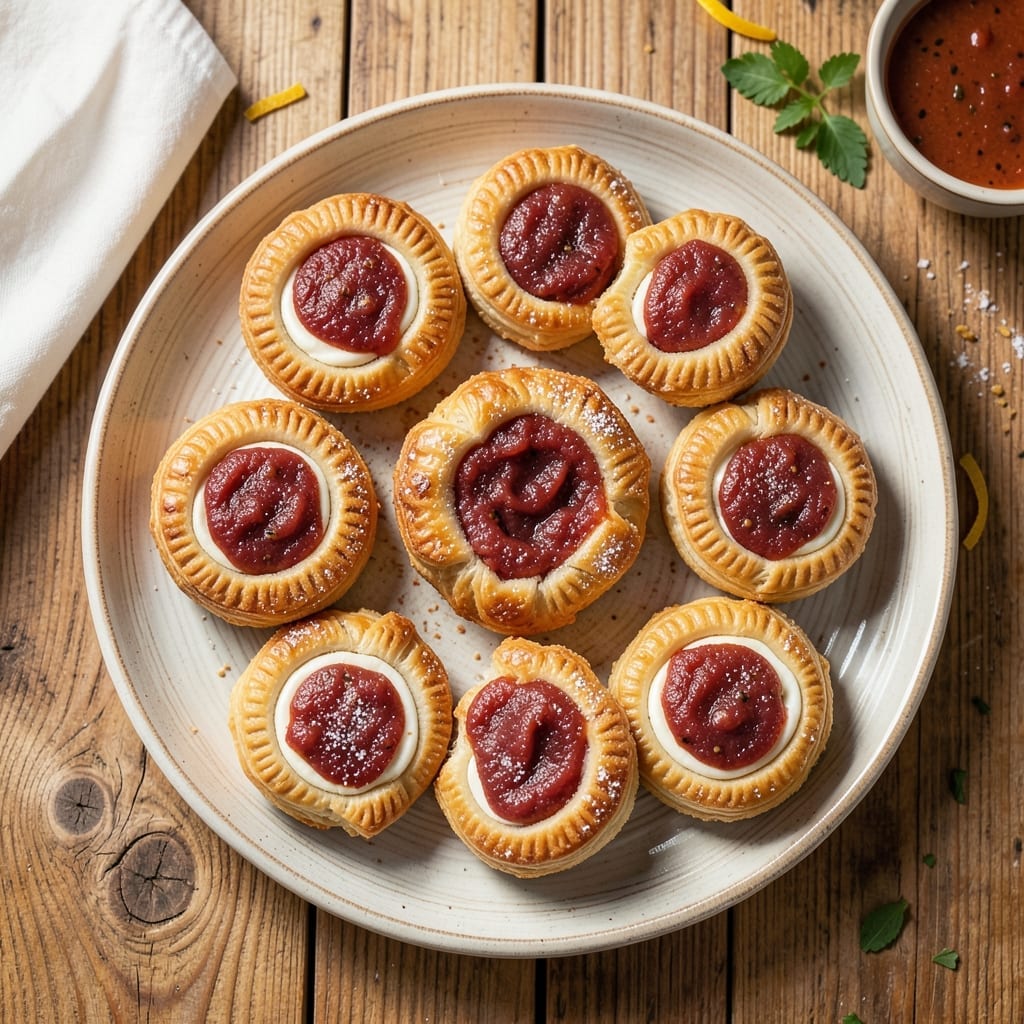
There’s something special about flaky Puerto Rican pastelillos that takes me straight to the island’s bakeries. This traditional pastry captures the perfect balance of buttery layers and sweet guava filling in every bite.
The secret lies in working with cold dough and creating paper-thin layers that puff up beautifully in the oven. Guava paste provides the signature sweet-tart filling that contrasts perfectly with the crisp pastry exterior.
Each golden turnover emerges with a delicate crunch giving way to the rich, fruity center. The technique may seem involved at first, but the results are worth every step of the process.
These pastries keep well for days, making them ideal for sharing with family or enjoying with a strong cup of Puerto Rican coffee.
Ingredients for Pastelillos De Guayaba Recipe Puerto Rico
Flaky layers and sweet guava filling start with these quality ingredients.
| Ingredient | Amount | Notes |
|---|---|---|
| All-Purpose Flour 🌾 | 3 cups | Plus extra for dusting |
| Unsalted Butter 🧈 | 1 cup | Cold, cubed for layers |
| Cold Water 💧 | ⅓ cup | Ice cold for flakiness |
| Salt 🧂 | ½ tsp | Fine sea salt preferred |
| Granulated Sugar 🍚 | 1 tbsp | For dough lightly sweetened |
| Guava Paste 🍓 | 8 oz | Cut into small cubes |
| Cream Cheese 🧀 | 4 oz | Softened for filling |
| Large Egg 🥚 | 1 whole | For egg wash finish |
| Vanilla Extract 🌿 | 1 tsp | Pure extract preferred |
| Lemon Juice 🍋 | 1 tsp | Freshly squeezed for balance |
| Cornstarch 🌽 | 1 tbsp | For thickening filling |
| Cinnamon 🌿 | ¼ tsp | Ground for filling warmth |
The butter is everything here. Use high-fat European-style butter—it has less water, which means flakier layers. Plugra or Kerrygold are excellent choices. The flour should be all-purpose; no need for anything fancy. Keep everything cold, especially the water—ice cubes floating in it won’t hurt. For the guava paste, Goya is widely available and reliable (the kind in the red can).
No guava paste? Mango or quince paste works in a pinch, though the flavor will be different. Cream cheese can be swapped for mascarpone at the same amount—it’s richer but delicious. If you’re out of vanilla, a pinch of almond extract adds a nice depth. The lemon juice balances the sweetness, but lime juice works too if that’s what you have on hand.
The dough can rest overnight in the fridge, making this a great make-ahead recipe. Pastries keep 3-4 days at room temperature in an airtight container, or freeze for up to 2 months. Reheat in the oven to restore that flaky crunch.
Why You’ll Love This Recipe
- Minimal Ingredients: I only need flour, butter, water, sugar, and salt—stuff I already have in my pantry.
- Sweet & Buttery: The flaky crust and guava filling make every bite ridiculously good.
- Crowd Pleaser: Honestly, I’ve never met anyone who didn’t love these at parties or family gatherings.
- Budget Friendly: Between us, a batch costs pennies compared to buying them at the bakery.
Step-by-Step Instructions for Flaky Pastry With Sweet Guava Paste
This method guarantees layers of crisp pastry with a perfectly balanced sweet filling every time.
Step 1: Prepare the Dough
In a large bowl, combine the 3 cups All-Purpose Flour, 0.5 tsp Salt, and 1 tbsp Granulated Sugar. The sugar adds just enough sweetness to complement the filling without overpowering it.
Cut in the 1 cup Unsalted Butter (cold and cubed) using a pastry cutter or your fingers until the mixture resembles coarse crumbs with pea-sized butter pieces visible. This creates the flaky layers. Gradually add the 0.33 cup Cold Water, mixing just until the dough comes together. Overworking will make it tough.
Shape into a disk, wrap in plastic, and refrigerate for 1 hour. The cold rest is crucial for handling and layer formation.
Step 2: Make the Guava Cream Cheese Filling
In a small saucepan, combine the 8 oz Guava Paste (cut into small cubes), 4 oz Cream Cheese, 1 tbsp Cornstarch, 0.25 tsp Cinnamon, 1 tsp Vanilla Extract, and 1 tsp Lemon Juice. The lemon juice brightens the sweetness, while the cornstarch ensures the filling sets properly.
Cook over medium-low heat for 5-7 minutes, stirring constantly, until the mixture is smooth and thickened. You want it to hold its shape when cooled but still be spreadable. Remove from heat and let cool completely before using.
Step 3: Assemble the Pastelillos
On a lightly floured surface, roll out the chilled dough to ⅛-inch thickness. Use a 3-inch round cutter to cut out circles. You should get about 12-14 circles from this dough. Light flouring between layers prevents sticking without toughening the dough.
Place 1 teaspoon of the cooled filling in the center of each dough circle. Fold the dough over to create a half-moon shape, then crimp the edges with a fork to seal. The filling should be completely enclosed to prevent leaks during baking.
Step 4: Bake to Golden Perfection
Preheat your oven to 375°F. Line a baking sheet with parchment paper. Brush the pastelillos with a beaten Large Egg for a glossy, golden finish. The egg wash also helps the layers separate and crisp up beautifully.
Bake for 20-25 minutes or until the pastelillos are deep golden brown and the layers are visibly flaky. Rotate the pan halfway through for even browning. Don’t be tempted to underbake—proper crispness requires this full cooking time.
Let cool on the baking sheet for 5 minutes before transferring to a wire rack. The filling will be very hot initially. Serve warm or at room temperature, when the pastry is at its crispiest and the filling has set.
Pro Tips For Making Pastelillos De Guayaba Recipe Puerto Rico
- Chill the Dough: After mixing the flour, butter, and water, refrigerate the dough for at least 30 minutes—I learned this the hard way after my first few pastelillos turned into greasy blobs instead of flaky shells.
- Use Ice-Cold Water: Sounds weird, but it works: replacing tap water with ice-cold water keeps the butter from melting too soon, which is non-negotiable for that perfect crisp texture.
- Skip Overworking: Resist the urge to knead the dough like bread—just mix until it comes together, or your pastelillos will end up tough instead of tender.
- Seal Tightly: Press the edges of the dough firmly around the guayaba filling with a fork to prevent leaks, or you’ll end up with a sticky mess instead of neat little pockets.
Essential Equipment for Perfect Results
Pastry Mat Essentials
A non-slip silicone pastry mat is non-negotiable for rolling out this delicate dough. I use the Joseph Joseph mat with measurements—it gives me perfect ⅛-inch thickness every time without sticking. The grid helps with consistent sizing for uniform baking. 💡
Precision Cutters
You’ll need a 3-inch round cutter for the classic pastelillo shape. I prefer stainless steel cutters with a fluted edge—they cut cleanly and add a decorative touch. Ateco makes excellent ones that won’t bend when pressing through the dough.
Thermometer Matters
An oven thermometer is critical because home ovens often run 25-50°F off. I keep a Taylor oven thermometer in my oven at all times. For these pastries, you need that exact 375°F to achieve the right flakiness and browning.
Quality Baking Sheets
Heavy-duty half-sheet pans prevent warping and distribute heat evenly. I swear by Nordic Ware—they’re durable and the perfect size for a dozen pastelillos with room for air circulation. Always line with parchment for easy release.
Pastry Brush
A good silicone pastry brush applies egg wash evenly without leaving bristles behind. I use the OXO Good Grips brush—it holds just enough wash and cleans easily. The egg wash is what gives these their beautiful golden sheen.
Rolling Pin Choice
For this delicate dough, a French rolling pin (no handles) gives you the most control. My J.K. Adams maple pin is 18 inches long and weighs just enough to roll thin layers without tearing the dough. Keep it lightly floured but not caked in flour.
Nutrition Facts
Frequently Asked Questions
Can I use puff pastry instead of homemade dough?
Yes! Store-bought puff pastry works in a pinch. Just thaw it first and roll it to ⅛-inch thickness before cutting. The texture won’t be identical to traditional, but the guava filling will still shine
Why does my filling leak out during baking?
This usually means the edges weren’t sealed tightly. Press firmly with a fork and avoid overfilling—1 teaspoon per pastelillo is ideal. Also ensure the filling is completely cooled before assembling
How do I get extra flaky layers?
Cold butter is key! Keep everything chilled, work quickly, and avoid over-handling the dough. Folding the dough like a book between rolls (laminating) creates more layers for that perfect crunch

- Pea Shoots Recipe Salad: Fresh Greens With Asian-Inspired Dressing - October 9, 2026
- Peanut Butter Bark Recipe With Pretzels: Sweet and Salty Holiday Treat - October 9, 2026
- Peach Crisp Recipe With Fresh Peaches: Buttery Oat Topping Over Juicy Summer Fruit - October 9, 2026