
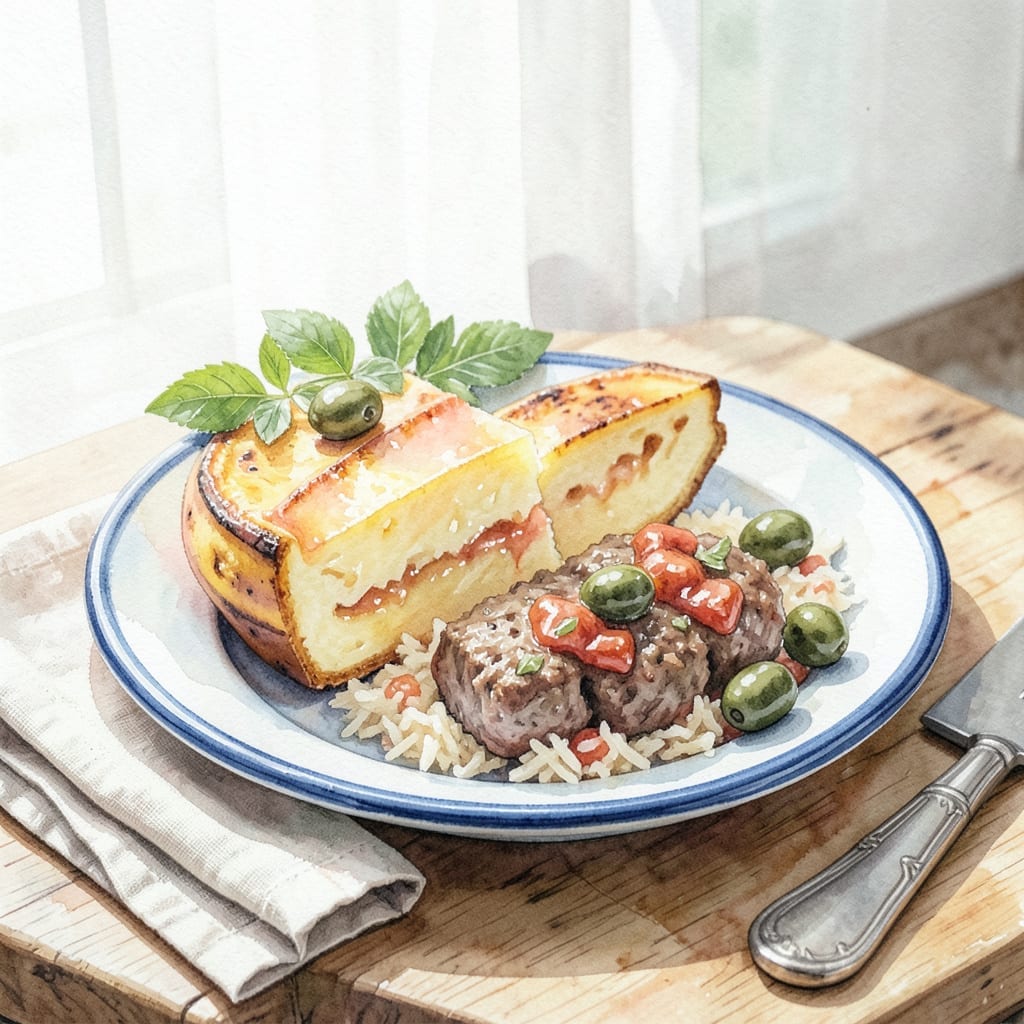
This Puerto Rican pastelon brings a taste of the island to your table. Layers of sweet plantains and savory picadillo create a perfect balance of flavors.
The dish transforms simple ingredients into something extraordinary. Ripe plantains are sliced and fried until golden, then layered with seasoned ground beef, olives, and sofrito.
What emerges is a lasagna-like casserole that’s both hearty and satisfying. The sweetness of the plantains complements the savory meat mixture beautifully.
Serve this at your next gathering and watch it disappear. The combination of textures and flavors makes it a true crowd-pleaser.
Ingredients for Pastelon Recipe Puerto Rico
Sweet plantains, savory picadillo, and a few pantry staples create this island favorite.
| Ingredient | Amount | Notes |
|---|---|---|
| Ripe Plantains 🍌 | 6 whole | Yellow with black spots, very ripe |
| Ground Beef 🥩 | 1 ½ lb | 80/20 lean-to-fat ratio preferred |
| Green Olives 🫒 | ½ cup | Manzanilla or pimiento-stuffed |
| Sofrito 🌿 | ½ cup | Homemade or store-bought Puerto Rican |
| Tomato Sauce 🍅 | 1 cup | Plain, no added seasonings |
| Long-Grain White Rice 🍚 | 1 cup | Uncooked, for picadillo |
| Onion 🧅 | 1 whole | Medium, finely diced |
| Garlic Cloves 🧄 | 4 cloves | Minced for picadillo |
| Ground Cumin 🌿 | 1 tsp | Toasted for depth |
| Dried Oregano 🍃 | 1 tsp | Mediterranean variety |
| Adobo Seasoning 🧂 | 2 tsp | Goya brand recommended |
| Bay Leaf 🌿 | 1 whole | Dried, for picadillo |
| Olive Oil 🫒 | ½ cup | For frying plantains and cooking |
| Vegetable Oil 🫒 | ½ cup | For additional frying if needed |
| Raisins 🍇 | ¼ cup | Optional, for sweetness in picadillo |
The plantains are the heart of this. You need them very ripe—yellow with lots of black spots, almost mushy to the touch (the kind you’d normally avoid for tostones). Latin markets always have them, but most big supermarkets stock them too. For the ground beef, 80/20 fat ratio gives you the juiciest picadillo. Goya Adobo seasoning is the shortcut that delivers authentic flavor without hunting down ten spices.
No sofrito on hand? One small onion, one bell pepper, and a bunch of cilantro pulsed in a food processor gets you 90% there. Swap green olives for caper berries if you want a fancier bite. The raisins are optional but add a nice sweet contrast—golden raisins work if that’s what you’ve got. Out of cumin? Coriander plus a pinch of cinnamon mimics the earthy warmth.
Make the picadillo a day ahead—flavors deepen overnight. Assembled pastelon keeps 3-4 days in the fridge, reheats like a dream. Freeze leftovers for up to 2 months (slice before freezing for easy portions).
Why You’ll Love This Recipe
- One Pan Wonder: I love that I can layer everything in a single dish—plantains, beef, olives—and let the oven do the work.
- Flavor Bomb: That combo of sweet ripe plantains and savory sofrito with tomato sauce is ridiculously good.
- Crowd Pleaser: Between us, this is my go-to for family dinners and potlucks alike.
- Budget Stretch: Ground beef and plantains feed a crowd without breaking the bank.
Step-by-Step Instructions for Sweet Plantain Lasagna With Picadillo Layers
This layered masterpiece comes together with a few key techniques and patience.
Step 1: Prepare the Picadillo Filling
Heat 2 tablespoons olive oil in a large skillet over medium-high heat. Add the 1.5 lb ground beef and cook, breaking it up with a wooden spoon, for 5-6 minutes until browned and crumbly. Season immediately with 2 tsp adobo seasoning, 1 tsp ground cumin, and 1 tsp dried oregano.
Add the 1 whole onion (finely diced) and cook for 3-4 minutes until translucent. Stir in the 4 cloves garlic cloves (minced), 0.5 cup sofrito, and 1 cup tomato sauce. Reduce heat to medium-low and add 0.5 cup green olives, 0.25 cup raisins, and 1 whole bay leaf. Simmer for 10-12 minutes until thickened.
Step 2: Cook and Mash the Plantains
Peel the 6 whole ripe plantains and slice them into ½-inch rounds. Heat ½ inch of vegetable oil in a separate skillet over medium heat until shimmering. Fry the plantain slices in batches for 2-3 minutes per side until golden brown but not crispy. Drain on paper towels.
While still warm, transfer the fried plantains to a large bowl. Mash them with a potato masher or fork until smooth but slightly chunky—you want texture, not puree. The natural sweetness should be pronounced, and the mash should hold together when pressed. This becomes your “pasta” layer.
Step 3: Layer the Pastelon for Baking
Preheat your oven to 375°F. Lightly grease a 9×13-inch baking dish with 1 tablespoon olive oil. Spread half of the mashed plantains evenly across the bottom, pressing gently to form a solid layer. Spoon the entire picadillo mixture over the plantains, spreading it to the edges with a spoon.
Top with the remaining mashed plantains, pressing lightly to seal the edges. The layers should be distinct but well-adhered. This prevents the filling from leaking out during baking. For extra richness, drizzle the remaining olive oil over the top.
Step 4: Bake to Perfection
Bake uncovered on the middle rack for 25-30 minutes until the top is golden brown and the edges pull slightly away from the dish. The kitchen should smell deeply aromatic, with the sweetness of plantains complementing the savory picadillo.
Let the pastelon rest for 10 minutes before slicing—this allows the layers to set. The first cut should reveal clean, distinct layers with the picadillo peeking through at the edges. Serve warm, as the flavors meld beautifully when fresh from the oven.
Pro Tips For Making Pastelon Recipe Puerto Rico
- Fry Plantains Twice: I learned this the hard way—fry the ripe plantain slices once at medium heat to soften, then again at high heat to caramelize. This guarantees that sweet, golden crust without a mushy center.
- Drain the Beef: After browning the ground beef, drain the excess fat before adding sofrito and tomato sauce. Skipping this leaves your pastelon greasy, and nobody wants that.
- Slice Olives Thin: Sounds weird, but it works: slice the green olives paper-thin so they distribute evenly in the beef layer. Big chunks make random salty bites instead of balanced flavor.
- Press Layers Tight: When layering the plantains and beef in the baking dish, press down firmly with a spatula. This keeps everything from shifting while baking and helps the layers set together properly.
Essential Equipment for Great pastelon recipe puerto rico
Essential Baking Dish
A 9×13-inch glass baking dish is non-negotiable for this recipe. I swear by Pyrex—it distributes heat evenly and lets you watch the layers brown. Metal pans work in a pinch, but glass gives you that perfect golden top. 💡
Heavy Skillet for Picadillo
You need a large, heavy-bottomed skillet for the picadillo. I use my 12-inch Lodge cast iron—it browns the meat beautifully and handles the 10-12 minute simmer without hot spots. A stainless steel sauté pan is a good alternative.
Plantain Frying Setup
For frying plantains, a 10-inch nonstick skillet with ½ inch of vegetable oil works perfectly. The nonstick surface prevents sticking, and the oil depth ensures even cooking. I keep a splatter screen nearby—trust me, this saves your stovetop.
Mashing Tool
A potato masher is ideal for smoothing the fried plantains while keeping some texture. In a pinch, a fork works, but it takes more effort. The mash shouldn’t be completely smooth—small lumps add character to your layers.
Thermometer for Accuracy
While not mandatory, an oven thermometer ensures your 375°F is spot-on. Home ovens often run hot or cold. I check mine regularly—I was shocked to find my oven ran 15°F hot before I started using one. 🌡️
Serving Essentials
Let the pastelon rest in the baking dish for 10 minutes before slicing. A sharp chef’s knife (I use Wüsthof) cuts clean squares. Serve on a warm platter—the contrast of hot pastelon against cool plates is part of the joy.
Nutrition Facts
Frequently Asked Questions
Can I use green plantains instead of ripe ones?
No, ripe plantains are essential—they must be yellow with black spots and very soft. Green plantains are too starchy and won’t provide the necessary sweetness or texture.
How do I know when the picadillo is ready?
Simmer until it thickens, about 10-12 minutes. The liquid should mostly evaporate, leaving a moist but not soupy mixture. The aroma will be rich and savory.
Can I make this ahead of time?
Yes! Assemble the layers, cover, and refrigerate for up to 24 hours before baking. Add 5-10 minutes to the baking time if chilled.
Why did my pastelon fall apart when slicing?
Letting it rest for 10 minutes after baking is crucial. Slicing too soon causes the layers to separate. Press the plantains firmly when layering.

- BBQ Sausage Recipe Oven: Smoky Depth Without the Grill - September 28, 2026
- BBQ Chicken Bowl Recipe Rice: Smoky Sweetness Over Fluffy Grains - September 28, 2026
- Beef Cutlet Recipe Ideas: Crispy Breaded Patties With Bold Seasonings - September 28, 2026