
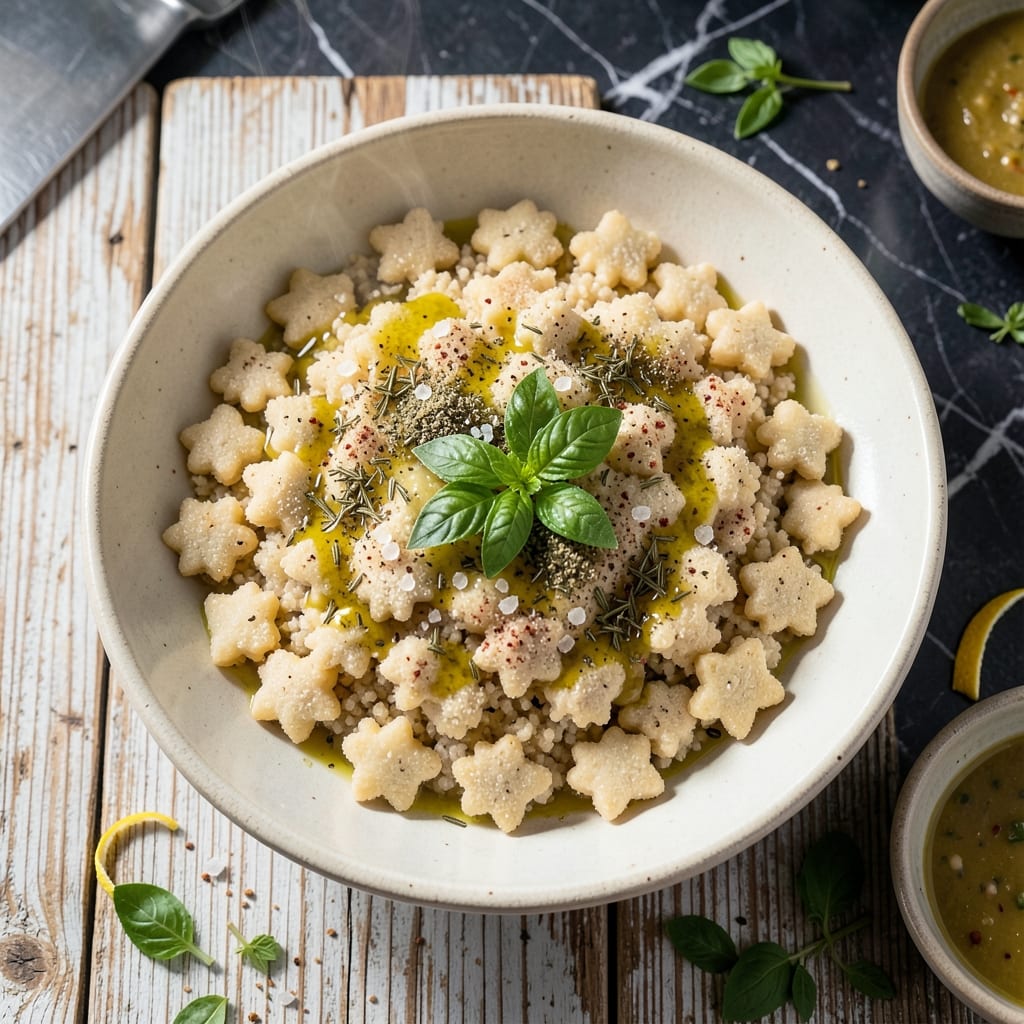
There’s something deeply comforting about a bowl of pastina that takes me back to my grandmother’s kitchen in Sicily. This tiny pasta delivers simple satisfaction with every bite, just as Nonna intended.
I’ve perfected this no-egg version to maintain the traditional texture while keeping it accessible for everyday cooking. The key is a precise ratio of flour to water and proper kneading technique.
The result is delicate, tender pasta that absorbs sauce beautifully. Whether served in broth or with a light tomato sauce, it brings that comfort we all crave in a meal.
Perfect for quick weeknight dinners or when you need a taste of home. Here’s how to make it.
Ingredients for Pastina Recipe No Egg
Simple, comforting ingredients for tiny pasta that feels like home in every bite.
| Ingredient | Amount | Notes |
|---|---|---|
| All-Purpose Flour 🌾 | 2 cups | Plus extra for dusting |
| Semolina Flour 🌾 | ½ cup | For authentic texture |
| Water 💧 | ¾ cup | Warm, about 110°F |
| Sea Salt 🧂 | 1 tsp | Fine grain preferred |
| Olive Oil 🫒 | 1 tbsp | Extra-virgin for flavor |
| Garlic Powder 🧄 | ½ tsp | Optional for flavor boost |
| Dried Basil 🌿 | ½ tsp | Or fresh chopped basil |
| Dried Oregano 🍃 | ½ tsp | Mediterranean variety preferred |
| Red Pepper Flakes 🌶️ | ¼ tsp | Adjust to taste preference |
| Vegetable Broth 🥣 | 4 cups | Low-sodium for serving |
Flour is the foundation here. King Arthur all-purpose is my go-to—consistent quality and easy to find at any grocery store. Semolina adds that classic pastina bite (look for it in the baking aisle or Italian markets). The water temperature matters more than you’d think—too hot kills the gluten, too cold won’t activate it. A quick thermometer check (or just warm to the touch) works perfectly.
No semolina? Replace with more all-purpose flour—texture will be slightly softer but still delicious. Swap dried herbs for fresh at one-third the amount. The garlic powder is optional but adds depth (I never skip it). For the broth, Better Than Bouillon makes a great vegetable base. If using fresh herbs, add them right before serving so they stay vibrant.
Dough keeps wrapped in plastic for 24 hours in the fridge (let it come to room temp before rolling). Cooked pastina? Toss with a little oil to prevent sticking—stores in the fridge for 3-4 days. Freeze uncooked dough in portions for up to 3 months.
Why You’ll Love This Recipe
- No Fuss Dough: I mix flour, semolina, water and olive oil in one bowl—no eggs, no fuss, no waiting for dough to rise.
- Buttery Nuttiness: The semolina gives it this warm, toasty flavor that’s way richer than plain pasta.
- Kid-Approved Meals: My picky nephew gobbles it up in soup or with butter, and it’s ready before he finishes his cartoons.
- Pantry Staples Only: Honestly, I always have these ingredients on hand, so it’s my go-to when the fridge is bare.
Step-by-Step Instructions for Pastina No Egg
Simple comfort in a bowl starts with these easy steps for perfect homemade pastina.
Step 1: Combine Dry Ingredients
In a large mixing bowl, whisk together the 2 cups all-purpose flour, 0.5 cup semolina flour, 1 tsp sea salt, 0.5 tsp garlic powder, 0.5 tsp dried basil, 0.5 tsp dried oregano, and 0.25 tsp red pepper flakes. The semolina adds that authentic texture you expect from traditional pastina.
Whisk until there are no visible streaks of spices left and the mixture is uniform in color. This ensures every tiny piece of pasta carries the full flavor profile. The mixture will look like fine sand with a pale yellow tint from the semolina.
Step 2: Create the Dough
Make a well in the center of your dry ingredients. Pour in the 0.75 cup warm water and 1 tbsp olive oil. I use warm water (about 110°F) because it helps activate the gluten without being hot enough to cook the flour.
Using a fork, gradually incorporate the flour mixture into the wet ingredients, starting from the inner rim of the well and working your way outward. The dough will start to come together in shaggy clumps. When it becomes too stiff to mix with a fork, switch to using your hands.
Knead in the bowl for 2-3 minutes until you have a cohesive dough. It should feel firm but not dry—if it’s too crumbly, add a few drops of water; if too sticky, dust with a bit of extra all-purpose flour.
Step 3: Rest and Roll the Dough
Turn the dough out onto a lightly floured surface and knead for another 5-7 minutes until smooth and elastic. You’ll know it’s ready when you can press your finger into the dough and it springs back slowly. The gluten development at this stage is crucial for pasta that holds its shape during cooking.
Form the dough into a ball, wrap it tightly in plastic wrap, and let it rest at room temperature for 30 minutes. This rest period relaxes the gluten, making the dough easier to roll out thinly.
Step 4: Shape and Cut the Pastina
Divide the rested dough into 4 equal portions. Working with one portion at a time (keep the others covered), roll the dough out on a well-floured surface until it’s paper-thin—about 1/16 inch thick. You should be able to see your hand through the dough when held up to light.
Using a sharp knife or pizza cutter, cut the dough into tiny squares, about ⅛ inch on each side. These small pieces are characteristic of pastina. As you cut, toss the pieces in a bit of flour to prevent sticking.
Step 5: Cook and Serve
Bring the 4 cups vegetable broth to a gentle boil in a medium saucepan. Add the pastina and cook for 5-7 minutes, stirring occasionally to prevent sticking. The pasta is done when it floats to the surface and is tender but still has a slight bite.
Serve immediately in the broth for a comforting, simple dish. The pastina will continue to absorb some of the broth as it sits, so if you prefer a soupier consistency, add a bit more warm broth when serving.
Pro Tips For Making Pastina Recipe No Egg
- Knead Until Smooth: Work the dough for at least 8-10 minutes—semolina takes longer to hydrate than all-purpose, and you’ll feel the texture shift from crumbly to elastic.
- Rest the Dough: Let it sit covered for 30 minutes before rolling; I learned this the hard way after my first batch kept springing back like a stubborn rubber band.
- Use Warm Water: About 110°F (43°C)—hotter kills the gluten, colder makes the dough sluggish, and lukewarm just doesn’t cut it for pastina’s signature bite.
- Roll It Thin: Aim for 1-2mm thickness—any thicker and your pastina turns chewy instead of delicate, and yes, even if it feels painfully thin, keep going.
Common Mistakes When Making This Dish
Overworking the Dough
Kneading too long or too aggressively develops excess gluten, making your pastina tough instead of tender. I stop as soon as the dough is smooth and elastic—usually after 7-8 minutes total. Remember, Nonna always said the dough should feel like a baby’s ear: soft but resilient. 💡
Skipping the Rest
Rushing the 30-minute rest means the gluten won’t relax properly, making the dough spring back when you try to roll it thin. I set a timer and use this time to prep my broth or set the table—multitasking like my grandmother taught me.
Incorrect Thickness
Pastina needs to be paper-thin, about 1/16 inch. If it’s too thick, it won’t cook evenly in the broth. I roll each portion until I can almost see my hand through it—this ensures those delicate, melt-in-your-mouth pieces.
Water Temperature
Using cold water slows gluten activation, while boiling water can cook the flour prematurely. I always use 110°F water—warm to the touch but not hot. A quick thermometer check guarantees consistency every time.
Overcrowding the Pot
Adding all the pastina at once causes sticking and uneven cooking. I cook in batches if needed, giving each tiny piece room to float freely. Stirring occasionally prevents clumping and ensures even doneness.
Underseasoning the Broth
Bland broth makes bland pastina. I taste my vegetable broth before adding the pasta and adjust with salt or herbs. The pasta absorbs the liquid, so the broth needs to be well-seasoned from the start.
Nutrition Facts
Frequently Asked Questions
Can I make this without semolina?
Yes, replace it with more all-purpose flour. The texture will be slightly softer but still delicious. Semolina just adds that classic bite.
How thin should the dough be?
Roll it until paper-thin, about 1/16 inch. You should see your hand through it. This ensures even cooking and tender pieces.
Can I use this for soup?
It’s perfect in broth. Cook it directly in the hot broth for 5-7 minutes. The pasta absorbs the flavor beautifully.
How do I store leftover dough?
Wrap it tightly in plastic. It keeps in the fridge for 24 hours or freezes for up to 3 months. Let it come to room temperature before rolling.

- Peach Syrup Recipe for Ice Cream: Sweet and Silky Drizzle for Scoops - October 6, 2026
- Pav Bhaji Recipe Food Lab: Mumbai Street Food Magic at Home - October 6, 2026
- Peach Jelly Recipe Without Pectin: Naturally Set Sweet Spread - October 6, 2026