
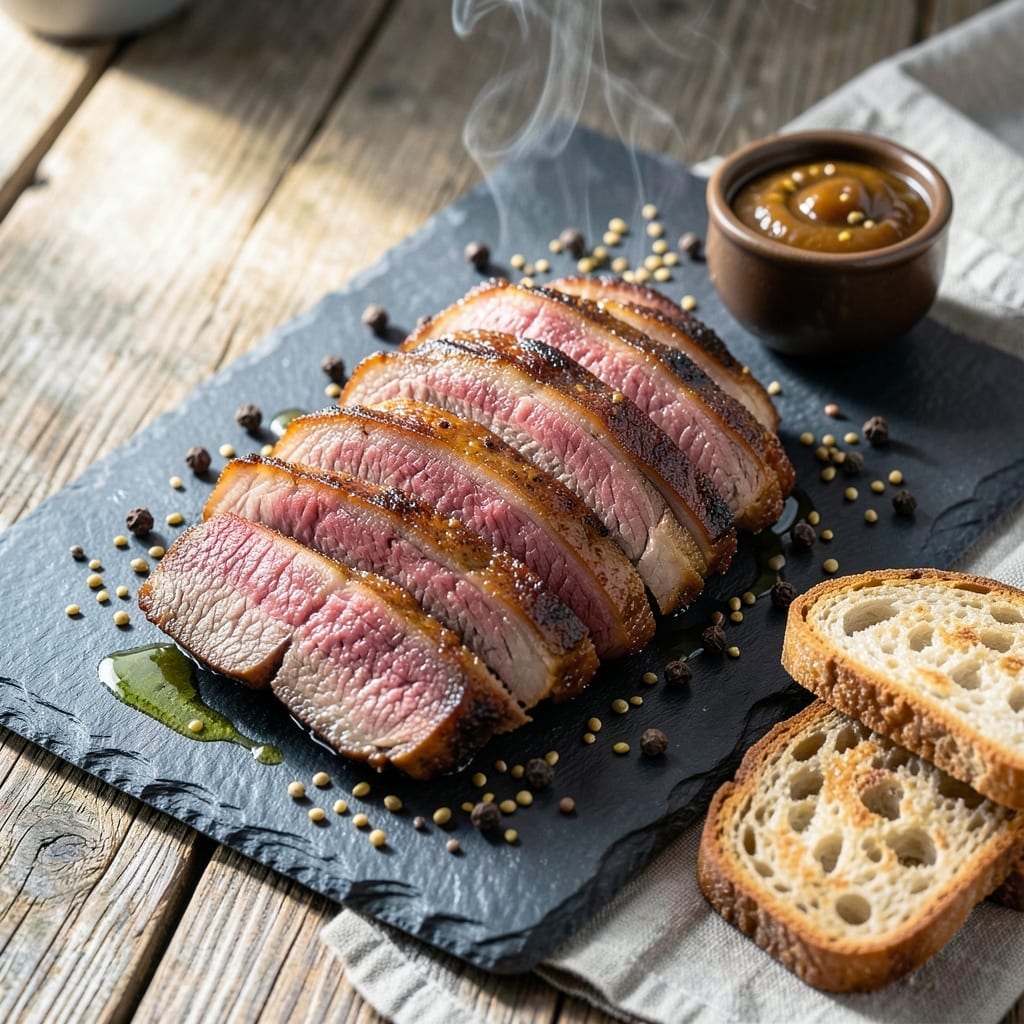
Transforming brisket into homemade pastrami is a rewarding process that yields deeply flavorful, tender results. This method combines traditional curing with modern techniques for professional-quality meat at home.
The journey begins with a wet brine that infuses the brisket with spices and preserves its natural juiciness. After curing, the meat is coated with a bold spice rub that forms a flavorful crust during the slow cooking process.
What emerges is pastrami with a perfect balance of smoky, spicy, and tangy notes. The meat becomes incredibly tender while maintaining its structure, making it ideal for sandwiches or charcuterie boards.
Serve thinly sliced with mustard and rye bread, or experiment with creative twists like pastrami tacos or breakfast hashes. This homemade version elevates any meal with its rich, complex flavors.
Ingredients for Pastrami Recipe Ideas
Professional-quality ingredients transform brisket into exceptional pastrami with deep, complex flavors at home.
| Ingredient | Amount | Notes |
|---|---|---|
| Beef Brisket 🥩 | 3 lb | Untreated, corned beef preferred |
| Kosher Salt 🧂 | ½ cup | Diamond Crystal brand recommended |
| Brown Sugar 🍚 | ¼ cup | Light or dark variety |
| Black Peppercorns 🌶️ | 2 tbsp | Coarsely crushed for brine |
| Coriander Seeds 🌿 | 1 tbsp | Toasted and crushed |
| Mustard Seeds 🌿 | 1 tbsp | Yellow or brown variety |
| Bay Leaves 🍃 | 4 whole | Dried, for brine infusion |
| Garlic Cloves 🧄 | 6 cloves | Smashed, peeled |
| Juniper Berries 🍇 | 1 tsp | Lightly crushed |
| Ground Paprika 🌶️ | 2 tbsp | Sweet or smoked variety |
| Ground Coriander 🌿 | 1 tbsp | For spice rub |
| Ground Cumin 🌿 | 1 tsp | Freshly ground preferred |
| Cayenne Pepper 🔥 | ½ tsp | Adjust for heat preference |
| Water 💧 | 4 cups | For wet brine solution |
The brisket is non-negotiable—untreated or pre-corned beef brisket yields the best texture. Source from a reputable butcher or Whole Foods for consistent marbling. Diamond Crystal kosher salt is ideal for brining due to its flake structure and purity. Spice quality matters: Penzeys offers superior coriander and mustard seeds, while bulk bins at natural food stores provide fresh juniper berries. Avoid pre-ground spices for the rub—they lack the potency of freshly toasted and ground.
No juniper berries? Substitute with ½ tsp allspice berries for a similar aromatic depth. Short on time? Pre-made pickling spice can replace individual whole spices in the brine. For the rub, smoked paprika adds an extra layer of complexity if you prefer a bolder smoke profile. The brown sugar can be swapped with turbinado for a coarser texture, but avoid substitutions that alter the brine’s chemistry, like honey or molasses.
Store the finished pastrami wrapped in parchment, then foil, for up to 10 days in the fridge. It freezes beautifully for 3 months—slice before freezing for easy portioning. The wet brine keeps for 1 week refrigerated, but discard it after use to prevent contamination.
Why You’ll Love This Recipe
- Set and Forget: Honestly, I just mix the kosher salt, brown sugar, and spices, coat the brisket, and let time do the work.
- Flavor Bomb: The black peppercorns and coriander seeds create that signature pastrami kick I crave.
- Meal Prep Hero: I smoke a big batch on Sunday and it’s sandwiches, tacos, or hash all week long.
- Leftovers Champion: It tastes even better the next day, and that’s saying something for a dish this good.
Step-by-Step Instructions for Homemade Pastrami
Master the curing and smoking process for deli-quality results with this time-tested method.
Step 1: Prepare the Wet Brine Solution
In a large pot, combine the 4 cups Water with the 0.5 cup Kosher Salt and 0.25 cup Brown Sugar. Heat over medium-high heat until the salt and sugar fully dissolve, stirring occasionally to prevent scorching.
Add the 2 tbsp Black Peppercorns, 1 tbsp Coriander Seeds, 1 tbsp Mustard Seeds, 4 whole Bay Leaves, 6 cloves Garlic Cloves, and 1 tsp Juniper Berries. Remove from heat and let the brine cool to room temperature—this prevents shocking the meat when submerged.
Step 2: Cure the Beef Brisket
Submerge the 3 lb Beef Brisket completely in the cooled brine, ensuring no part of the meat is exposed. I use a food-safe container with a weight on top to keep it submerged. The brisket should cure in the refrigerator for 5-7 days, with daily rotation to ensure even flavor distribution.
During this time, the brine penetrates the meat, transforming its texture and infusing it with the complex spice blend. You’ll notice the brisket firms up slightly as the curing process progresses.
Step 3: Apply the Spice Rub
Remove the brisket from the brine and rinse briefly under cold water. Pat it thoroughly dry with paper towels—this helps the rub adhere properly. In a bowl, mix the 2 tbsp Ground Paprika, 1 tbsp Ground Coriander, 1 tsp Ground Cumin, and 0.5 tsp Cayenne Pepper.
Coat the brisket evenly with the spice mixture, pressing firmly to create a uniform crust. This rub forms the characteristic pastrami bark during smoking. Let the rubbed brisket rest uncovered in the refrigerator for 12-24 hours to allow the spices to adhere and the surface to dry slightly.
Step 4: Smoke to Perfection
Preheat your smoker to 225°F using wood chips or chunks—hickory or oak works particularly well. Place the brisket fat-side up on the smoker grate. Insert a meat thermometer into the thickest part of the brisket to monitor internal temperature.
Smoke for 6-8 hours or until the internal temperature reaches 165°F. At this point, wrap the brisket tightly in butcher paper and return it to the smoker. Continue cooking until the internal temperature hits 200-203°F and the meat is probe-tender like butter.
Step 5: Rest and Slice
Transfer the smoked brisket to a cutting board and let it rest for at least 1 hour, tented loosely with foil. This resting period allows the juices to redistribute, ensuring moist, flavorful slices.
Slice against the grain into ¼-inch thick pieces. The pastrami should have a deep, mahogany-colored bark with a pink smoke ring just beneath the surface. Serve warm on rye bread with mustard, or use in sandwiches, salads, or other creative dishes.
Pro Tips For Making Pastrami Recipe Ideas
- Cure for 5-7 Days: I learned this the hard way—rushing the brine step gives you bland pastrami. Give the brisket a full week in the salt-sugar-spice mix for that deep, flavorful penetration.
- Crush the Spices: Toast the coriander and peppercorns, then crush them just before mixing into the cure. Whole spices won’t stick properly, and pre-ground loses its punch too fast.
- Rinse Before Smoking: After curing, soak the brisket in cold water for 30 minutes to remove excess salt. Skip this and you’ll end up with a pastrami that’s painfully over-seasoned.
- Use a Fat Cap: Leave the fat cap on the brisket during curing and smoking—it keeps the meat moist. Trim it only after cooking, right before slicing.
Common Mistakes When Making This Recipe
Skipping the Brine Cool
Never add the brisket to hot brine—this cooks the outer layer, preventing proper curing. Always cool your brine to room temperature first. I learned this the hard way when my first batch had a tough, overcooked exterior. 💡
Incomplete Submersion
If any part of the 3 lb Beef Brisket peeks above the brine, it won’t cure evenly. Use a weight or zip-top bag filled with water to keep it fully submerged during the 5-7 day curing period.
Rushing the Cure
Patience is key—5-7 days in the brine is non-negotiable for proper flavor development. Shortcutting this step results in bland, under-cured meat. I set a calendar reminder to rotate the brisket daily.
Over-Rinsing the Brisket
After brining, a quick rinse is fine, but don’t scrub aggressively. Over-rinsing washes away the flavor-infused surface. Pat it dry thoroughly before applying the spice rub for maximum adhesion.
Ignoring the Rest
Letting the rubbed brisket rest uncovered in the fridge for 12-24 hours forms a tacky surface (pellicle) that helps the rub stick and creates a better bark during smoking.
Skipping this step often leads to a loose, uneven crust. 🌡️
Slicing Too Soon
Always rest the smoked brisket for at least 1 hour before slicing. Cutting too early causes juices to spill out, leaving your pastrami dry. The internal temp will also rise 5-10°F during resting.
Nutrition Facts
Frequently Asked Questions
What kind of wood works best for smoking?
Hickory and oak are classic choices for that authentic deli flavor. Each imparts a distinct richness without overpowering the spice rub. Fruit woods like apple or cherry add a milder, sweeter note if you prefer a gentler smoke.
Can I use a different cut of meat?
While brisket is traditional, beef navel or plate can work in a pinch. Avoid lean cuts—they lack the fat needed for that signature tenderness. Stick with 3 lb pieces for even cooking.
How do I store leftover pastrami?
Wrap slices tightly in parchment paper, then foil, and refrigerate for up to 10 days. For longer storage, freeze for 3 months. Thaw overnight in the fridge before reheating gently.
Why is my pastrami tough?
This usually means it didn’t reach the ideal internal temperature of 200-203°F. Use a meat thermometer and smoke until probe-tender. Rushing the process or slicing too soon can also cause dryness.

- BBQ Sausage Recipe Oven: Smoky Depth Without the Grill - September 28, 2026
- BBQ Chicken Bowl Recipe Rice: Smoky Sweetness Over Fluffy Grains - September 28, 2026
- Beef Cutlet Recipe Ideas: Crispy Breaded Patties With Bold Seasonings - September 28, 2026