
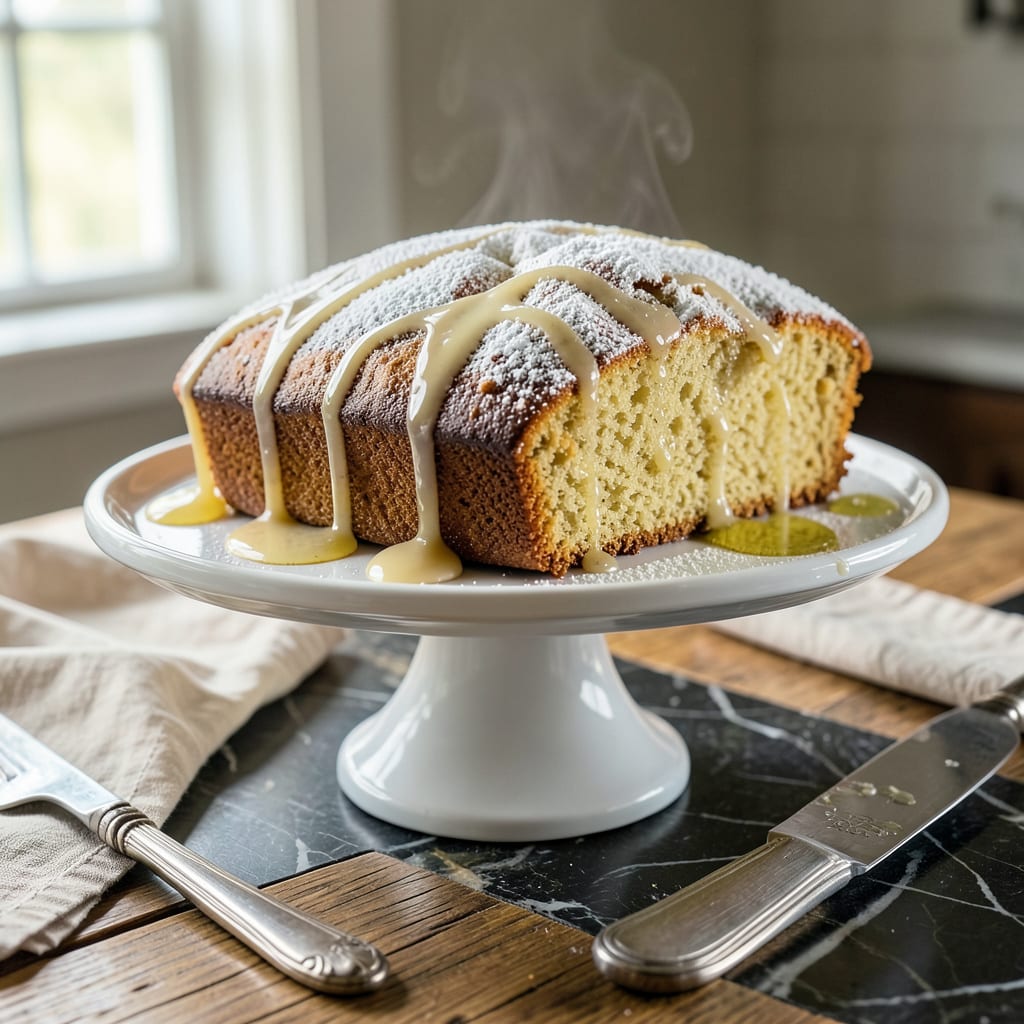
This pound cake delivers the ultra-moist texture that made Patti LaBelle’s version legendary. The secret lies in proper creaming and precise ingredient ratios.
With a tender crumb and rich vanilla flavor, this recipe proves why classic techniques still produce the best results. The baking time and temperature ensure even cooking throughout.
Ingredients for Patti Labelle Pound Cake
Classic ingredients create that signature ultra-moist texture everyone loves in this timeless loaf.
| Ingredient | Amount | Notes |
|---|---|---|
| All-Purpose Flour 🌾 | 3 cups | Sifted for lighter texture |
| Granulated Sugar 🍚 | 2 cups | Fine white sugar preferred |
| Unsalted Butter 🧈 | 1 lb | Room temperature, high quality |
| Large Eggs 🥚 | 6 whole | Room temperature for even mixing |
| Whole Milk 🥛 | 1 cup | Full-fat for richness |
| Pure Vanilla Extract 🌿 | 2 tsp | High-quality for best flavor |
| Baking Powder 🧂 | 1 tsp | Fresh for optimal rise |
| Salt 🧂 | ½ tsp | Fine table salt |
| Heavy Cream 🥛 | ½ cup | Cold, for extra moisture |
| Confectioners' Sugar ✨ | 2 tbsp | For dusting finished cake |
The butter is non-negotiable for achieving that tender crumb—Land O’Lakes or Plugrá are excellent choices (82% fat content works best). Use room-temperature eggs and butter; cold ingredients won’t cream properly. For the flour, King Arthur or Gold Medal all-purpose give consistent results. The vanilla should be pure extract, not imitation, for that rich depth of flavor Patti LaBelle is known for.
No heavy cream? Whole milk plus 1 tbsp melted butter works in a pinch. For a lighter version, half-and-half cuts some fat without sacrificing moisture. Out of baking powder? 1/4 tsp baking soda plus 1/2 tsp cream of tartar makes a suitable substitute. The confectioners’ sugar can be omitted, but it adds that professional bakery finish (and who doesn’t love a little extra sweetness?).
Store the cake in an airtight container at room temperature for up to 5 days. For longer storage, wrap tightly in plastic and freeze for up to 3 months. Always bring to room temperature before serving—the flavors meld and the texture improves after a day.
Why You’ll Love This Recipe
- One Bowl Wonder: I love that I can mix everything in a single bowl—flour, sugar, butter, eggs, and milk—no fancy equipment needed.
- Buttery Richness: The combo of real butter and whole milk gives it that ultra-moist, melt-in-your-mouth texture Patti’s famous for.
- Crowd Pleaser: Honestly, it’s my go-to for potlucks, birthdays, or just because—everyone from kids to grandparents asks for the recipe.
- Stays Fresh: Bakes up so well it tastes just as good on day three, which is rare for homemade cakes.
Step-by-Step Instructions for Ultra Moist Vanilla-Kissed Pound Cake
Master the creaming method and precise layering of wet and dry ingredients for bakery-quality results.
Step 1: Cream Butter and Sugar to Ribbon Stage
In a stand mixer with paddle attachment, beat the 1 lb unsalted butter and 2 cups granulated sugar on medium-high speed for 5-7 minutes. The mixture should transform from grainy to pale yellow and hold a ribbon when the paddle is lifted.
Stop frequently to scrape the bowl—this ensures even incorporation. The sugar crystals create tiny air pockets that expand during baking, giving the cake its characteristic fine crumb and light texture. Under-creaming results in a dense, greasy cake.
Step 2: Incorporate Eggs and Flavorings Gradually
Add the 6 whole large eggs one at a time, mixing for 30-45 seconds after each addition until fully emulsified. Then add the 2 tsp pure vanilla extract and mix for 10 seconds to distribute evenly.
I always use room temperature eggs for this step—they emulsify better with the butter-sugar mixture. If the batter appears curdled, add 1 tablespoon of the 3 cups all-purpose flour to stabilize it. The mixture should look smooth and slightly increased in volume.
Step 3: Alternate Dry and Wet Ingredients
Whisk together the 3 cups all-purpose flour, 1 tsp baking powder, and 0.5 tsp salt in a separate bowl. With the mixer on low speed, add ⅓ of the flour mixture to the butter-egg mixture, mixing just until combined.
Pour in ⅓ cup of the 1 cup whole milk, mixing until incorporated. Repeat with remaining flour and milk, ending with flour. The batter should be thick but pourable. Overmixing at this stage develops gluten, resulting in a tough cake.
Fold in the 0.5 cup heavy cream by hand using a spatula. This extra moisture guarantees the ultra-moist texture promised in the title, while the fat content enriches the flavor.
Step 4: Bake at Precise Temperature with Proper Pan Prep
Preheat oven to 325°F. Generously grease a 12-cup Bundt pan with butter and dust with flour, tapping out excess. Pour the batter into the prepared pan, smoothing the top with a spatula.
Bake for 1 hour 15 minutes to 1 hour 30 minutes until a wooden skewer inserted in the center comes out with only a few moist crumbs attached. Rotate the pan 180° halfway through baking to ensure even browning.
The low and slow baking temperature prevents a domed top and ensures even cooking throughout. Avoid opening the oven door for the first 1 hour to prevent collapse.
Step 5: Cool and Finish with Confectioners’ Sugar
Let the cake cool in the pan for 20 minutes, then invert onto a wire rack to cool completely. This resting period allows the structure to set while preventing sogginess from trapped steam.
Once completely cool, dust the top with 2 tbsp confectioners’ sugar using a fine-mesh sieve. For the best texture, wait until the cake has cooled for at least 2 hours before slicing. The cake keeps well at room temperature for 3-4 days in an airtight container.
Pro Tips For Making Patti Labelle Pound Cake
- Cream Butter Longer: Beat the butter and sugar for a full 5-7 minutes until pale and fluffy—I learned this the hard way after my first dense cake.
- Warm Your Eggs: Take the eggs out 30 minutes before baking, or soak them in warm water for 10 minutes. Cold eggs seize the butter and ruin the texture.
- Skip the Overmixing: Fold in the flour just until it disappears. Overmixing develops gluten, and your cake will turn out tough instead of tender.
- Check at 50 Minutes: Start testing for doneness at 50 minutes with a toothpick—this cake bakes faster than most pound cakes despite its size.
Wine and Beer Pairings for This Recipe
Sweet Wine Pairings
A Moscato d’Asti from Italy offers the perfect pairing with its light effervescence and notes of peach and apricot. The low alcohol content (around 5-6% ABV) won’t overpower the cake’s delicate vanilla flavor. I love how the bubbles cleanse your palate between bites. 🍷
Dessert Wines
For a richer option, try a Sauternes from Bordeaux—its honeyed notes and apricot flavors complement the buttery cake beautifully. A 3.5 oz pour provides the perfect serving size. The sweetness of the wine enhances the cake’s vanilla without making it cloying.
Coffee Pairings
A cup of dark roast coffee cuts through the richness of the pound cake with its bold acidity. I recommend Starbucks Sumatra or Peet’s Major Dickason’s Blend for their deep, earthy notes. Serve black to let the cake’s flavors shine. ☕
Beer Options
For beer lovers, a Belgian-style Tripel like Westmalle offers complex fruit and spice notes that pair surprisingly well. The 8-10% ABV stands up to the cake’s richness without overwhelming it. Serve chilled in a tulip glass.
Non-Alcoholic Choices
A sparkling vanilla cream soda from Jones Soda or Stewart’s provides a fun, festive pairing that kids and adults will love. The vanilla notes mirror the cake’s flavor while the carbonation refreshes your palate. 🥤
Tea Pairings
An Earl Grey tea with its bergamot citrus notes offers an elegant contrast to the cake’s sweetness. I prefer Twinings or Harney & Sons for consistent quality. Serve hot with a slice of lemon to brighten the pairing.
Nutrition Facts
Frequently Asked Questions
Why do my eggs need to be room temperature?
Room temperature eggs emulsify better with butter and sugar, creating a smoother batter. This prevents curdling and ensures even mixing for that perfect tender crumb.
Can I use salted butter instead?
It’s best to stick with unsalted to control the salt content precisely. If you must use salted, reduce the added salt by ½. The recipe is balanced for unsalted.
How do I know when it’s done baking?
A wooden skewer inserted in the center should come out with only a few moist crumbs. The cake will pull slightly from the pan edges when ready.
What if my cake sinks in the middle?
This usually happens from opening the oven too early or underbaking. Avoid peeking for the first 1 hour and always check doneness with a skewer.

- BBQ Sausage Recipe Oven: Smoky Depth Without the Grill - September 28, 2026
- BBQ Chicken Bowl Recipe Rice: Smoky Sweetness Over Fluffy Grains - September 28, 2026
- Beef Cutlet Recipe Ideas: Crispy Breaded Patties With Bold Seasonings - September 28, 2026