
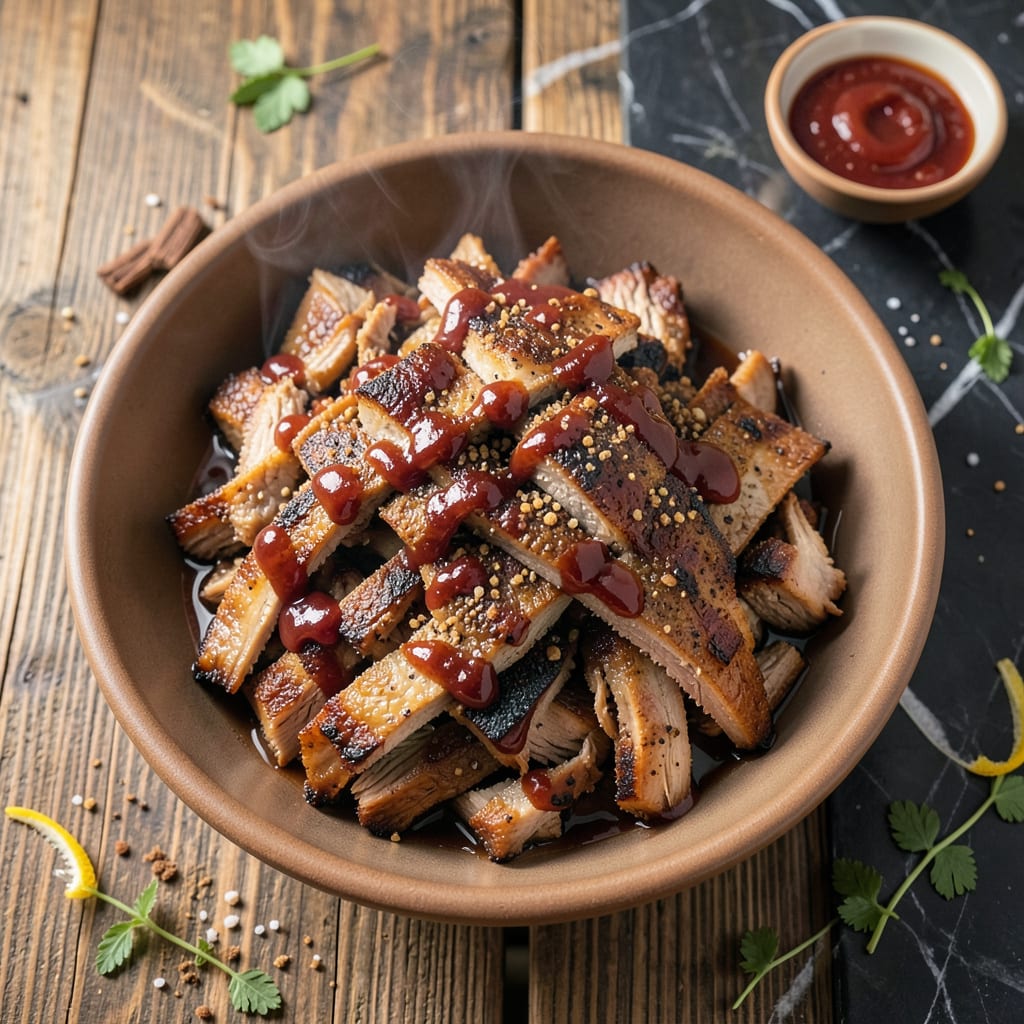
This slow-smoked pulled pork delivers the tender, fall-apart texture that defines Southern barbecue tradition.
The secret lies in a low-and-slow cooking process that transforms tough cuts into melt-in-your-mouth perfection, with a seasoning blend that enhances the pork’s natural richness.
Ingredients for Paula Deen Pulled Pork
Nothing fancy here—just pork and spices that sing with Southern soul.
| Ingredient | Amount | Notes |
|---|---|---|
| Pork Shoulder 🐖 | 4 lb | Bone-in, Boston butt preferred |
| Kosher Salt 🧂 | 2 tbsp | Diamond Crystal brand recommended |
| Black Pepper 🌶️ | 2 tbsp | Freshly ground, coarse |
| Garlic Powder 🧄 | 1 tbsp | Not garlic salt substitute |
| Onion Powder 🧅 | 1 tbsp | Freshly ground if possible |
| Smoked Paprika 🌶️ | 1 tbsp | Sweet or hot variety |
| Brown Sugar 🧈 | ½ cup | Light or dark, packed |
| Yellow Mustard 🟡 | ¼ cup | For bark formation |
| Apple Cider Vinegar 🍏 | ¼ cup | For tang and moisture |
| Hickory Wood Chips 🪵 | 2 cups | Soaked in water 1 hour |
| Barbecue Sauce 🍯 | 2 cups | Sweet and tangy style |
| Chicken Stock 🍲 | 1 cup | For moisture during smoking |
The pork shoulder is the star here—bone-in Boston butt gives you that fall-apart texture with rich flavor. Look for good marbling (those white streaks of fat) at Costco or your local butcher. I’ve had luck with Publix too (they often have pre-trimmed cuts). Avoid the lean pork loin; it’ll dry out. The bone-in version also holds up better during the long cooking process.
No smoked paprika? Regular paprika plus a pinch of liquid smoke works in a pinch. Brown sugar can be swapped for honey or maple syrup if you’re avoiding refined sugar. Out of yellow mustard? Dijon in a 1:1 ratio adds a nice kick. The apple cider vinegar is non-negotiable though—it balances the richness. For the BBQ sauce, Sweet Baby Ray’s or Stubb’s are solid store-bought options.
Pork can be smoked immediately or dry-brined overnight for deeper flavor. Leftovers keep in the fridge for 4 days or freeze for 3 months (portion into meal-sized containers first). The wood chips? Store unused ones in a sealed bag—they’ll keep for 6 months if dry.
Why You’ll Love This Recipe
- Set and Forget: I toss the pork shoulder with salt, pepper, and those powders, then let the slow cooker do the magic all day.
- Feeds Everyone: I’ve served this at summer barbecues and weeknight dinners—it’s always the first thing to disappear.
- Stretches for Days: One pork shoulder gives us sandwiches, tacos, and leftovers that actually taste better on day two.
Step-by-Step Instructions for Slow-Smoked Pulled Pork
This is how Southern pitmasters do it—low, slow, and full of smoky flavor.
Step 1: Create the Signature Dry Rub
In a bowl, combine all the 2 tbsp Kosher Salt, 2 tbsp Black Pepper, 1 tbsp Garlic Powder, 1 tbsp Onion Powder, 1 tbsp Smoked Paprika, and 0.5 cup Brown Sugar. I like to use my hands to mix, breaking up any clumps in the sugar so the rub adheres evenly to the meat.
Pat the 4 lb Pork Shoulder dry with paper towels first—this helps the rub stick. Apply the mixture liberally over every surface, pressing it in so it forms a thick crust. Don’t be shy; you want a visible layer of seasoning. Let it sit at room temperature for 30 minutes while you prep the smoker.
Step 2: Prepare the Smoker and Apply the Binder
Soak the 2 cups Hickory Wood Chips in water for 1 hour before starting. Preheat your smoker to 225°F using indirect heat. I prefer a charcoal smoker for that authentic flavor, but an electric or pellet smoker works just as well.
Before placing the pork in the smoker, brush it with the 0.25 cup Yellow Mustard. This might seem odd, but it creates a sticky base for the rub to cling to and helps form a beautiful bark. The mustard flavor disappears during cooking, leaving only its binding power behind.
Step 3: Smoke the Pork Low and Slow
Place the pork shoulder fat-side up in the smoker. Add the soaked wood chips to the coals for steady smoke. Insert a meat thermometer into the thickest part of the shoulder, avoiding the bone. Smoke undisturbed for 6-8 hours until the internal temperature reaches 165°F.
At this point, you’ll hit the stall—a plateau where the temperature stops rising as moisture evaporates. This is normal. Spritz the pork with the 0.25 cup Apple Cider Vinegar every 30-45 minutes to keep it moist and add a tangy depth to the bark.
Step 4: Wrap and Finish the Cook
Once the stall passes, wrap the pork tightly in foil with 1 cup Chicken Stock to speed up the process and keep it juicy. Return it to the smoker and continue cooking until the internal temperature reaches 203°F—this is when the connective tissue breaks down into tender, pull-apart perfection.
This can take another 2-4 hours, depending on the size of your shoulder. Don’t rush it. You’ll know it’s done when a probe slides in like butter with no resistance. Remove it from the smoker and let it rest, still wrapped, for 1 hour.
Step 5: Shred and Sauce the Pork
Unwrap the pork and transfer it to a large cutting board or bowl. Use two forks or meat claws to shred the pork into bite-sized pieces. Discard any large fat chunks or the bone if it’s still attached.
Toss the shredded pork with 2 cups Barbecue Sauce until evenly coated. I like to reserve some sauce for serving, so everyone can add extra if they like. Serve immediately on buns, or keep it warm in a slow cooker for a crowd. The meat should be tender, smoky, and packed with that classic Southern flavor.
Pro Tips For Making Paula Deen Pulled Pork
- Low and Slow Wins: Cook the pork shoulder at 225°F for at least 8 hours—any higher and the fat won’t render properly, leaving you with tough, dry meat. I learned this the hard way after cranking the heat to 275°F and ending up with pulled pork that fought back. —
- Dry Rub Generously: Don’t skimp on the kosher salt, black pepper, garlic powder, and onion powder mix—coat every inch of that pork shoulder like you’re frosting a cake. Sounds excessive, but it’s the only way to get that deep, balanced flavor in every bite. —
- Skip the Water Pan: Paula’s recipe doesn’t need a water pan in the smoker or oven—it just steams the bark right off. After ruining two shoulders this way, I finally ditched it and let the dry rub do its job. —
- Rest Before Pulling: Let the pork shoulder rest for 30-45 minutes under foil after cooking—this lets the juices redistribute. I used to dig in right away, and the meat would shred unevenly, losing all that good moisture to the cutting board.
Essential Equipment for This Dish
Smoker Options
For authentic Southern flavor, I recommend a charcoal smoker like the Weber Smokey Mountain. It gives that true wood-fired taste. An electric smoker like the Masterbuilt 30-inch is perfect for beginners—easy to control and consistent. 🌡️
Thermometer Essentials
A dual-probe thermometer is non-negotiable for perfect results. The ThermoWorks Smoke lets you monitor both smoker and meat temps remotely. I also keep a instant-read thermometer handy for spot-checking.
Wood Chip Tools
Use a wood chip soaking tray or large bowl to soak your hickory chips for at least 1 hour. A cast iron smokers box helps contain wood chips in gas grills. Always have extra chips on hand for long smokes.
Resting Equipment
After smoking, wrap the pork in heavy-duty foil and rest it in a cooler for 1 hour. This keeps it hot while the juices redistribute. I use a Yeti cooler for this—it retains heat perfectly.
Shredding Tools
Two good bear claw meat shredders make quick work of the pork. I also keep a large cutting board and sharp carving knife nearby for trimming fat. The claws save your hands from heat too.
For serving, a slow cooker on warm setting keeps the pork at perfect temperature for hours. 💡
Nutrition Facts
Frequently Asked Questions
Can I use a slow cooker instead of a smoker?
Yes, but texture differs. Use low heat for 8-10 hours with 1 cup liquid (broth or apple juice). Add wood chips in a foil pouch for smoke flavor. Result won’t have the same bark, but will be tender.
Why wrap the pork in foil?
Wrapping (the “Texas crutch”) speeds cooking by trapping steam and breaks through the stall. It also prevents drying. Unwrap for last 30 minutes to crisp the bark.
How do I store leftovers?
Keep in an airtight container in the fridge for up to 4 days. For longer storage, freeze for 3 months. Reheat in a pan with a splash of water or sauce.
What if my pork isn’t tender at 203°F?
Every cut varies. If it’s not probe-tender, wrap it tightly and cook another 1-2 hours. Patience is key—never rush this process.

- BBQ Sausage Recipe Oven: Smoky Depth Without the Grill - September 28, 2026
- BBQ Chicken Bowl Recipe Rice: Smoky Sweetness Over Fluffy Grains - September 28, 2026
- Beef Cutlet Recipe Ideas: Crispy Breaded Patties With Bold Seasonings - September 28, 2026