
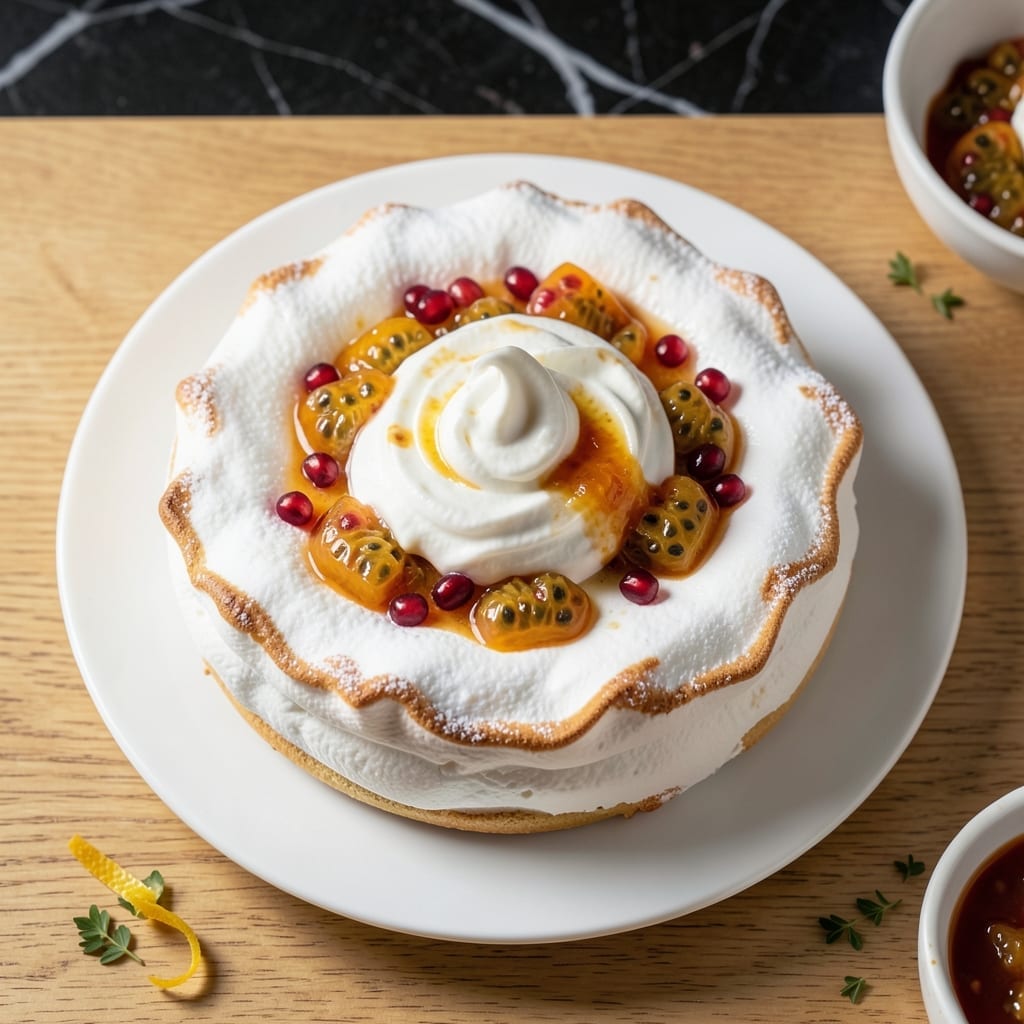
There’s an art to creating the perfect pavlova, with its crisp outer shell and marshmallow-soft center. This classic dessert begins with a simple meringue base that requires precise technique and patience.
The key is beating egg whites to stiff peaks before gently folding in sugar, then baking at a low temperature for 2 hours. The slow bake prevents cracking while achieving that signature pillowy texture.
Once cooled, the meringue transforms into a delicate canvas for toppings. Fresh whipped cream and seasonal berries add vibrant color and natural sweetness that complements the meringue’s subtle vanilla notes.
Serve immediately for the best texture contrast between the crisp shell and cloud-like interior. This showstopping dessert is worth every minute of the process.
Ingredients for Pavlova Recipe Pavlova
Crisp meringue shell meets cloud-like center with fresh berries and cream.
| Ingredient | Amount | Notes |
|---|---|---|
| Large Egg Whites 🥚 | 4 whole | Room temperature, no yolk traces |
| Granulated Sugar 🍚 | 1 cup | Superfine preferred for smoother texture |
| Pure Vanilla Extract 🌿 | 1 tsp | High-quality for best flavor |
| White Vinegar 💧 | ½ tsp | Or lemon juice substitute |
| Cornstarch 🌾 | ½ tsp | Helps stabilize meringue |
| Heavy Whipping Cream 🥛 | 1 cup | Chilled for optimal whipping |
| Powdered Sugar 🍬 | 2 tbsp | For sweetening whipped cream |
| Pure Vanilla Extract 🌿 | ½ tsp | Second addition for cream |
| Fresh Mixed Berries 🍓 | 2 cups | Strawberries, blueberries, raspberries |
| Fresh Mint Leaves 🌿 | ¼ cup | Loosely packed, for garnish |
| Salt 🧂 | ¼ tsp | Fine grain for even distribution |
Egg whites are the foundation here. Room temperature is non-negotiable for maximum volume—cold whites won’t whip properly. Use fresh large eggs (not cartons of whites) for best structure. Superfine sugar dissolves faster, but regular granulated works if pulsed in a food processor first. The vinegar and cornstarch are secret weapons—don’t skip them.
No superfine sugar? Pulse regular sugar in a blender for 30 seconds. Out of white vinegar? Lemon juice or cream of tartar (1/4 tsp) works equally well. For the cream, full-fat is essential—light versions won’t hold peaks. Berries can be swapped for any seasonal fruit (passionfruit is divine). Want extra crunch? Add toasted almond slivers over the top.
Meringue keeps 2-3 days in an airtight container (if it lasts that long). Assembled pavlova is best served immediately—the cream softens the shell. Leftover meringue makes killer ice cream toppings. Store components separately for optimal texture.
Why You’ll Love This Recipe
- One-Bowl Wonder: I just beat the egg whites with sugar, add vanilla and vinegar, then fold in cornstarch—no extra bowls, no mess.
- Crispy Cloud Magic: That airy meringue shell with its marshmallow center hits the perfect sweet spot every time, thanks to the vinegar’s subtle tang.
- Dessert Showstopper: Honestly, it’s my go-to for potlucks, dinner parties, or just a fancy Tuesday treat.
- Budget-Friendly Luxe: Five simple ingredients—most already in my pantry—and it serves a crowd without breaking the bank.
Step-by-Step Instructions for Light Pillowy Meringue With Fresh Berries
Follow this precise method for a pavlova with crisp shell and marshmallow-soft interior.
Step 1: Prepare the Meringue Base
Preheat your oven to 250°F and line a baking sheet with parchment paper. In a clean, grease-free bowl, combine the 4 whole Large Egg Whites with the 0.25 tsp Salt. I always ensure my bowl and beaters are spotless—any trace of grease will prevent proper stiff peaks.
Begin beating on medium speed until foamy, then gradually increase to high speed. Add the 1 cup Granulated Sugar one tablespoon at a time, waiting until each addition is fully dissolved before adding more. This process takes 8-10 minutes and should result in glossy, stiff peaks that hold their shape when the beaters are lifted.
Step 2: Stabilize and Shape the Meringue
Once stiff peaks form, gently fold in the 1 tsp Pure Vanilla Extract, 0.5 tsp White Vinegar, and 0.5 tsp Cornstarch using a spatula. The vinegar helps create that characteristic crisp shell, while the cornstarch contributes to the soft, marshmallow-like center.
Spoon the meringue onto the prepared baking sheet, creating a 7-inch circle with a slight indentation in the center for the berries. I use the back of my spoon to create decorative swirls around the edges. This shape helps contain the toppings while providing visual appeal.
Step 3: Bake the Meringue Low and Slow
Place the baking sheet in the preheated oven and immediately reduce the temperature to 200°F. Bake for 1 hour 30 minutes, then turn off the oven and let the pavlova cool completely inside with the door closed for at least 1 hour. This gradual cooling prevents cracking.
The meringue is done when it’s crisp to the touch and has a pale cream color. If it feels sticky or soft, return it to the oven for an additional 15-20 minutes. The slow baking time is crucial for achieving the perfect texture throughout.
Step 4: Whip the Cream and Prepare Toppings
While the pavlova cools, whip the 1 cup Heavy Whipping Cream with the 2 tbsp Powdered Sugar and 0.5 tsp Pure Vanilla Extract until soft peaks form. Be careful not to overwhip—you want the cream to be billowy and spreadable, not stiff.
Gently wash and dry the 2 cups Fresh Mixed Berries and roughly chop any larger ones for even distribution. Pick the 0.25 cup Fresh Mint Leaves from their stems, keeping a few whole for garnish.
Step 5: Assemble the Pavlova
Carefully transfer the cooled meringue to a serving platter. Spread the whipped cream over the top, leaving a slight border of meringue visible around the edges. Arrange the berries artfully over the cream, pressing them lightly into the topping.
Finish with a sprinkle of the mint leaves for a pop of color and fresh flavor. Serve immediately—the pavlova is best enjoyed within a few hours of assembly, as the meringue will begin to soften from the moisture in the cream and berries.
Pro Tips For Making Pavlova Recipe Pavlova
- Beat Egg Whites Slow: Start your mixer on low to break up the whites, then gradually increase to medium-high—this builds a stable foam that won’t collapse when you add sugar.
- Dry Your Bowl First: Wipe your mixing bowl with lemon juice or vinegar before adding egg whites; any trace of grease will prevent them from reaching stiff peaks.
- Skip Humid Days: I learned this the hard way—pavlova absorbs moisture from the air, so save this recipe for dry weather to avoid a soggy crust.
- Use Superfine Sugar: Pulse granulated sugar in a blender for 30 seconds to make it finer; it dissolves faster into the meringue, giving a smoother, glossier finish.
Serving Suggestions for This pavlova recipe pavlova
Plating Presentation
Transfer the meringue to a white platter for maximum visual contrast against the pale shell. The indentation in the center naturally cradles the cream and berries. I always use a cake stand to elevate the dessert for a dramatic effect. 💫
Cream Artistry
Pipe the whipped cream in decorative swirls using a star tip for a professional look. Leave small gaps between swirls so the berries can peek through. This technique adds height and visual interest to your presentation.
Berry Arrangement
Create a color gradient with your berries—start with darker ones like blueberries at the base, then layer raspberries and strawberry slices outward. This arrangement highlights each fruit’s natural beauty while maintaining balance.
Final Touches
Dust the entire dessert with a light sprinkle of powdered sugar just before serving. Add fresh mint sprigs between berry clusters for pops of green. A drizzle of berry reduction adds glossy finish.
Serving Timing
Assemble the pavlova no more than 30 minutes before serving to maintain that perfect crispness. I time the assembly right after dinner so it’s ready for dessert. The meringue will begin to soften after 1 hour with toppings. 💛
Nutrition Facts
Frequently Asked Questions
Why did my meringue crack while cooling?
Rapid temperature changes cause cracking. Always cool the pavlova gradually in the turned-off oven with the door closed for at least 1 hour. Opening the door too soon creates sudden temperature drops.
Can I make this ahead of time?
Yes! Bake the meringue shell up to 2 days ahead and store in an airtight container at room temperature. Assemble with cream and berries no more than 30 minutes before serving for best texture.
What can I use instead of vinegar?
Lemon juice or cream of tartar (1/4 tsp) work perfectly as substitutes. They provide the same acidity to stabilize the egg whites and help create that crisp shell.

- Peach Syrup Recipe for Ice Cream: Sweet and Silky Drizzle for Scoops - October 6, 2026
- Pav Bhaji Recipe Food Lab: Mumbai Street Food Magic at Home - October 6, 2026
- Peach Jelly Recipe Without Pectin: Naturally Set Sweet Spread - October 6, 2026