
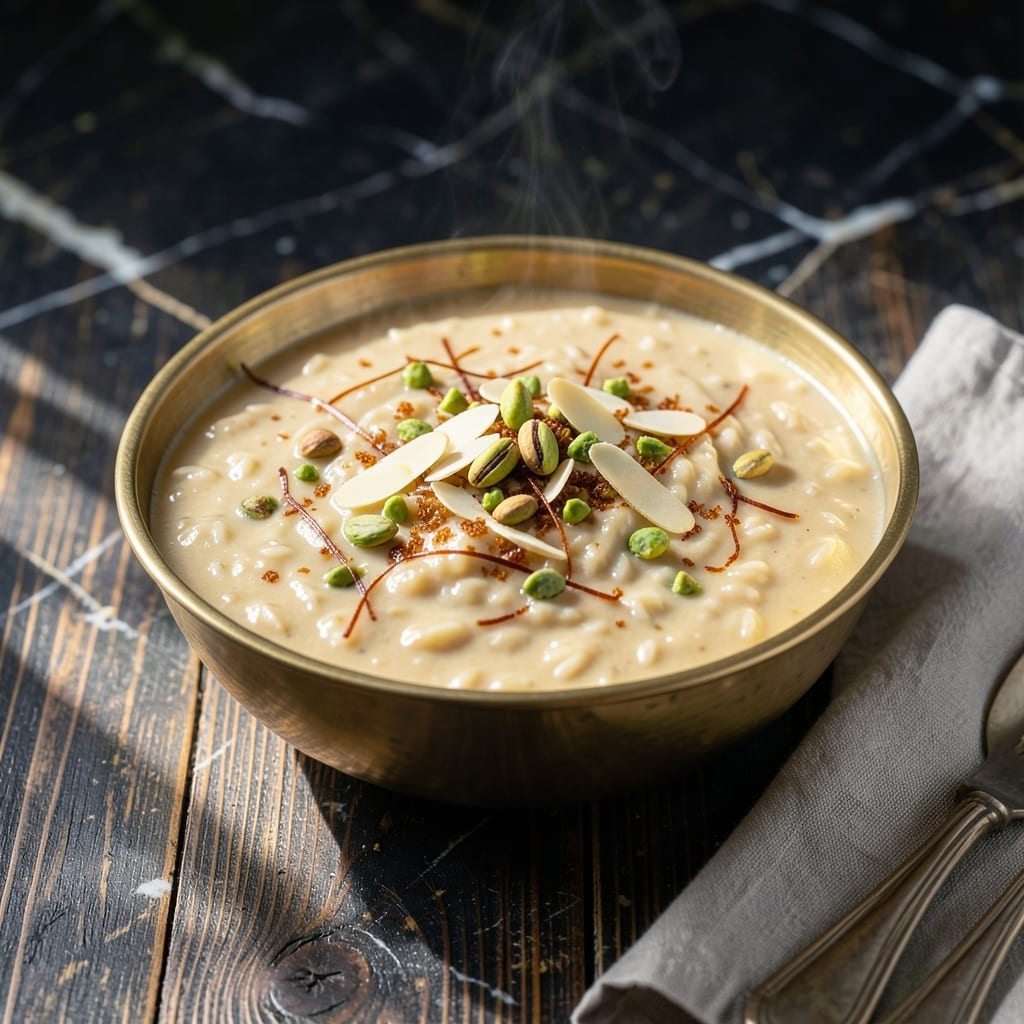
This traditional South Indian dessert brings generations of family kitchen wisdom to your table. The rice transforms into a creamy, fragrant pudding that’s both comforting and celebratory.
I’ve adapted this traditional method to ensure perfect texture every time, using simple ingredients and careful cooking. The rice absorbs the sweetened milk, creating a rich, velvety consistency that’s neither too thick nor too thin.
You’ll end up with a lightly spiced, naturally sweet pudding that’s perfect for festivals or everyday treats. The cardamom and saffron add layers of authentic flavor without overpowering the delicate rice base.
Serve warm or chilled, with a sprinkle of nuts for added texture. This recipe honors the original while making it accessible for home cooks.
Ingredients for Payasam Recipe with Rice
Simple, fragrant ingredients transform into a rich, creamy South Indian classic dessert.
| Ingredient | Amount | Notes |
|---|---|---|
| Basmati Rice 🌾 | ½ cup | Rinsed until water runs clear |
| Whole Milk 🥛 | 4 cups | Full-fat for creaminess |
| Granulated Sugar 🍚 | ¾ cup | Adjust to taste preference |
| Ghee 🧈 | 2 tbsp | Clarified butter, melted |
| Cardamom Pods 🌿 | 6 whole | Lightly crushed, seeds removed |
| Saffron Threads 🌼 | ¼ tsp | Soaked in warm milk |
| Cashew Nuts 🌰 | ¼ cup | Broken into pieces, toasted |
| Raisins 🍇 | ¼ cup | Golden or black variety |
| Coconut Milk 🥥 | ½ cup | Canned, full-fat preferred |
| Rose Water 🌹 | ½ tsp | Optional for floral aroma |
| Almonds 🌰 | 2 tbsp | Sliced, for garnish |
| Pistachios 🌰 | 2 tbsp | Chopped, for garnish |
The rice is foundational—Basmati is traditional for its delicate texture once cooked. Indian grocery stores carry high-quality options, but any well-stocked Whole Foods or Trader Joe’s will have it. For the ghee, organic clarified butter ensures a pure, authentic flavor. Cardamom pods should be fresh and aromatic; avoid pre-ground as it loses potency quickly.
Substitute basmati with jasmine rice if needed, though texture may vary slightly. Coconut oil can replace ghee for a vegan twist (though this is vegetarian, not vegan). No saffron? Turmeric at a pinch adds color but lacks the floral depth. Cashews and raisins can be swapped for other nuts and dried fruits—almonds and sultanas work beautifully.
Store rice in an airtight container for up to 6 months. Nuts keep for 3 months in the fridge. The pudding itself stays fresh for 3-4 days refrigerated, though it’s best enjoyed warm or at room temperature.
Why You’ll Love This Recipe
- One Pot Simplicity: I just dump rice, milk, and sugar in one pot and let the stove do the work.
- Warm Cardamom Hug: The ghee and crushed cardamom pods make every bite taste like home.
- Festive or Lazy: I’ve served this at Diwali parties and also made it in my pjs on a Sunday.
- Keeps Like a Dream: Honestly, it tastes even better the next day after the flavors meld overnight.
Step-by-Step Instructions for Traditional Rice Payasam
This method preserves authentic South Indian technique while ensuring perfect texture every time.
Step 1: Prepare and Toast the Rice
Begin by rinsing the 0.5 cup Basmati Rice under cold water until the water runs completely clear. This removes excess starch and prevents the payasam from becoming gummy. Drain thoroughly in a fine-mesh sieve.
Heat a heavy-bottomed saucepan over medium heat and add 2 tbsp Ghee. When the ghee melts and shimmers, add the drained rice. Toast for 2-3 minutes, stirring constantly, until the grains turn slightly translucent and emit a nutty aroma. This step enhances the rice’s natural flavor and prevents it from turning mushy during cooking.
Step 2: Infuse the Milk with Spices
Pour 4 cups Whole Milk into the saucepan with the toasted rice. Add the 6 whole Cardamom Pods (lightly crushed to release their seeds) and 0.25 tsp Saffron Threads (soaked in 2 tbsp of the warm milk for 5 minutes to release their color and aroma). Stir well to combine.
Increase the heat to medium-high and bring the mixture to a gentle boil. Reduce the heat to low and let it simmer uncovered for 20-25 minutes, stirring occasionally to prevent the milk from scorching. The payasam is ready for the next step when the rice is half-cooked and the milk has reduced slightly.
Step 3: Sweeten and Add Coconut Milk
Add the 0.75 cup Granulated Sugar and 0.5 cup Coconut Milk to the saucepan. Stir well to dissolve the sugar completely. The mixture will thin out initially, but it will thicken as it continues to cook.
Continue simmering on low heat for another 15-20 minutes, stirring frequently, until the rice is fully cooked and the payasam reaches a creamy, pudding-like consistency. The grains should be tender but still hold their shape. Taste and adjust sweetness if needed, though the sugar quantity provided balances the richness perfectly.
Step 4: Temper and Add Nuts, Raisins, and Rose Water
In a small pan, heat 1 tsp Ghee over medium heat. Add the 0.25 cup Cashew Nuts (broken into pieces) and 0.25 cup Raisins. Fry for 2-3 minutes until the cashews turn golden brown and the raisins plump up. Remove from heat and set aside.
Stir the 0.5 tsp Rose Water into the payasam, then add the toasted cashews and raisins, reserving a few for garnish. Simmer for an additional 2-3 minutes to allow the flavors to meld. Remove from heat and let it sit covered for 5 minutes to thicken further.
Step 5: Garnish and Serve
Ladle the payasam into serving bowls. Garnish with the reserved cashews, raisins, and the 2 tbsp Almonds (sliced) and 2 tbsp Pistachios (chopped). The payasam should have a glossy, creamy texture with visible rice grains and a rich, aromatic flavor from the spices.
Serve warm or chilled, though traditional preparation favors serving it at room temperature. The payasam will continue to thicken as it cools, so adjust the consistency with a splash of warm milk if needed before serving.
Pro Tips For Making Payasam Recipe With Rice
- Simmer Slowly: Keep the heat low once the milk starts boiling—I learned this the hard way after scorching two batches. A gentle simmer prevents the milk from curdling and lets the rice absorb the liquid evenly.
- Toast the Rice: Lightly fry the basmati rice in ghee for 2-3 minutes before adding milk. Sounds weird, but it works: this step adds a nutty depth and keeps the grains from turning mushy.
- Crush Cardamom Pods: Split the cardamom pods and crush the seeds slightly before adding them. My grandmother swore by this, and she was right: it releases way more aroma than tossing them in whole.
- Skip the Rinse: Don’t rinse the basmati rice for payasam—the starch helps thicken the dish. I was skeptical until I tried it, and now my payasam has that perfect creamy texture every time.
Troubleshooting This Dish
Too Thin Payasam
If your pudding is runny, continue simmering on low heat for 5-10 more minutes, stirring constantly. I find a heavy-bottomed pan prevents scorching during this process. The rice will absorb more liquid as it cooks further. 💡
Overly Thick
For payasam that’s too thick, stir in ¼-½ cup warm milk gradually until reaching your desired consistency. This works best when done while the pudding is still warm. The texture should be creamy, not gluey.
Burnt Bottom
To prevent scorching, always use a heavy-bottomed saucepan and maintain low heat once simmering begins. If you notice burning, immediately transfer to a clean pot, scraping off any burnt bits from the bottom.
Grainy Texture
The rice should be soft and creamy. If grains remain hard, they likely need more cooking time. Add ¼ cup hot water, cover, and simmer for 5-7 minutes until tender. Stir occasionally to prevent sticking.
Weak Spice Flavor
If the cardamom and saffron aren’t prominent enough, gently crush 2-3 additional cardamom pods and steep in 2 tbsp warm milk for 5 minutes. Stir this infusion into your payasam during the final cooking stage.
Nuts Sinking
To keep cashews and raisins suspended, add them during the last 5 minutes of cooking rather than at the beginning. This ensures they stay visible and don’t settle to the bottom of your serving dish. 🌟
Nutrition Facts
Frequently Asked Questions
Can I use regular white rice instead of basmati?
Yes, but basmati gives the best texture. If using regular white rice, reduce cooking time by 5-7 minutes as it cooks faster. The flavor may be slightly less fragrant.
How long does payasam keep in the fridge?
It stays fresh for 3-4 days refrigerated in an airtight container. Reheat gently on the stove with a splash of milk to restore creaminess.
Why did my payasam turn lumpy?
This happens if the milk boils too vigorously. Always cook on low heat and stir frequently. If lumps form, whisk vigorously until smooth.
Can I make this vegan?
Substitute ghee with coconut oil and use plant-based milk. Skip the saffron if using turmeric for color. The texture remains creamy with these swaps.

- Peach Syrup Recipe for Ice Cream: Sweet and Silky Drizzle for Scoops - October 6, 2026
- Pav Bhaji Recipe Food Lab: Mumbai Street Food Magic at Home - October 6, 2026
- Peach Jelly Recipe Without Pectin: Naturally Set Sweet Spread - October 6, 2026