
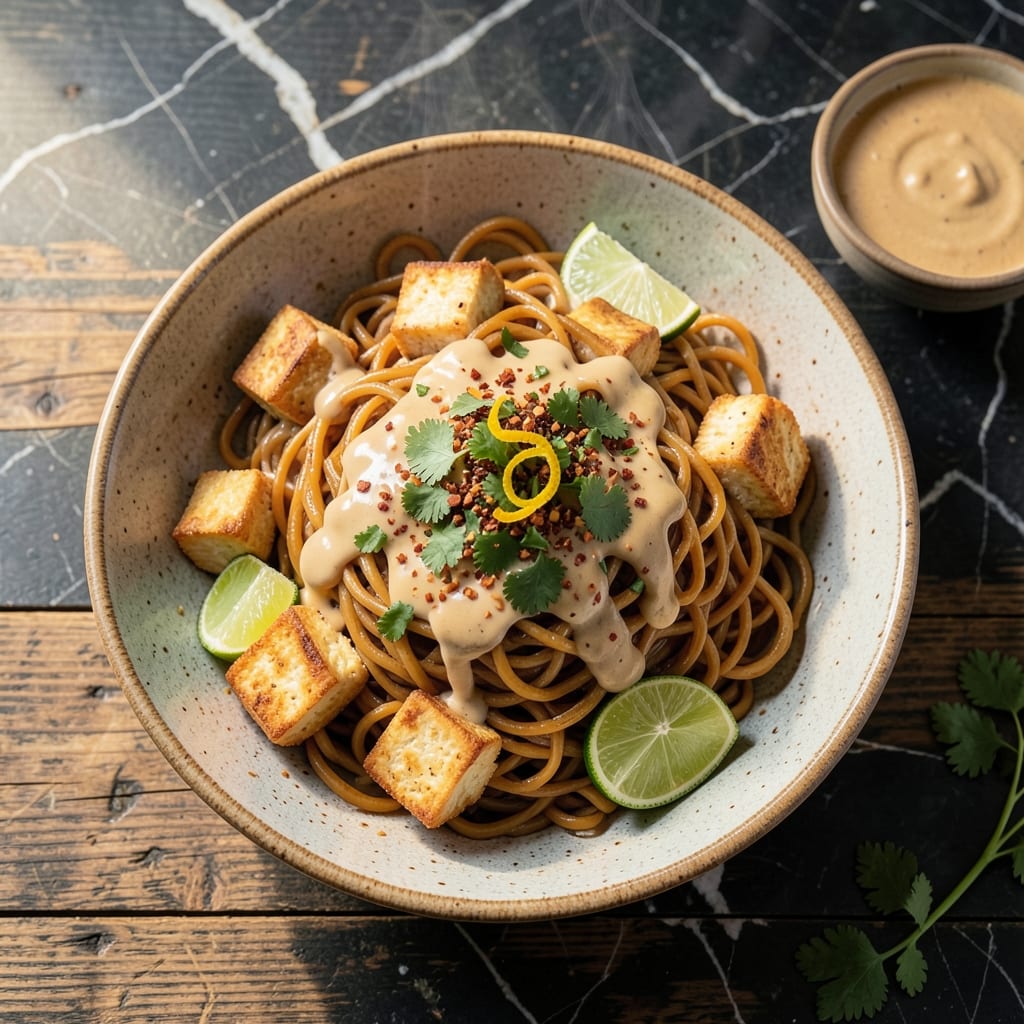
I’ve perfected a vegan pad thai that captures the authentic balance of sweet, tangy, and savory flavors without compromising on texture. The tamarind sauce delivers that signature depth, while rice noodles soak up every bit of the rich, umami-packed dressing.
This dish relies on simple pantry staples and a few key substitutions to achieve traditional Thai taste. Crushed peanuts add the essential crunch, and tofu stands in for protein, absorbing the bold flavors beautifully.
What sets this version apart is the careful layering of ingredients—each component plays a distinct role in creating that restaurant-quality experience. The noodles stay perfectly tender, never mushy, with a satisfying bite in every forkful.
The final touch is a squeeze of lime and a sprinkle of cilantro, brightening the dish and tying all the flavors together seamlessly.
Ingredients for Peanut Pad Thai Recipe Vegan
Rice noodles, tamarind, and crushed peanuts create authentic vegan pad thai with bold flavors.
| Ingredient | Amount | Notes |
|---|---|---|
| Rice Noodles 🍜 | 8 oz | Flat pad thai style preferred |
| Firm Tofu 🧈 | 14 oz | Pressed and cubed |
| Tamarind Paste 🌰 | 3 tbsp | Pure, no added sugar |
| Soy Sauce 🫕 | 3 tbsp | Low-sodium or tamari |
| Maple Syrup 🍁 | 2 tbsp | Grade A or B |
| Rice Vinegar 🍚 | 2 tbsp | Unseasoned variety |
| Peanut Butter 🥜 | 2 tbsp | Creamy, unsweetened |
| Garlic Cloves 🧄 | 3 cloves | Minced finely |
| Shallot 🧅 | 1 whole | Thinly sliced |
| Roasted Peanuts 🥜 | ½ cup | Unsalted, crushed |
| Bean Sprouts 🌱 | 1 cup | Fresh, rinsed |
| Lime 🍋 | 1 whole | Juiced and zested |
| Fresh Cilantro 🌿 | ¼ cup | Chopped, for garnish |
| Red Pepper Flakes 🌶️ | ½ tsp | Adjust to taste |
| Olive Oil 🫒 | 2 tbsp | For cooking tofu |
The tamarind paste is non-negotiable for authentic flavor—look for pure tamarind concentrate at Asian markets or well-stocked international aisles. Firm tofu holds its shape best; Wildwood or Nasoya brands are reliable. Rice noodles should be flat and about 1/8-inch wide. Avoid the thin vermicelli-style as they can turn mushy. For the peanuts, dry-roasted unsalted gives the cleanest crunch.
No tamarind? Lime juice plus brown sugar in a 1:1 ratio gets you close (use 3 tbsp each). Gluten-free soy sauce or coconut aminos can replace regular soy. Skip the peanut butter? Almond or cashew butter works, though the flavor shifts slightly. Fresh cilantro is ideal, but Thai basil adds a nice anise note. The maple syrup can be swapped for agave or coconut sugar.
Tamarind paste keeps indefinitely in the fridge once opened. Pressed tofu stays fresh for 5 days in water (change daily). Rice noodles last 1-2 years in a cool, dry place. The sauce can be made ahead—store in the fridge for up to 5 days. Always soak noodles just before cooking to prevent sticking.
Why You’ll Love This Recipe
- One Pot Wonder: I toss everything in a single pan—noodles, tofu, sauce—and it’s done in 20 minutes flat.
- Sweet & Tangy: The tamarind paste and maple syrup hit that perfect balance—savory, sweet, with just the right zing.
- Feeds a Crowd: I make a big batch on Sunday and pack it for lunch all week. (Yes, even on a Tuesday night)
- Budget Friendly: Firm tofu and rice noodles stretch far, so I’m spending less but eating like a queen.
Step-by-Step Instructions for Peanut Pad Thai
Master the technique for perfectly balanced flavors and textures in this plant-based classic.
Step 1: Press and Sear the Firm Tofu
Begin by pressing the 14 oz firm tofu to remove excess moisture. I recommend wrapping it in a clean kitchen towel, placing a heavy pan on top, and letting it drain for 15 minutes. This crucial step ensures the tofu absorbs maximum flavor and achieves a satisfying crispness.
Cut the pressed tofu into ½-inch cubes, then heat 2 tbsp olive oil in a large skillet over medium-high heat. Add the tofu and cook undisturbed for 3-4 minutes per side until golden brown on all sides. The tofu should release easily from the pan when properly seared.
Step 2: Prepare the Tamarind Sauce
In a medium bowl, whisk together the 3 tbsp tamarind paste, 3 tbsp soy sauce, 2 tbsp maple syrup, 2 tbsp rice vinegar, and 2 tbsp peanut butter until smooth. The sauce should have a glossy appearance and slightly thick consistency.
Add the 3 cloves minced garlic cloves and 0.5 tsp red pepper flakes to the sauce. This creates a complex flavor profile with just the right amount of heat. Taste and adjust seasoning if needed, though the measurements provided deliver optimal balance.
Step 3: Soak and Cook the Rice Noodles
Place the 8 oz rice noodles in a large bowl and cover with hot tap water. Let soak for 8-10 minutes until pliable but still slightly firm. Drain immediately and rinse with cold water to stop the cooking process.
In the same skillet used for tofu, add the soaked noodles and half the tamarind sauce. Toss gently with tongs over medium heat for 2-3 minutes until the noodles absorb the sauce and become tender. Avoid overworking the noodles to prevent breakage.
Step 4: Combine and Finish with Garnishes
Add the seared tofu to the noodles along with the remaining sauce. Gently fold in the 1 whole thinly sliced shallot and 1 cup bean sprouts, cooking for an additional 1-2 minutes until everything is heated through and well coated.
Remove from heat and stir in the juice and zest from the 1 whole lime. Transfer to serving plates and top with 0.5 cup crushed roasted peanuts and 0.25 cup chopped fresh cilantro. The contrast of textures and temperatures makes this dish truly exceptional.
Pro Tips For Making Peanut Pad Thai Recipe Vegan
- Soak Noodles Separately: I learned this the hard way—soak rice noodles in warm water for exactly 8-10 minutes until pliable but still firm, then drain. If you let them sit in the soaking water too long, they’ll turn to mush when stir-fried.
- Press Tofu First: Wrap firm tofu in a clean towel, place a heavy pan on top, and press for 15 minutes to remove excess water. Sounds tedious, but it’s the only way to get that golden, crispy sear without soggy pad thai.
- Balance Tamarind Early: Tamarind paste can overpower quickly—start with 1 tablespoon, then adjust. I used to dump it all in at once and ended up with a dish that tasted more like sour candy than pad thai.
- Toast Peanut Butter: Sounds weird, but it works: lightly toast the peanut butter in the pan for 30 seconds before mixing with soy sauce and maple syrup. It deepens the flavor and makes the sauce cling better to the noodles.
Dietary Considerations for These Flavors
Gluten-Free Adaptation
This dish is naturally gluten-free if you use tamari soy sauce instead of regular soy sauce. I always keep a bottle of San-J Tamari in my pantry for this very reason. The flavor is nearly identical to traditional soy sauce. 💪
Nut-Free Alternative
For those with peanut allergies, swap the peanut butter for sunflower seed butter and the crushed peanuts for toasted sesame seeds. The taste will be slightly different but equally delicious. I’ve tested this with friends who have nut allergies and they loved it.
Soy-Free Option
Replace the soy sauce with coconut aminos, which has a similar umami flavor without the soy. Use the same 3 tbsp measurement as the original recipe. This works great for anyone avoiding soy for dietary reasons.
Low-Carb Variation
For a lower-carb version, substitute the rice noodles with zucchini noodles or shirataki noodles. Soak and rinse shirataki noodles well to remove excess odor. Cook them for 2-3 minutes to soften before adding the sauce.
Protein Swaps
If you’re not a fan of tofu, try tempeh or chickpeas for protein. For tempeh, crumble it into small pieces and pan-fry until crispy. For chickpeas, use 1 can (15 oz), drained and patted dry, then roast at 400°F for 20 minutes before adding. ✨
Sugar-Free Adjustment
To reduce sugar, replace the maple syrup with monk fruit sweetener or erythritol. Use the same 2 tbsp measurement for balanced sweetness. The tamarind paste itself has natural sugars, so this keeps the dish flavorful without added sweeteners.
Nutrition Facts
Frequently Asked Questions
Can I make this without tamarind paste?
Yes! Substitute 3 tbsp lime juice plus 3 tbsp brown sugar for the tamarind. The flavor won’t be identical but it’ll still be delicious.
How do I prevent the noodles from sticking?
Rinse soaked noodles with cold water before cooking, and use medium heat. Stir gently with tongs to avoid breaking them.
What’s the best tofu texture for this dish?
Extra-firm tofu works best. Press it for 15 minutes to remove moisture before cubing and searing for maximum crispiness.
Can I use a different nut butter?
Cashew or almond butter work well. Stick to unsweetened varieties to maintain the authentic flavor balance.

- Potato Candy Recipe 1933: Vintage Peanut Butter Roll Delight - October 30, 2026
- Potato Chip Cookie Recipe With Pecans: Buttery Crunch Meets Nutty Richness - October 30, 2026
- Potato Patty Recipe No Egg: Crispy Edges Without the Binder - October 30, 2026