
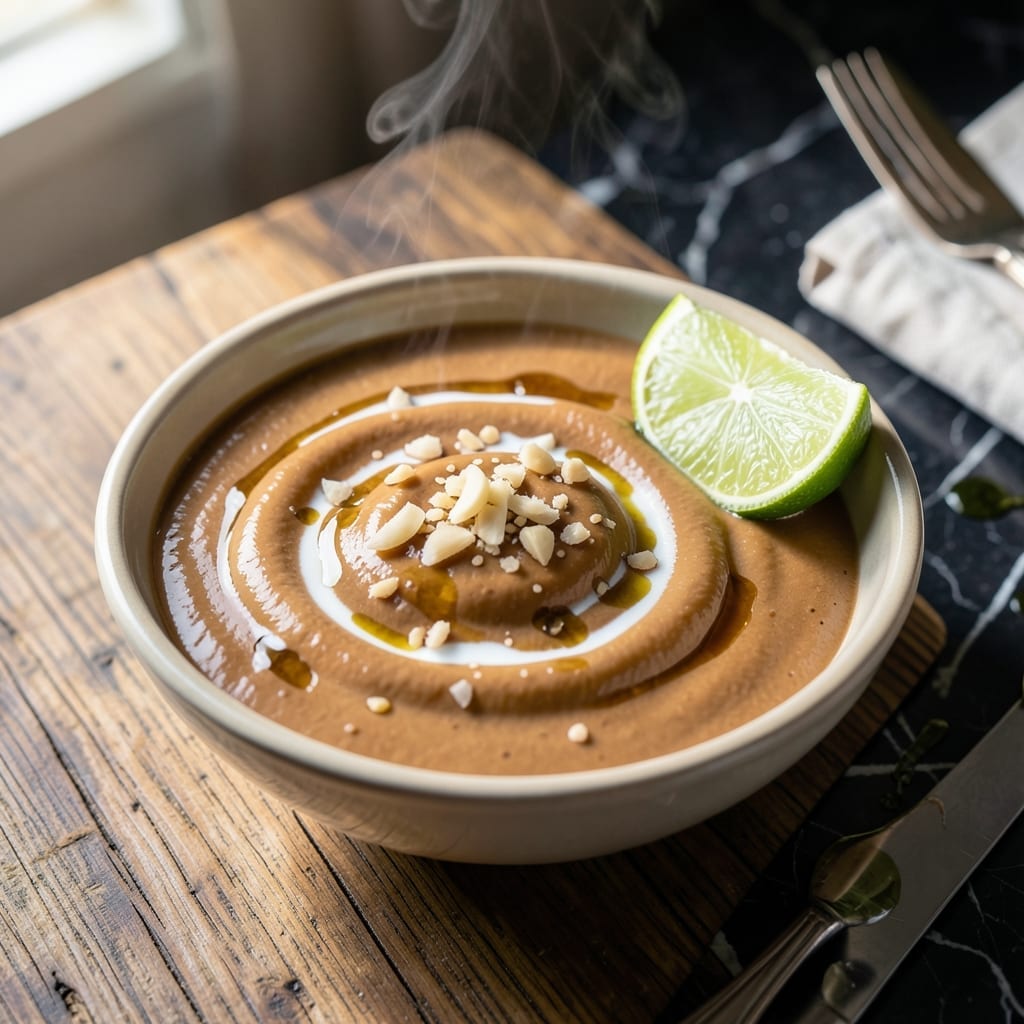
This Thai-inspired peanut sauce brings restaurant-quality flavor to your kitchen with minimal effort. The combination of creamy peanut butter and rich coconut milk creates a smooth, velvety texture that clings perfectly to noodles, satay, or fresh vegetables.
What makes this sauce special is its balance of flavors—sweet, tangy, and slightly spicy all in one creamy package. A touch of lime juice brightens the richness while garlic and ginger add depth without overpowering the natural nuttiness.
The beauty lies in its versatility. Use it as a dip for spring rolls, a dressing for salads, or a sauce for stir-fries. It comes together in minutes with pantry staples you likely already have on hand.
Store leftovers in the fridge for up to a week, though it rarely lasts that long. This sauce elevates simple dishes into something extraordinary.
Ingredients for Peanut Sauce Recipe with Coconut Milk
Nine pantry staples blend into a rich, velvety dip ready in minutes.
| Ingredient | Amount | Notes |
|---|---|---|
| Creamy Peanut Butter 🥜 | ¾ cup | Unsweetened, smooth variety |
| Coconut Milk 🥥 | ½ cup | Full-fat, canned for richness |
| Lime Juice 🍋 | 2 tbsp | Freshly squeezed preferred |
| Soy Sauce 🫒 | 2 tbsp | Low-sodium or tamari for gluten-free |
| Maple Syrup 🍁 | 2 tbsp | Or agave nectar alternative |
| Garlic Cloves 🧄 | 2 cloves | Minced or grated |
| Fresh Ginger 🌿 | 1 tbsp | Peeled and grated |
| Rice Vinegar 🍚 | 1 tbsp | Or apple cider vinegar |
| Red Pepper Flakes 🌶️ | ½ tsp | Adjust for heat preference |
| Sesame Oil 🫒 | 1 tsp | Toasted for depth of flavor |
The peanut butter is the foundation here. Natural, unsweetened is key—skip the sugar-loaded kinds. Coconut milk from a can (like Thai Kitchen or Native Forest) gives that luscious thickness you can’t get from carton. Look for creamy, no-stir varieties if you want to avoid oil separation. Fresh ginger and garlic are non-negotiable for that bright, aromatic kick.
No lime juice? Lemon works fine, but lime’s tang is closer to Thai flavors. Maple syrup can be swapped for agave or coconut sugar—one-for-one ratio. Tamari makes this gluten-free without sacrificing flavor. If you’re out of rice vinegar, apple cider vinegar adds a similar sharpness. For extra heat, add a dash of sriracha instead of red pepper flakes.
This keeps beautifully in the fridge for up to 1 week—the flavors actually deepen over time. Store it in an airtight jar (mason jars work great). Freezing isn’t ideal since it can separate, but if you must, thaw slowly and stir well before using.
Why You’ll Love This Recipe
- 5-Minute Magic: I toss everything in a bowl—peanut butter, coconut milk, lime juice—and it’s ready before the noodles finish boiling.
- Flavor Bomb: That creamy, tangy, slightly sweet combo from the peanut butter and lime juice hits every note.
- Dinner or Dip: I slather it on chicken satay one night, then use the leftovers as a veggie dip the next.
- Pantry Hero: Honestly, I always have these ingredients on hand, so it saves me from last-minute grocery runs.
Step-by-Step Instructions for Peanut Sauce With Coconut Milk
Here’s how I make this rich, velvety dip that’s always a crowd-pleaser.
Step 1: Bloom the Aromatics
Heat the 1 tsp sesame oil in a small saucepan over medium heat until it shimmers. Add the 2 cloves garlic cloves and 1 tbsp fresh ginger, stirring constantly for 30-45 seconds until you catch that first whiff of their fragrance.
This quick bloom wakes up the flavors and prevents any raw, harsh notes. Watch closely—you want golden edges on the garlic, not brown. If it starts to color too quickly, lower the heat. The 0.5 tsp red pepper flakes go in now too, toasting just long enough to release their warmth without turning bitter.
Step 2: Whisk in the Liquid Base
Pour in the 2 tbsp soy sauce, 1 tbsp rice vinegar, 2 tbsp lime juice, and 2 tbsp maple syrup. Stir well and let it simmer for 1-2 minutes until the mixture darkens slightly and the vinegar’s sharpness mellows.
The acid in these liquids will balance the richness of the peanut and coconut. I always use freshly squeezed lime juice here—it makes a noticeable difference in brightness. You’ll see tiny bubbles forming at the edges; that’s your cue the mixture is ready for the next step.
Step 3: Create the Creamy Foundation
Reduce heat to low and add the 0.75 cup creamy peanut butter. Stir vigorously with a whisk—it’ll seize up at first, looking almost like wet cement. Keep at it; the heat will loosen it into a thick, glossy paste within 1-2 minutes.
This is where the magic happens. The peanut butter transforms from a dense blob into a silky base. If it seems too thick, don’t add water yet. The coconut milk in the next step will perfect the consistency.
Step 4: Finish with Coconut Milk
Slowly pour in the 0.5 cup coconut milk, whisking constantly until fully incorporated. The sauce will lighten in color and become luxuriously smooth. Let it warm through for 2-3 minutes on low heat, stirring occasionally.
You’re aiming for a consistency that coats the back of a spoon but still drizzles easily. If it’s too thick, add a splash of warm water. Taste and adjust seasoning—though the soy sauce provides saltiness, I sometimes add a pinch more if needed. The full-fat coconut milk gives it that signature creamy texture that makes this sauce so irresistible.
Step 5: Cool and Serve
Remove from heat and let the sauce cool to room temperature. It’ll thicken slightly as it cools, which is exactly what you want. The flavors deepen and meld during this time, so resist the urge to dig in immediately.
Transfer to a serving bowl. The sauce should be glossy, with a perfect balance of nutty, sweet, tangy, and spicy notes. It pairs beautifully with satay, spring rolls, or as a salad dressing. For the best texture, use it within 3-4 days or freeze for longer storage.
Pro Tips For Making Peanut Sauce Recipe With Coconut Milk
- Warm the Coconut Milk: Heat the coconut milk gently before mixing—cold milk seizes up the peanut butter and leaves you with a lumpy mess. I learned this the hard way after stirring a clumpy disaster for 10 minutes.
- Use Natural Peanut Butter: Skip the shelf-stable stuff; natural, no-sugar-added peanut butter blends smoother and lets the maple syrup’s sweetness shine through.
- Balance the Lime: Add the lime juice last and taste as you go—too much early on can curdle the coconut milk, and you can’t take it back once it’s in.
- Thin with Water: If the sauce gets too thick, whisk in warm water a tablespoon at a time instead of more coconut milk—it keeps the flavor rich without diluting it.
Regional Styles of These Flavors
Thai Classic Style
In Thailand, peanut sauce often includes 1 tsp fish sauce for umami depth, though I skip it to keep this vegan. The balance of sweet, sour, and salty remains key. Traditional versions use tamarind paste instead of lime juice for that signature tang.
Indonesian Gado-Gado
This version adds 1 tbsp tahini and 1 tsp ground coriander to the base for earthy complexity. It’s thicker, often served at room temperature over boiled vegetables. The coconut milk makes it richer than typical Indonesian peanut sauces. 🔥
I love this with green beans and hard-boiled eggs for an authentic experience.
Vietnamese Fresh Twist
Vietnamese peanut sauce is lighter, using 3 tbsp water to thin it out. They often add 1 tbsp hoisin sauce for depth. It’s perfect for dipping fresh spring rolls or grilled meats.
Malaysian Satay Style
Malaysian versions are chunkier, with crushed peanuts stirred in at the end. They also include 1 stalk lemongrass (minced) in the aromatics. The sauce is thicker, meant to cling to skewered meats.
Filipino Bagoong
Filipino cuisine adds 1 tbsp shrimp paste (bagoong), but I use miso paste for a vegan alternative. It gives a funky depth that pairs wonderfully with grilled vegetables. 💛
Nutrition Facts
Frequently Asked Questions
Can I use crunchy peanut butter?
Stick with creamy for the smoothest texture. Crunchy works but will leave visible peanut bits. For best results, blend it thoroughly with the coconut milk.
How do I fix a sauce that’s too thick?
Add warm water 1 tbsp at a time until it reaches your desired consistency. Coconut milk can also work, but water won’t dilute the flavor. Stir well between additions.
What can I substitute for maple syrup?
Agave nectar, honey, or coconut sugar all work in a 1:1 ratio. Brown sugar adds molasses notes but may darken the sauce. Adjust sweetness to taste.
How long will this keep in the fridge?
Store in an airtight container for up to 1 week. The flavors deepen over time. Stir before using as some separation is normal.

- BBQ Sausage Recipe Oven: Smoky Depth Without the Grill - September 28, 2026
- BBQ Chicken Bowl Recipe Rice: Smoky Sweetness Over Fluffy Grains - September 28, 2026
- Beef Cutlet Recipe Ideas: Crispy Breaded Patties With Bold Seasonings - September 28, 2026