
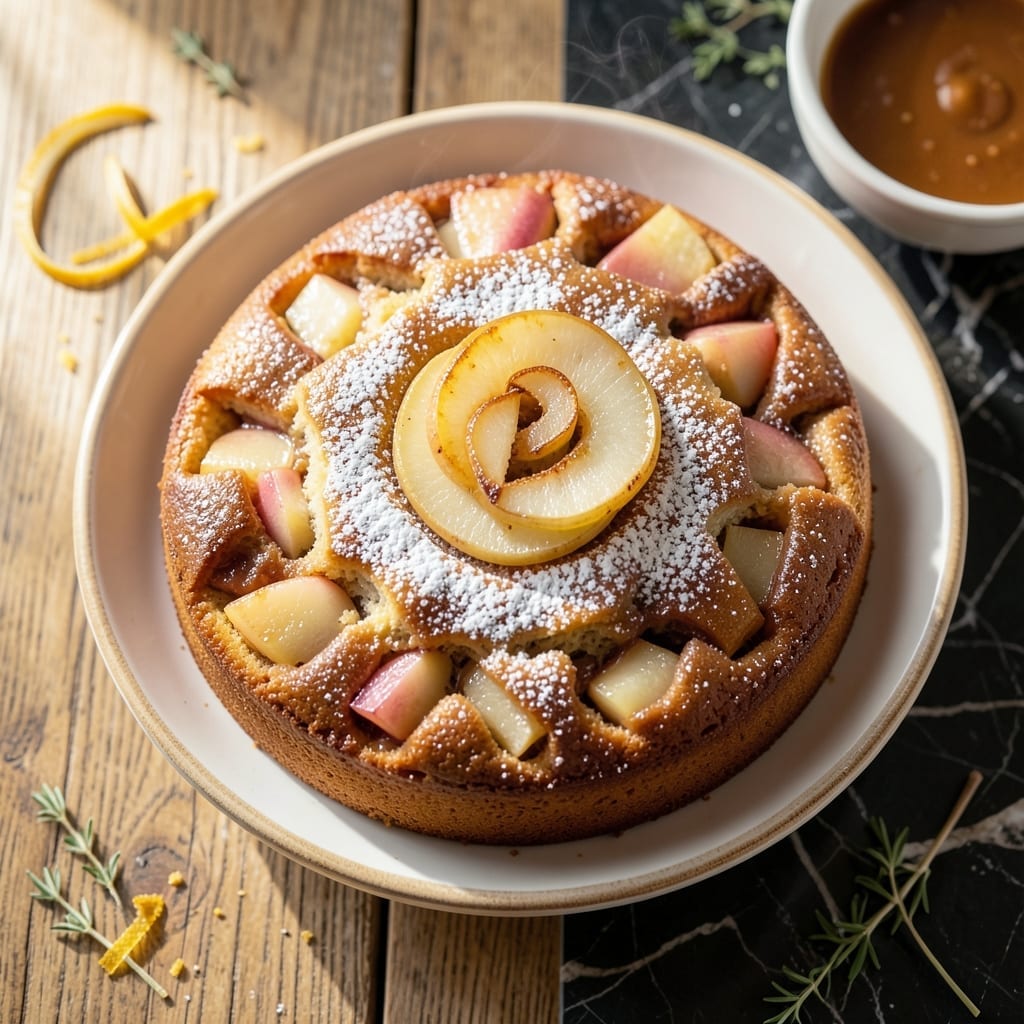
This pear cake delivers on its promise of moist layers with every bite. The secret lies in using ripe fresh pears that caramelize beautifully during baking, infusing the cake with natural sweetness and a tender crumb.
I developed this recipe to highlight the fruit’s natural flavor without overpowering it. The pears are folded into the batter and also arranged on top, creating a rustic presentation that’s as pleasing to the eye as it is to the palate.
What emerges from the oven is a golden cake with a delicate texture, studded with soft pear pieces and a hint of spice. The caramelized fruit on top adds a beautiful finish and extra depth of flavor.
The result is a dessert that’s impressive enough for company but simple enough for a weekday treat. This cake keeps well and actually improves the next day as the flavors meld.
Ingredients for Pear Cake Recipe Using Fresh Pears
Fresh pears and pantry staples create a cake that’s moist with caramelized fruit in every bite.
| Ingredient | Amount | Notes |
|---|---|---|
| Ripe Fresh Pears 🍐 | 3 whole | Bartlett or Anjou, peeled and diced |
| All-Purpose Flour 🌾 | 2 cups | Sifted for lighter texture |
| Granulated Sugar 🍚 | 1 ½ cups | Divided for batter and topping |
| Unsalted Butter 🧈 | ¾ cup | Softened to room temperature |
| Large Eggs 🥚 | 3 whole | Room temperature for even mixing |
| Baking Powder 🧂 | 2 tsp | For leavening the batter |
| Baking Soda 🧂 | ½ tsp | Helps with rise and texture |
| Ground Cinnamon 🌿 | 1 tsp | Adds warm spice to cake |
| Vanilla Extract 💧 | 2 tsp | Pure extract for best flavor |
| Salt 🧂 | ½ tsp | Balances sweetness in batter |
| Brown Sugar 🍯 | ¼ cup | For caramelized topping on pears |
| Lemon Juice 🍋 | 1 tbsp | Prevents pears from browning |
The pears are non-negotiable here—Bartlett or Anjou varieties hold up best during baking and caramelize beautifully. Look for fruit that yields slightly to gentle pressure (ripe but firm). Most grocery stores carry these year-round, but farmers markets often have the best selection in fall. The butter should be real unsalted—salted can throw off the balance, and margarine won’t give the same richness.
No fresh pears? Canned pear halves (drained well) can work in a pinch, though texture won’t be quite the same. Out of vanilla extract? Vanilla bean paste adds great flavor and those pretty flecks. Need to make it gluten-free? Bob’s Red Mill 1-to-1 flour blend swaps directly. The cinnamon can be skipped, but it adds a warmth that complements the pears perfectly.
This cake keeps beautifully at room temperature for 2 days (covered). Store in the fridge for up to 5 days, though it’s best served slightly warm. Freezes for 3 months—slice before freezing for easy single servings. The flavors actually deepen overnight, making leftovers a treat.
Why You’ll Love This Recipe
- One Bowl Wonder: I just dump the flour, sugar, and eggs in one bowl, mix, and fold in the pears—no fancy steps.
- Sweet & Juicy: The fresh pears stay tender and soak up the buttery batter, making every bite ridiculously good.
- Keeps Well: Leftovers taste even better the next day, and it freezes solid for up to a month.
Step-by-Step Instructions for Pear Cake with Caramelized Fruit
This method ensures a moist crumb and perfectly tender pears in every bite.
Step 1: Prepare and Caramelize the Pears
Peel, core, and dice the 3 whole Ripe Fresh Pears into ½-inch pieces. Immediately toss them with the 1 tbsp Lemon Juice to prevent browning. This keeps the fruit looking fresh and vibrant in your finished cake.
In a skillet over medium heat, melt ¼ cup of the 0.75 cup Unsalted Butter with the 0.25 cup Brown Sugar. Add the pears and cook for 8-10 minutes, stirring occasionally, until they soften and the sauce thickens to a syrupy consistency. The pears should be tender but still hold their shape.
Remove from heat and let cool slightly. This caramelization step intensifies the natural sweetness of the fruit and creates pockets of moisture throughout the cake.
Step 2: Cream Butter and Sugars
In a large bowl, beat the remaining ½ cup Unsalted Butter with 1 cup of the 1.5 cups Granulated Sugar until light and fluffy—about 3-4 minutes. The mixture should turn pale yellow and nearly double in volume.
Add the 3 whole Large Eggs one at a time, beating well after each addition. Stir in the 2 tsp Vanilla Extract. This creaming process incorporates air, which contributes to the cake’s tender texture and even crumb.
Step 3: Combine Dry Ingredients and Fold Together
In a separate bowl, whisk together the 2 cups All-Purpose Flour, 2 tsp Baking Powder, 0.5 tsp Baking Soda, 1 tsp Ground Cinnamon, and 0.5 tsp Salt. These leaveners work together to create a perfect rise and soft texture.
Gradually add the dry ingredients to the wet mixture, alternating with the remaining ½ cup Granulated Sugar, beginning and ending with the flour. Mix just until combined—overmixing will develop gluten and make the cake dense. Fold in the caramelized pears with all their juices.
Step 4: Bake to Golden Perfection
Pour the batter into a greased 9×13-inch baking pan and spread evenly. Bake at 350°F for 40-45 minutes, or until a toothpick inserted in the center comes out clean. The top should be golden brown and spring back when lightly touched.
Rotate the pan halfway through baking if your oven has hot spots. This ensures even browning and cooking. The caramelized pears will create beautiful swirls of color and pockets of flavor throughout the cake.
Step 5: Cool and Serve
Let the cake cool in the pan for 15 minutes before transferring to a wire rack. This brief cooling period allows the cake to set without becoming dry. The residual heat will continue cooking the center slightly.
Serve warm or at room temperature. Each slice will showcase the moist crumb and bursts of caramelized pear that make this cake special. For best results, store leftovers covered at room temperature for up to 2 days.
Pro Tips For Making Pear Cake Recipe Using Fresh Pears
- Test Pear Ripeness: Press your thumb gently into the pear—it should give slightly, like a ripe avocado. Overripe pears turn mushy in the batter, and underripe ones stay hard and bland.
- Coat the Pears: Toss pear chunks in 1 tablespoon of the flour from the recipe before folding them in. Sounds weird, but it works: keeps them from sinking to the bottom of the cake.
- Room-Temp Butter: I learned this the hard way—cold butter won’t cream properly with sugar, leaving your cake dense. Pull it out 1-2 hours before baking, or microwave in 5-second bursts until soft but not melted.
- Check at 40 Minutes: Oven temps vary, and pears add moisture, so start checking for doneness 10 minutes early. A toothpick should come out clean or with a few moist crumbs, not wet batter.
Troubleshooting Great pear cake recipe using fresh pears
Soggy Cake Fix
If your cake turns out too moist or gummy, it likely needs more baking time. The toothpick test is key—insert it into the center and it should come out clean with just a few moist crumbs. I always set my timer for 40 minutes and check at 5-minute intervals until done. 💡
Dense Texture Issues
Overmixing the batter develops gluten, leading to a dense cake. Mix just until the flour disappears. Also, ensure your baking powder and baking soda are fresh—old leaveners lose potency. I replace mine every 6 months to guarantee a perfect rise.
Pears Sink to Bottom
To prevent pears from sinking, toss them in 1 tbsp flour before folding into the batter. This helps suspend them throughout the cake. Also, don’t let the caramelized pears cool completely—they should be warm but not hot when added to the batter.
Caramelization Problems
If your pears aren’t caramelizing, the heat might be too low. Use medium heat and avoid stirring too frequently—let them sit for 1-2 minutes between stirs to develop color. I use a stainless steel skillet for even heat distribution.
Dry Cake Solutions
Overbaking is the main culprit. Start checking at 38 minutes and pull the cake as soon as the toothpick test passes. Also, ensure your pears are ripe—underripe fruit releases less moisture. I find Anjou pears work best for consistent texture. 🍐
Uneven Baking
Rotate your pan halfway through baking to account for oven hot spots. If the top browns too quickly, tent the pan with aluminum foil. My oven has a hot back corner, so I always turn the pan to ensure even cooking.
Nutrition Facts
Frequently Asked Questions
What’s the best pear variety for baking?
Bartlett or Anjou pears hold their shape and caramelize beautifully. Avoid overly ripe ones—they can turn mushy during baking.
How do I prevent pears from sinking to the bottom?
Toss diced pears in 1 tbsp flour before folding into the batter. This helps them stay suspended evenly throughout the cake.
Can I make this cake ahead of time?
Yes! It keeps well at room temperature for 2 days or in the fridge for 5 days. Flavors actually deepen overnight.
What if my cake turns out dense?
Avoid overmixing the batter—stop as soon as the flour disappears. Also, check that your baking powder and baking soda are fresh.

- Potato Candy Recipe 1933: Vintage Peanut Butter Roll Delight - October 30, 2026
- Potato Chip Cookie Recipe With Pecans: Buttery Crunch Meets Nutty Richness - October 30, 2026
- Potato Patty Recipe No Egg: Crispy Edges Without the Binder - October 30, 2026