
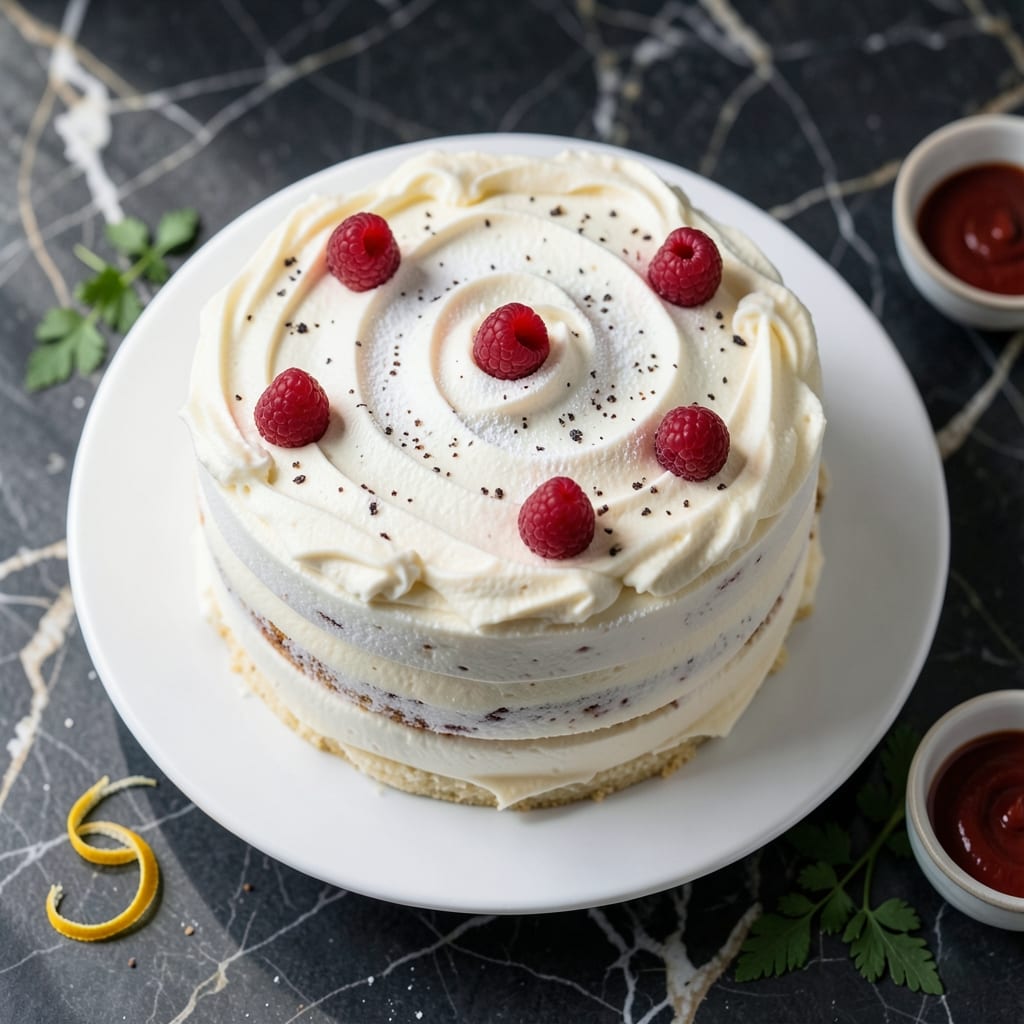
This white cake recipe delivers the perfect balance of delicate crumb and bright vanilla flavor every time. After testing countless versions, I’ve refined a method that guarantees a tender, moist texture that rises beautifully in the pan.
The secret lies in properly creaming the butter and sugar, then folding in egg whites separately for maximum lift. Using cake flour ensures that fine, velvety texture that defines an exceptional white cake.
You’ll end up with layers so light and fluffy they practically melt in your mouth, with a golden crust that’s just the right thickness. The vanilla shines through without being overpowering.
Ideal for celebrations or when you want to impress with a from-scratch dessert that looks and tastes professional.
Ingredients for Perfect White Cake Recipe from Scratch
Simple ingredients for a cake that tastes like a bakery masterpiece.
| Ingredient | Amount | Notes |
|---|---|---|
| Cake Flour 🌾 | 2 ½ cups | Sifted for best texture |
| Granulated Sugar 🍚 | 1 ¾ cups | Fine white sugar preferred |
| Unsalted Butter 🧈 | 1 cup | Room temperature, softened |
| Large Egg Whites 🥚 | 6 whole | Room temperature for volume |
| Whole Milk 🥛 | 1 cup | Room temperature |
| Pure Vanilla Extract 🌿 | 2 tsp | High-quality for best flavor |
| Baking Powder 🧂 | 1 tbsp | Fresh for maximum lift |
| Salt 🧂 | ½ tsp | Fine sea salt |
| Almond Extract 🌰 | ½ tsp | Optional for depth |
| Vegetable Shortening 🧈 | ¼ cup | For extra moisture |
| All-Purpose Flour 🌾 | ½ cup | For structure if needed |
The cake flour is non-negotiable here. King Arthur or Swans Down are my go-tos—regular flour just won’t give you that velvety crumb. Butter needs to be properly softened (not melted), and room temperature eggs whip up fluffier. I always grab my vanilla from Nielsen-Massey—it’s worth the splurge for that bright, pure flavor (the imitation stuff tastes like plastic).
No cake flour? Sift all-purpose flour minus 2 tbsp per cup, then replace with cornstarch. Out of egg whites? Whole eggs work in a pinch (just adjust the color). Short on time? Skip the almond extract—vanilla does the heavy lifting. The milk can be swapped for buttermilk (add 1 tbsp vinegar to 1 cup milk) for extra tenderness.
Store cake flour in the freezer to keep it fresh for 6-12 months. Butter keeps in the fridge for 3 months or freezer for 1 year. Baked layers? Wrap tightly in plastic—they’ll stay moist for 3 days at room temp.
Why You’ll Love This Recipe
- One Bowl Wonder: I love that I can mix everything in a single bowl—no fancy equipment, just cake flour, sugar, and butter coming together effortlessly.
- Celebration Ready: Birthdays, weddings, or just because—this white cake fits any moment. Between us, it’s my go-to for impressing guests without stress.
- Budget Friendly: Cake flour and basic pantry staples keep costs low. I’ll be real: it’s cheaper than a box mix and tastes a million times better.
Step-by-Step Instructions for Perfect White Cake
Here’s the method I use to get that dreamy, cloud-like texture every single time.
Step 1: Cream the Fats and Sugar
In a large mixing bowl, beat the 1 cup Unsalted Butter and 0.25 cup Vegetable Shortening together until smooth. This combo gives you the best of both worlds—flavor from butter and moisture from shortening.
Gradually add the 1.75 cups Granulated Sugar and beat on medium-high speed for 3-4 minutes until light and fluffy. You’ll know it’s ready when the mixture turns pale yellow and doubles in volume. This step is crucial for that perfect crumb.
Step 2: Incorporate the Wet Ingredients
With the mixer running on low, add the 6 whole Large Egg Whites one at a time, letting each fully incorporate before adding the next. Then mix in the 1 cup Whole Milk, 2 tsp Pure Vanilla Extract, and 0.5 tsp Almond Extract.
Scrape down the sides of the bowl as needed to ensure everything combines evenly. The mixture might look a bit curdled at this point—that’s completely normal and will smooth out once you add the dry ingredients.
Step 3: Combine the Dry Ingredients
In a separate bowl, whisk together the 2.5 cups Cake Flour, 0.5 cup All-Purpose Flour, 1 tbsp Baking Powder, and 0.5 tsp Salt. The cake flour is what gives this its signature lightness, while the all-purpose adds just enough structure.
Add about a third of the dry ingredients to the wet mixture and mix on low until just combined. Pour in half of the remaining milk (if any), mix, then repeat with another third of dry ingredients. Finish with the last of the dry mix. Don’t overmix—just until you see no more streaks of flour.
Step 4: Bake to Golden Perfection
Divide the batter evenly between two greased and lined 9-inch round cake pans. Smooth the tops with a spatula and give each pan a gentle tap on the counter to remove any large air bubbles.
Bake at 350°F for 25-30 minutes, or until a toothpick inserted in the center comes out clean and the edges start to pull away from the pan. The tops should be golden brown with a slight spring when touched.
Step 5: Cool and Serve
Let the cakes cool in their pans for 10 minutes, then transfer them to a wire rack to cool completely. This prevents them from becoming soggy on the bottom while still keeping them moist.
Once completely cool, you can frost with your favorite buttercream or serve as-is with fresh berries and a dusting of powdered sugar. The texture should be tender, fine-crumbed, and melt-in-your-mouth soft—exactly what you want from a perfect white cake.
Pro Tips For Making Perfect White Cake Recipe From Scratch
- Room Temp Egg Whites: Pull your egg whites out 30 minutes before mixing—cold ones won’t whip to stiff peaks, and you’ll end up with a dense cake instead of that airy crumb.
- Weigh Your Flour: Scooping cake flour straight from the bag packs it down; I learned this the hard way after three tough cakes. Weigh 1 cup as 100 grams for accuracy.
- Cream Butter Slowly: Beat the unsalted butter and sugar for a full 3-4 minutes until pale and fluffy—rushing this step leaves you with a greasy, flat cake.
- Alternate Wet and Dry: Add flour and milk in three parts, starting and ending with flour, to prevent overmixing. Sounds fussy, but it keeps the texture tender every time.
Pro Cooking Tips for perfect white cake recipe from scratch
Room Temperature Matters
I can’t stress this enough—all your dairy and eggs need to be room temperature. Cold ingredients won’t emulsify properly, leading to a dense cake. I pull my butter, milk, and egg whites out 1-2 hours before baking. 💡
Proper Creaming Technique
Beat the butter and sugar for the full 3-4 minutes until it’s pale and fluffy. This incorporates air, which gives your cake that light texture. Use a stand mixer with paddle attachment for best results.
Fold Egg Whites Gently
If you’re adding whipped egg whites, fold them in by hand with a spatula using a gentle J-shaped motion. This preserves all that air you worked so hard to incorporate. Overmixing here will deflate your batter.
Pan Preparation
Grease your 9-inch round pans thoroughly, then line with parchment paper. I use Baker’s Joy spray for easy release. Tap the pans on the counter after filling to remove air bubbles.
Oven Temperature Accuracy
Invest in an oven thermometer—many home ovens run hot or cold. Bake at exactly 350°F and rotate pans halfway through for even baking. The toothpick test is your best indicator of doneness.
Cooling is Key
Let cakes cool in pans for 10 minutes, then transfer to a rack. Cooling too long in the pan makes them soggy. I always set a timer to remind myself of this critical step.
Nutrition Facts
Frequently Asked Questions
Why use both butter and shortening?
The butter adds rich flavor while shortening keeps the cake moist and tender. This combo gives you the best texture without sacrificing taste.
Can I use all-purpose flour instead of cake flour?
Yes, but sift all-purpose flour minus 2 tbsp per cup and replace with cornstarch. This mimics cake flour’s fine texture for a lighter crumb.
How do I prevent a dense cake?
Ensure all ingredients are room temperature and cream butter and sugar for 3-4 minutes. Overmixing the batter can also make it dense.
What if my cake domes in the middle?
Level it with a serrated knife after cooling. To prevent doming, bake at 325°F for 5-10 minutes longer for even rising.

- Potato Candy Recipe 1933: Vintage Peanut Butter Roll Delight - October 30, 2026
- Potato Chip Cookie Recipe With Pecans: Buttery Crunch Meets Nutty Richness - October 30, 2026
- Potato Patty Recipe No Egg: Crispy Edges Without the Binder - October 30, 2026