
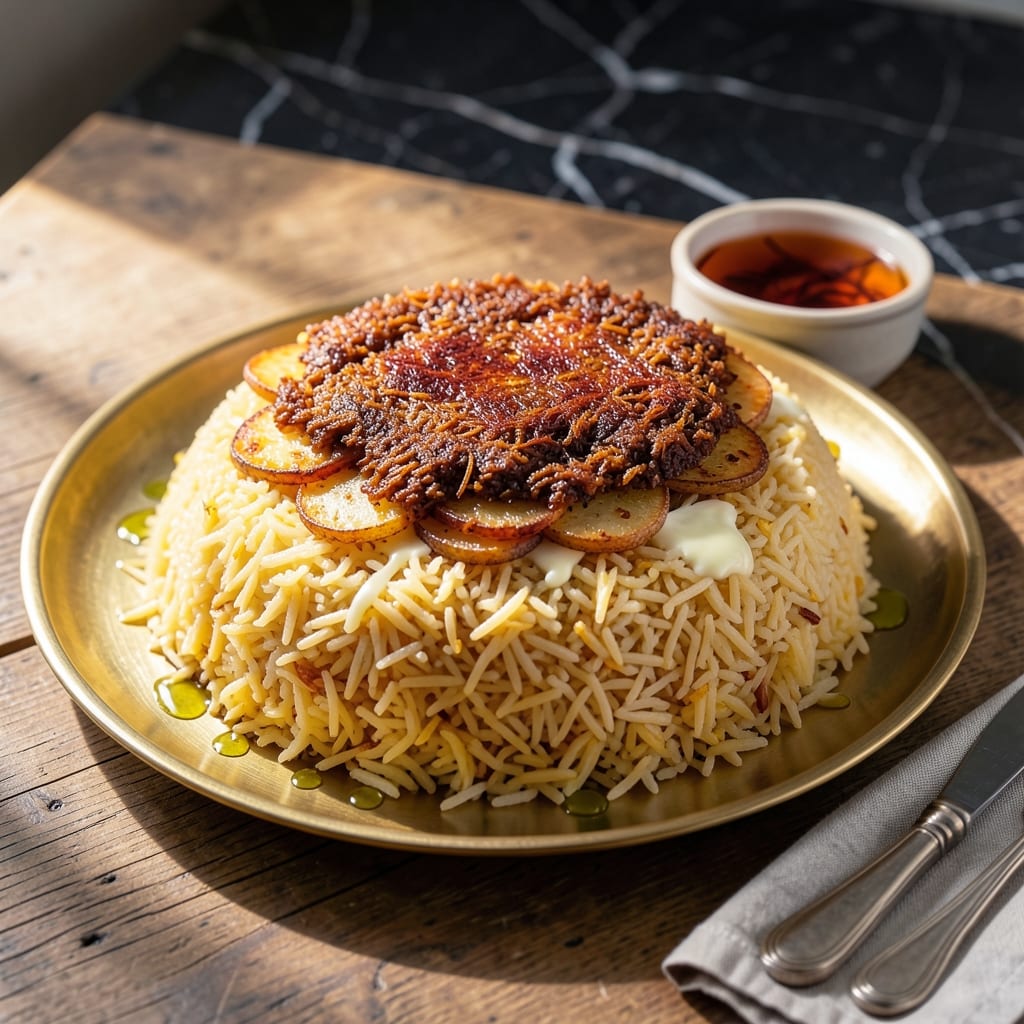
There’s nothing quite like the aroma of fragrant basmati rice cooking with saffron and butter. This method brings authentic Persian flavors to your kitchen with minimal effort.
The rice cooker simplifies the process while still delivering that coveted crispy tahdig layer at the bottom. I’ve perfected the timing and layering technique to ensure consistent results every time.
What emerges is fluffy, aromatic rice with a golden, crispy crust that’s music to your ears when you lift it from the pot. The saffron-infused steam creates a beautiful color and intoxicating scent.
This dish transforms a simple side into something extraordinary. Let’s begin with the proper preparation of the rice and pot.
Ingredients for Persian Rice Recipe in Rice Cooker
Few ingredients deliver such elegant results. Basmati, saffron, and butter create magic together.
| Ingredient | Amount | Notes |
|---|---|---|
| Basmati Rice 🌾 | 2 cups | Rinsed until water runs clear |
| Saffron Threads 🌼 | ¼ tsp | Crushed between fingers |
| Hot Water 💧 | ¼ cup | For steeping saffron |
| Unsalted Butter 🧈 | ½ cup | Melted, divided use |
| Vegetable Oil 🫒 | 2 tbsp | For crispy tahdig layer |
| Kosher Salt 🧂 | 1 ½ tsp | Diamond Crystal preferred |
| Ground Cardamom 🌿 | ¼ tsp | Optional for depth |
| Plain Yogurt 🥛 | ½ cup | Full-fat for richness |
| Garlic Cloves 🧄 | 2 cloves | Minced for rice layer |
| Rose Water 🌹 | 1 tsp | Optional for floral note |
| All-Purpose Flour 🌾 | 2 tbsp | For tahdig binding |
| Potato 🥔 | 1 whole | Thinly sliced for tahdig |
The basmati is non-negotiable for authentic texture. Seek out Indian or Pakistani brands like Daawat or Tilda—they’ve got the right aged grains for fluffiness. Saffron quality varies wildly: Persian saffron (the deep red threads) from Whole Foods or a Middle Eastern market is worth the splurge. Butter should be European-style for richness, but any unsalted works. The potato for tahdig? Russets crisp up best, but Yukon Golds add a buttery note.
No saffron? A pinch of turmeric gives color but not the flavor—skip it entirely if you can’t find the real thing. Rose water can be polarizing; use half the amount first time. For a simpler tahdig, skip the potato and use extra rice with a bit more oil. Yogurt alternatives? Greek yogurt works, but thin it with water to match plain yogurt’s consistency.
Rinsed rice keeps in a bowl of water 2-3 hours before cooking (don’t soak longer). Saffron steeped in hot water stays potent 1 week refrigerated. Leftovers? The tahdig loses crispness but reheats well—3-4 days in the fridge, or freeze the rice portion only for 1 month.
Why You’ll Love This Recipe
- Set It & Forget It: That rice cooker does all the work while I steam the saffron in hot water—no stirring, no watching.
- Golden Luxury: The saffron-infused butter makes every grain smell like a Persian feast.
- Feeds a Crowd: Double the batch and it’s still perfect for leftovers or a last-minute dinner party.
- Budget Basmati: A pound of rice and a pinch of saffron stretch into multiple meals without breaking the bank.
Step-by-Step Instructions for Persian Rice in Rice Cooker
Master the technique for fragrant basmati with a perfect tahdig crust using your rice cooker.
Step 1: Prepare the Saffron and Rice Foundation
Crush the 0.25 tsp Saffron Threads between your fingers and steep in 0.25 cup Hot Water for 10 minutes to release its vibrant color and aroma. Meanwhile, rinse the 2 cups Basmati Rice until the water runs clear—this removes excess starch for fluffy grains.
Soak the rinsed rice in water for 20-30 minutes to ensure even cooking. Drain thoroughly before proceeding. I always taste the steeped saffron water at this stage—it should have an intense floral flavor that will perfume the entire dish.
Step 2: Create the Tahdig Crust Layer
Thinly slice the 1 whole Potato using a mandoline for uniform pieces. In a bowl, toss the potato slices with 2 tbsp All-Purpose Flour, 2 tbsp Vegetable Oil, and 0.5 cup Plain Yogurt until evenly coated. This mixture will form the crispy base.
Spread this potato mixture evenly across the bottom of your rice cooker insert. Press down firmly to create a solid layer. The yogurt helps bind the potato while the flour ensures a sturdy crust that won’t stick. Don’t skip pressing—this prevents gaps in your tahdig.
Step 3: Layer and Season the Rice
In a separate bowl, melt 0.25 cup Unsalted Butter and mix with the drained rice. Add 1.5 tsp Kosher Salt, minced 2 cloves Garlic Cloves, and 0.25 tsp Ground Cardamom for depth of flavor. The rice should glisten with butter but not be soggy.
Gently spread the seasoned rice over the potato layer in the rice cooker. Use the back of a spoon to create a slight dome in the center—this helps the rice cook evenly and prevents the tahdig from burning. Drizzle the steeped saffron water evenly over the top for that signature golden hue.
Step 4: Cook and Achieve the Perfect Tahdig
Add the remaining 0.25 cup Unsalted Butter and 1 cup water to the rice cooker. Cook on the standard white rice setting. After 15 minutes, when the cooker switches to “keep warm,” let it steam for an additional 10-15 minutes to ensure the tahdig crisps properly.
Here’s the critical moment: when you smell a nutty aroma and see steam escaping from the edges, the tahdig is ready. The crust should be a deep golden brown—this visual cue is your signal. If you’re unsure, lift a corner gently with a spatula to check the color underneath.
Step 5: Release and Serve the Tahdig
Run a thin spatula around the edges of the rice cooker insert to loosen the tahdig. Place your serving platter over the insert and flip confidently in one motion. The tahdig should release cleanly with a satisfying crisp sound.
Let the rice rest for 2-3 minutes before serving to allow the layers to set. The result should be fragrant basmati grains atop a crisp, potato-based crust with a beautiful saffron-tinted top. Optionally, drizzle with 1 tsp Rose Water for an additional floral note before serving.
Pro Tips For Making Persian Rice Recipe In Rice Cooker
- Rinse the Rice: Soak basmati rice for 30 minutes in cold water, then rinse until the water runs clear—I learned this the hard way after ending up with gummy rice more than once.
- Bloom the Saffron: Crush a pinch of saffron threads and steep in 2 tablespoons of hot water for 10 minutes before adding; it releases way more color and flavor than just tossing it in dry.
- Skip the Peeking: Resist the urge to open the rice cooker lid while it’s cooking—every time you do, you drop the temperature and mess with the steam, which can turn your tahdig into a sad, soggy mess.
- Use Both Fats: Mix 1 tablespoon each of butter and vegetable oil in the bottom of the cooker—it gives the crust that golden, crispy texture without burning, and yes, it’s worth the extra dish.
Regional Styles of This Recipe
Tehran Style
In Tehran, they often use lavash bread instead of potato for tahdig, creating a paper-thin, shatteringly crisp layer. Soak 2 sheets of lavash in 2 tbsp melted butter and layer at the bottom before adding rice. The result is a delicate, cracker-like base that’s music to your ears. 🌟
Shiraz Variation
Shiraz cooks add 1 tsp ground cumin and 1 tsp turmeric to their rice for earthy warmth. They also use barberries (zereshk) sprinkled over the finished dish for a tart contrast. Soak 2 tbsp dried barberries in warm water for 10 minutes before using.
Isfahan Approach
Isfahan’s version often includes sliced carrots and raisins layered within the rice. Thinly slice 1 carrot and soak 2 tbsp raisins in warm water. Layer these between rice portions in the cooker for bursts of sweetness and color.
Northern Iran Style
The Caspian region favors herbed rice with fresh dill and parsley. Chop ½ cup each of dill and parsley and mix into the rice before cooking. This creates a vibrant green-speckled dish with a fresh, aromatic profile.
Kashan Tradition
Kashan cooks add 1 tsp advieh (Persian spice blend) to their rice for complex warmth. Mix ½ tsp cinnamon, ¼ tsp cardamom, and ¼ tsp nutmeg as a substitute. The spices infuse the rice with a cozy, fragrant depth.
Tabriz Method
Tabriz is known for its tomato-based tahdig. Spread ½ cup tomato paste mixed with 1 tbsp butter at the bottom of the cooker before adding rice. This creates a tangy, slightly sweet crust that pairs beautifully with the saffron rice. 💫
Nutrition Facts
Frequently Asked Questions
Can I use jasmine rice instead of basmati?
Basmati’s long grains and low starch are ideal, but jasmine works in a pinch. Expect slightly stickier results and a less pronounced saffron aroma.
Why did my tahdig not get crispy?
Insufficient oil or flipping too soon are common culprits. Ensure 2 tbsp oil in your potato layer and let it steam for the full 10-15 minutes after cooking.
How do I store leftovers?
Keep rice and tahdig separate in airtight containers. Refrigerate for 3-4 days or freeze rice only for 1 month. Reheat in a skillet to revive crispness.
Can I make this without a potato layer?
Use extra rice mixed with yogurt and flour for the tahdig. Press 1 cup cooked rice firmly into the bottom with 1 tbsp oil for a classic crispy crust.

- Potato Candy Recipe 1933: Vintage Peanut Butter Roll Delight - October 30, 2026
- Potato Chip Cookie Recipe With Pecans: Buttery Crunch Meets Nutty Richness - October 30, 2026
- Potato Patty Recipe No Egg: Crispy Edges Without the Binder - October 30, 2026