
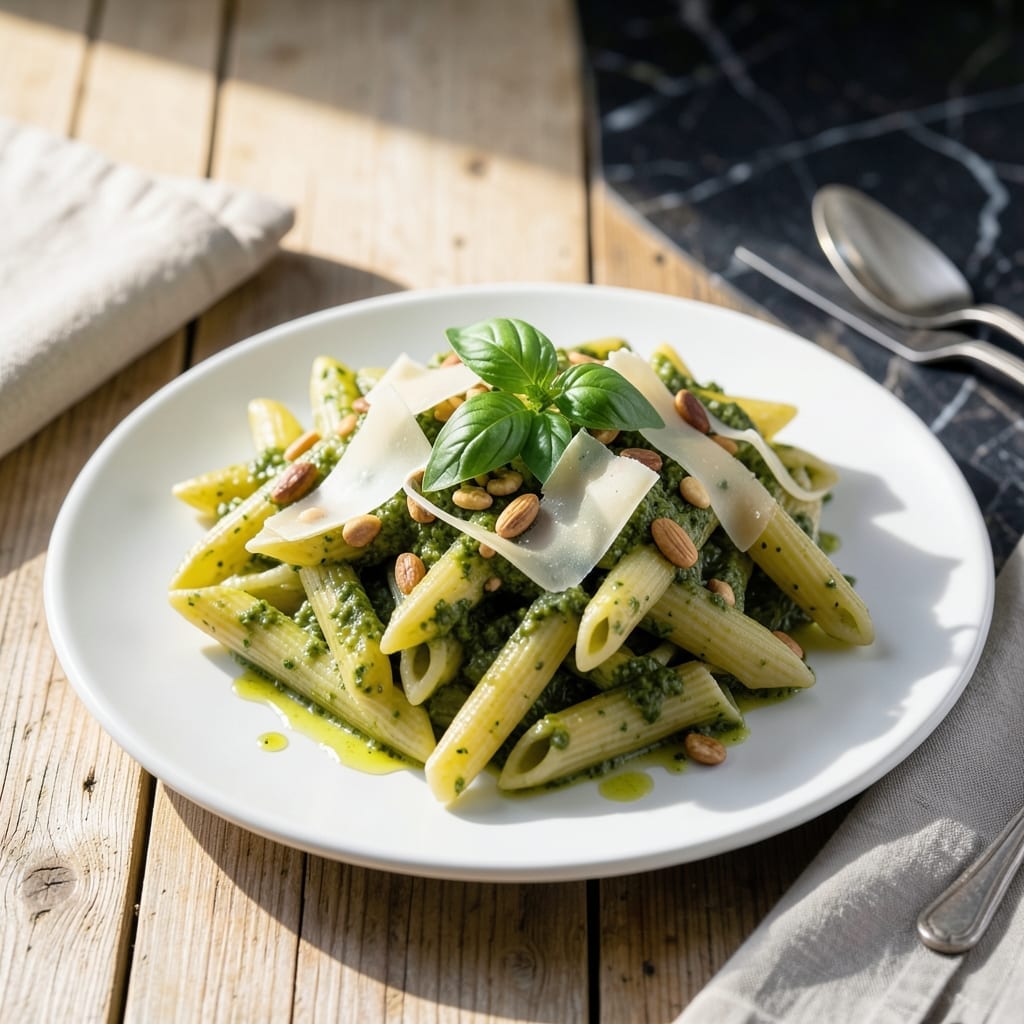
This pesto pasta captures the essence of Jamie Oliver’s approach—simple ingredients with bold, fresh flavors. The combination of basil, pine nuts, and parmesan creates a sauce that’s both vibrant and rich.
I’ve refined this method to ensure the pesto clings perfectly to each strand of pasta. The key is blending the ingredients just enough to maintain texture while releasing their natural oils.
You’ll end up with a dish that’s creamy without being heavy, with the bright herbal notes of basil shining through. The pine nuts add a subtle crunch that elevates every bite.
Serve it warm or cold, as a main or side. This recipe delivers restaurant-quality results with minimal effort.
Ingredients for Pesto Pasta Recipe Jamie Oliver
Fresh basil, nutty pine nuts, and parmesan form the heart of this vibrant pasta dish.
| Ingredient | Amount | Notes |
|---|---|---|
| Pasta 🍝 | 1 lb | Spaghetti or linguine preferred |
| Fresh Basil Leaves 🌿 | 2 cups | Packed, stems removed |
| Pine Nuts 🥜 | ½ cup | Toasted for richness |
| Parmesan Cheese 🧀 | ¾ cup | Freshly grated from block |
| Garlic Cloves 🧄 | 3 cloves | Peeled, rough chopped |
| Extra-Virgin Olive Oil 🫒 | ¾ cup | High quality, fruity |
| Lemon Juice 🍋 | 1 tbsp | Freshly squeezed |
| Sea Salt 🧂 | ½ tsp | Fine grain preferred |
| Black Pepper 🌶️ | ¼ tsp | Freshly ground |
| Heavy Cream 🥛 | ¼ cup | Optional for creamier texture |
| Reserved Pasta Water 💧 | ½ cup | Starchy, for adjusting consistency |
The basil is non-negotiable—fresh, vibrant leaves from the farmers market or grocery store produce section. Pine nuts are pricey, but Trader Joe’s and Costco offer the best value. For Parmesan, Parmigiano-Reggiano is ideal; avoid pre-grated as it contains anti-caking agents that dull the flavor. The olive oil should be extra-virgin, with a peppery finish for depth.
No pine nuts? Walnuts or raw cashews make excellent substitutes (toast them first). Short on basil? Stretch it with fresh parsley. If Parmesan isn’t available, Pecorino Romano adds a sharper bite. The pasta water is key for emulsifying the pesto—don’t skip reserving it. For a lighter version, omit the heavy cream entirely.
Pesto oxidizes quickly. Store leftovers in an airtight container with a thin layer of olive oil on top to preserve the color. Keeps in the fridge for 5 days or frozen for 3 months. Ice cube trays are perfect for single-serving portions.
Why You’ll Love This Recipe
- 20-Minute Dinner: I can have this on the table faster than delivery arrives—just boil pasta while the food processor does the rest.
- Fresh Herb Magic: That first bite of basil, garlic, and pine nuts with Parmesan is so bright it feels like summer in a bowl.
- Feeds Everyone: I serve this to picky kids, veggie friends, and meat lovers alike—no complaints, just clean plates.
- Budget Friendly: Pine nuts are the only splurge, but a little goes a long way with pasta stretching it into multiple meals.
Step-by-Step Instructions for Pesto Pasta
This method ensures vibrant, creamy pesto that coats every strand of pasta perfectly.
Step 1: Toast the Pine Nuts and Prepare Aromatics
In a dry skillet over medium heat, toast the 0.5 cup Pine Nuts for 3-4 minutes, stirring frequently, until they turn golden brown and release a nutty aroma. Remove from heat immediately and set aside to cool.
Meanwhile, peel and roughly chop the 3 cloves Garlic Cloves. I like to leave them a bit chunky for texture. Measure out the 2 cups Fresh Basil Leaves, ensuring they’re packed tightly and stems are removed for the smoothest pesto.
Step 2: Blend the Pesto Base
In a food processor, combine the 2 cups Fresh Basil Leaves, toasted 0.5 cup Pine Nuts, chopped 3 cloves Garlic Cloves, and 0.75 cup Parmesan Cheese. Pulse until finely chopped but not pureed—you want some texture remaining.
With the processor running, slowly drizzle in the 0.75 cup Extra-Virgin Olive Oil until fully incorporated. Stop to scrape down the sides as needed. The mixture should be thick and vibrant green at this stage.
Step 3: Season and Finish the Pesto
Add the 1 tbsp Lemon Juice, 0.5 tsp Sea Salt, and 0.25 tsp Black Pepper to the processor. Pulse a few times to combine. For a creamier texture, add the 0.25 cup Heavy Cream and pulse until just blended.
Taste and adjust seasoning—I often add a pinch more Sea Salt if needed. The pesto should be bright, nutty, and perfectly balanced.
Step 4: Cook the Pasta and Combine
Bring a large pot of salted water to a boil and cook the 1 lb Pasta according to package instructions until al dente. Reserve 0.5 cup Reserved Pasta Water before draining—this starchy water is key for adjusting the sauce consistency.
In a large bowl, combine the hot pasta with the pesto. Add ¼ cup of the 0.5 cup Reserved Pasta Water and toss vigorously. The heat from the pasta will slightly soften the pesto while the reserved water helps it cling to every strand. Add more water as needed until the sauce coats the pasta beautifully.
Step 5: Serve Immediately
Divide the pesto pasta among plates. The sauce should be glossy and vibrant, with visible flecks of basil and pine nuts. The pine nuts add a rich, buttery crunch that contrasts perfectly with the silky sauce.
Serve with additional Parmesan Cheese if desired. This dish is best enjoyed fresh, as the pesto can oxidize and darken over time. The flavors meld beautifully when served warm, with the aroma of fresh basil filling the air.
Pro Tips For Making Pesto Pasta Recipe Jamie Oliver
- Toast the Pine Nuts: I learned this the hard way—raw pine nuts make pesto taste flat. Toss them in a dry pan over medium heat for 2-3 minutes until golden and fragrant, then let them cool before blending.
- Use Starchy Pasta Water: After draining the pasta, reserve about 1/2 cup of the starchy cooking water. It helps loosen the pesto and makes it cling better to the noodles—sounds weird, but it works.
- Skip the Food Processor: Jamie’s right about this one: a mortar and pestle gives pesto the perfect texture. If you must use a blender, pulse it just 3-4 times to keep it chunky, not smooth.
- Grate Your Own Parmesan: Pre-shredded cheese has anti-caking agents that make pesto grainy. Take the extra minute to grate a wedge of Parmesan yourself—it melts into the sauce instead of sitting like little sand grains.
Troubleshooting Great pesto pasta recipe jamie oliver
Pesto Too Thick
If your pesto seems dry or clumps together, it needs more liquid. Add 1-2 tbsp Reserved Pasta Water at a time while tossing the pasta. I often need up to ½ cup for perfect consistency. The starch in the water helps emulsify the sauce beautifully. 💡
Bitter Taste
Bitter pesto usually means over-processed basil or old pine nuts. Use fresh basil and check pine nuts for rancidity before toasting. Adding 1 tsp honey or extra Parmesan Cheese can balance bitterness if it occurs.
Pesto Separating
If oil pools on top, your processor may have overheated the mixture. Let it cool for 5 minutes, then pulse again briefly. When combining with pasta, use hot pasta and toss vigorously to re-emulsify the sauce.
Dull Color
Pesto darkens quickly from oxidation. To prevent this, blanch basil in boiling water for 10 seconds before processing, or add 1 tsp Lemon Juice to brighten the color. Serve immediately for the most vibrant green. 🌿
Pine Nuts Burning
Toast pine nuts over medium-low heat and stir constantly. They burn in 30 seconds once golden. Remove from pan immediately when fragrant. If they darken too much, discard and start fresh—they’ll taste bitter.
Pasta Sticking
Use 1 tbsp olive oil in your pasta water to prevent sticking. Undercook pasta by 1 minute as it will finish in the hot pesto. Toss with pesto immediately after draining to prevent clumping.
Nutrition Facts
Frequently Asked Questions
Can I use walnuts instead of pine nuts?
Walnuts make a great substitute and are more budget-friendly. Toast them for 3-4 minutes over medium heat to bring out their natural oils before blending.
How do I keep pesto from turning brown?
Store it in an airtight container with a thin layer of olive oil on top. This creates a barrier to prevent oxidation. It stays fresh in the fridge for up to 5 days.
Should I add cream to the pesto?
The recipe includes ¼ cup Heavy Cream for a richer texture, but it’s optional. For a lighter version, skip the cream entirely—the olive oil and cheese provide enough richness.
Can I make this ahead of time?
Yes, but prepare the pesto and pasta separately. Refrigerate the pesto and cook the pasta just before serving. Combine them while the pasta is still hot for the best texture.

- Potato Candy Recipe 1933: Vintage Peanut Butter Roll Delight - October 30, 2026
- Potato Chip Cookie Recipe With Pecans: Buttery Crunch Meets Nutty Richness - October 30, 2026
- Potato Patty Recipe No Egg: Crispy Edges Without the Binder - October 30, 2026