
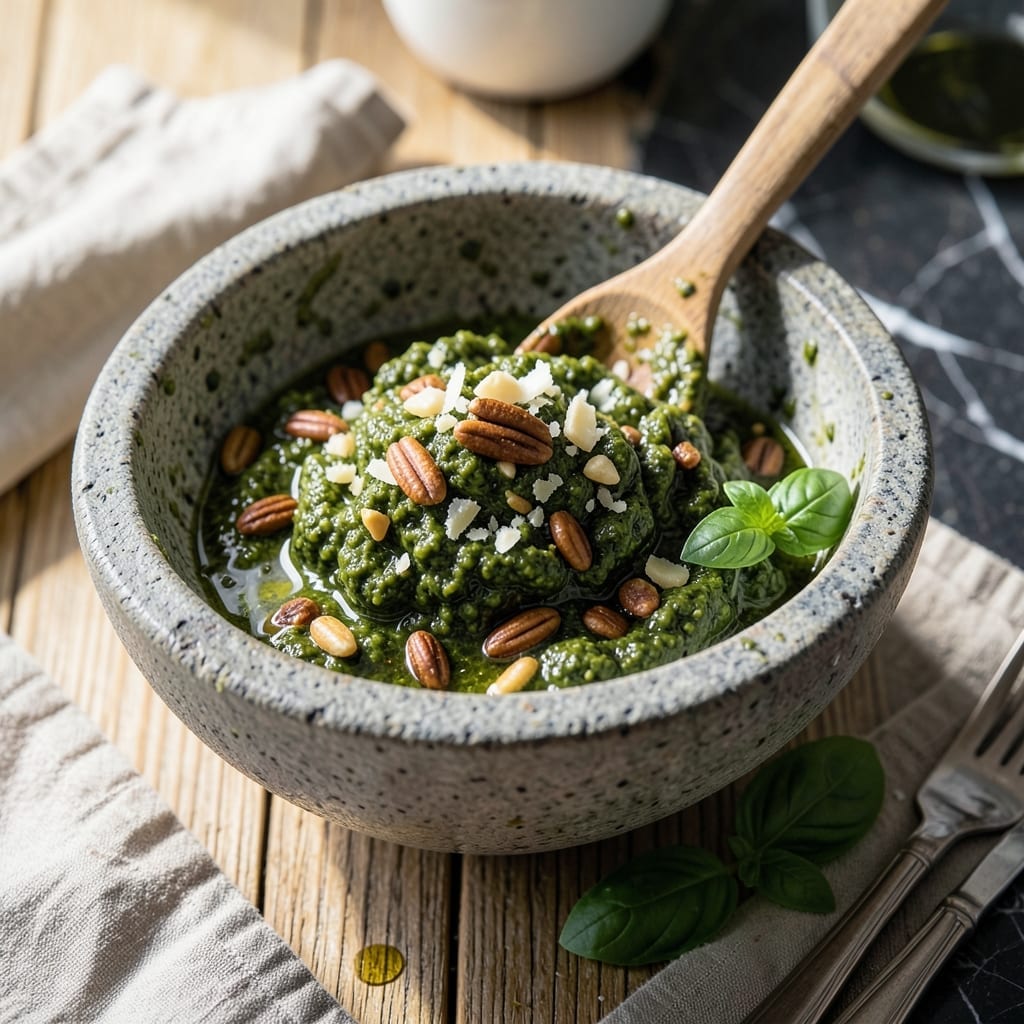
There’s a simplicity in making pesto by hand that a food processor can’t replicate. This method delivers perfect texture and vibrant flavor, with each ingredient’s character shining through.
Using a mortar and pestle, you control the consistency—crushing garlic first, then pine nuts, before gently bruising basil leaves. The result is a sauce with body and depth, not a uniform puree.
Fresh basil, good olive oil, and aged Parmesan come together in minutes. The manual process releases oils and aromas that elevate the final dish far beyond machine-made versions.
Ideal for pasta, sandwiches, or as a dip, this classic sauce proves that sometimes the traditional way is the best way.
Ingredients for Pesto Recipe No Food Processor
Eight ingredients transform into handcrafted pesto with vibrant flavor and perfect texture.
| Ingredient | Amount | Notes |
|---|---|---|
| Fresh Basil Leaves 🌿 | 2 cups | Packed, stems removed |
| Pine Nuts 🥜 | ½ cup | Toasted for richness |
| Garlic Cloves 🧄 | 3 cloves | Peeled, rough chopped |
| Parmesan Cheese 🧀 | ¾ cup | Freshly grated, aged |
| Extra-Virgin Olive Oil 🫒 | ¾ cup | High quality, fruity |
| Lemon Juice 🍋 | 1 tbsp | Freshly squeezed |
| Sea Salt 🧂 | ½ tsp | Fine grain preferred |
| Black Pepper 🌶️ | ¼ tsp | Freshly ground |
The basil must be fresh and vibrant—farmers market finds are ideal, but grocery store basil works if leaves are bright green and firm. Pine nuts, while traditional, can be pricey; Trader Joe’s and Costco offer the best value. Aged Parmigiano-Reggiano is non-negotiable for authentic flavor—grate it fresh from a wedge for the best results (pre-grated loses texture and taste).
No pine nuts? Walnuts or raw cashews work beautifully at the same quantity. Short on basil? Stretch it with fresh parsley (up to half). The olive oil should be high quality—extra-virgin, fruity, and peppery. If you need a nut-free version, sunflower seeds make a great substitute, though the flavor profile shifts slightly.
Pesto oxidizes quickly—press plastic wrap directly on the surface or add a thin layer of olive oil on top before sealing. Keeps in the fridge for up to 5 days or frozen for 6 months. Ice cube trays are perfect for portioning single servings (worth the extra minute).
Why You’ll Love This Recipe
- No Blender Needed: I just crush everything with a mortar and pestle—pine nuts, garlic, basil—so simple it feels like cheating.
- Ridiculously Fresh Taste: That first bite of basil, sharp Parmesan, and nutty oil? Honestly, it tastes brighter than any jarred pesto I’ve tried.
- Spreads Like Magic: I toss it on pasta, sandwiches, even scrambled eggs. Between us, I’ve used it three ways in one week.
- Saves My Wallet: Pine nuts are the only splurge here, and a little goes a long way. I stretch one batch over meals for days.
Step-by-Step Instructions for Pesto
This handcrafted method delivers the perfect texture and vibrant flavor without any special equipment.
Step 1: Toast the Pine Nuts to Golden Perfection
Heat a dry skillet over medium-low heat. Add the 0.5 cup Pine Nuts and spread them in an even layer. Toast for 3-5 minutes, stirring frequently, until they turn light golden brown and emit a fragrant, nutty aroma.
Watch them closely—they burn easily. The moment they’re golden and fragrant, immediately transfer them to a plate to cool. This prevents residual heat from over-toasting. The toasted nuts will add a deep, rich flavor that raw pine nuts simply can’t match.
Step 2: Crush Garlic and Salt into a Paste
Place the 3 cloves Garlic Cloves on a cutting board with the 0.5 tsp Sea Salt. Using the flat side of a chef’s knife, press down firmly and drag the blade across the garlic repeatedly until you create a smooth paste. The salt’s abrasive texture helps break down the garlic fibers.
This technique releases the garlic’s essential oils, creating a more uniform flavor distribution in your pesto. The paste should look almost like wet sand when you’re finished. Be patient—this step takes about 2-3 minutes of steady work.
Step 3: Mash Basil with Garlic Paste and Nuts
In a large mortar and pestle, combine the 2 cups Fresh Basil Leaves with the garlic paste. Begin mashing with a circular motion, pressing the pestle against the mortar’s sides. After about 2 minutes, when the basil starts breaking down, add the cooled toasted Pine Nuts.
Continue mashing for another 3-4 minutes. The mixture will transform from whole leaves to a thick, coarse paste. You’re looking for a texture where you can still see some flecks of basil and bits of pine nuts—this gives your pesto character. Stop before it becomes completely smooth.
Step 4: Incorporate Cheese and Finish with Oil
Add the 0.75 cup Parmesan Cheese to the mortar and mix it into the basil-nut paste. The cheese should incorporate evenly without clumping. Then drizzle in 0.75 cup Extra-Virgin Olive Oil gradually, about 2 tablespoons at a time, while continuing to stir with the pestle.
The oil should emulsify with the other ingredients, creating a thick but pourable sauce. Add the 1 tbsp Lemon Juice and 0.25 tsp Black Pepper, then stir for another 30 seconds to combine everything thoroughly. The final pesto should be vibrant green with visible texture.
Step 5: Adjust Consistency and Rest
Taste and adjust seasoning if needed, though the original measurements should provide perfect balance. If the pesto is too thick, thin it with a small amount of water or additional olive oil, 1 teaspoon at a time, until it reaches your desired consistency.
Transfer to a jar or bowl and let it rest at room temperature for 10-15 minutes. This allows the flavors to meld together. Use immediately or store in the refrigerator with a thin layer of olive oil on top to preserve the color. The pesto will keep for 3-4 days refrigerated.
Pro Tips For Making Pesto Recipe No Food Processor
- Crush Pine Nuts First: Start by crushing the pine nuts with the side of your knife or a mortar and pestle—they release their oils faster and create a better base for the rest of the ingredients.
- Avoid Soggy Basil: Pat the basil leaves completely dry with a kitchen towel before chopping; I learned this the hard way after a few watery pesto batches ruined my pasta.
- Grate Cheese Fresh: Skip pre-grated parmesan—it contains anti-caking agents that make the pesto grainy. A microplane gives you 1 cup of fine, melt-in-your-mouth cheese in under a minute.
- Add Oil Gradually: Drizzle the olive oil in 1 tablespoon at a time while mixing, about 1/2 cup total. This keeps the texture thick and creamy instead of oily.
Perfect Pairings for These Flavors
Pasta Pairings
Toss this vibrant pesto with 12 ounces of al dente spaghetti or linguine for a classic combination. The sauce clings beautifully to long strands. Add ½ cup reserved pasta water to loosen the texture if needed. 🥗
Protein Additions
For a heartier meal, fold in grilled chicken breast or shrimp after cooking. The pesto’s bright flavors pair especially well with poached salmon—just drizzle it over 6-ounce portions before serving.
Bread and Dips
Spread on toasted ciabatta or baguette slices for an easy appetizer. I love it as a dip for crudités like carrot sticks or bell pepper strips. A 1:1 ratio with Greek yogurt makes a creamy veggie dip.
Salad Dressing
Thin with 2-3 tbsp water and use as a dressing for caprese salad or tomato-mozzarella stacks. The acidity from the lemon juice brightens fresh greens like arugula or spinach. ✨
Soup Enhancer
Stir 1-2 tbsp into hot minestrone or tomato soup just before serving. It adds a fresh, herbaceous layer that elevates simple soups. I often swirl it into creamy butternut squash soup for contrast.
Nutrition Facts
Frequently Asked Questions
What can I use instead of a mortar and pestle?
A heavy mug or rolling pin works well for crushing. Place ingredients on a cutting board and use the mug to grind in circular motions. It takes more effort but achieves similar results.
Why does hand-made pesto taste better?
Manual crushing preserves texture and releases oils gradually. This creates more nuanced flavors compared to the uniform blend from a machine. The process also prevents overheating, which can make basil bitter.
How do I keep my pesto from turning brown?
Press plastic wrap directly on the surface before sealing. Alternatively, add a thin layer of olive oil on top to create a barrier against air. This slows oxidation significantly.
Can I make this with dried basil?
No, fresh basil is essential for authentic flavor and vibrant color. Dried herbs lack the moisture and aromatic oils needed for proper pesto texture and taste.

- Pav Bhaji Recipe Food Lab: Mumbai Street Food Magic at Home - October 6, 2026
- Peach Jelly Recipe Without Pectin: Naturally Set Sweet Spread - October 6, 2026
- Pasta Salad Recipe With Zesty Italian Dressing: Bright Herb-Kissed Medley for Picnics - October 6, 2026