
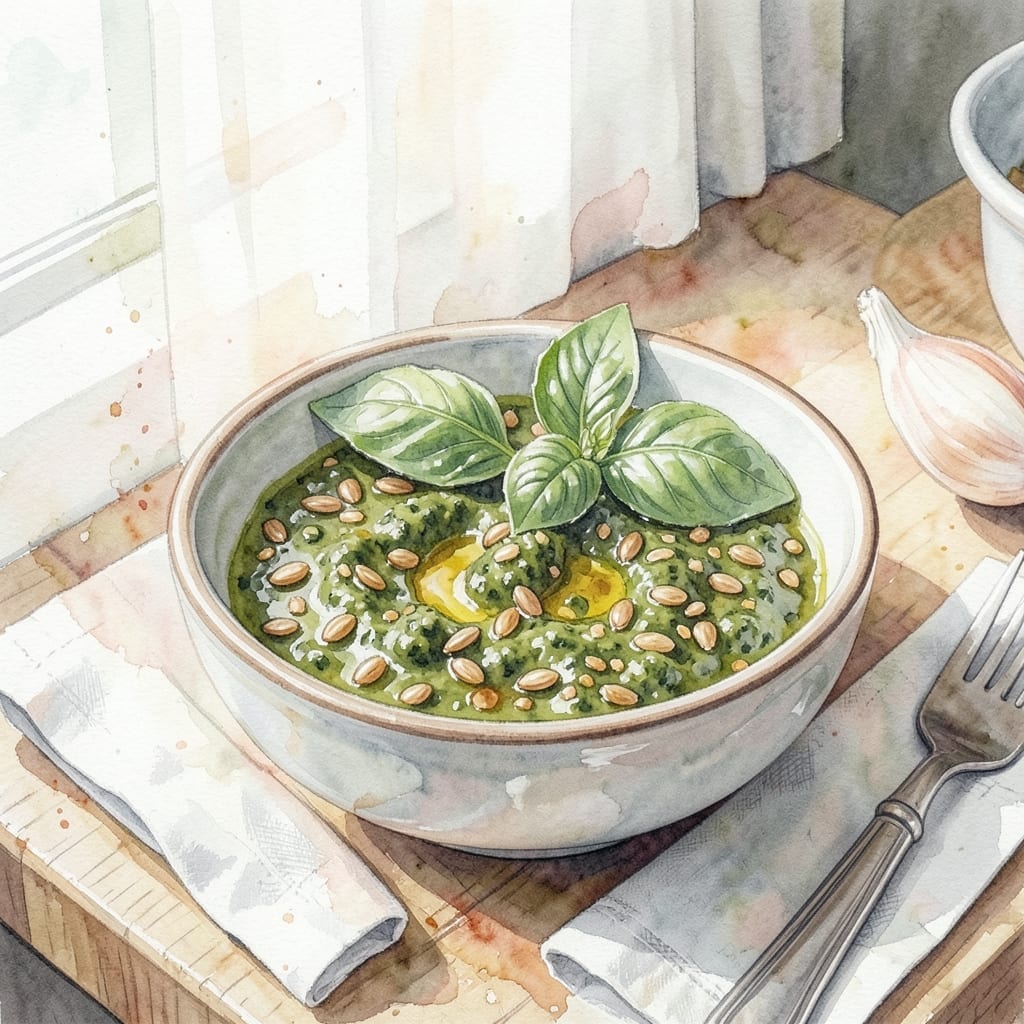
This sunflower seed pesto delivers the classic basil-garlic flavor with a nutty twist that’s both budget-friendly and allergy-conscious. The seeds create a rich, creamy texture that rivals traditional versions.
I developed this recipe to offer a vegan alternative without compromising on depth or quality. Sunflower seeds blend smoothly with fresh basil, garlic, and olive oil for a vibrant, aromatic sauce.
Use it on pasta, sandwiches, or as a dip—its bold flavor works everywhere. The result is bright, herbaceous, and packed with plant-based richness.
Stores well in the fridge for up to five days. Here’s how to make it perfectly every time.
Ingredients for Pesto Recipe Sunflower Seeds
Eight plant-based ingredients create this vibrant, herbaceous pesto with a nutty sunflower seed twist.
| Ingredient | Amount | Notes |
|---|---|---|
| Raw Sunflower Seeds 🌻 | ¾ cup | Unsalted, for smooth blending |
| Fresh Basil Leaves 🌿 | 2 cups | Packed, stems removed |
| Garlic Cloves 🧄 | 3 cloves | Peeled, rough chopped |
| Extra-Virgin Olive Oil 🫒 | ¾ cup | High quality, fruity notes |
| Nutritional Yeast 🧀 | 3 tbsp | For cheesy umami depth |
| Fresh Lemon Juice 🍋 | 1 tbsp | Brightens flavor profile |
| Sea Salt 🧂 | ½ tsp | Fine grain, adjust to taste |
| Freshly Ground Black Pepper 🌶️ | ¼ tsp | Adds subtle sharpness |
The sunflower seeds are the hero here. Raw and unsalted is non-negotiable—roasted or salted versions throw off the flavor balance. Trader Joe’s and Costco carry high-quality bulk options at better prices than pre-packaged. Look for seeds that smell fresh and nutty, not stale or bitter. The basil should be bright green with no wilting (the good stuff, not the pre-packaged kind).
Allergic to nuts? Pumpkin seeds work as a 1:1 swap with a slightly earthier taste. No basil? Fresh spinach or arugula at half the amount keeps the color vibrant. Missing nutritional yeast? Vegan Parmesan (like Follow Your Heart) adds similar depth. The olive oil must be extra-virgin—this isn’t the place for neutral oils.
This pesto stays fresh for about 5 days in an airtight container. Pour a thin layer of olive oil on top to prevent browning (worth the extra minute). For longer storage, freeze in ice cube trays—perfect for single-serving portions.
Why You’ll Love This Recipe
- Minimal Chopping: I just toss everything into the blender—basil, sunflower seeds, garlic—no knife work required.
- Sunflower Surprise: The raw seeds give it a rich, nutty depth that’s way better than pine nuts, with that nutritional yeast adding a cheesy kick.
- Weeknight Hero: Between us, I slather this on pasta, sandwiches, even scrambled eggs when I’m too tired to cook.
- Budget Winner: Sunflower seeds cost half as much as pine nuts, and this pesto keeps in the fridge for a full week.
Step-by-Step Instructions for Pesto with Sunflower Seeds
Follow this professional method to achieve a perfectly balanced, nutty basil pesto with optimal texture.
Step 1: Toast the Raw Sunflower Seeds
Heat a dry skillet over medium heat and add the 0.75 cup Raw Sunflower Seeds. Toast for 3-5 minutes, stirring frequently, until the seeds become fragant and lightly golden. This enhances their natural nuttiness and prevents a raw flavor in the finished dish.
Watch closely to prevent burning—sunflower seeds can go from toasted to bitter quickly. Remove from heat immediately when they develop a light golden hue and emit a rich, nutty aroma. Transfer to a plate to cool completely before blending.
Step 2: Blend Basil and Aromatics
In a food processor or high-speed blender, combine the 2 cups Fresh Basil Leaves and 3 cloves Garlic Cloves. Pulse until the mixture is finely chopped but not pureed, about 8-10 one-second pulses. The texture should still have some visible flecks for visual appeal.
Scrape down the sides of the bowl as needed to ensure even processing. Avoid overworking the basil at this stage, as excessive blending can cause it to darken and lose some of its vibrant green color.
Step 3: Create the Emulsion Base
Add the toasted Raw Sunflower Seeds, 3 tbsp Nutritional Yeast, 0.5 tsp Sea Salt, and 0.25 tsp Freshly Ground Black Pepper to the basil mixture. Pulse until the seeds are broken down into small, even pieces, about 10-12 pulses.
With the processor running, begin drizzling in the 0.75 cup Extra-Virgin Olive Oil in a thin, steady stream. This slow incorporation creates a stable emulsion, resulting in a creamy, well-balanced texture rather than a separated or oily finish.
Step 4: Finish with Brightness
Stop the processor and add the 1 tbsp Fresh Lemon Juice. Pulse 2-3 times just until incorporated. The lemon juice brightens the flavor profile and balances the richness of the olive oil and sunflower seeds.
Taste and adjust seasoning if necessary, though the initial salt measurement should suffice for most palates. The pesto should have a vibrant green color with a slightly textured consistency, not completely smooth.
Step 5: Serve or Store Properly
Transfer the pesto to an airtight container. For immediate use, toss with hot pasta, spread on sandwiches, or use as a dip. The flavors will meld and intensify after 10-15 minutes at room temperature.
For storage, press plastic wrap directly onto the surface to prevent oxidation, which can turn the pesto brown. It will keep in the refrigerator for up to 4 days or can be frozen for 3 months with minimal flavor degradation.
Pro Tips For Making Pesto Recipe Sunflower Seeds
- Toast the Seeds: Dry-toast the raw sunflower seeds in a pan for 2-3 minutes until golden and fragrant—I learned this the hard way after my first batch tasted bland and raw.
- Use Room-Temp Basil: Skip cold basil straight from the fridge; let it sit out for 30 minutes so the leaves release more oil and flavor when blended.
- Pulse, Don’t Blend: Process in short bursts to keep texture chunky and avoid a bitter, overheated paste—my grandmother swore by this, and she was right.
- Add Yeast Last: Fold in the nutritional yeast after blending the rest; it incorporates evenly and prevents clumping—sounds weird, but it works.
Pro Cooking Tips for pesto recipe sunflower seeds
Toast to Perfection
Heat a dry skillet over medium heat and toast the 0.75 cup Raw Sunflower Seeds for 3-5 minutes. Stir constantly until they turn light golden and emit a nutty aroma. This step deepens their flavor and removes any raw bitterness.
Pulse for Texture
Blend the 2 cups Fresh Basil Leaves and 3 cloves Garlic in a food processor with 8-10 one-second pulses. Avoid overworking the basil to preserve its vibrant green color. Scrape the bowl as needed for even processing.
Emulsion Technique
Add the toasted seeds, 3 tbsp Nutritional Yeast, 0.5 tsp Sea Salt, and 0.25 tsp Black Pepper. Pulse until seeds break down, then slowly drizzle in 0.75 cup Extra-Virgin Olive Oil while running the processor. This creates a creamy, stable emulsion.
Brighten the Flavor
Add 1 tbsp Fresh Lemon Juice and pulse 2-3 times just to incorporate. This final touch balances the richness and enhances the freshness of the basil. Taste and adjust seasoning if needed.
Equipment Matters
I recommend a food processor over a blender for better texture control. A Cuisinart 14-cup is my go-to for even blending. Ensure all ingredients are at room temperature for the smoothest results. 💡
Nutrition Facts
Frequently Asked Questions
Can I use roasted sunflower seeds?
Stick with raw, unsalted seeds for best results. Roasted seeds can make the pesto bitter and overpower the basil. Lightly toasting raw seeds yourself gives the perfect nutty flavor without harshness.
Why add lemon juice?
The 1 tbsp of lemon juice brightens the rich flavors and balances the oil’s heaviness. It also helps preserve the vibrant green color by slowing oxidation. Don’t skip it!
How do I store leftover pesto?
Transfer to an airtight container and cover with a thin olive oil layer. It keeps in the fridge for 4-5 days or freezes for 3 months in portions.
Can I make this without a food processor?
Yes, but it requires effort! Finely chop basil and garlic, then crush seeds in a mortar with pestle. Slowly work in oil by hand. Texture may be slightly rustic.

- BBQ Sausage Recipe Oven: Smoky Depth Without the Grill - September 28, 2026
- BBQ Chicken Bowl Recipe Rice: Smoky Sweetness Over Fluffy Grains - September 28, 2026
- Beef Cutlet Recipe Ideas: Crispy Breaded Patties With Bold Seasonings - September 28, 2026