
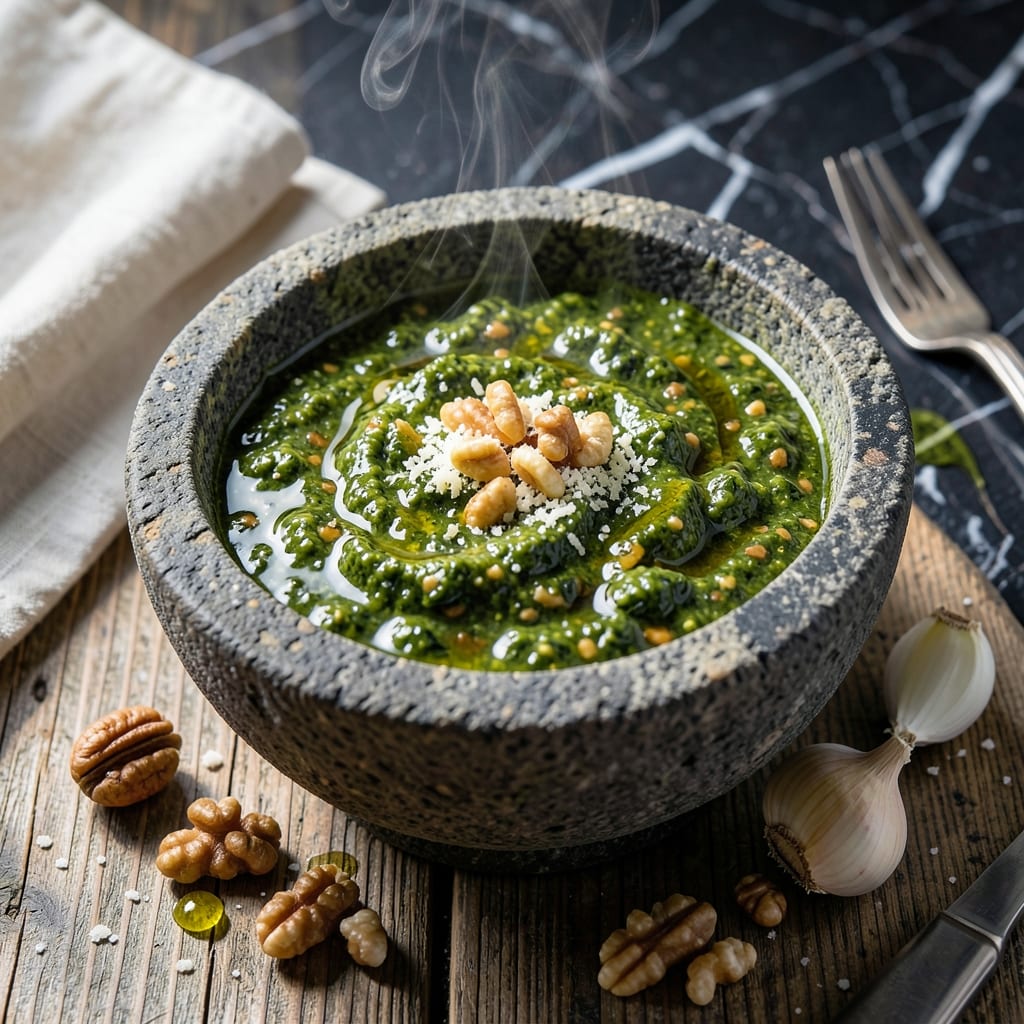
This walnut pesto delivers the classic basil flavor with a rich, earthy depth that pine nuts simply can’t match. The walnuts add a satisfying texture and robust taste that elevates every dish it touches.
I developed this version after realizing how often walnuts get overlooked in traditional pesto recipes. Their natural oils create a smoother, creamier sauce without any dairy, making it perfect for vegan adaptations.
What makes this sauce special is its versatility—toss it with pasta, spread it on sandwiches, or use it as a marinade. The walnuts provide a more affordable alternative to pine nuts with equally impressive results.
Store it in an airtight container with a layer of oil on top to keep it fresh and vibrant for up to a week.
Ingredients for Pesto Sauce Recipe with Walnuts
Eight ingredients deliver that classic basil flavor with a nutty twist.
| Ingredient | Amount | Notes |
|---|---|---|
| Fresh Basil Leaves 🌿 | 2 cups | Packed, stems removed |
| Walnuts 🥜 | ¾ cup | Toasted for depth of flavor |
| Garlic Cloves 🧄 | 3 cloves | Peeled, rough chopped |
| Parmesan Cheese 🧀 | ¾ cup | Freshly grated preferred |
| Extra-Virgin Olive Oil 🫒 | ¾ cup | High quality, fruity |
| Lemon Juice 🍋 | 1 tbsp | Freshly squeezed |
| Salt 🧂 | ½ tsp | Sea salt preferred |
| Black Pepper 🌶️ | ¼ tsp | Freshly ground |
The walnuts are the hero here—fresh is key (the old ones in the back of your pantry won’t cut it). I grab mine from Trader Joe’s or the bulk section at Whole Foods. Basil should be vibrant green, not wilted. For the Parmesan, a good wedge from the deli counter grates smoother than pre-shredded.
No walnuts? Pecans or almonds work in a pinch (toast them first). Fresh out of basil? Half spinach, half basil still tastes great. Want it vegan? Skip the Parm and add nutritional yeast for a cheesy kick. The olive oil should be something you’d drizzle on bread—no cheap stuff here.
Top with a thin layer of olive oil before sealing—keeps it green for about 1 week in the fridge. Freeze in ice cube trays for 3 months. (frozen works in a pinch)
Why You’ll Love This Recipe
- 5-Minute Blend: I toss everything in the food processor and it’s done before the pasta finishes boiling.
- Rich & Earthy: The walnuts add this deep, almost buttery taste that pairs perfectly with the sharp parmesan.
- Endless Uses: I’ve stirred it into soups, slathered it on sandwiches, and even used it as a pizza base.
- Budget Stretch: A big bunch of basil and a handful of walnuts make enough pesto to last the whole week.
Step-by-Step Instructions for Pesto Sauce With Walnuts
Here’s the method. Straightforward, tested, works every time.
Step 1: Toast the Walnuts for Depth of Flavor
Heat a dry skillet over medium heat and add the 0.75 cup Walnuts. Toast them for 5-7 minutes, stirring frequently, until they turn golden brown and smell fragrant.
Watch them closely—they burn easily. Once toasted, transfer the walnuts to a plate to cool completely. This prevents them from continuing to cook and becoming bitter. The toasting step brings out their natural oils and adds a rich, nutty depth to your creation.
Step 2: Pulse the Garlic, Walnuts, and Salt
In a food processor, combine the 3 cloves Garlic Cloves, toasted 0.75 cup Walnuts, and 0.5 tsp Salt. Pulse in 1-second bursts until the mixture is finely chopped but not paste-like.
I’ve found that pulsing instead of running the processor continuously gives you better control over the texture. You want small, even pieces that will blend smoothly into the sauce. Stop and scrape down the sides of the bowl as needed to ensure everything gets incorporated evenly.
Step 3: Add Basil and Cheese
Add the 2 cups Fresh Basil Leaves and 0.75 cup Parmesan Cheese to the food processor. Pulse again in short bursts until the mixture is well combined but still has some texture.
Here’s the thing—basil can turn bitter if over-processed, so keep an eye on it. The leaves should be finely chopped, and the cheese should be evenly distributed. The mixture will look crumbly at this stage, but that’s normal. The oil in the next step will bring it all together.
Step 4: Stream in the Olive Oil and Lemon Juice
With the food processor running on low, slowly drizzle in the 0.75 cup Extra-Virgin Olive Oil. This gradual addition helps emulsify the sauce, giving it that creamy, smooth consistency.
Once all the oil is incorporated, add the 1 tbsp Lemon Juice and 0.25 tsp Black Pepper. Pulse a few more times to combine. The lemon juice brightens the flavors and balances the richness of the cheese and oil. Taste and adjust seasoning if needed.
The sauce should be thick but pourable. If it’s too thick, add a little more oil, 1 tablespoon at a time, until it reaches your desired consistency.
Pro Tips For Making Pesto Sauce Recipe With Walnuts
- Toast the Walnuts: I learned this the hard way—raw walnuts taste bitter in pesto. Toss them in a dry pan over medium heat for 3-4 minutes until fragrant before blending.
- Blanch the Basil: Sounds weird, but it works: dunk basil leaves in boiling water for 10 seconds, then shock in ice water. This keeps your pesto that vibrant green instead of turning brown.
- Skip the Food Processor: After burning out two motors on cheap processors, I switched to a mortar and pestle for small batches. The texture is coarser but the flavor is cleaner and more controlled.
- Grate Your Own Parmesan: Pre-grated parmesan has anti-caking agents that make pesto grainy. Grate a wedge yourself—it melts into the sauce better and tastes about 50% more delicious.
Common Mistakes When Making This Recipe
Overprocessing the Basil
Don’t let your food processor run continuously with the basil. Pulse in 1-second bursts instead—this prevents the leaves from turning bitter and keeps the sauce vibrant green. I learned this the hard way after making a few gray, sad batches. 🌿
Skipping the Toast
Always toast your 0.75 cup Walnuts first. Raw walnuts taste flat and can make your sauce grainy. A quick 5-7 minutes in a dry skillet over medium heat brings out their oils and deepens the flavor. Cool them completely before blending.
Wrong Oil Temperature
Never add cold olive oil straight from the fridge. Let your 0.75 cup Extra-Virgin Olive Oil sit at room temperature for 15 minutes before using. Cold oil won’t emulsify properly, leaving you with a separated, oily mess instead of a creamy sauce.
Overcrowding the Processor
Your food processor needs room to work. If you’re doubling the recipe, process the 2 cups Fresh Basil Leaves in batches. Stuffing it all in at once leads to uneven chopping and a chunky texture. Patience pays off here.
Forgetting the Salt
Don’t skip the 0.5 tsp Salt—it’s not just for seasoning. Salt helps break down the basil leaves and release their oils, which is crucial for that perfect pesto consistency. I use sea salt for the best flavor.
Storage Shortcuts
Always cover your pesto with a thin layer of oil before refrigerating. This simple step prevents oxidation and keeps your sauce that beautiful green color for up to 1 week. Skip this, and you’ll end up with a dull, brownish sauce. 💡
Nutrition Facts
Frequently Asked Questions
Can I use a blender instead of a food processor?
Yes, but pulse carefully to avoid overprocessing. A blender works best with smaller batches to maintain control over texture.
Why toast the walnuts first?
Toasting enhances their natural oils and deepens the nutty flavor. Skip this step and your pesto may taste flat or grainy.
How long will this keep in the fridge?
Stored in an airtight container with a thin oil layer on top, it stays fresh for up to 1 week. Freeze for longer storage.
Can I make this vegan?
Replace the Parmesan with nutritional yeast for a cheesy flavor. The walnuts already make it naturally dairy-free.

- Potato Candy Recipe 1933: Vintage Peanut Butter Roll Delight - October 30, 2026
- Potato Chip Cookie Recipe With Pecans: Buttery Crunch Meets Nutty Richness - October 30, 2026
- Potato Patty Recipe No Egg: Crispy Edges Without the Binder - October 30, 2026