
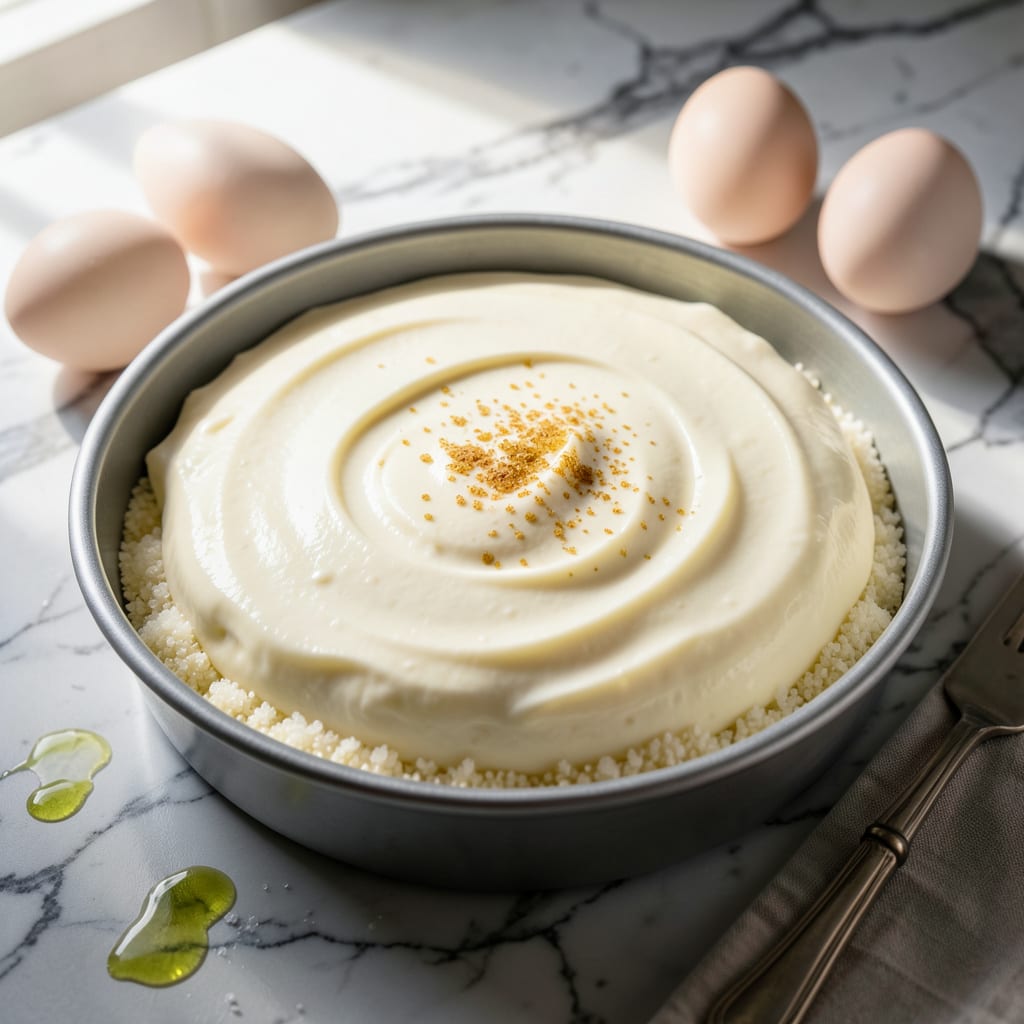
There’s a reason Philadelphia cream cheese is the gold standard for cheesecake—it creates an ultra-smooth base that’s rich without being heavy. This recipe focuses on that perfect texture, ensuring every bite melts effortlessly.
With just a few ingredients and careful mixing, you’ll achieve a filling so velvety it rivals any bakery. The key is room-temperature ingredients and patience—rushing leads to lumps, not luxury.
Ingredients for Philadelphia Cheesecake Filling
Nine ingredients transform into that signature velvety, bakery-quality cream cheese filling.
| Ingredient | Amount | Notes |
|---|---|---|
| Philadelphia Cream Cheese 🧀 | 32 oz | Full-fat, room temperature |
| Granulated Sugar 🍚 | 1 ¼ cup | Fine white sugar preferred |
| Sour Cream 🥛 | 1 cup | Full-fat for creaminess |
| Heavy Cream 🥛 | ½ cup | Cold, for stability |
| Vanilla Extract 🌿 | 2 tsp | Pure vanilla, not imitation |
| Large Eggs 🥚 | 4 whole | Room temperature, separated |
| All-Purpose Flour 🌾 | 2 tbsp | Sifted to prevent lumps |
| Lemon Juice 🍋 | 1 tbsp | Freshly squeezed preferred |
| Lemon Zest 🍋 | 1 tsp | Finely grated from fresh lemon |
| Salt 🧂 | ¼ tsp | Fine sea salt or table salt |
The cream cheese must be Philadelphia brand—its higher fat content and lower moisture deliver that ultra-smooth texture the intro promises. Room temperature is non-negotiable; cold blocks create lumps. Sour cream adds tang and stability—Daisy or Breakstone’s are reliable brands. Heavy cream, similarly, should be full-fat and cold to maintain structure during baking.
No sour cream? Full-fat Greek yogurt works at a 1:1 ratio. Out of heavy cream? Whole milk at half the volume (with an extra egg yolk for richness). Vanilla beans can replace extract—scrape one pod for equivalent flavor. The flour prevents cracking—cake flour makes it even finer. Always use fresh lemon juice; bottled lacks the brightness this filling needs.
The filling keeps 5 days refrigerated in an airtight container, though it’s best used within 48 hours for peak freshness. For make-ahead, prepare the batter without eggs, then add them just before baking. Freezing is not recommended—it alters the creamy texture the recipe is built on.
Why You’ll Love This Recipe
- Mix and Go: I just dump the Philadelphia Cream Cheese, sugar, and vanilla in one bowl—no fancy steps, just smooth, creamy filling in minutes.
- Velvety Melt: The combo of sour cream and heavy cream gives it that rich, luxurious texture that’s impossible to resist.
- Party Ready: I’ve used this filling for everything from birthday cakes to mini jars for potlucks—it’s always the first to disappear.
- Fridge Friendly: Honestly, it keeps beautifully for days, so I can make it ahead and forget about last-minute stress.
Step-by-Step Instructions for Philadelphia Cheesecake Filling
This professional method ensures a silky, lump-free filling with perfect texture every time.
Step 1: Cream the Philadelphia Cream Cheese and Granulated Sugar
In a stand mixer fitted with the paddle attachment, beat the 32 oz Philadelphia Cream Cheese on medium speed for 1 minute until completely smooth and free of lumps. The cream cheese must be at room temperature to prevent overmixing and incorporate air properly.
Gradually add the 1.25 cup Granulated Sugar and continue beating for an additional 3-4 minutes until the mixture is light, fluffy, and pale in color. Scrape down the sides of the bowl with a silicone spatula as needed to ensure even mixing. This step aerates the base for a lighter texture.
Step 2: Incorporate the Sour Cream, Heavy Cream, and Flavorings
With the mixer running on low speed, add the 1 cup Sour Cream and 0.5 cup Heavy Cream. Mix just until combined—overmixing at this stage can introduce too much air, leading to cracks during baking.
Add the 2 tsp Vanilla Extract, 1 tbsp Lemon Juice, 1 tsp Lemon Zest, and 0.25 tsp Salt. Mix on low speed for 15-20 seconds until fully incorporated. The lemon zest and juice add brightness, while the salt balances the sweetness. Ensure all ingredients are evenly distributed before proceeding.
Step 3: Add the All-Purpose Flour and Eggs
Sprinkle the 2 tbsp All-Purpose Flour over the cream cheese mixture. This small amount acts as a stabilizer, preventing excess spreading and contributing to a denser, creamier texture. Mix on low speed until just combined—visible streaks of flour should disappear within 10-15 seconds.
Add the 4 whole Large Eggs, one at a time, mixing on low speed for 10-15 seconds after each addition. This gradual incorporation prevents overmixing, which can cause the filling to puff up and then collapse during baking. The batter should be smooth, glossy, and free of streaks when finished.
Step 4: Final Check for Smoothness and Consistency
Stop the mixer and scrape down the sides and bottom of the bowl with a silicone spatula. Give the batter one final mix on low speed for 5-10 seconds to ensure complete homogeneity. The ideal consistency should resemble thick, pourable custard.
Run the spatula through the batter to check for lumps. If any remain, mix for another 5-10 seconds on low speed. Pour the filling into your prepared crust immediately, as it will begin to set slightly at room temperature. The surface should be glossy with no visible separation.
Pro Tips For Making Philadelphia Cheesecake Filling
- Room Temp Cream Cheese: Pull your Philadelphia Cream Cheese out at least 2 hours before mixing—cold blocks create lumps no amount of beating will fix.
- Beat Low and Slow: Use the paddle attachment on low speed for the first minute to break up the cream cheese, then gradually increase to medium; high speed incorporates too much air, leading to cracks.
- Skip the Overmixing: Once the sugar and vanilla are just combined, stop the mixer; overworking the filling after adding eggs can make your cheesecake dense instead of creamy.
- Strain the Sour Cream: Sounds weird, but it works: run your sour cream through a fine-mesh sieve to remove any lumps before adding it to the batter for a perfectly smooth texture.
Best Sauces and Condiments for philadelphia cheesecake filling
Classic Berry Compote
A warm berry compote cuts through the richness beautifully. Simmer 2 cups mixed berries with ¼ cup sugar and 1 tbsp lemon juice for 10-12 minutes until thickened. I love the pop of color it adds. 💫
Salted Caramel Drizzle
For a decadent touch, drizzle store-bought caramel sauce (I use Smucker’s) warmed with ½ tsp flaky sea salt. The sweet-salty contrast is irresistible. It pairs especially well with the tangy lemon notes in the filling.
Chocolate Ganache
A silky chocolate ganache takes this to dessert royalty status. Heat ½ cup heavy cream to a simmer, pour over 4 oz chopped dark chocolate, and stir until smooth. Let cool slightly before drizzling.
Whipped Cream Topping
Light and airy whipped cream balances the dense filling. Whip 1 cup cold heavy cream with 2 tbsp powdered sugar and ½ tsp vanilla to stiff peaks. Dollop generously on each slice.
Citrus Glaze
A bright lemon or orange glaze enhances the citrus in the filling. Whisk 1 cup powdered sugar with 2 tbsp fresh lemon juice until smooth. Drizzle over cooled cheesecake for a glossy finish.
Fresh Fruit Garnish
Keep it simple with sliced strawberries or a handful of blueberries. Toss with 1 tsp honey to lightly glaze. The freshness complements the creamy filling perfectly.
Nutrition Facts
Frequently Asked Questions
Why must the cream cheese be room temperature?
Room temperature cream cheese blends smoothly without lumps. Cold blocks create air pockets that ruin the velvety texture. Always let it sit out for 1-2 hours before starting.
Can I use low-fat cream cheese?
No, full-fat is essential for the rich, creamy texture. Low-fat versions have higher water content, which can make the filling runny and less stable during baking.
How do I prevent cracks on the surface?
Avoid overmixing after adding eggs. Also, bake in a water bath and let the cheesecake cool gradually in the oven with the door slightly ajar for 1 hour.
What if my filling is too thin?
Chill the batter for 30 minutes before baking. If it’s still thin, add 1 extra tablespoon of flour to thicken it.

- BBQ Sausage Recipe Oven: Smoky Depth Without the Grill - September 28, 2026
- BBQ Chicken Bowl Recipe Rice: Smoky Sweetness Over Fluffy Grains - September 28, 2026
- Beef Cutlet Recipe Ideas: Crispy Breaded Patties With Bold Seasonings - September 28, 2026