
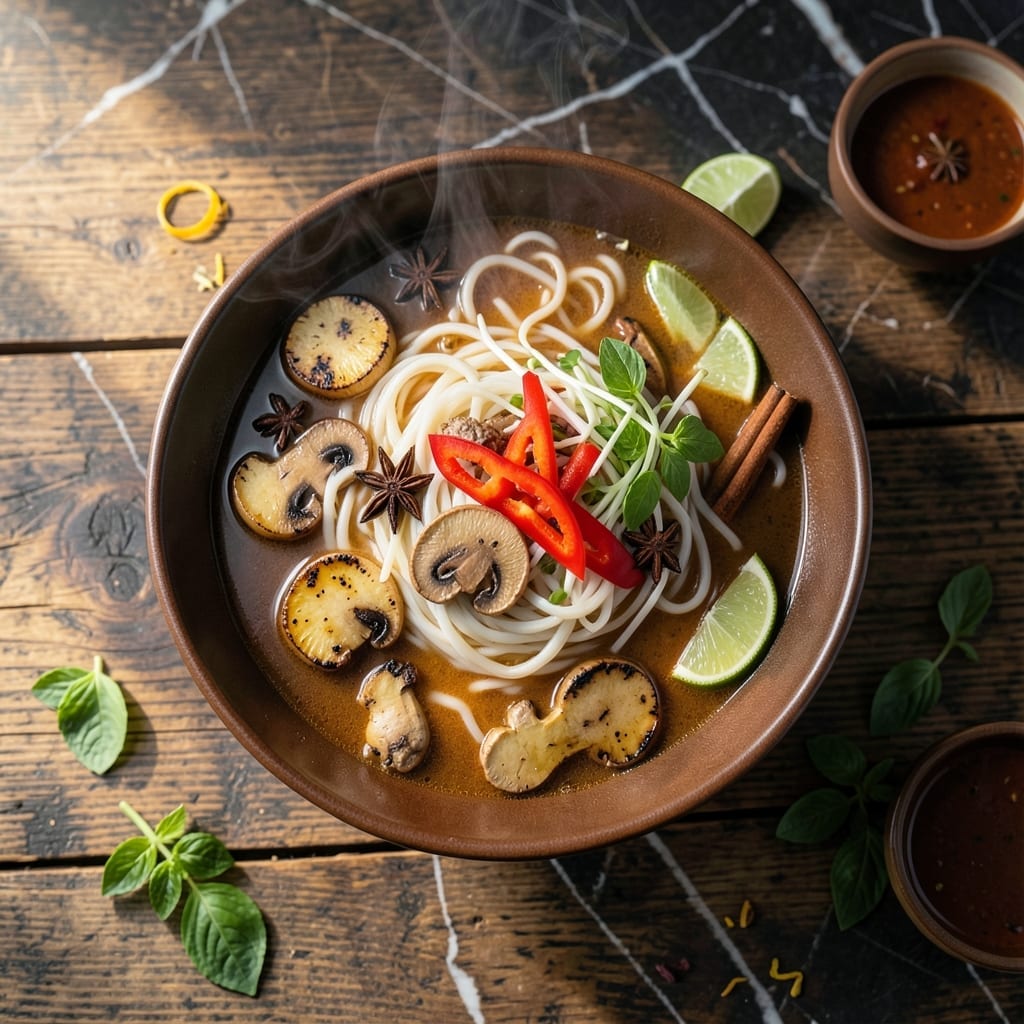
I’ve always believed the best dishes maximize flavor while minimizing friction—this vegetarian pho is proof. The aromatic broth, built from charred onions, spices, and mushrooms, delivers the same depth as traditional versions without the long simmer.
A few pantry staples and fresh herbs create a dish that feels special but stays approachable. The key is layering flavors: toasted spices, caramelized aromatics, and a finish of bright lime and herbs.
You’ll end up with a bowl of tender noodles, fragrant broth, and toppings that add texture and freshness. It’s comfort in a bowl, ready in under an hour.
Perfect for weeknights when you crave restaurant-quality results at home. Here’s how to make it.
Ingredients for Pho Noodle Soup Recipe Vegetarian
Pantry spices, fresh herbs, and a few key veggies deliver that signature pho depth. Nothing obscure here.
| Ingredient | Amount | Notes |
|---|---|---|
| Rice Noodles 🍜 | 8 oz | Dried, flat or round variety |
| Yellow Onion 🧅 | 2 whole | Large, quartered for charring |
| Fresh Ginger 🌿 | 1 whole | 3-inch piece, halved and charred |
| Garlic Cloves 🧄 | 6 cloves | Peeled, left whole |
| Star Anise Pods ⭐ | 2 whole | Whole for broth infusion |
| Cinnamon Stick 🌰 | 1 whole | 2-inch piece for depth |
| Cloves 🌿 | 4 whole | Whole spices for broth |
| Cardamom Pods 🌿 | 3 whole | Lightly crushed to release flavor |
| Vegetable Broth 🥣 | 8 cups | Low-sodium preferred for control |
| Mushrooms 🍄 | 8 oz | Shiitake or cremini, sliced |
| Soy Sauce 🫒 | 3 tbsp | Low-sodium for balancing flavor |
| Brown Sugar 🍚 | 1 tbsp | For caramelized depth in broth |
| Fresh Thai Basil 🌿 | ½ cup | Loosely packed for garnish |
| Fresh Cilantro 🌿 | ½ cup | Chopped, stems included |
| Lime 🍋 | 1 whole | Cut into wedges for serving |
| Bean Sprouts 🌱 | 1 cup | Fresh, for topping |
| Jalapeño 🌶️ | 1 whole | Thinly sliced for heat |
The spices are non-negotiable for authentic flavor. Star anise and cardamom can be found in the international aisle at most supermarkets, but Asian markets often have fresher stock (and better prices). The mushrooms add umami depth—shiitake is ideal, but cremini or even white button work too. Char the onion and ginger until deeply blackened (don’t worry, it’s supposed to look burnt) for that signature smoky backbone.
No star anise? Five-spice powder at one-third the amount gets you close. Out of Thai basil? Regular basil plus mint works in a pinch (the flavor profile leans different but still fresh). Want more umami? Add a splash of fish-free Worcestershire sauce. The soy sauce can be tamari for gluten-free—just taste as you go, since brands vary in saltiness.
Broth keeps 5 days in the fridge or freezes beautifully for 3 months. Prep toppings separately and store in airtight containers. The herbs will wilt, so add them fresh when serving (trust me on this one).
Why You’ll Love This Recipe
- Set It and Forget It: I toss everything into one pot—ginger, garlic, star anise—and let the broth simmer while I prep the noodles.
- Aroma Overload: The star anise and fresh ginger fill my kitchen with the most intoxicating scent, way better than any candle.
- Meal Prep Magic: I make a big batch on Sunday and pack it for lunch all week—noodles stay perfect, broth soaks up flavor.
- Budget Hero: Rice noodles and spices stretch this into three meals for the cost of one takeout bowl. Honestly, my wallet thanks me.
Step-by-Step Instructions for Pho Noodle Soup Vegetarian
Build layers of flavor with this method—charred aromatics and fragrant spices create the foundation.
Step 1: Char the Aromatics for Depth
Heat a dry skillet over medium-high heat until very hot. Add the 2 whole Yellow Onion (quartered) and 1 whole Fresh Ginger (halved) to the pan. Let them sear undisturbed for 5-7 minutes until deeply charred and blackened in spots.
This charring process develops the complex, smoky-sweet base that defines pho broth. You’ll smell the sugar in the onion caramelizing—that’s exactly what you want. Don’t worry if some pieces stick; those browned bits will dissolve into the broth.
Add the 6 cloves Garlic Cloves (peeled) to the pan and char for 2-3 minutes until fragrant and lightly blackened. Remove everything from the pan and set aside.
Step 2: Toast the Spices to Release Their Essence
In the same skillet, reduce heat to medium and add the 2 whole Star Anise Pods, 1 whole Cinnamon Stick, 4 whole Cloves, and 3 whole Cardamom Pods (lightly crushed). Toast for 2-3 minutes, stirring frequently, until the spices become fragrant.
Watch closely—spices burn easily. You’ll know they’re ready when the kitchen fills with their warm, sweet aroma. This toasting step wakes up the essential oils in the spices, ensuring they infuse the broth with maximum flavor.
Remove the spices from the pan immediately once toasted to prevent burning. Set them aside with the charred aromatics.
Step 3: Simmer the Broth to Perfection
In a large pot, combine the 8 cups Vegetable Broth, charred Yellow Onion, Fresh Ginger, and Garlic Cloves, along with the toasted spices. Add the 3 tbsp Soy Sauce and 1 tbsp Brown Sugar, stirring until the sugar dissolves.
Bring the mixture to a boil, then reduce heat to low and let it simmer, partially covered, for 30-40 minutes. This gentle simmer allows the flavors to meld and deepen without overpowering the broth.
Strain the broth through a fine-mesh sieve into another pot, discarding the solids. Taste and adjust seasoning if needed—the broth should be rich, aromatic, and slightly sweet with a savory depth.
Step 4: Prepare the Noodles and Toppings
Soak the 8 oz Rice Noodles in warm water for 10-15 minutes until pliable but still slightly firm. Drain and set aside. Meanwhile, thinly slice the 8 oz Mushrooms and the 1 whole Jalapeño.
In a small bowl, combine the 0.5 cup Fresh Thai Basil (loosely packed) and 0.5 cup Fresh Cilantro (chopped). Rinse the 1 cup Bean Sprouts and drain well. Cut the 1 whole Lime into wedges for serving.
These toppings add freshness, texture, and a bright contrast to the rich broth. The mushrooms will soak up the broth’s flavor, while the herbs and lime add a vibrant finish.
Step 5: Assemble and Serve
Divide the soaked Rice Noodles among four large bowls. Ladle the hot broth over the noodles, ensuring each bowl gets an equal amount. Top each serving with a handful of the sliced Mushrooms and Bean Sprouts.
Garnish generously with the Fresh Thai Basil and Fresh Cilantro, and a few thin slices of Jalapeño for heat. Serve immediately with Lime wedges on the side for squeezing into the soup.
The key is to let everyone customize their bowl at the table. The broth should be steaming hot, the noodles tender, and the toppings fresh—this is the essence of pho.
Pro Tips For Making Pho Noodle Soup Recipe Vegetarian
- Char the Aromatics: Blacken the onion, ginger, and garlic over an open flame or under the broiler until deeply charred—I learned this the hard way, but skipping this step leaves your broth tasting flat and one-dimensional.
- Toast the Spices: Dry-toast the star anise pods in a hot pan for 30-60 seconds until fragrant before adding liquid. Sounds weird, but it works: this wakes up the oils and gives the broth a richer, more complex base.
- Soak the Noodles: Cover rice noodles with hot water for 10-15 minutes before cooking, then drain. After burning three batches, I finally figured out that pre-soaking prevents gummy, unevenly cooked noodles.
- Strain Twice: After simmering, strain the broth through a fine-mesh sieve first, then again through cheesecloth or a coffee filter. My grandmother swore by this, and she was right: it removes every last bit of grit for a silky-smooth soup.
Regional Styles of These Flavors
Northern Vietnamese Style
This version stays closest to the original with its clear, aromatic broth. I use shiitake mushrooms for umami depth and keep the seasoning light—just 3 tbsp soy sauce and 1 tbsp brown sugar. The focus is on the spices: star anise, cinnamon, cloves, and cardamom.
Southern Vietnamese Style
Here, the broth is sweeter and richer. I add 1 extra tbsp of brown sugar and a splash of hoisin sauce at the end. The toppings are more abundant—bean sprouts, Thai basil, cilantro, and lime are non-negotiable. It’s bolder and more customizable.
Thai-Inspired Variation
For a Thai twist, I swap star anise for lemongrass and add galangal alongside the ginger. The broth becomes brighter and more citrus-forward. I also include thinly sliced Thai chilies for heat. 🌶️
Chinese-Influenced Style
This approach leans into five-spice powder for the broth, giving it a warmer, more complex profile. I use 1 tsp five-spice powder in place of the individual spices. The result is deeply aromatic with a hint of warmth.
Fusion Bowl
I love adding roasted tofu or seared tempeh for protein, plus bok choy for greens. The broth stays traditional, but the toppings make it heartier. Perfect for a filling weeknight meal.
Quick Weeknight Version
When I’m short on time, I use store-bought veggie broth and infuse it with charred onion, ginger, and a pho spice tea bag from the Asian market. It’s ready in 20 minutes but still packed with flavor. 💡
Nutrition Facts
Frequently Asked Questions
Can I use different noodles?
Yes, you can swap in udon or soba noodles if needed. Stick to 8 oz for consistent texture. Rice noodles are traditional but others work in a pinch.
How do I make the broth richer?
Add 1-2 tbsp nutritional yeast or 1 tbsp miso paste while simmering. Both boost umami without overpowering the spices.
What if I don’t have all the spices?
Use 1 tsp five-spice powder as a substitute for the whole spices. It won’t be identical but still delivers warm, complex flavor.
Can I make this ahead?
Broth keeps 5 days refrigerated or 3 months frozen. Cook noodles fresh to avoid mushiness. Reheat broth gently before serving.

- Potato Candy Recipe 1933: Vintage Peanut Butter Roll Delight - October 30, 2026
- Potato Chip Cookie Recipe With Pecans: Buttery Crunch Meets Nutty Richness - October 30, 2026
- Potato Patty Recipe No Egg: Crispy Edges Without the Binder - October 30, 2026