
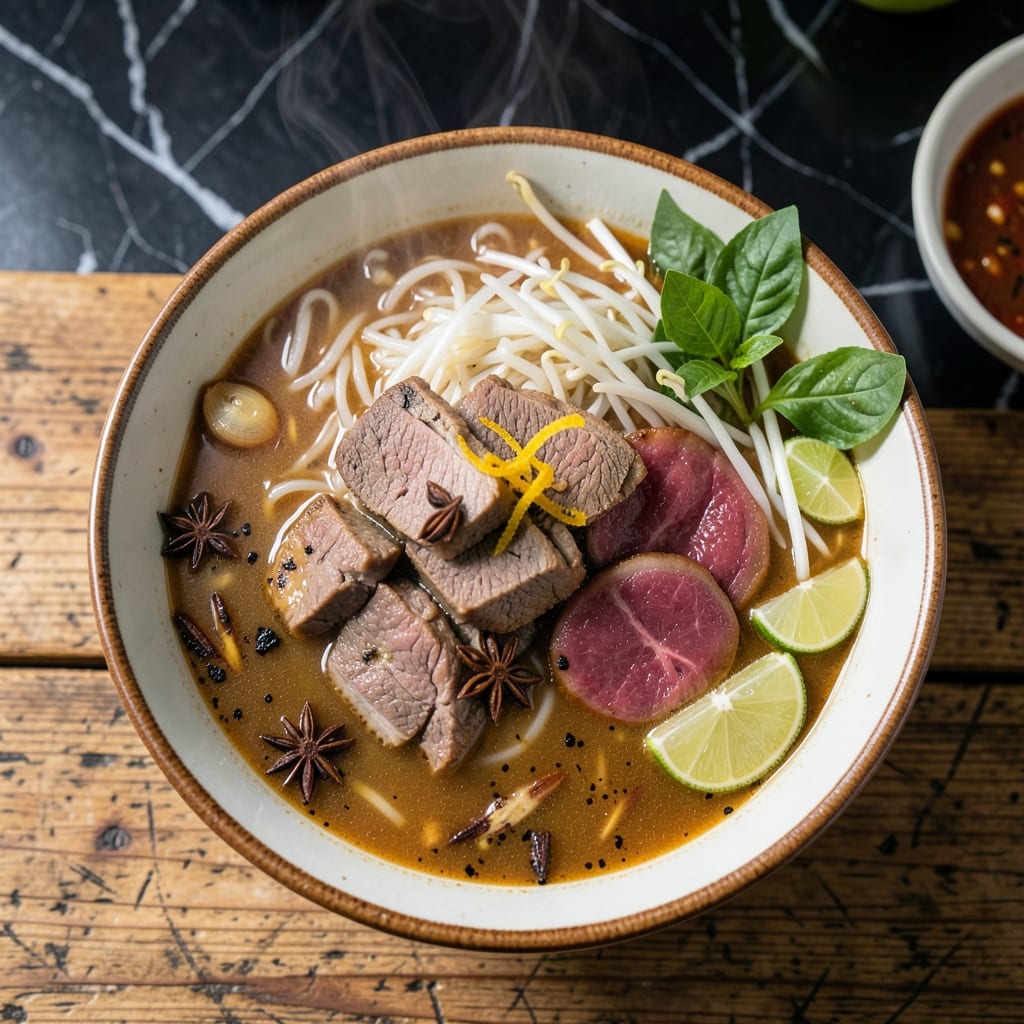
There’s an art to crafting authentic pho that captures the soul of Vietnamese cuisine at home. This recipe delivers the rich, aromatic broth and perfectly prepared rice noodles that define this beloved dish.
The secret lies in charring the onions and ginger before simmering, which builds deep, complex flavors in the broth. Traditional star anise, cinnamon, and cloves create the signature fragrant base that makes pho unforgettable.
What emerges is a bowl of tender rice noodles swimming in a clear, golden broth with slices of beef that cook instantly in the hot liquid. Fresh herbs and lime wedges complete this authentic experience.
Serve immediately for the best texture and flavor. The results speak for themselves.
Ingredients for Pho Recipe Rice Noodles
Authentic Vietnamese flavors start with these aromatic ingredients and fresh herbs.
| Ingredient | Amount | Notes |
|---|---|---|
| Rice Noodles 🍜 | 8 oz | Flat, medium-width preferred |
| Beef Bones 🥩 | 2 lb | Marrow or knuckle bones |
| Beef Brisket or Chuck 🥩 | 1 lb | Thinly sliced for serving |
| Yellow Onions 🧅 | 2 whole | Halved and charred |
| Fresh Ginger 🌿 | 1 whole | 4-inch piece, halved and charred |
| Star Anise Pods ✨ | 3 pieces | Whole, not ground |
| Cinnamon Stick 🌰 | 1 piece | 3-inch piece |
| Cloves 🌿 | 4 pieces | Whole cloves |
| Fish Sauce 🐟 | 3 tbsp | Vietnamese-style preferred |
| Rock Sugar 🍬 | 1 oz | Or substitute granulated |
| Fresh Thai Basil 🌿 | 1 cup | Loosely packed leaves |
| Fresh Cilantro 🌿 | ½ cup | Roughly chopped |
| Lime 🍈 | 2 whole | Cut into wedges |
| Bean Sprouts 🌱 | 2 cups | Optional, for serving |
| Jalapeño Peppers 🌶️ | 2 whole | Sliced, for serving |
For the broth, beef bones with marrow are essential for depth. Asian markets often carry pre-cut pho bones, but most butchers can prepare them for you. The star anise, cinnamon, and cloves must be whole—ground spices will make the broth murky. Char the onions and ginger (broiler works in a pinch) until blackened. This step builds the complex, smoky base that defines authentic pho.
No fish sauce? Soy sauce plus a pinch of sugar approximates the umami, though it won’t be the same. Rock sugar adds a clean sweetness, but granulated works fine. For the beef, flank steak or sirloin can replace brisket—slice thinly against the grain. The herbs are non-negotiable: Thai basil and cilantro are staples at Vietnamese grocers or well-stocked Whole Foods locations.
Broth keeps 5 days refrigerated or freezes beautifully for 3 months. Soak rice noodles in hot water for 20 minutes before serving—they should be pliable but still chewy. Prep all toppings in advance: herbs, lime, sprouts, peppers. The aromatics lose potency quickly, so use fresh spices each time for the best results.
Why You’ll Love This Recipe
- Set It & Forget It: I toss the beef bones and brisket in the pot with onions and ginger, then let the slow simmer do all the work.
- Deep, Rich Broth: The charred onions and ginger give the broth that complex, aromatic depth I crave in every slurp.
- Meal Prep Magic: I make a big batch on Sunday—rice noodles stay fresh for days, and the broth freezes like a dream.
- Budget Stretcher: A few pounds of bones and chuck transform into multiple meals, and honestly, it’s cheaper than takeout.
Step-by-Step Instructions for Pho with Rice Noodles
Authentic technique delivers the deep, aromatic broth that defines this classic Vietnamese dish.
Step 1: Char and Parboil the Aromatics and Bones
Heat a dry skillet over medium-high heat and char the 2 whole Yellow Onions and 1 whole Fresh Ginger halves cut-side down for 8-10 minutes until blackened in spots. This creates smoky depth in the broth. Meanwhile, rinse the 2 lb Beef Bones under cold water to remove impurities.
Place the bones in a stockpot, cover with cold water, and bring to a boil. Boil for 3-5 minutes, then drain and rinse the bones again. This parboiling step removes blood and scum, ensuring a clear, clean broth.
Step 2: Simmer the Broth with Spices
Return the parboiled bones to the stockpot and add 12 cups of water or enough to cover by 2 inches. Add the charred Yellow Onions and Fresh Ginger, along with the 3 pieces Star Anise Pods, 1 piece Cinnamon Stick, and 4 pieces Cloves.
Bring to a boil, then reduce heat to low and simmer uncovered for 3-4 hours. Skim off any foam that rises to the surface during the first 30 minutes. The broth should develop a rich, fragrant aroma and a light amber color.
Step 3: Strain Broth and Prepare the Meat
After simmering, carefully strain the broth through a fine-mesh sieve into a clean pot. Discard the solids. Stir in the 3 tbsp Fish Sauce and 1 oz Rock Sugar, then taste and adjust seasoning if needed. The broth should be savory with a hint of sweetness.
Add the 1 lb Beef Brisket or Chuck to the strained broth and simmer for 20-25 minutes until the meat is tender but not falling apart. Remove the meat, thinly slice it against the grain, and set aside. Keep the broth hot over low heat.
Step 4: Soak the Rice Noodles and Assemble Bowls
Place the 8 oz Rice Noodles in a large bowl and cover with hot water. Let them soak for 20-25 minutes until pliable but still slightly firm. Drain and rinse with cold water to stop the cooking process. The noodles will finish cooking in the hot broth.
Divide the soaked Rice Noodles among 4 large bowls. Top each with slices of the cooked Beef Brisket or Chuck. Ladle the hot broth over the noodles and meat, ensuring each bowl has plenty of liquid.
Step 5: Garnish and Serve Immediately
Arrange the 1 cup Fresh Thai Basil, 0.5 cup Fresh Cilantro, 2 whole Lime (cut into wedges), 2 cups Bean Sprouts, and 2 whole Jalapeño Peppers (sliced) on a platter for diners to customize their bowls. Serve immediately while the broth is piping hot.
Each bite should deliver the fragrant herbs, tender beef, and silky noodles swimming in a deeply flavorful broth. The Thai Basil and Lime add a bright, fresh finish that balances the richness of the dish.
Pro Tips For Making Pho Recipe Rice Noodles
- Char the Aromatics: Blacken the onions and ginger directly over a flame or under the broiler until deeply charred—about 10-15 minutes. I learned this the hard way: skipping this step leaves the broth bland and one-dimensional.
- Parboil the Bones: Blanch the beef bones in boiling water for 5-10 minutes first to remove impurities. After my first few cloudy, scummy broths, I finally figured out this is non-negotiable.
- Soak the Noodles: Cover rice noodles with hot water and let sit for 15-20 minutes until pliable but still slightly firm. Sounds weird, but it works: this prevents them from turning to mush in the hot broth.
- Skim Constantly: Use a fine-mesh skimmer to remove foam and fat from the broth every 15-20 minutes during simmering. I skip this when I’m lazy, but the broth is noticeably cleaner when I don’t.
Wine and Beer Pairings for pho recipe rice noodles
Vietnamese Beer Pairings
I always reach for a crisp Vietnamese lager like Bia Saigon or 333 Export with my pho. Their light, slightly sweet profile complements the aromatic broth without overpowering it. The carbonation cuts through the richness beautifully. 🍺
Light White Wines
A chilled Riesling from Germany or Washington state works wonderfully. The wine’s citrus notes and touch of sweetness balance the savory, spiced flavors. I prefer off-dry styles for this pairing.
Asian-Inspired Craft Brews
For craft beer lovers, try a Japanese lager like Sapporo or Asahi. Their clean, crisp finish lets the pho’s complex spices shine. I’ve found these pair particularly well with the charred onion and ginger notes. 💫
Avoid Heavy Reds
Skip bold red wines or hoppy IPAs—they’ll clash with the delicate broth. The same goes for dark beers like stouts or porters. Stick to lighter, cleaner options that won’t compete with the dish’s aromatic complexity.
Non-Alcoholic Options
For a refreshing non-alcoholic pairing, try Vietnamese iced coffee or jasmine green tea. The coffee’s bitterness contrasts nicely with the sweet broth, while the tea’s floral notes complement the herbs perfectly.
Nutrition Facts
Frequently Asked Questions
What’s the best rice noodle width for pho?
Flat, medium-width noodles are traditional. They soak up broth beautifully while staying tender. Avoid very thin noodles—they can overcook and become mushy.
How long should I soak the noodles before cooking?
Soak rice noodles in hot water for 20-25 minutes until pliable but still slightly firm. They’ll finish cooking in the hot broth. Rinse after soaking to stop the cooking process.
Can I make pho without beef bones?
Yes! Use chicken bones or a mix of mushrooms and kombu for a vegetarian version. The charred aromatics and spices still create deep flavor. Adjust fish sauce to taste.

- Potato Candy Recipe 1933: Vintage Peanut Butter Roll Delight - October 30, 2026
- Potato Chip Cookie Recipe With Pecans: Buttery Crunch Meets Nutty Richness - October 30, 2026
- Potato Patty Recipe No Egg: Crispy Edges Without the Binder - October 30, 2026